Lavon Scandal/Operation Susanna
In 1975, an Israeli newspaper published news about Golda Meir and Moshe Dayan attending the wedding of a forty-five-year-old girl, Marcel Nino.
One of the journalists was alerted to the news and was surprised that Golda Meir and Dayan were attending the wedding of an unknown woman who was not related to them.
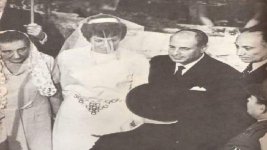
The journalist sought to meet the bride and conducted a press interview with her.
To reveal to him the events of a sabotage operation in Egypt, planned by the Israeli Minister of Defense in the 1950s, Pinhas Lavon. The operation was called (Operation Susanna).
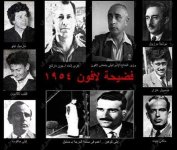
The Israeli journalist called it the "Lavon scandal."
The importance of the Lavon scandal is that it is the main reason for the establishment of the Egyptian General Intelligence, headed by Zakaria Mohieddin. And the beginning of the appearance of the Egyptian hero Raafat Al-Hagan, the resignation of both Ben-Gurion from the Prime Minister of Israel office and Pinhas from the Ministry of Defense, and the emigration of Jews from Egypt.
Lavon Scandal/Operation Susanna:
After Egypt and England agreed on all the terms of the British evacuation from Egyptian lands, military intelligence in the Israeli army put in place a sabotage and espionage plan in Egypt that carries out attacks on cinemas, public institutions, and some American and British institutions in the hope that these actions will lead to tension in Egyptian-American relations and Britain’s reluctance to evacuate its forces from Suez.
Lavon sent the famous Israeli intelligence man Ivri Elad, known as "John Darling " to Egypt to recruit a number of Jewish youth. Elad actually succeeded in recruiting a number of young Egyptian Jews who belonged to the Zionist Agency, which was working in secret to transport Jews to the new Israel. They were the Egyptian Jewish doctor Moshe Marzouk, who worked in a Hospital in Abbasiya, and the network was headed by Samuel Azar, along with: Victor Levy - Robert Dasa - Philip Natason - Marcel Victorin Nino - Meir Zafran - Meir Meohas - Eli Jacob and Tszar Cohen, Eli Cohen. Then they were joined by Israeli officer Max Bennett, who was spying on Egypt at the time, and he was the same Israeli spy who planned bombings in Baghdad in 1951 against the Jewish community in Iraq to sow enmity and hatred between them and the rest of the Iraqis to urge them to immigrate to Israel.
Beginning of the process:
Instructions were arriving from Israel to the sabotage cell via Israel Radio, specifically from a daily home program, and in one of the episodes of the program “How to Make an English Cake,” Israel launched the password “Housewife’s Choice” to start the process. The instructions were clear and explicit: To blow up the cars of diplomats, English nationals, economic institutions, and cultural and media centers.
On July 2 1954 the network carried out its first terrorist operation in which they succeeded in bombing the US Post Office in the city of Alexandria, initially with a small package, which resulted in a fire in the office and a number of casualties. On July 14, the network carried out its second operation when it planted firebombs at the American Library headquarters in Cairo and Alexandria.at the same time, which led to fires and injuries among employees and visitors to the two libraries, and the press at the time treated these incidents as a short circuit.
On July 23, during the “Revolution Celebrations,” explosives were supposed to be placed at the train station, the Rivoli Theater in Cairo, and the “Metro Rio” cinemas in Alexandria.
But than bad luck played its part, and one of the explosives in the pocket of the agent, “Philip Natasone,” who was in charge of placing the explosives in the Rio movie theater, exploded, and passers-by saved him. Unfortunately for him, there was a policeman at the scene who doubted his actions, so he took him to the hospital under the pretext of treating him from the effects of the fire. There, the doctors said that the young man’s body was smeared with a shiny silver powder.
There was a similar powder in a glasses case that he was holding in his hand, and doctors believed that the ignition was the result of a chemical reaction.
Upon searching the young man, another bomb was found with the name of “Maroun Ayak,” the owner of the eyeglasses store, on it. He was arrested. He said that his name was Philip Natason, a Jew, and he was 21 years old. His nationality was unknown. He admitted that he joined a terrorist organization responsible for the fires, and a small factory for explosives, highly flammable chemicals, incendiary bombs ready for use, and papers explaining how to make bombs were found in his house.
Based on Natason's confessions, Victor Levy and Robert Dasa were arrested.
Mamdouh Salem (Member of the Revolutionary Command Council) took over the Investigations..
The three insisted that they were working individually, without instigators or financiers. As for the reasons, they are “their love for Egypt and their contribution to its national cause, and so that the British and Americans know that they will leave Egypt by force and terrorism!!
Mamdouh Salem asked them: Why did you burn the post office building, which belongs to the Egyptians??
They didn't find an answer!
As investigations continued, Samuel Azar, an engineer, was arrested. He was the founder of the Alexandria Cell and its leader for some time before he ceded leadership to Victor Levy, who was better trained than him.
From Azar's confessions, the authorities reached Meir Mihoas, who is of Polish origin. The most dangerous thing that Mihoas confessed to was his reference to John Darling, who later turned out to be the leader of the network, the founder of its two branches in Cairo and Alexandria, and one of the most dangerous men in Israeli intelligence at that time.
Meyohas also revealed the Jewish doctor Moshe Marzouk, who was responsible for the Cairo branch, and he was arrested, and from his confessions, Victorin Nino, famous as Marcel and Max Bennett, was arrested. As well as Eli Jacob, Youssef Zaafaran, Cesar Youssef Cohen, and Eli Cohen.
Ivri Elad fled Egypt before his arrest, and Israel had suspicions about Elad’s involvement in handing over members of the network to Egyptian intelligence.
Court:
On December 11, 1954, the network members were tried in the Cairo Military Court, which issued its rulings as follows:
* Execution by hanging of Mosheya Marzouk and Samuel Azar (the sentence was carried out on January 31, 1955).
* Life imprisonment with hard labor for Victor Levy and Philip Natason.
* 15 years' hard labor for Marcel Victorin Nino and Robert Dassa.
* Hard labor for 7 years for Mayer Youssef Zaafaran and Mayer Samuel Meyohas.
The innocence of Eli Jacob, Cesar Yosef Cohen and Eli Cohen.
* Confiscation of radio equipment, money, and Max Bennett’s car.
The ruling ignored Max Bennett because he had committed suicide in prison and his body was returned to Israel years later.
Following the trial, Israel tried to appease Egypt to release the organization members..
US President Eisenhower sent a personal letter to President Abdel Nasser requesting the release of detainees “for humanitarian reasons.”
Anthony Eden, British Prime Minister Winston Churchill, and French officials sent similar letters and requests, but they were all met with absolute rejection.
The Israeli news agency said at the time, “This rejection is a slap to the rulers of the West.”
On January 31, 1955, the death sentences were carried out on Moshe Marzouk (buried in the Jewish cemetery in Basateen) and Samuel Azar (buried in the Jewish cemetery in Alexandria), and Moshe Sharett immediately declared them “martyrs.” Members of the Knesset mourned their deaths, and official mourning was declared the next day; Israeli flags were lowered and newspapers appeared without colors, and the names of the two spies were released on the streets of Beersheba.
At the beginning of 1968, the prisoners in the case were released as part of a prisoner exchange deal with Egypt following the June setback.
They were given a "hero's welcome" in Israel and were appointed to the Israeli army as a sure way to prevent them from talking about the issue.
20 years after the events of Operation Susanna, Marcel Nino, Robert Dassa, and Youssef Zaafaran appeared for the first time on Israeli television and attacked the Israeli governments that did not bother to search for a way to release them!!
Eli Cohen:
After obtaining acquittal in the Lavon scandal he migrated to Israel in 1957, he was recruited to work as an Israeli spy in Syria.
He traveled to Argentina under the name of the Syrian businessman "Kamel Amin Thabet" and there he became close to the Syrian community. Then he traveled to Syria after he deluded everyone that he liquidated all his businesses in Argentina because of his homesickness. He continued in Syria for four years
approaching army officers and military officials and was able to obtain important information from them that he sent to Israel.
In the year 1965, by chance, Jack Peton (Raafat Al-Hagan, the famous Egyptian spy inside Israel) saw a picture of Kamel Thabet on the Golan Heights in the company of Syrian officers, so he sent a message to Egypt in which it said: “Kamel Thabet is nothing but an Israeli spy whose name is Eli Cohen . I saw his picture with a Moroccan Jewish friend named Laila, and when I asked her about him, she said that he was her sister’s husband.
On the same night that Al-Hagan’s message arrived, an Egyptian intelligence officer traveled to Syria and met with President Amin Al-Hafez and informed him of the information sent by the Egyptian agent Raafat Al-Hagan.
Eli Cohen was arrested..
He was executed on May 18, 1965 in Marjeh Square in Damascus.
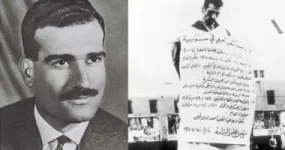
Raafat Al-Hagan says: “I attended his funeral in Israel among Mossad men after the Arab newspapers announced the news of his arrest and execution, and I shared with friends the grief over the fall of...(Our star) the legendary Eli Cohen..
Source: Watan media.
Media of the New Republic.