Whatever

Very well.

The same prayers chanted by Iranians have a typical Farsi accent. That is frankly new Arabized Farsi. Post conversion to Islam. You can hear it very clearly in some of the videos posted by the other members that were not from India.

It is very common in group prayer for an Indian Parsi priest to correct an Iranian Zoroastrian mobed. Either in intonation or ritual.

It takes a child (at the age if 7-9) about a year (at least 6 months in a rush) of going to a priest and being taught the basic set of Kusti prayers before the child's Navjote (Iranians call ir Sudreh Pooshi) ceremony. In which it is not just the words but how to say them (pronunciation and cadence, rhythm) that is drilled into the child for life.

The video I shared is made as a trailer for a book by a Hindu author, his and his publisher's idea of how it should sound fir dramatic effect. Hence probably the modern middle eastern touches.

Some authentic Zoroastrian prayer videos ...

To view this content we will need your consent to set third party cookies.
For more detailed information, see our cookies page.


To view this content we will need your consent to set third party cookies.
For more detailed information, see our cookies page.


To view this content we will need your consent to set third party cookies.
For more detailed information, see our cookies page.


Cheers, Doc


Should we maybe create a dedicated Parsi/Zoroastrian history + culture thread (and copy/bring the last set of replies there)? Or continue here?

The same prayers chanted by Iranians have a typical Farsi accent. That is frankly new Arabized Farsi. Post conversion to Islam. You can hear it very clearly in some of the videos posted by the other members that were not from India.

It is very common in group prayer for an Indian Parsi priest to correct an Iranian Zoroastrian mobed. Either in intonation or ritual.
Heh, Hindi accent exists as well for Sanskrit prayers in fairly substantial way (my father especially relishes in pointing this out).

Vedic Sanskrit phonological transmission is retained (in more advanced strict way) in the context of the Vedic priests, scholars etc... through different recital patterns that essentially give different hymns but retain exact same message. In this way there are actually (by oral definition) different recited versions of the same Veda.

This offers kind of secure oral end-end verification by memorising and then passing on all these different ways (including backwards).

It takes a child (at the age if 7-9) about a year (at least 6 months in a rush) of going to a priest and being taught the basic set of Kusti prayers before the child's Navjote (Iranians call ir Sudreh Pooshi) ceremony. In which it is not just the words but how to say them (pronunciation and cadence, rhythm) that is drilled into the child for life.
Yes all quite similar stuff.

The video I shared is made as a trailer for a book by a Hindu author, his and his publisher's idea of how it should sound fir dramatic effect. Hence probably the modern middle eastern touches.

Some authentic Zoroastrian prayer videos ...
Yup I have listened to number of Zoroastrian prayers and have long noted the phonological similarity between Avestan and especially Rig Vedic Sanskrit sound and meter. So recognising Avestan is immediate for me.

There is even deeper connection if you know the specifics intrinsic in the Rig Veda regarding its use of early "archaic" tenses frequently....which Old Avestan has specifically as well. These diminish in frequency greatly even in the other 3 "newer" Vedas (making the Rig Veda very unique)....and then of course classical Sanskrit changes even more so with the grammar codification and so on and introduction of script and less relevance of "sruti" in this growing sphere.

I can maybe get into more of this next reply, depending where you all want to continue this convo (here or a new dedicated thread).
 

There is lot of pages I'm just skipping past so I don't understand what exactly is going on.

Is this goodbye for good from this forum on account of some mod stuff?

Or just taking a break for a little bit? Or just that night heh?

Confused. Maybe I'll read this whole thread more measuredly later, things are all over the place and I arrive late to party on this stuff it seems.
 
There is lot of pages I'm just skipping past so I don't understand what exactly is going on.

Is this goodbye for good from this forum on account of some mod stuff?

Or just taking a break for a little bit? Or just that night heh?

Confused. Maybe I'll read this whole thread more measuredly later, things are all over the place and I arrive late to party on this stuff it seems.

Just a good night.

It was a long day. With some really annoying interludes.

Cheers, Doc
 
Yup I have listened to number of Zoroastrian prayers and have long noted the phonological similarity between Avestan and especially Rig Vedic Sanskrit sound and meter. So recognising Avestan is immediate for me.

There is even deeper connection if you know the specifics intrinsic in the Rig Veda regarding its use of early "archaic" tenses frequently....which Old Avestan has specifically as well. These diminish in frequency greatly even in the other 3 "newer" Vedas (making the Rig Veda very unique)....and then of course classical Sanskrit changes even more so with the grammar codification and so on and introduction of script and less relevance of "sruti" in this growing sphere.
The variance btween Indo-Aryan - the language of the Rg Veda - and the evolving Prakrit that grew after the Vedas increased almost imperceptibly, until a couple of centuries before 600 BC or so, grammarians had written extensively on the differences, specifically differences in the tenses used.

By then, the centre of gravity for the culture of the immigrants had shifted from the north-west, to the heart of the Punjab, to the Delhi region, and progressively into the Gangetic Doab. Essentially the grammar codification you refer to was needed to create some order due to the differences between the Rg Vedic (and almost Avestan) language and the language that was being spoken, early forms of Prakrit.

Panini's codification of the Indo-Aryan language eliminated the 'alien' forms, and codified the language strictly, making it clear which forms and usages were 'legitimate', without quite declaring the others 'illegitimate'. This codification is the reason why there is a gap between the sacerdotal language that Doc has been showing us, and classical Sanskrit; Sanskrit was specifically streamlined to eliminate the similarities with Avestan, the sacred language of the Iranians, a variation of the broader group spoken by the eastern Iranians, the Sakas, known in the Mahabharata as the Parama Kamboja, a valiant tribe of horsemen from the extreme edges of consciousness of the immigrants of the Punjab and upper Doab. Note that this occurrence in the Mahabharata is just before the appearance of the codified Sanskrit, as the Mahabharata was probably last 'enhanced' around 800 BC or so.

So simultaneously, there existed the descended language, Prakrit, and the cleaned up language, Sanskrit. It is important to know that Sanskrit was before then, 600 BC, a cleaned up, codified version of the archaic language of the Vedas, while the language that was spoken in those areas that the immigrants' language had prevailed over the older, pre-existing ones (that is, between the Indus and the mountains to the west to the Rajgir mountains to the east, and between the Himalayas to the north and Vindhya mountains to the south) was Prakrit.

Today's north Indian languages are descendants essentially of Sauraseni Prakrit, from which is derived most of the languages of the west of India, including Punjabi, Marathi, Gujarati, Konkani, or of the more glamorous Magadhi Prakrit, the cultural centre of gravity having shifted to Magadha, that gave rise to a number of languages in the east.

Hindi doesn't figure because Hindi was an artificial creation of the 18th and 19th centuries, with the weaponisation of language by the Hindus of the UP as a reaction to their resentment at a perceived domination. Effectively, these cultural guerrillas were rejecting the earlier lingua franca that everyone in the north spoke, Hindustani, that was often written in Urdu script. Hindi rejected those parts of Hindustani that were 'imported' from Persian, Turkish, Arabic, and created words from Sanskrit to replace some of them, and also rejected the Urdu script in favour of Nagari, soon to become Devnagari. So, ironically, we have a repeat of the north Indian rejection of the Persian, first, due to the codification of Sanskrit excluding Avestan and its secular cognates, second, due to the promotion after codification of Hindustani, excluding Farsi.

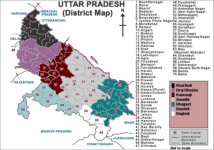
Hindi was an adaptation of one of the eight seven dialects that prevailed in today's UP, the heart of the Gangetic Doab, Khadiboli, that describes the language spoken in the extreme west, including some part of Haryana. There were six others, Braj Bhasha, Bundeli, Kanauji, Awadhi, Bagheli and Bhojpuri, besides three others from Bihar, not including Maithil, and the four or five dialects of Rajasthan.

1705203567393.png

 
Last edited:
The variance btween Indo-Aryan - the language of the Rg Veda - and the evolving Prakrit that grew after the Vedas increased almost imperceptibly, until a couple of centuries before 600 BC or so, grammarians had written extensively on the differences, specifically differences in the tenses used.

By then, the centre of gravity for the culture of the immigrants had shifted from the north-west, to the heart of the Punjab, to the Delhi region, and progressively into the Gangetic Doab. Essentially the grammar codification you refer to was needed to create some order due to the differences between the Rg Vedic (and almost Avestan) language and the language that was being spoken, early forms of Prakrit.

Panini's codification of the Indo-Aryan language eliminated the 'alien' forms, and codified the language strictly, making it clear which forms and usages were 'legitimate', without quite declaring the others 'illegitimate'. This codification is the reason why there is a gap between the sacerdotal language that Doc has been showing us, and classical Sanskrit; Sanskrit was specifically streamlined to eliminate the similarities with Avestan, the sacred language of the Iranians, a variation of the broader group spoken by the eastern Iranians, the Sakas, known in the Mahabharata as the Parama Kamboja, a valiant tribe of horsemen from the extreme edges of consciousness of the immigrants of the Punjab and upper Doab. Note that this occurrence in the Mahabharata is just before the appearance of the codified Sanskrit, as the Mahabharata was probably last 'enhanced' around 800 BC or so.

So simultaneously, there existed the descended language, Prakrit, and the cleaned up language, Sanskrit. It is important to know that Sanskrit was before then, 600 BC, a cleaned up, codified version of the archaic language of the Vedas, while the language that was spoken in those areas that the immigrants' language had prevailed over the older, pre-existing ones (that is, between the Indus and the mountains to the west to the Rajgir mountains to the east, and between the Himalayas to the north and Vindhya mountains to the south) was Prakrit.

Today's north Indian languages are descendants essentially of Sauraseni Prakrit, from which is derived most of the languages of the west of India, including Punjabi, Marathi, Gujarati, Konkani, or of the more glamorous Magadhi Prakrit, the cultural centre of gravity having shifted to Magadha, that gave rise to a number of languages in the east.

Hindi doesn't figure because Hindi was an artificial creation of the 18th and 19th centuries, with the weaponisation of language by the Hindus of the UP as a reaction to their resentment at a perceived domination. Effectively, these cultural guerrillas were rejecting the earlier lingua franca that everyone in the north spoke, Hindustani, that was often written in Urdu script. Hindi rejected those parts of Hindustani that were 'imported' from Persian, Turkish, Arabic, and created words from Sanskrit to replace some of them, and also rejected the Urdu script in favour of Nagari, soon to become Devnagari. So, ironically, we have a repeat of the north Indian rejection of the Persian, first, due to the codification of Sanskrit excluding Avestan and its secular cognates, second, due to the promotion after codification of Hindustani, excluding Farsi.

Hindi was an adaptation of one of the eight dialects that prevailed in today's UP, the heart of the Gangetic Doab, Khadiboli, that describes the language spoken in the extreme west, including some part of Haryana. There were six others, Braj Bhasha, Bundeli, Kanauji, Awadhi, Bagheli and Bhojpuri, besides three others from Bihar, not including Maithil, and the four or five dialects of Rajasthan.


More posts like this please Joe.

Don't waste yourself on fools. Including me.

Sacerdotal ❤️👍

Cheers, Doc
 

1307376978474.png
 
To view this content we will need your consent to set third party cookies.
For more detailed information, see our cookies page.


Shukla Ji is mast, cricket ke bhot shaukeen hain

I once bumped into the late Arun Jaitley ji in an elevator at the Feroze Shah Kotla (now Jaitley) stadium at an IPL game.. he was flanked by two huge SPG guys with AKs.. Saw Shukla Ji in the box too, briefly, also lotsa well armed heavies.

Scene hi alag hai politicians ka, bhai..
 
To view this content we will need your consent to set third party cookies.
For more detailed information, see our cookies page.
 
To view this content we will need your consent to set third party cookies.
For more detailed information, see our cookies page.


To view this content we will need your consent to set third party cookies.
For more detailed information, see our cookies page.


To view this content we will need your consent to set third party cookies.
For more detailed information, see our cookies page.
 
Last edited:
To view this content we will need your consent to set third party cookies.
For more detailed information, see our cookies page.


I dont know why she came on my feed but Im not complaining.

Cheers, Doc
 
The variance btween Indo-Aryan - the language of the Rg Veda - and the evolving Prakrit that grew after the Vedas increased almost imperceptibly, until a couple of centuries before 600 BC or so, grammarians had written extensively on the differences, specifically differences in the tenses used.

By then, the centre of gravity for the culture of the immigrants had shifted from the north-west, to the heart of the Punjab, to the Delhi region, and progressively into the Gangetic Doab. Essentially the grammar codification you refer to was needed to create some order due to the differences between the Rg Vedic (and almost Avestan) language and the language that was being spoken, early forms of Prakrit.

Panini's codification of the Indo-Aryan language eliminated the 'alien' forms, and codified the language strictly, making it clear which forms and usages were 'legitimate', without quite declaring the others 'illegitimate'. This codification is the reason why there is a gap between the sacerdotal language that Doc has been showing us, and classical Sanskrit; Sanskrit was specifically streamlined to eliminate the similarities with Avestan, the sacred language of the Iranians, a variation of the broader group spoken by the eastern Iranians, the Sakas, known in the Mahabharata as the Parama Kamboja, a valiant tribe of horsemen from the extreme edges of consciousness of the immigrants of the Punjab and upper Doab. Note that this occurrence in the Mahabharata is just before the appearance of the codified Sanskrit, as the Mahabharata was probably last 'enhanced' around 800 BC or so.

So simultaneously, there existed the descended language, Prakrit, and the cleaned up language, Sanskrit. It is important to know that Sanskrit was before then, 600 BC, a cleaned up, codified version of the archaic language of the Vedas, while the language that was spoken in those areas that the immigrants' language had prevailed over the older, pre-existing ones (that is, between the Indus and the mountains to the west to the Rajgir mountains to the east, and between the Himalayas to the north and Vindhya mountains to the south) was Prakrit.

Today's north Indian languages are descendants essentially of Sauraseni Prakrit, from which is derived most of the languages of the west of India, including Punjabi, Marathi, Gujarati, Konkani, or of the more glamorous Magadhi Prakrit, the cultural centre of gravity having shifted to Magadha, that gave rise to a number of languages in the east.

Hindi doesn't figure because Hindi was an artificial creation of the 18th and 19th centuries, with the weaponisation of language by the Hindus of the UP as a reaction to their resentment at a perceived domination. Effectively, these cultural guerrillas were rejecting the earlier lingua franca that everyone in the north spoke, Hindustani, that was often written in Urdu script. Hindi rejected those parts of Hindustani that were 'imported' from Persian, Turkish, Arabic, and created words from Sanskrit to replace some of them, and also rejected the Urdu script in favour of Nagari, soon to become Devnagari. So, ironically, we have a repeat of the north Indian rejection of the Persian, first, due to the codification of Sanskrit excluding Avestan and its secular cognates, second, due to the promotion after codification of Hindustani, excluding Farsi.

Hindi was an adaptation of one of the eight seven dialects that prevailed in today's UP, the heart of the Gangetic Doab, Khadiboli, that describes the language spoken in the extreme west, including some part of Haryana. There were six others, Braj Bhasha, Bundeli, Kanauji, Awadhi, Bagheli and Bhojpuri, besides three others from Bihar, not including Maithil, and the four or five dialects of Rajasthan.


This post belongs in a more substantive thread than Whatever.
 
Make a nice pair, her and Shoaib Malik

he's the quieter more introverted one, she's a bit of a sherni

she'd be quite the pataka in the court.. of love :P

dominate you proper
 
About 15 or 20,000 of my posts were multi-pagers, and then the music died.
RIP Buddy Holly

To view this content we will need your consent to set third party cookies.
For more detailed information, see our cookies page.


bye bye ms PDF pie :(
 

Users who are viewing this thread

Latest Posts

Back
Top