China in 1980s and 1990s, when their GDP per capita was less than 500$

In the US, noboby voted for the current democratic nominee for President and the incumbent president was nominated by dems through hook and crook and massive manipulation of the primary. There's no democracy in the West, especially in the US, it is controlled by the deep state. There's nothing that sets apart policy wise any of the presidents from Clinton to now.
You hit it right on the nail. In the US, presidential parties might change but the policies remains similar. In China, leadership changes from the same party creates more changes in policy vs US presidential changes from a different party.
 
Question - How was china able to build cities like this in 1990, when the percapita was less than $500 ?? It seems like there is simply not enough money.

Buildings aren't that expensive or difficult to build.

1730225440746.png

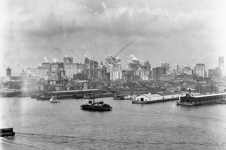
This is New York in 1895. I'm pretty sure the big cities in China in 1990 are wealthier and have access to better construction technology than NY in 1895.

GDP per capita might be low, but their cities have a large population which results in a decent total GDP and provides the economic resources. And with a state-directed economy, they can concentrate their resources for construction in certain locations.

I mean, North Korea has a GDP per capita of ~$600 in 2019 (worth less than $500 in 1990), and this video was uploaded in 2018:

To view this content we will need your consent to set third party cookies.
For more detailed information, see our cookies page.


But that isn't representative even of Pyongyang, much less than the entire North Korea.

1730224823373.png

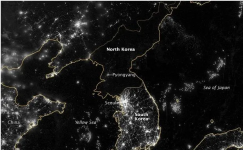
You can see that the Yellow Sea and Sea of Japan has more lighting than North Korea. It ranks 118th out of 127 countries in the Global Hunger Index, more than half of the population suffers from malnutrition, and 16.8% of their children are stunted.
 
Buildings aren't that expensive or difficult to build.

View attachment 75743

This is New York in 1895. I'm pretty sure the big cities in China in 1990 are wealthier and have access to better construction technology than NY in 1895.

GDP per capita might be low, but their cities have a large population which results in a decent total GDP and provides the economic resources. And with a state-directed economy, they can concentrate their resources for construction in certain locations.

I mean, North Korea has a GDP per capita of ~$600 in 2019 (worth less than $500 in 1990), and this video was uploaded in 2018:

To view this content we will need your consent to set third party cookies.
For more detailed information, see our cookies page.


But that isn't representative even of Pyongyang, much less than the entire North Korea.

View attachment 75742

You can see that the Yellow Sea and Sea of Japan has more lighting than North Korea. It ranks 118th out of 127 countries in the Global Hunger Index, more than half of the population suffers from malnutrition, and 16.8% of their children are stunted.

China was a superpower for the last 2000 years straight. The last 300 years were an anomaly!
 
Every country ruled by an authoritarian regime is more organized and clean

Um go look in Africa or even Cuba.

To view this content we will need your consent to set third party cookies.
For more detailed information, see our cookies page.
 
Last edited:
Buildings aren't that expensive or difficult to build.

1730225440746-png.75743


This is New York in 1895. I'm pretty sure the big cities in China in 1990 are wealthier and have access to better construction technology than NY in 1895.

It would have been even earlier but electric power plants only went online in the 1880s, dependable lightbulbs in the 1880s, and the electric safety elevator in 1889. So after those 3 details were ironed out it was off to the races of what mankind could build to leverage it all.
 
You hit it right on the nail. In the US, presidential parties might change but the policies remains similar. In China, leadership changes from the same party creates more changes in policy vs US presidential changes from a different party.
It is easy to change government and hard to change policies in US. It is hard to change government and easy to change policies in China.
It can be controlled by a fully functioning judiciary and police force.
There are strict laws for political parties and what they can or cant do. If youre thinking of the USA, yes i think the US system is not completeley democratic (i know americans will disagree), as it allows lobbying and donations from rich people. The USA in reality is plutocracy masked a a democracy.

But in a communistic one party system the power of that party ie the party leadership, is absolute. Criticism may be allowed but only to certain point.
Go beyond that and youre executed. In a open democracy, any citizen can curse or criticize a politican right in his face, literally.

Remember that its always holly dolly fun when a economy is growing, like in China, then its easy for a one party state because very few complains. But if the economy is in trouble all that pent up fustration will create huge problem, when people cant openly demonstrate or criticize. People arent allowed to choose who they want to rule the country. It will be bloody eventually.
Democracy is hopeless. It only work wells for a society that has thousands of citizens, like states in ancient Greece. With more people , voters can not know the true quality the candidates have. They have to turn to media to know them. When media are involved, money will be inevitably involved. When money decides election result, don't expect there will a happy end.
 
Last edited:
It is easy to change government and hard to change policies in US. It is hard to change government and easy to change policies in China.

Very true, China has more flexibility and is more agile policy wise. If something doesn't work, we will change fast. I find US more bureaucratic than China.

Anyway, those infrastructure were only found in tier 1 cities back then, and people living in cities were relatively well off. Don't forget due to collective ownership, gdp per capita is low, hence ppl think they are 'poor'. China had decent cleanliness in cities back then but sewage systems were stil not as developed as now. Rural people had very low level wealth due to collective production, people were just not greedy enough to produce more. Imagine our grain production nearly doubled after farming reforms in the 70s.
 
Last edited:
Imagine our grain production nearly doubled after farming reforms in the 70s.
China could not produce chemical fertilizer until 70's because back then China could not produce high pressure steel tank. Which is indispensable for producing ammonia. This technology is sanctioned by west because it can be used to produce submarine. Many people mocked CCP for the big famine. They ignored the fact that China used to be utterly backward in everything.
 
what did Mao? what did Deng?

you ever worked with koreans or japanese?

China has more potential than Japan and Korea. if not misguided by irrational internal politics China can surpass both by great margins. that’s the reality. :)

once we discussed on workplace, and my boss answered, "time is coming when Japanese are going to copy Chinese technologies...." as, what we do in Japan and what we do in China has difference and too visible. Chinese are set to outperform east Asian countries :)
 
Last edited:
China could not produce chemical fertilizer until 70's because back then China could not produce high pressure steel tank. Which is indispensable for producing ammonia. This technology is sanctioned by west because it can be used to produce submarine. Many people mocked CCP for the big famine. They ignored the fact that China used to be utterly backward in everything.

it's usually said, "how much strength China have been having, no one knows :)." strength of China has been more than counting numbers of Submarines-Aircrafts..... :coffee:

US-West plot World War with Germany & Iraq and enjoy that they may win a war. on ground realities, they are measured to lose to Iran also :)

US/West were never having strength to fight with big countries like China-Russia-India etc...

for recent news about Israel/US - Iran war, i would state, "Once US-west lose a real war, for example Iran, and then they will have virtually lost all the wars of Past :) ."
 
Guangzhou in 1980s

To view this content we will need your consent to set third party cookies.
For more detailed information, see our cookies page.


Beijing in 1990s

To view this content we will need your consent to set third party cookies.
For more detailed information, see our cookies page.


Shanghai in 1990s

To view this content we will need your consent to set third party cookies.
For more detailed information, see our cookies page.


Shenzhen in 1990s

To view this content we will need your consent to set third party cookies.
For more detailed information, see our cookies page.


The first time I set foot on China was in 2002 (just at the small town of Hekou bordering Vietnam), i was amazed because how far it was advanced compared to Vietnam. Even with such low national GDP per capita (around 800$), Hekou was closer to a modern Western European town rather than a Vietnamese town, with tall, well-planned buildings and very modern street life


I don't believe that US was worth more a living land than China during 60s or 70s also.🙂

Its always a truth that the US/West trying their "Fate" in Asian Countries since history, and the China is the one 👍
🇮🇳
 
People always like to compare China to India before the 1978 reform and the decade before 1990s when China's economy took off. On the surface, the GDP per capita figures at the times were similar, but the key social indicators of development of the two countries told a very different story.

"Comparing China and India in 1977 by GDP per capita alone is misleading.

While their incomes per person were similar, that metric ignores differences in human development. China had already built stronger foundations in education, health, and equality. Life expectancy was about 66 years in China compared to 54 in India, and literacy was roughly 70 percent in China versus 35 to 40 percent in India. Infant mortality rate in China was much lower than that in India. Fertility rates were lower too, showing China was further along in its demographic transition.

By the late 1970s, China had mass literacy campaigns, basic healthcare through the barefoot doctor system, and land reforms that improved rural equality. India still struggled with weaker public health coverage and high inequality, which limited its ability to transform economic growth into broad-based development. So while GDP per capita looked similar, China’s human capital base gave it a much stronger platform for rapid progress after 1978."
 
Last edited:

Users who are viewing this thread

Pakistan Defence Latest

Back
Top