Iranian Air Defence Systems | News and Discussions

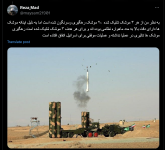
This Zoubin system looks pretty slick no? Very markeatable looking package with a similar performance to the Tor-M or Al-Bantsir S-2
Who cares about the looks - as long as it does the job, I'll quite happily take an 'ugly' looking one! This may well be the system Iran deployed recently that scared the baby killers off...
 
Who cares about the looks - as long as it does the job, I'll quite happily take an 'ugly' looking one! This may well be the system Iran deployed recently that scared the baby killers off...
Looks are half the battle. A nice looking package that appeals will sell.

Look at Indian drones. They won’t sell cuz they look like shit.
 
To view this content we will need your consent to set third party cookies.
For more detailed information, see our cookies page.


Confirmation that at least one OTH radar site was successfully targeted by Israel. Damage seems rather extensive with one building completely destroyed and another mostly destroyed. This level of explosion rules out a quadcopter/drone and likely points to 1-2 small cruise missiles given the absence of an impact crater (ALBM).

Also decent chance that of the 4 air defense operators that died in the Israeli “response” attack, that there was likely a couple if not all of them at this site during the night of the attack.

Given this was near the border it was likely able to targeted using air launched CMs by either Israel’s infamous “stealth” drone or an F-35 from stand-off distance.

In the future an automated AD system such as an Iranian version of CRAM could do wonders for protecting against air launched projectiles. Even Majid or Dey system could be great solutions.
 
To view this content we will need your consent to set third party cookies.
For more detailed information, see our cookies page.


Confirmation that at least one OTH radar site was successfully targeted by Israel. Damage seems rather extensive with one building completely destroyed and another mostly destroyed. This level of explosion rules out a quadcopter/drone and likely points to 1-2 small cruise missiles given the absence of an impact crater (ALBM).

Also decent chance that of the 4 air defense operators that died in the Israeli “response” attack, that there was likely a couple if not all of them at this site during the night of the attack.

Given this was near the border it was likely able to targeted using air launched CMs by either Israel’s infamous “stealth” drone or an F-35 from stand-off distance.

In the future an automated AD system such as an Iranian version of CRAM could do wonders for protecting against air launched projectiles. Even Majid or Dey system could be great solutions.

They hit the radars with AGM-88 missiles
 
To view this content we will need your consent to set third party cookies.
For more detailed information, see our cookies page.


Confirmation that at least one OTH radar site was successfully targeted by Israel. Damage seems rather extensive with one building completely destroyed and another mostly destroyed. This level of explosion rules out a quadcopter/drone and likely points to 1-2 small cruise missiles given the absence of an impact crater (ALBM).

Also decent chance that of the 4 air defense operators that died in the Israeli “response” attack, that there was likely a couple if not all of them at this site during the night of the attack.

Given this was near the border it was likely able to targeted using air launched CMs by either Israel’s infamous “stealth” drone or an F-35 from stand-off distance.

In the future an automated AD system such as an Iranian version of CRAM could do wonders for protecting against air launched projectiles. Even Majid or Dey system could be great solutions.


Kind of suprising that all militarties do not protect high value installations like this with a CIWS type system to protect against missile attacks.
 
This seems to swing between nothing happened to something happened.
 
Kind of suprising that all militarties do not protect high value installations like this with a CIWS type system to protect against missile attacks.

Pantsir type system would be ideal here as it is mobile and so can itself be moved to protect itself while protecting the site as well.
 
It was obvious the Israeli attack will comprise of air launched ballistic missiles and possibly ground based ballistic missiles, they did not use the latter as they probably don’t have enough stock of such systems. Other assets such as quadcopters were also predictable.

It’s no surprise they managed to cause damage to soft targets, no country can stop 100% of ballistic missiles. The problem the Israelis have is with these systems they can not inflict strategic damage to Iran’s military. Most of Iran’s strategic offensive military assets are hardened. Therefore Israel’s current military capability means it can at best inflict some tactical damage and let the western media propaganda make it seems as though they achieved some strategic objective.

Like I said a few days ago, these attacks will now have the positive effects of forcing Iran to start mass producing its air defence ( short to long range) assets in large numbers and also give focus to being able to defeat hypersonic/ballistic/ aeromaneuvering systems from long ranges. For example, the engagement range of Bavar should at least double to 600km. Iran seems to be going down this route going by below interview where the current air defence commander said they want to get to a point where the range of irans air defence is unique in the world.

To view this content we will need your consent to set third party cookies.
For more detailed information, see our cookies page.


Obviously Israel can counter by increasing range of its air launched ballistic missiles but this will mean Iran has longer to react and also be able to turn the whole of Iraq into a no fly zone if it came to to that. There is obviously a lot more to this topic.
 
Last edited:
It was obvious the Israeli attack will comprise of air launched ballistic missiles and possibly ground based ballistic missiles, they did not use the latter as they probably don’t have enough stock of such systems. Other assets such as quadcopters were also predictable.

It’s no surprise they managed to cause damage to soft targets, no country can stop 100% of ballistic missiles. The problem the Israelis have is with these systems they can not inflict strategic damage to Iran’s military. Most of Iran’s strategic offensive military assets are hardened. Therefore Israel’s current military capability means it can at best inflict some tactical damage and let the western media propaganda make it seems as though they achieved some strategic objective.

Like I said a few days ago, these attacks will now have the positive effects of forcing Iran to start mass producing its air defence ( short to long range) assets in large numbers and also give focus to being able to defeat hypersonic/ballistic/ aeromaneuvering systems from long ranges. For example, the engagement range of Bavar should at least double to 600km. Iran seems to be going down this route going by below interview where the current air defence commander said they want to get to a point where the range of irans air defence is unique in the world.

To view this content we will need your consent to set third party cookies.
For more detailed information, see our cookies page.


Obviously Israel can counter by increasing range of its air launched ballistic missiles but this will mean Iran has longer to react and also be able to turn the whole of Iraq into a no fly zone if it wanted.

Caution, the cost of increased production of defensive (or any type of) systems must be juxtaposed with the cost and tolerance for absorbing damage. Given 100% coverage is not possible, the damage we see should be well within Iran's absorption tolerance. If that is correct, enough systems have already been built. Don'T forget Iran has built these for war with US so I assume there are enough there already.

The last attack cost Zionia substantially. The resulting damage and costs in Iran is nowhere close to that.

That said, I'm confident fine tuning is taking place as we speak whether on exiting systems or battle damaged ones.
 
Caution, the cost of increased production of defensive (or any type of) systems must be juxtaposed with the cost and tolerance for absorbing damage. Given 100% coverage is not possible, the damage we see should be well within Iran's absorption tolerance. If that is correct, enough systems have already been built. Don'T forget Iran has built these for war with US so I assume there are enough there already.

That said, I'm confident fine tuning is taking place as we speak whether on exiting systems or battle damaged ones.

One good thing about making longer range systems is that you need less of them to cover the needed areas so it will certainly cost less overall for Iran.

I agree that these systems have to be combined with other factors such as fast reaction time, high maneuverability and high hiddeness, I.e they should be concealed in tunnels like we have seen etc. Also I am sure Iran is working on/ has developed convincing decoy systems that will force the enemy to spend munitions etc.

Any static system should not relied on for anything more than the very initial phase of a conflict as that is one of first things to go, e.g Ghadir and Sepehr radars.

Mobile long range radars are key, interestingly I am aware Iran has developed multiple of these but for good reason does not advertise them much publicly.
 
Last edited:
One good thing about making longer range systems is that you need less of them to cover the needed areas so it will certainly cost less overall for Iran.

I agree that these systems have to be combined with other factors such as fast reaction time, high maneuverability and high hiddeness, I.e they should be concealed in tunnels like we have seen etc. Also I am sure Iran is working on/ has developed convincing decoy systems that will force the enemy to spend munitions etc.

Any static system should not relied on for anything more than the very initial phase of a conflict as that is one of first things to go, e.g Ghadir and Sepehr radars.

Mobile long range radars are key, interestingly I am aware Iran has developed multiple of these but for good reason does not advertise them much publicly.
I understand your post but still don’t see the term ‘cost’ anywhere in it. Ie cost of protection vs cost of what’s being protected.
 

Users who are viewing this thread

Country Watch Latest

Latest Posts

Back
Top