Iranian Air Defence Systems | News and Discussions

If i can recall correctly, the number "40" in code name "AD-40" indicates the operational range of the missile. It's that the range of Kamin-2?
No AD-40 is watered down export version.
Kamin-2 has twice the range
 
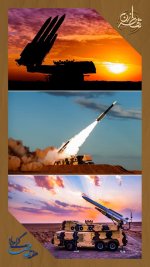
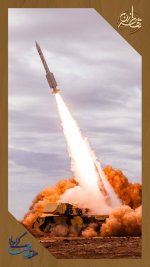
7th-Khordad Defense System’ (aka as the 3rd Khordad system)
To view this content we will need your consent to set third party cookies.
For more detailed information, see our cookies page.

is a medium-range tactical air defense missile system. Initially it had a range of 75km, which has since been increased to 200km due to advancements in its missile & radar technologies.

This system was developed by the IRGC after Iran did not receive the S-300 from Moscow. The 7th Khordad is the same SAM that successfully shot down an American Northrop Grumman RQ-4 Global Hawk drone in 2019.

⚙️ Some nerd info stuff:

It utilizes an X-band Active Phased Array engagement radar. Its Transporter Erector Launcher & Radar (TELAR) can carry 3 Taer-2B missiles with ranges of 50–105 km, it can engage targets at altitudes between 25–30 km. It is capable of detecting up to 100 targets, engaging 4, and guiding 2 missiles towards a target simultaneously.

Each battalion, consisting of four batteries, can thus engage 16 targets at the same time. Additionally, the system includes a Bashir 3-D S-band Phased Array Surveillance radar with a detection range of 350 km and a Command and Control (C2) unit for coordinating with other air defense systems, ensuring integrated networked operations and providing a Data link to counteract radar jamming.

photo_2024-11-09_16-00-39.jpg
photo_2024-11-09_16-00-40.jpg
 
To view this content we will need your consent to set third party cookies.
For more detailed information, see our cookies page.


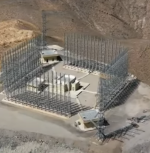
Another S-300 site is fine after initially thought to have been hit. At this point it appears maybe only 1 S-300 site was hit. Possibly none.

Most of the damage seems to have been to Shahrud, Parchin, and the two OTH radars.

Of course there could be sites that were hit that Israel/US/Iran are NOT talking about and that OSINT has failed to get imaging on. But for now this is what we know of.

By now it is clear that costly hi-end ADS' such as S400 & S300 are vulnerable to A-G and G-G launched ordinance. Even from lowly quadcopters costing $xx vs a valuable ADS costing $xxxxx.

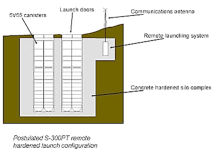
Best way to look after such assets are to put these underground such as in vertical stowed SSM's fields, and larger missiles launched from a 'revolver' type moving platform using the same launch tube.

Integrating ADS' *within* existing underground VHV & VHVT targets would to my mind save Iran a whole lot of digging, time effort and resources.

I came across the following image some time ago.

1731241985639.png

And, wrote it up as follows:-

... Fortunately for Iran, its scientists have proven to be more proficient than some of its ruling elite. Scientists at the University of Iran were in 2007 already working to produce really hard cement. In 2012 they claimed to have developed an ultra-high-performance concrete, or UHPC, which is one of the toughest and most rigid building materials in the world - 50 000 to 60 000 psi. UHPC is produced when concrete is mixed with quartz powder and special fibres such as steel – transforming it into highly hardened concrete that can withstand high pressures with increased rigidity.

In 2012, even US Defence Secretary Leon Panetta (no less) expressed concern that US bunker-busters may not be able to penetrate Iran’s deepest bunkers should UHPC be employed for military purposes. Even the largest US super bunker buster – MOP - would be unable to disable Iran’s Fordo UE plant. This bomb can penetrate 60m of 5 000psi concrete, 40m of moderately hard rock, and 8m of 10 000 psi concrete ...

Piet
 
Last edited:
By now it is clear that costly hi-end ADS' such as S400 & S300 are vulnerable to A-G and G-G launched ordinance. Even from lowly quadcopters costing $xx vs a valuable ADS costing $xxxxx.

Best way to look after such assets are to put these underground such as in vertical stowed SSM's fields, and larger missiles launched from a 'revolver' type moving platform using the same launch tube.

Integrating ADS' *within* existing underground VHV & VHVT targets would to my mind save Iran a whole lot of digging, time effort and resources.

I came across the following image some time ago.

View attachment 78854

And, wrote it up as follows:-

... Fortunately for Iran, its scientists have proven to be more proficient than some of its ruling elite. Scientists at the University of Iran were in 2007 already working to produce really hard cement. In 2012 they claimed to have developed an ultra-high-performance concrete, or UHPC, which is one of the toughest and most rigid building materials in the world - 50 000 to 60 000 psi. UHPC is produced when concrete is mixed with quartz powder and special fibres such as steel – transforming it into highly hardened concrete that can withstand high pressures with increased rigidity.

In 2012, even US Defence Secretary Leon Panetta (no less) expressed concern that US bunker-busters may not be able to penetrate Iran’s deepest bunkers should UHPC be employed for military purposes. Even the largest US super bunker buster – MOP - would be unable to disable Iran’s Fordo UE plant. This bomb can penetrate 60m of 5 000psi concrete, 40m of moderately hard rock, and 8m of 10 000 psi concrete ...

Piet
Are there any actual underground bunkers in Iran you think is built entirely with UHPC? It seems such concrete can withstand MOP easily since MOP can only penetrate up to 10,000 psi but UHPC has 50,000 psi.
 
Are there any actual underground bunkers in Iran you think is built entirely with UHPC? It seems such concrete can withstand MOP easily since MOP can only penetrate up to 10,000 psi but UHPC has 50,000 psi.
This is the $1000 question.

I do not know if any such hardened facilities exist in Iran. I suspect that such data would be held at the highest level.

The knowledge of such high psi manufactured concrete and the use thereof would of course not stay hidden long via internal sources ---> leaks ---> various foreign intel. services.

Probability a spy vs spy high-stakes shell game where a % of 'ordinary' concrete and a % of UHPC are used at random at different underground facilities.

This would mean that foreign powers wishing to destroy such super-hardened underground facilities would have to commit a proportionately higher number of really value assets that can carry those 'super' bunker busters to target.

Lastly, also commit a substantial number of these no doubt expensive bombs - say 2-4? per target, or risk missions where such bombers leave only deep ineffective holes in the ground.

Piet
 
Last edited:
To view this content we will need your consent to set third party cookies.
For more detailed information, see our cookies page.


To view this content we will need your consent to set third party cookies.
For more detailed information, see our cookies page.
 
By now it is clear that costly hi-end ADS' such as S400 & S300 are vulnerable to A-G and G-G launched ordinance. Even from lowly quadcopters costing $xx vs a valuable ADS costing $xxxxx.

Best way to look after such assets are to put these underground such as in vertical stowed SSM's fields, and larger missiles launched from a 'revolver' type moving platform using the same launch tube.

Integrating ADS' *within* existing underground VHV & VHVT targets would to my mind save Iran a whole lot of digging, time effort and resources.

I came across the following image some time ago.

View attachment 78854

And, wrote it up as follows:-

... Fortunately for Iran, its scientists have proven to be more proficient than some of its ruling elite. Scientists at the University of Iran were in 2007 already working to produce really hard cement. In 2012 they claimed to have developed an ultra-high-performance concrete, or UHPC, which is one of the toughest and most rigid building materials in the world - 50 000 to 60 000 psi. UHPC is produced when concrete is mixed with quartz powder and special fibres such as steel – transforming it into highly hardened concrete that can withstand high pressures with increased rigidity.

In 2012, even US Defence Secretary Leon Panetta (no less) expressed concern that US bunker-busters may not be able to penetrate Iran’s deepest bunkers should UHPC be employed for military purposes. Even the largest US super bunker buster – MOP - would be unable to disable Iran’s Fordo UE plant. This bomb can penetrate 60m of 5 000psi concrete, 40m of moderately hard rock, and 8m of 10 000 psi concrete ...

Piet

This is not a smart strategy at all, The evidence is clear, mobile based launchers are more survivable than fixed.

Also the enemy rarely goes after launchers as there are numerous, it’s easier to go after the targeting system that powers all these launchers. Launchers are easily replaceable, the high end radars and supporting systems are not and take time to build.

See battalion map below (ignore the tweet)

To view this content we will need your consent to set third party cookies.
For more detailed information, see our cookies page.
 
This is not a smart strategy at all, The evidence is clear, mobile based launchers are more survivable than fixed.

Also the enemy rarely goes after launchers as there are numerous, it’s easier to go after the targeting system that powers all these launchers. Launchers are easily replaceable, the high end radars and supporting systems are not and take time to build.

See battalion map below (ignore the tweet)

To view this content we will need your consent to set third party cookies.
For more detailed information, see our cookies page.

Nice:-
Thanks

Piet
 
Some good layers of LR-AESA track radars + HIMAD batteries are being added at Natanz

To view this content we will need your consent to set third party cookies.
For more detailed information, see our cookies page.
 
To view this content we will need your consent to set third party cookies.
For more detailed information, see our cookies page.

Greetings.

This video is very revealing.

It firstly reveals two Arman 'systems' viz an AESA and a PESA one.

Sayyad-3F comes with ARH as well as TVC, while the other does not.

Sayyad-3C comes with ARH as well.

Also of interest was the image of an OTH radar that differs from both Sepher and Ghadir radar.

1734190259712.png
Perhaps one for the D/Bases?

And from 09:10 reference and images that could only indicate the operation of Cooperative Engagement Capability (CEC) .

From 12:11 reference to an AIM-9X-like missile in 1 tube --> of Arman (four).

We know that the Arman system have been shown with the separate Azarakhsh low-altitude mobile ADS protecting it. These missiles (4) follow the more traditional Azarakhsh-shape.

Piet
 

Users who are viewing this thread

Country Watch Latest

Latest Posts

Back
Top