The Evolution of PAF's JF-17 Thunder through OCU [Operational Capability Upgrade] - News, Updates, Possibilities & Discussions.
CSAW

Trusted Member
Joined
Mar 9, 2022
Messages
2,086
Reaction score
5,395
Reputation
3,386.4
Country of Origin
Country of Residence
The Evolution of PAF's JF-17 Thunder through OCU [Operational Capability Upgrade]

1734090897351.png

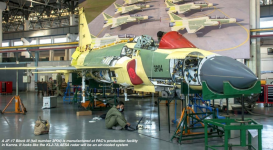
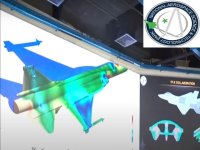
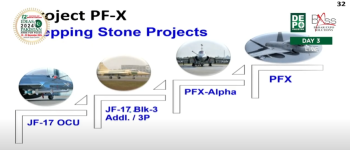
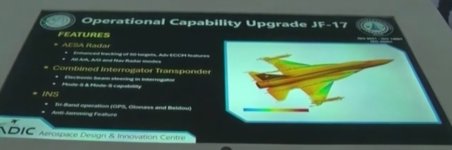
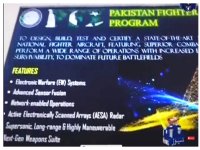
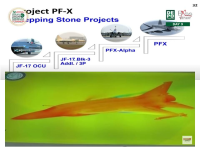
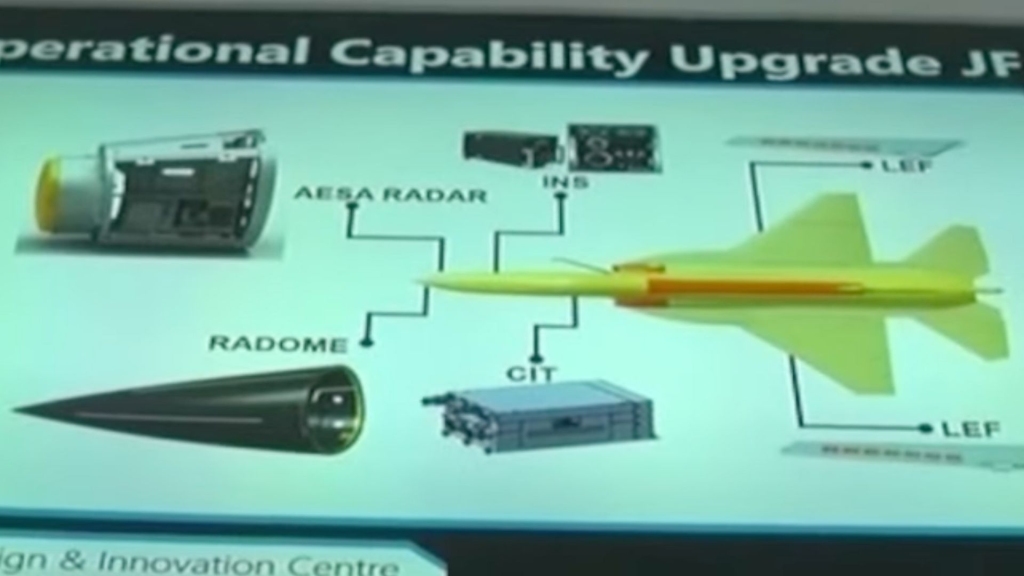
"During the 2024 International Defence Exhibition and Seminar (IDEAS 2024), the Pakistan Air Force’s (PAF) National Aerospace Science and Technology Park (NASTP) revealed that the JF-17 Thunder will undergo an ‘Operational Capability Upgrade’ (OCU). NASTP is also designating this JF-17 OCU project as ‘PFX Alpha’, indicating that it is the first sequential step towards the future PFX fighter program.
PFX - 11.jpg

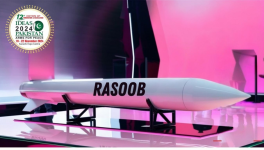
Currently, it seems that the primary task of the JF-17 OCU (or PFX Alpha) is to upgrade the Thunder’s radar and avionics suite and, potentially, integrate the fighter with additional air-to-air and air-to-surface munitions, especially homegrown solutions like the Rasoob 250 and AZB-81LR, among many others.
PFX 10.jpg

However, while the task of the OCU is to upgrade the fighter with new subsystems, the goal is deeper: it might be the PAF’s first major step towards independently managing the Thunder platform.

The JF-17 Vision Coming to Life​

Since the JF-17’s introduction to the PAF combat aircraft fleet, there had been an underlying gap in the imagined goals of the fighter and the reality of Pakistan’s aerospace capacity. Basically, while the JF-17 was supposed to be a fighter free of political and technical strings, the reality was that Pakistan was still reliant on China in critical areas, such as subsystems and munitions integration.

This gap may have come to a head when the PAF was evaluating its options for an active electronically scanned array (AESA) radar for use on the JF-17 Block-3. Reportedly, a major reason why the PAF was not able to select the Leonardo Grifo-E was because neither the Aviation Industry Corporation of China (AVIC) nor Leonardo would agree to share their respective source-codes.
1734091135011.png

Though far from a guarantee, the PAF could not view the Leonardo Grifo-E as a serious option, despite it leveraging newer gallium nitride (GaN) technology for its transmit/receive modules (TRM), for example. It was categorically discounted due to a technical ‘string’. However, even if the PAF could source munitions from Europe, it lacked the technical capacity to carry out the integration work without AVIC’s help. Hence, the PAF was not necessarily emerging out of that situation in line with its best interests.
1734091038140.png

In 2020, the PAF began taking steps to close this gap by establishing a new integration facility to manage subsystem and weapon system integration onto the JF-17. Since then, the PAF integrated several original munitions to the Thunder, including air-launched cruise missiles (ALCM) like the Ra’ad–series, AZB-series of precision-guided bombs (PGB), and the Aselsan ASELPOD advanced targeting pod.

Now, with the JF-17 OCU / PFX Alpha, the PAF is aiming to take control of electronics stack – i.e., radar, electronic warfare (EW), avionics, and possibly even electro-optical (EO) systems – to design and build a package that shapes the JF-17 into the no-compromise solution Air Headquarters (AHQ) envisioned.
67-1024x576.jpg

A Greater Focus on Localization​

One of the goals the PAF set with Project PFX is to establish “total technological control” of the platform. In other words, the PAF should be able to freely decide upon, integrate, and deploy the inputs or subsystems of its choosing onto the platform…"


https://quwa.org/quwa-premium/
 
Last edited:
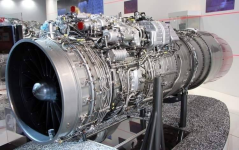
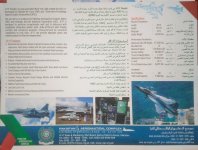
"IDEAS 2024 : JF-17 Thunder marketed as 4.5 Gen Multi role with A2A configuration TW ratio stated as 1.0 : 1.09
Max Engine Thrust 18,960 lbs
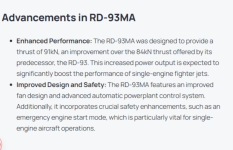
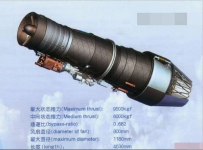
Engine is Russian origin RD-93 with its advance version being RD-93MA
State of Art AESA Radar
HMS
Combat Proven BVR Missile & SRAAM Missile hosting capability "


JF-17 X 01.jpg
JF-17 X 02.jpg
 
Last edited:
" Keeping the Assembly Line at PAC Kamra 'Warm' & Independent management of Thunder


The approach to Operational Capacity Upgrade OCU for JF-17 Thunder has been envisaged as :
- MLU for Older Block IIs with AESA radar
- Block III upgraded with Turkish & Pakistani Sub systems .
The package that may include:
  • Radar and avionics: Avionics Upgrade ; The indigenous AESA radar may be upgraded.
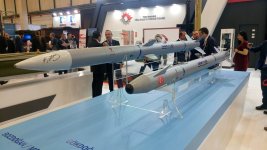
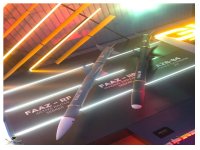
  • Missiles: PL-15E as Primary BVR with Faaz-1 / 2 based on GÖKDOĞAN Infrared Air-to-Air Missiles (IR AAM) and BOZDOĞAN Beyond Visual Range Air-to-Air Missiles (BVR AAM)
  • Helmet-Mounted Display System (HMDS): TULGAR HMDS w
  • Cruise missiles: Azb-81 LR , Rasoob-250 & SOM-J Cruise Missiles
  • Engine: 8D-93MA & WS- Newer series engine tested
  • Data connectivity: Enhanced data connectivity with Horion-7 and AKINCI platforms will be added.
  • Wing strengthening: For Block -II , the wings will be strengthened according to Block-III standards.
The Pakistan Air Force's (PAF) National Aerospace Science and Technology Park (NASTP) is calling this project "PFX Alpha".

It's the first step in the PAF's future PFX fighter program.

The goal of the OCU is to upgrade the Thunder's radar and avionics, and potentially integrate it with new munitions.

It may also be the first major step towards the PAF independently managing the Thunder platform. "

Jef RD-93MA.jpg

To view this content we will need your consent to set third party cookies.
For more detailed information, see our cookies page.
 
" Keeping the Assembly Line at PAC Kamra 'Warm' & Independent management of Thunder


The approach to Operational Capacity Upgrade OCU for JF-17 Thunder has been envisaged as :
- MLU for Older Block IIs with AESA radar
- Block III upgraded with Turkish & Pakistani Sub systems .
The package that may include:
  • Radar and avionics: Avionics Upgrade ; The indigenous AESA radar may be upgraded.
  • Missiles: PL-15E as Primary BVR with Faaz-1 / 2 based on GÖKDOĞAN Infrared Air-to-Air Missiles (IR AAM) and BOZDOĞAN Beyond Visual Range Air-to-Air Missiles (BVR AAM)
  • Helmet-Mounted Display System (HMDS): TULGAR HMDS w
  • Cruise missiles: Azb-81 LR , Rasoob-250 & SOM-J Cruise Missiles
  • Engine: 8D-93MA & WS- Newer series engine tested
  • Data connectivity: Enhanced data connectivity with Horion-7 and AKINCI platforms will be added.
  • Wing strengthening: For Block -II , the wings will be strengthened according to Block-III standards.
The Pakistan Air Force's (PAF) National Aerospace Science and Technology Park (NASTP) is calling this project "PFX Alpha".

It's the first step in the PAF's future PFX fighter program.

The goal of the OCU is to upgrade the Thunder's radar and avionics, and potentially integrate it with new munitions.

It may also be the first major step towards the PAF independently managing the Thunder platform. "

View attachment 88756

To view this content we will need your consent to set third party cookies.
For more detailed information, see our cookies page.

Question, on the PFX thread, VIP member Micheal said that AVIC is closing their Thunder assembly line and will hand over the 42% share they have to PAC Kamra, how long do you think it will take before PAC recieves it?
 
Question, on the PFX thread, VIP member Micheal said that AVIC is closing their Thunder assembly line and will hand over the 42% share they have to PAC Kamra, how long do you think it will take before PAC recieves it?
What ?
When did I say that?

1, AVIC has never owned the production line of JF-17. the production line of JF-17 has always been in Pakistan. cac only owns the R&D system of JF-17, not the production line of JF-17 in bulk.
2. the JF-17 shares are insignificant to AVIC. if PAC is interested, it can seek to negotiate a share transfer with AVIC.

But I think PAC, if it is smart enough, will not acquire the remaining shares.
Once AVIC no longer owns any shares of JF-17, it means that the subsequent development of JF-17 has no direct relationship with AVIC. If PAC subsequently needs CAC's assistance, CAC's status will change from that of a shareholder to that of a cooperative merchant, and from a work obligation to a purely commercial relationship. This would be a disaster for PAC.

According to official Chinese-language media reports, certain key structural parts of Chinese fighter jets use heavy-duty forging machines in a one-shot molding process to improve structural strength. There are also parts that are molded in one go using a large-scale 3D metal printing process.
These parts in the JF-17 are manufactured in China and then transferred to PAC for assembly.

These heavy-duty forging machines and large-scale 3D metal printing systems fall under the strict control of Chinese law. They are prohibited from leaving Chinese soil in any way. However, products machined from them are allowed to be exported.
 
Last edited:
The Evolution of PAF's JF-17 Thunder through OCU [Operational Capability Upgrade]

View attachment 88397

"During the 2024 International Defence Exhibition and Seminar (IDEAS 2024), the Pakistan Air Force’s (PAF) National Aerospace Science and Technology Park (NASTP) revealed that the JF-17 Thunder will undergo an ‘Operational Capability Upgrade’ (OCU). NASTP is also designating this JF-17 OCU project as ‘PFX Alpha’, indicating that it is the first sequential step towards the future PFX fighter program.

View attachment 88395

Currently, it seems that the primary task of the JF-17 OCU (or PFX Alpha) is to upgrade the Thunder’s radar and avionics suite and, potentially, integrate the fighter with additional air-to-air and air-to-surface munitions, especially homegrown solutions like the Rasoob 250 and AZB-81LR, among many others.

View attachment 88396

However, while the task of the OCU is to upgrade the fighter with new subsystems, the goal is deeper: it might be the PAF’s first major step towards independently managing the Thunder platform.

The JF-17 Vision Coming to Life​

Since the JF-17’s introduction to the PAF combat aircraft fleet, there had been an underlying gap in the imagined goals of the fighter and the reality of Pakistan’s aerospace capacity. Basically, while the JF-17 was supposed to be a fighter free of political and technical strings, the reality was that Pakistan was still reliant on China in critical areas, such as subsystems and munitions integration.

This gap may have come to a head when the PAF was evaluating its options for an active electronically scanned array (AESA) radar for use on the JF-17 Block-3. Reportedly, a major reason why the PAF was not able to select the Leonardo Grifo-E was because neither the Aviation Industry Corporation of China (AVIC) nor Leonardo would agree to share their respective source-codes.

View attachment 88399

Though far from a guarantee, the PAF could not view the Leonardo Grifo-E as a serious option, despite it leveraging newer gallium nitride (GaN) technology for its transmit/receive modules (TRM), for example. It was categorically discounted due to a technical ‘string’. However, even if the PAF could source munitions from Europe, it lacked the technical capacity to carry out the integration work without AVIC’s help. Hence, the PAF was not necessarily emerging out of that situation in line with its best interests.

View attachment 88398

In 2020, the PAF began taking steps to close this gap by establishing a new integration facility to manage subsystem and weapon system integration onto the JF-17. Since then, the PAF integrated several original munitions to the Thunder, including air-launched cruise missiles (ALCM) like the Ra’ad–series, AZB-series of precision-guided bombs (PGB), and the Aselsan ASELPOD advanced targeting pod.

Now, with the JF-17 OCU / PFX Alpha, the PAF is aiming to take control of electronics stack – i.e., radar, electronic warfare (EW), avionics, and possibly even electro-optical (EO) systems – to design and build a package that shapes the JF-17 into the no-compromise solution Air Headquarters (AHQ) envisioned.
67-1024x576.jpg

A Greater Focus on Localization​

One of the goals the PAF set with Project PFX is to establish “total technological control” of the platform. In other words, the PAF should be able to freely decide upon, integrate, and deploy the inputs or subsystems of its choosing onto the platform…"


https://quwa.org/quwa-premium/

This article does seem to suggest that PAF does not have access to the full source code of the JF17 and that rests under Chinese control.
 
This article does seem to suggest that PAF does not have access to the full source code of the JF17 and that rests under Chinese control.
I think it mentions that about just the AESA radar. It should’ve been solved by now if it were a concern in the first place.
 
What ?
When did I say that?

1, AVIC has never owned the production line of JF-17. the production line of JF-17 has always been in Pakistan. cac only owns the R&D system of JF-17, not the production line of JF-17 in bulk.
2. the JF-17 shares are insignificant to AVIC. if PAC is interested, it can seek to negotiate a share transfer with AVIC.

But I think PAC, if it is smart enough, will not acquire the remaining shares.
Once AVIC no longer owns any shares of JF-17, it means that the subsequent development of JF-17 has no direct relationship with AVIC. If PAC subsequently needs CAC's assistance, CAC's status will change from that of a shareholder to that of a cooperative merchant, and from a work obligation to a purely commercial relationship. This would be a disaster for PAC.

According to official Chinese-language media reports, certain key structural parts of Chinese fighter jets use heavy-duty forging machines in a one-shot molding process to improve structural strength. There are also parts that are molded in one go using a large-scale 3D metal printing process.
These parts in the JF-17 are manufactured in China and then transferred to PAC for assembly.

These heavy-duty forging machines and large-scale 3D metal printing systems fall under the strict control of Chinese law. They are prohibited from leaving Chinese soil in any way. However, products machined from them are allowed to be exported.
Allow me to clear the misunderstnading,

On the PFX thread post no 966, these are the last 2 statements made by our moderator Oscar
"What is also not mentioned is CATIC is VERY keen and trying to add to JF-17 local production in Pakistan because it wants its own capacity to focus on next gen products for China and repurpose the facilities it currently is using for JF-17.

CATIC has hinted to PAC on a “deadline” to stop supporting JF-17 at the current level and reduce its share"

On post no 969 in which you replied to him, This is the first part of your statement

"I have always been of this opinion.CAC wants to hand over everything related to JF-17 to Pakistan. There is nothing that needs to be kept secret for China and Pakistan.CAC's focus is still on the design of the next generation fighter and the production of the J-20"

These 2 statements led me to believe that PAC wants to start producing parts of the JF-17 that are produced by China. I hope this clears everything.
 
does this also means that china is ready to provide pakistan with all the machinery that is required to produce jf-17 thunder in pakistan all by itself and would it be useable to manufacture another desigh of jf-17 if needed ?
 
" Continued........The key Factors pushing for the OCU can be summarised as under :

1- Source Code issues faced by PAC during integration of Non Chinese Critical sub systems , munitions & upgrades.

2- PAC's desire to integrate High end electronics in JF-17 Block-III P means the engine upgrade route needed is inevitable.

3- Lack of future interest in Thunder after Block-III shown by CATIC & a willingness to reduce its share on gradual basis.

4- To keep the Assembly line & knowledge base obtained during Thunder development intact with export orders , Block II MLU, Block -30 upgrades & producing in small batches until PFX transition occurs.

1734309760144.png

Considering the fate of Azm & current industrial capabilities of Eco-system, PAC would be well advised to move in logical steps with piece by piece integration of available indigenous, off the shelf , Turkish, Russian & those Chinese systems for which it has a broader control / share.

The Phase wise approach' was a shining light in Thunder project management approach and its continuation would mean that High Tech, Complex and Costly systems would be localized in bite-able chunks as hinted in the slide Jf-17 Thunder Block-3P.

The initiatives taken to integrate Pakistani desired sub systems in Block-III have been reported in media such as AESA radar & Stand off Cruise missiles.

The Alpha iteration would be the major project milestone. "

PFX - OCU.jpg
1734309093732.png
 
Last edited:
Allow me to clear the misunderstnading,

On the PFX thread post no 966, these are the last 2 statements made by our moderator Oscar
"What is also not mentioned is CATIC is VERY keen and trying to add to JF-17 local production in Pakistan because it wants its own capacity to focus on next gen products for China and repurpose the facilities it currently is using for JF-17.

CATIC has hinted to PAC on a “deadline” to stop supporting JF-17 at the current level and reduce its share"

On post no 969 in which you replied to him, This is the first part of your statement

"I have always been of this opinion.CAC wants to hand over everything related to JF-17 to Pakistan. There is nothing that needs to be kept secret for China and Pakistan.CAC's focus is still on the design of the next generation fighter and the production of the J-20"

These 2 statements led me to believe that PAC wants to start producing parts of the JF-17 that are produced by China. I hope this clears everything.
Analyze it from a purely commercial point of view.
In the 1990s, the early days of the JF-17 program, the technological gap between Chinese and Pakistani fighters was not very large, and the program was among the very best cooperation projects. But. China's rapid development in recent decades, but Pakistan is stagnant. the JF-17 program has now become a burden to CAC.

China's modern aircraft industry, has made extensive use of advanced manufacturing processes. It includes not only final assembly lines but also component manufacturing systems.

Due to Pakistan's extremely weak industrial base, a large number of key components for the JF-17 had to be manufactured in China. Based on the China-Pakistan agreement, the Chinese component manufacturing plants have to retain these special manufacturing tools and special molds. However, the production of JF-17 is so low that their productivity cannot be improved, and these specialized equipments have been idle for a long time.

China hopes that Pakistan seriously build the basic industry, when Pakistan's industrial capacity to meet the technical requirements, China will be these JF-17 special manufacturing systems transferred to PAC, so that Pakistan to achieve the JF-17 completely localized manufacturing capacity. But it was not to be.

does this also means that china is ready to provide pakistan with all the machinery that is required to produce jf-17 thunder in pakistan all by itself and would it be useable to manufacture another desigh of jf-17 if needed ?
As much as both China and Pakistan would like it to be, Pakistan has absolutely no such capabilities.
A complete full chain fighter manufacturing industry is a very, very large industrial system. It is a symbol of the world's top industrial and military power.
 

Users who are viewing this thread

Pakistan Defence Latest

Country Watch Latest

Latest Posts

Back
Top