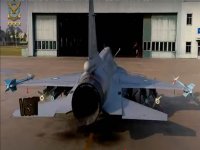
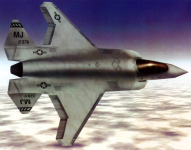
The Evolution of PAF's JF-17 Thunder through OCU [Operational Capability Upgrade] - News, Updates, Possibilities & Discussions.

does this also means that china is ready to provide pakistan with all the machinery that is required to produce jf-17 thunder in pakistan all by itself and would it be useable to manufacture another desigh of jf-17 if needed ?

Pakistan will need equipment of that category for sure, as to whether Pakistan gets it from China, or elsewhere is up for debate. It comes down to what the alternative suppliers in that space, ie does Turkey produce something equivalent ?

The decision point is really do they absorb everything that it takes to make the Block III in Pakistan, where the risk is low, or do they try to do the map indicated, potentially with newer or different manufacturing tooling required and risk failure both in the new project and also in local manufacturing in the block III. It looks like they have adoped the more risky approach. Lets see where they end up.
 

WVR-BVR Development​

Gokdogan BVRAAM​


1734402458095.png

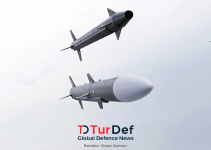
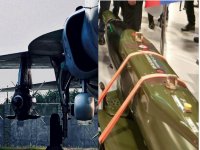
" Azerbaijan’s Air Force JF-17 “Thunder” Block 3 fighter jets are reportedly set to be equipped with Gokdogan BVRAAM and Bozdogan WVRAAM air-to-air missiles produced by Turkey’s defense

Turkey and Azerbaijan share a close defense cooperation. The selection of Turkish-made air-to-air missiles for Azerbaijan’s JF-17 Block 3 fighters is a testament to the capabilities of Turkey’s defense industry.
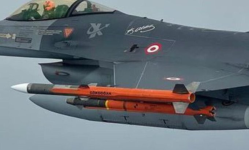

1734402941589.png


Turkey developed these air-to-air missiles as part of the GOKTUG Project for use in its own fighter aircraft, such as the F-16, and later for other platforms like the Hurjet, KAAN, and combat drones.

Following successful test launches, Turkey is now prepared to begin mass production of these missiles.

The Gokdogan BVRAAM, a long-range air-to-air missile developed by Turkey, is designed to compete with the American AIM-120 AMRAAM.
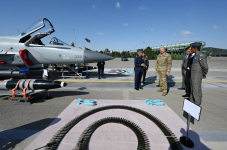

1734403411560.png

Equipped with an Active Radar Seeker, the Gokdogan BVRAAM offers advanced capabilities, including the ability to detect multiple targets and engage from all directions.

It is also engineered to be resistant to electronic countermeasures, turning the source of interference into a target.


The Gökdoğan BVRAAM, equipped with an active radar seeker and a range of 100 km, represents a significant leap in missile technology. Its use of a laser proximity fuse with sensors around the missile to increase resistance against jamming in the terminal phase is a testament to its advanced design.
Gökdoğan missile is built for medium-range, beyond-visual-range [BVR] engagements. It’s slightly larger, at about 3.7 meters in length, and uses a solid-fuel rocket motor to reach the speed and range needed to strike distant targets.


The Gökdoğan features an advanced guidance system combining inertial navigation, midcourse updates via data link, and an active radar seeker for terminal phase targeting. This allows it to engage enemy aircraft at ranges of up to 65 kilometers. Its larger warhead, weighing between 20 and 25 kilograms, is also a high-explosive fragmentation type, designed to destroy or disable aircraft from long distances.
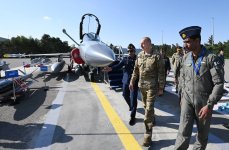
1734403454022.png

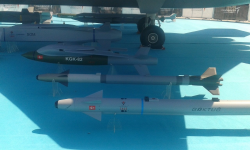
Bozdoğan WVRAAM is significantly larger and faster than AIM-9 missiles.
The Bozdoğan, a short-range, within-visual-range [WVR] missile, is designed for close-quarters dogfighting. Measuring approximately 3 meters in length, it features a solid-fuel rocket motor that provides the rapid acceleration needed for short-range engagements.

The missile uses an infrared homing guidance system to lock onto the heat signatures of enemy aircraft. This makes it highly effective in combat scenarios where targets are close. With an operational range of up to 25 kilometers and a high-explosive fragmentation warhead, it ensures High Probability to hit
1734403037836.png

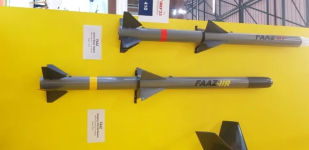
Bozdogan WVRAAM, a short-range air-to-air missile also developed by Tubitak Sage, uses an Imaging Infrared (IIR) guidance system similar to that of the American AIM-9X Sidewinder.

The Bozdogan missile is capable of reaching speeds up to Mach 4.


The missile weighs 140 kg and reaches a speed of more than Mach 4, whereas AIM-9X weighs 85 kg and reaches a speed of Mach 2.5. In addition to the F-16, the missiles will be used on other combat aircraft like KAAN fighter and KIZILELMA unmanned fighter. ASELSAN will also use the missiles on its new air defence systems: "

--------------------------------
1734403115459.png
 
Last edited:
1734999201136.png
JF-17C REK.jpg
JF-17C with PL-15E.jpg
 
Last edited:
" ......

While the OCU primarily aims to equip the JF-17 with cutting-edge subsystems, defense media outlets in Pakistan suggest a secondary objective: establishing greater independence in managing the aircraft, which was originally developed through a joint venture with China.​


PFX Fighter 01.jpg

Since the JF-17’s induction into the PAF, there has been a noticeable gap between Pakistan’s aspirations for the platform and the actual capabilities of its domestic aerospace industry.​


PFX Fighter 02.jpg

In theory, the JF-17 was envisioned as a platform free from external political and technical dependencies.​

However, in practice, Pakistan remains reliant on China for critical areas such as subsystems and weapon system integration.​

1735447712692.png

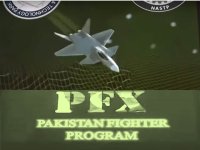
With the launch of the OCU program under PFX Alpha, the PAF aims to further incorporate local technologies into the JF-17.​

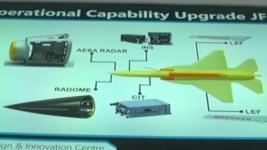
This includes advancements in radar, electronic warfare systems, avionics, and potentially electro-optical systems. The ultimate goal is to transform the JF-17 into a more formidable fighter jet, showcasing the growing capabilities of Pakistan’s domestic defense industry.​


PFX Fighter 03.jpg

The primary goal of the PFX Alpha upgrade is to modernize the radar and avionics systems of the JF-17, with potential integration of advanced air-to-air and air-to-ground weapon systems, including indigenous solutions such as the “Rasoob 250” and “AZB-81LR.

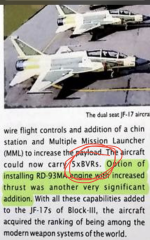
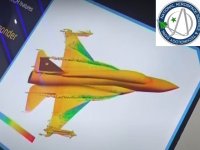
NASTP instead of naming it a Block-IV as Block -III P & OCU , as reports pour in , is already making progress in the JF-17 'Operational Capability Upgrade' (OCU) for the Thunder.

NASTP is showing the OCU under banner of PFX Alpha'. Its a clear show of intent in achieving local 'technological control' over the platform as much as possible.

1735447162072.png

Getting full access & finer expertise over the process of integrating, testing, and validating radars, avionics, and air-to-air and air-to-surface munitions as a first key step.

With a Local BVR coming up, the way forward was to guarantee the integration and use of Pakistani designed munitions by having a Localised Sensor and avionics stack. This will make inhouse all the source-code and other related parameters.

However, getting more technical control over the platform also opens the door to other possibilities. Perhaps there's an avenue again for third-party munitions and subsystems vendors to vie for a spot on the JF-17

1735447388589.png

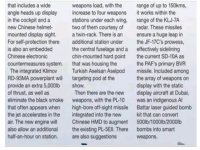
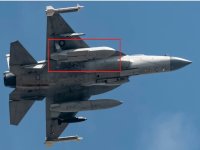
Phase-1 seems to involve a new AESA radar (GaN) & An integrated ECM involving several arrays mounted around the aircraft & finalising a High Performance Powerplant
 
the reality is that not so long ago HIT issued a nationwide call to all concerned to manufacture the rubber that goes on the wheels inside the tracks of all tanks n APC........not even one local rubber producer could come up a reliable product.

that friends is the sad ground reality
 
To view this content we will need your consent to set third party cookies.
For more detailed information, see our cookies page.


1735946361945.png

To view this content we will need your consent to set third party cookies.
For more detailed information, see our cookies page.


To view this content we will need your consent to set third party cookies.
For more detailed information, see our cookies page.
 
PFX.jpg
1736037354050.png

1736037032419.png

To view this content we will need your consent to set third party cookies.
For more detailed information, see our cookies page.


To view this content we will need your consent to set third party cookies.
For more detailed information, see our cookies page.


To view this content we will need your consent to set third party cookies.
For more detailed information, see our cookies page.
 
Last edited:
the reality is that not so long ago HIT issued a nationwide call to all concerned to manufacture the rubber that goes on the wheels inside the tracks of all tanks n APC........not even one local rubber producer could come up a reliable product.

that friends is the sad ground reality
Don't know about that particular case but as far as I know rubberized track pads of all tanks in Pakistan is sourced from within Pakistan from privatly owned businesses.
 
Don't know about that particular case but as far as I know rubberized track pads of all tanks in Pakistan is sourced from within Pakistan from privatly owned businesses.
if something happened in the last year then ur statement might be true.....
as before that time all rubber track sets, tank rollers, tank track pads, tank bushes etc were/are being imported
 
  • Like
Reactions: HRK

Users who are viewing this thread

Pakistan Defence Latest

Latest Posts

Back
Top