Iranian Air Force (IRIAF/IRGC-ASF) | News and Discussions

IMO a hypothethical naval Qaher cannot fit a Owj class turbojet, the weight It is high that any real carrier landing would break the deck. It should be propulsed by a Jaesh or even a higher powered Toloue as well suggested Emirzad.

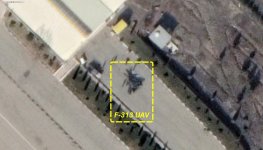
Anyway it seems wild unrealistic to talk about a naval version of Qaher. C"mon brothers, how the hell will you test a naval Qaher whenever you didn't test even in a dusty airbase?. We don't have any evidence of a flyable Qaher aside some blurry satellite pictures.
Qaher in tehran airport
Screenshot_20231119_153645_com_alensw_PicFolder~01.jpg
 
Hi,
If Russians really have the ball to go against UN resolutions, Iran should get
Asap whatever they can in terms of su
35/30 with R37 type of missiles
And in numbers not like 18/24 should be
Around 4/5 squadrons
And if China agrees for AESA in those SUs
Best bet is through via Russia these radars can be integrated if Russians at the moment don’t have anything to offer
For the love of God, Iranian an at least go
For SU27 with upgrade gadgets as they are lying in abundance in Russia
Thank you
exactly which un resolution ?
 
Qaher in tehran airport
View attachment 88819
Mehrabad airport It is for domestic flights. In a city of 15 millions of people, with the second biggest airport of the country, nobody saw It on flight or made a picture (as opposed to chinese J20/31 who was soon spotted by civilians). So you can guess that maybe taxi test have been done at much.

I would LOVE to see it flying too...
 
Ge3Ry8NXQAAwVfB
 
exactly which un resolution ?
Hi,
So if there isn’t any it means that’s a piece
Of cake for Russians to supply Iran with their latest gadgets, so then probably why not to get SU57 in near future, in the meanwhile the. Other SUs will be the best
Option but in numbers 24/36 probably will
Not work out fully against the opponents
Thank you
 
Seems like this Qaher wingman is gonna be a reality now. I have no doubt Iran can create a classy prototype but will it hit the assembly line is doubtful IMO. Iran has bad aviation managers who have so far failed in mass productions in combat aviation ector despite promising prototypes. Regardless, I have added below what can designers use from domestically available tech, it will all depend upon the size of the drone.
Which in all likelihood would a twin-and a smaller -single design.

Apologies for the slow response.


Airframe
Size: Although I do believe they may have completely changed the dimensions, but judging by the Satellite photos, the airframe seems atleast the size of a light fighter.
Well, I am looking at how this is unfolding and I see two possibilities. The manned & the unmanned way. The Tejas MARK-1A for example has a L=13.2m. JAS-39A = 14.1m and F-16A = 15.02.

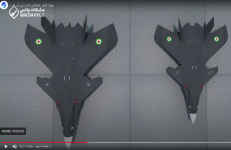
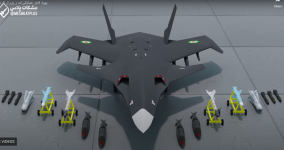
To this end, would it be possible to estimate the L of the larger twin-engine unmanned Q-313 comparing it with something that has known dimensions such as the Azarakhsh AAM in the second image'. Images clipped from:-
To view this content we will need your consent to set third party cookies.
For more detailed information, see our cookies page.

1734353581208.png
1734353622162.png


Aerodynamics: People raised the viability of the airframe before based upon small and weird positioning of air-intakes with bottoms totally blocked. This could theoretically mean stall at a sharp pitch-up motion. Seems like re-work was needed.
Definitely
FBW: It will be necessary to control a large jet-powered unmanned vehicle, the tech is demonstrated in Kowsar.
Agree. Timesaving all round. In this case I do wonder if it could be a case of the chicken and the egg?
RCS: Low RCS or atleast low observable Airframe will be needed. With experience gained from RQ-170 and then mass production of Local Shahed Flying wings, It is quite possible that RCS drops considerably.
Clean, I would venture to say yes. But when loaded out conventionally on pylons etc., it's RSC value would take a hit.
Internal Bays: They will be necessary for Stealth flight and the tech is demonstrated in Shahed Flying Wings and also in Shahed-149 although that's a totally different design.
Agree here too. A redesign at this stage though, would set the FOC of this a/c back drastically. In an industry that is beset by other, rather than by strictly mechanical, problems only.

Engine Options

Turbojets
2 x OWJ J-90 Afterburning Turbojets (used in Kowsar, total 11,000 lbf wet thrust). 2 x J-85II can push F-5 airframe to 0.99 Mach without afterburner so Qaher wingmen may supercruise with 2 x OWJ.

2 x OWJ-J-90Y Non-Afterburning Turbojet(used in Yasin AT, total 7200 lbs dry thrust)

Turbofans
2 x Jahesh-700 Non-Afterburning Turbofans (Single Crystal technology, total 3600 lbf dry thrust, Doubtful to be in production)

2 x Tolue-14 Nonafterburning Turbofans (Possible use in Shahed 171 Stealth UCAV, ~3500 lbf dry thrust)
At this stage I am admittingly partial to a AI-225F-xx, or a comparable AI-322-30F type solution, both dry and wet. Circa 6 600lbf - 11 000lbf. Especially with the advent of YAK-130 also. The higher the quantity of engines sought, the lower overall costs of production.
Onboard Avionics

Radar Options


Bayyenat-I PESA (100/150 KM A2A Track/Detect range with SAR, look down Shoot down capability, Fitted in F-4E/D Dowran Upgrade program, too heavy and large for wingman)

Bayyenat-II PESA (94/115 KM A2A Track/Detect range with 1 m2 SAR for ground attack at 78 KM, look down Shoot down capability, ECM control, weight < 100 KG, Application: Kowsar prototype)

Bayyenat-V / Baaz PESA (75-80/100 KM A2A Track/Detect range, rest is unknown, weight < 100 KG, Application: Saeghe I/II, Kowsar)
A higher performance radar is required here. See for example the just mentioned YAK-130.
Computers

Flight controllers, Weapons Management, Air Data instrument, Engine Control instruments etc have all been demonstrated before in Kowsar, Yasin.

Active/Passive Sensors

EO/IRST

Laser Range Finder

E-warfare/Self-Defense
RWR/MAWS (SAIRAN) slaved Chaff/Flare dispenser (Available in Kowsar and F-4 Dowran, demonstrated in shows)

Internal Jammers (Demonstrated in Mohajer-6)

External Shahin X Band pod (ALQ-119 copy, available to entire IRIAF)

- Nav/Comm

INS+SAT

Double Duplex Datalink by SAIRAN (Available in Kowsar IRIAF, Su-22M4 of IRGCAF, Karrar drones)

TACAN (SAIRAN built, available in all fighters)
All good here.
Weapons Options

Air to Air


Azarakash HOBS WVR (Used in SHORAD, reported use as a WVR)

Arash AIM-7E2 airframe-based BVR (mockup only, Doubtful existence)

R-77E (Arrival from Russia, doubtful implementation)
The Q is why build a manned and/or unmanned aerial vehicle from scratch and for all that enormous financial and industrial effort, if you cannot afford to give it the required sensors, weapons etc. to compete with a chance of success at least, against foes.
Air to Ground

SDB

Sadid 1/345 or Ghaem

Balaban
??
Yes, and reviewing the larger Q-313's possible loadout (above), it would not be trivial, especially pertaining to PGM's.

Piet.
 
Which in all likelihood would a twin-and a smaller -single design.


Well, I am looking at how this is unfolding and I see two possibilities. The manned & the unmanned way. The Tejas MARK-1A for example has a L=13.2m. JAS-39A = 14.1m and F-16A = 15.02.

To this end, would it be possible to estimate the L of the larger twin-engine unmanned Q-313 comparing it with something that has known dimensions such as the Azarakhsh AAM in the second image'. Images clipped from:-
To view this content we will need your consent to set third party cookies.
For more detailed information, see our cookies page.

View attachment 88938
View attachment 88939


Definitely

Agree. Timesaving all round. In this case I do wonder if it could be a case of the chicken and the egg?

Clean, I would venture to say yes. But when loaded out conventionally on pylons etc., it's RSC value would take a hit.

Agree here too. A redesign at this stage though, would set the FOC of this a/c back drastically. In an industry that is beset by other, rather than by strictly mechanical, problems only.


At this stage I am admittingly partial to a AI-225F-xx, or a comparable AI-322-30F type solution, both dry and wet. Circa 6 600lbf - 11 000lbf. Especially with the advent of YAK-130 also. The higher the quantity of engines sought, the lower overall costs of production.

A higher performance radar is required here. See for example the just mentioned YAK-130.

All good here.

The Q is why build a manned and/or unmanned aerial vehicle from scratch and for all that enormous financial and industrial effort, if you cannot afford to give it the required sensors, weapons etc. to compete with a chance of success at least, against foes.

Yes, and reviewing the larger Q-313's possible loadout (above), it would not be trivial, especially pertaining to PGM's.

Piet.

Caution folks. These analyses do not take into consideration the mandatory low cost requirements. Whatever it is, by definition, it will be cheap but highly performant.
 
Caution folks. These analyses do not take into consideration the mandatory low cost requirements. Whatever it is, by definition, it will be cheap but highly performant.
I agree. It would be those inevitable trade-offs between quality and quantity. Hopefully cool heads will prevail and a sensible (doable) balance struck between these two.

Piet
 
To view this content we will need your consent to set third party cookies.
For more detailed information, see our cookies page.
 
Oldie but goodie!

To view this content we will need your consent to set third party cookies.
For more detailed information, see our cookies page.
 
To view this content we will need your consent to set third party cookies.
For more detailed information, see our cookies page.


These are not Azaraksh, they are F-5Es that were upgraded under "Ofagh" program in 90s, the APQ-153 got upgraded to APQ-159 like standard with flat antennas to increase the search ranges to 65-70 KM. New RWR were installed. Almost the entire tiger fleet underwent this program.
 
Which in all likelihood would a twin-and a smaller -single design.


Well, I am looking at how this is unfolding and I see two possibilities. The manned & the unmanned way. The Tejas MARK-1A for example has a L=13.2m. JAS-39A = 14.1m and F-16A = 15.02.

To this end, would it be possible to estimate the L of the larger twin-engine unmanned Q-313 comparing it with something that has known dimensions such as the Azarakhsh AAM in the second image'. Images clipped from:-
To view this content we will need your consent to set third party cookies.
For more detailed information, see our cookies page.

View attachment 88938
View attachment 88939


Definitely

Agree. Timesaving all round. In this case I do wonder if it could be a case of the chicken and the egg?


Hypothetically, for a fighter-size version, they will need 2 x J-90 (or its non-afterburning version J-90Y) OWJ turbojets to power up the vehicle. Here is the dilemma, if the 25-30 feet design on the drone carrier is a low RCS/stealth design powered by 1-2 x Jahesh Turbofan then they can't just scale it up to 45-50 feet because RCS does not work this way, they will need to re-design the entire airframe. This means it won't be Qaher anymore. It will become something else. I have a hard time believing that IAIO has the capability to put two assembly lines for two wingmen, one of which is the size of an F-16?

Most loyal wingmen are just 25-35 feet in length. I believe this vehicle will be this size as well and they might build 1-2 squadrons to put them on carrier and call it "mass production".

Clean, I would venture to say yes. But when loaded out conventionally on pylons etc., it's RSC value would take a hit.

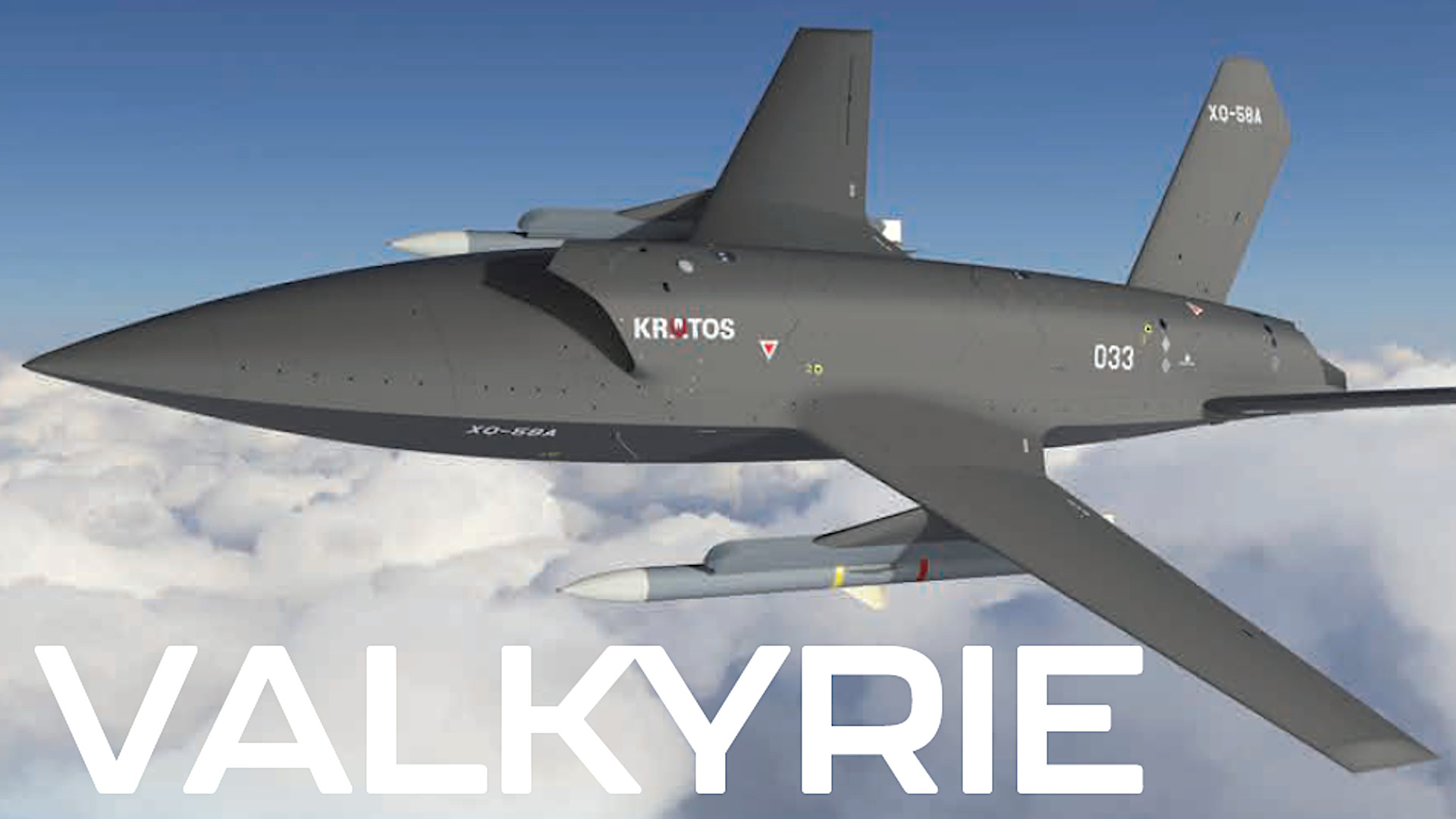
So does Valkyrie. Anything carried outside means its just another "missile" carrier for the fighter jet/mothership since the RCS will be gone. Just another larger Karrar.

kratos-growing-valkyrie-family.jpg


Agree here too. A redesign at this stage though, would set the FOC of this a/c back drastically. In an industry that is beset by other, rather than by strictly mechanical, problems only.


At this stage I am admittingly partial to a AI-225F-xx, or a comparable AI-322-30F type solution, both dry and wet. Circa 6 600lbf - 11 000lbf. Especially with the advent of YAK-130 also. The higher the quantity of engines sought, the lower overall costs of production.

The increasing number of Yak-130 will certainly point to a possible localization of Saljut AL-222-25. The afterburning version will solve problems of IRIAF's future light designs like magic but will be stupid to waste these engines in anything other than F-5 derivatives or YAK-130M2 (full combat capable version). 2 x Afterburing Saljut AL-225 means a Kowsar size fighter now has a thrust higher than Indian Tejas, F-20 Tigershark.

A higher performance radar is required here. See for example the just mentioned YAK-130
All good here.

The Q is why build a manned and/or unmanned aerial vehicle from scratch and for all that enormous financial and industrial effort, if you cannot afford to give it the required sensors, weapons etc. to compete with a chance of success at least, against foes.

The problem with Iranian aviation is $$$ and nothing else otherwise what is stopping them from putting J-90 turbojets on the assembly line? Build some from scratch, re-build/re-furbish the ~200 or so J-85 turbojets of F-5 fleet present in Iran, and use them in Kowsar, Qaher, and Yasin? The same goes for Radars, HOBS WVRs, avionics ...

The acquisition of SU-35S, Yak-130, and the very possible future acquisition of SU-30SM, MIG-29 SMT(upgrade) will kill all these local projects.
 

Users who are viewing this thread

Pakistan Defence Latest

Country Watch Latest

Back
Top