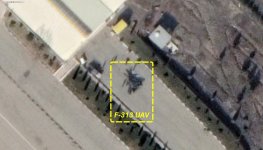
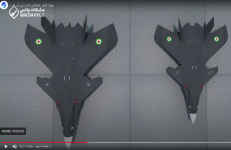
Which in all likelihood would a twin-and a smaller -single design.
Well, I am looking at how this is unfolding and I see two possibilities. The manned & the unmanned way. The Tejas MARK-1A for example has a L=13.2m. JAS-39A = 14.1m and F-16A = 15.02.
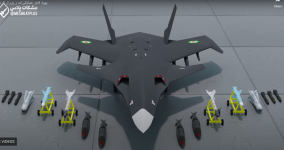
To this end, would it be possible to estimate the L of the larger twin-engine unmanned Q-313 comparing it with something that has known dimensions such as the Azarakhsh AAM in the second image'. Images clipped from:-
View attachment 88938
View attachment 88939
Definitely
Agree. Timesaving all round. In this case I do wonder if it could be a case of the chicken and the egg?
Clean, I would venture to say yes. But when loaded out conventionally on pylons etc., it's RSC value would take a hit.
Agree here too. A redesign at this stage though, would set the FOC of this a/c back drastically. In an industry that is beset by other, rather than by strictly mechanical, problems only.
At this stage I am admittingly partial to a AI-225F-xx, or a comparable AI-322-30F type solution, both dry and wet. Circa 6 600lbf - 11 000lbf. Especially with the advent of YAK-130 also. The higher the quantity of engines sought, the lower overall costs of production.
A higher performance radar is required here. See for example the just mentioned YAK-130.
All good here.
The Q is why build a manned and/or unmanned aerial vehicle from scratch and for all that enormous financial and industrial effort, if you cannot afford to give it the required sensors, weapons etc. to compete with a chance of success at least, against foes.
Yes, and reviewing the larger Q-313's possible loadout (above), it would not be trivial, especially pertaining to PGM's.
Piet.