Collaborative Combat Aircraft (CCA)
"
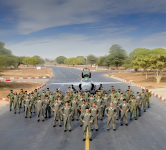
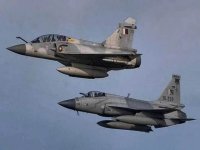
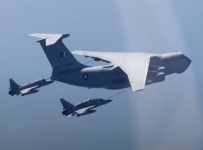
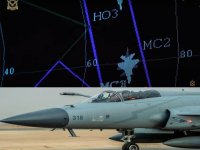
The Pakistan Air Force (PAF) stands at a very interesting juncture in its history. For the first time, it is equipped with a qualitative edge at considerable scale. And at the same time, it has hundreds of still-capable airframes coming up for a potential retirement. The confluence of these factors provide the PAF with an opportunity to make a leap forward that could redefine its capabilities and global standing.
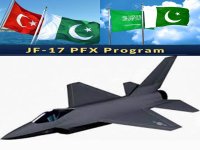
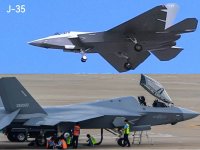
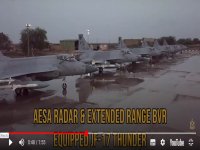
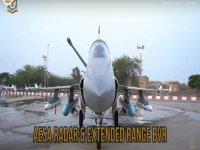
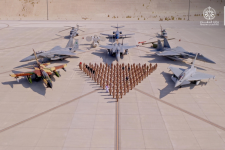
With a current fleet that includes over 180 BVR equipped JF-17s, nearly 75 F-16s, and 36 J-10s, the PAF already has a sizable high-end force. The launch of the PFX (Pakistan Fighter Experimental) program and announced future acquisition of J-31 stealth fighters will further strengthen Pakistan’s air defense capabilities for years to come. However, the true measure of an air force’s strength lies not just in new acquisitions but in its ability to seize the initiative, innovate and maximize the potential of all its assets.
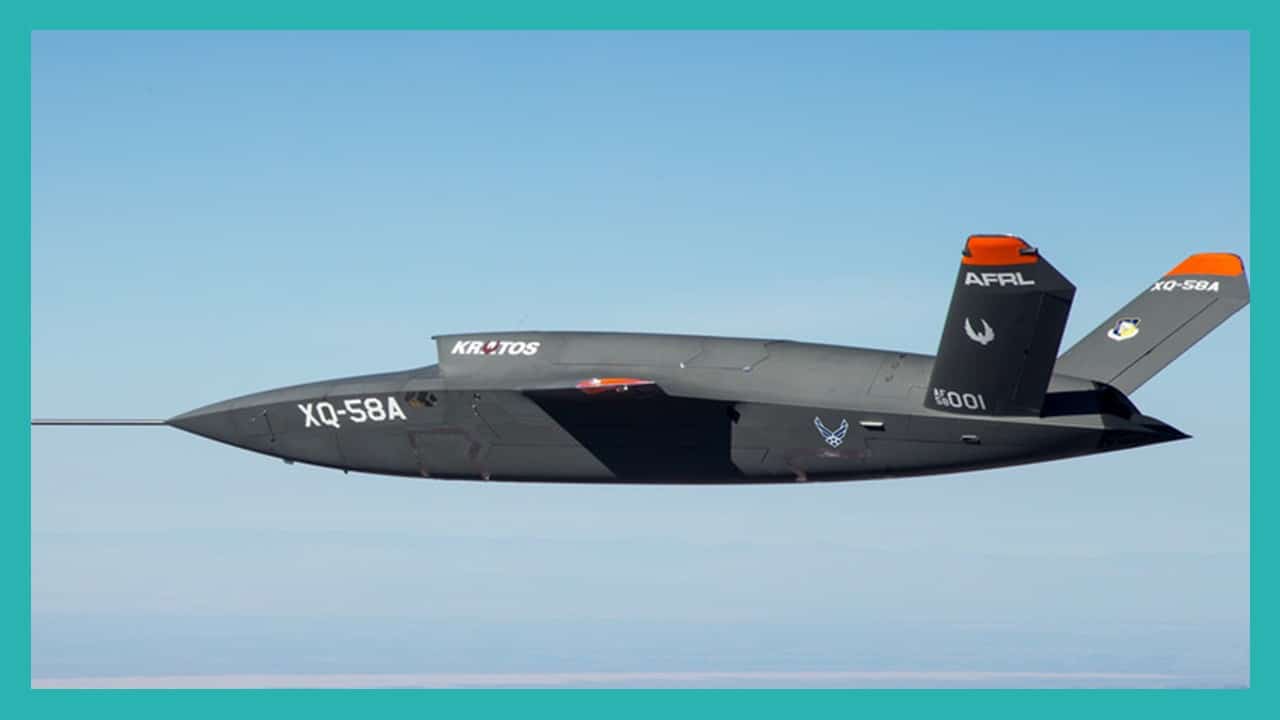
U.S. Air Force’s CCA program aims to develop unmanned aircraft that can operate alongside manned fighters, bombers, and other assets. These aircraft are expected to perform a variety of missions, including:
- Serving as loyal wingmen to manned aircraft
- Conducting independent intelligence, surveillance, and reconnaissance (ISR) missions
- Electronic warfare and jamming
- Serving as weapons trucks to extend the range and payload of manned aircraft
- Acting as decoys to confuse and saturate enemy air defenses
Lets review the progress made by China & India :
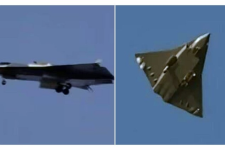
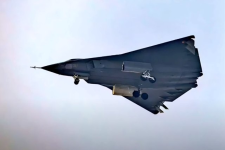
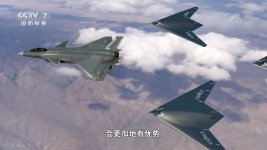
China has unveiled a new unmanned aerial system (UAS) designed to operate in tandem with its advanced fighter jets.
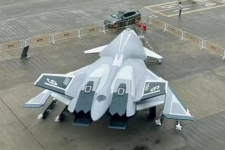
Showcased at the recent Zhuhai air show in southern China, the Feihong FH-97A is capable of leading swarms of smaller drones or acting as a companion wingman for Beijing’s stealth fighters, such as the J-20.
It can reportedly support “confrontational, high-intensity, and long-lasting” combat, thanks to its enhanced weapons bay for both air-to-air and air-to-ground munitions.
“The FH-97A drone meets the four [major] trends in the development of weapons: it is unmanned, miniaturized, intelligent, and stealthy,” Shanghai-based military analyst
Ni Lexiong told Financial Times.
In addition to serving as a drone wingman, the Feihong can be catapult-launched from aircraft carriers to support maritime operations.
Despite its promising capabilities, several defense analysts believe it will take at least five years before China deploys the FH-97A at scale.
“In the future, [the FH-97A] will be extremely important. The future of war will be competition between drone and anti-drone technology,” Ni stated.
======================
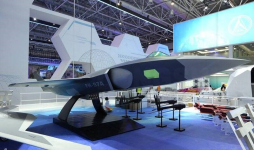
A full scale replica of India’s first-ever semi-stealth drone, now under development, is being showcased at Aero India, the mega air-show which kicks off in Bengaluru later this week.
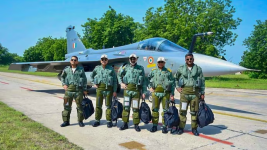
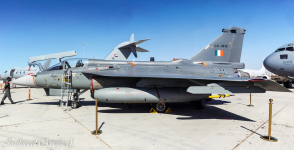
The drone, called Warrior, is part of an indigenous programme called CATS or Combat Air Teaming System, described as “a composite amalgamation of manned and unmanned platforms which work together to penetrate heavily defended enemy airspace.” In simple terms, the Warrior drone is being designed to operate with an Indian-made Tejas combat aircraft flown by an Indian Air Force pilot, which it will defend and fight with as they go into combat together.
The first Warrior prototypes are expected to fly within three to five years and is being funded by Hindustan Aeronautics (HAL).
HAL reveals the Loyal Wingman – Warrior, parts of the CATS(Combat Air Teaming System) at Aero India.
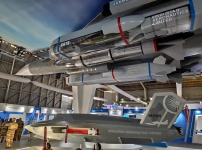
“Multiple Warriors will be commanded by a single Tejas,” said a source close to the project. The idea is to maximise the effectiveness of every mission while reducing the potential of losing the lives of precious pilots since they would be accompanied by the drones which would protect them. “The Warrior is being armed with air-to-air and air-to-ground missiles,” which would be used to hit targets on the ground or in the air.
The Warrior, while not an out-and-out stealth platform, which would allow it to evade being picked up by radar, is classified ‘low observable’, which makes its detection challenging for contemporary systems.
At the moment, Hindustan Aeronautics Limited, which has been working on drone warfare concepts for more than five years, is working towards the design, development and integration of key subsystems of Warrior. The Indian Air Force and the Indian Navy, the eventual users of the platform, will need to re-shape their operational philosophies around the concept of ‘combat-teaming’ to effectively integrate the use of a manned and unmanned platform.
The Hunter drone is a part of a series of new designs which are in the process of being designed and developed. This includes the Hunter cruise missile, designed to hit targets more than 200 kilometres away and a swarm drone system called ALFA-S designed to hone in on multiple targets which it identifies through artificial intelligence and machine-learning technology which allows the weapon to discriminate between possible targets.
-------------------------------------
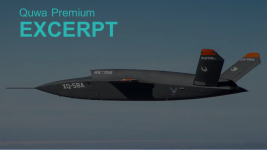
A cursory look at the development of ‘loyal wingman’ unmanned aerial vehicles (UAV) throughout the world, but with particular attention paid to what a country requires to successfully develop one.

quwa.org
Manned-Unmanned Teaming
A sign of the PAF’s interest in UCAVs was the reference it made to manned-unmanned teaming (MUM-T). The PAF did not reveal how it will build MUM-T capabilities, but one can reasonably see it using the wider industry’s general direction as its reference point
PAF NASTP - GIDS nexus with Turlish companies could mean Leveraging tech to develop this tech instead of assembling a manned fighter jet program.
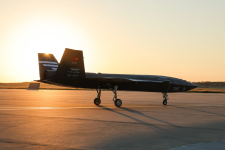
For PAF Designing, constructing, and flying these UCAVs that are approaching manned fighter jets in complexity will give PAC valuable experience and build the human resource and infrastructure that it is currently lacking. Embarking on this program will build the foundations on which PAC will become capable of designing and building large parts of a manned fighter jet, as is the vision under PFX Alpha or JF-17 OCU."
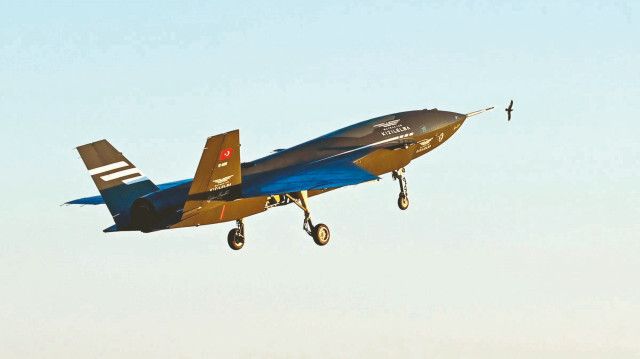
The production prototype of the unmanned fighter jet Kızılelma successfully completed its first flight yesterday. Baykar Chairman Selçuk Bayraktar announced the development on his social media account. Kızılelma is expected to start mass production this year.

www.azernews.az