Egyptian Armed Forces

View attachment 100081

Announcing or leaking deals is mostly for the purposes of the military tension policy on the Egyptian-Israeli border. Leaking deals is a kind of deterrence. Simply put, it is not that Egypt has obtained J-10C aircraft, but that Egypt has, over the past 15 years, been parading militarily with only old equipment and that it possesses huge quantities as a means of deterrence. Therefore, if the presence of the latest systems is announced, the matter will be more difficult for the enemies. Therefore, leaking confirmation of the J-10C deal is a kind of pressure on Israel and America and showing the Americans that your influence or even the American arms supply has been transformed within 10 years into only a secondary resource for the continued operation of the outdated equipment that was obtained over the past 40 years, while most of the influential weapons in the Nasrid army are from various sources. Although Egypt aims to obtain 96 J-10 aircraft before obtaining the Gil Khani fighters, the presence of 48 J-10C aircraft as an air brigade of 3 squadrons supports the protection of Egyptian airspace in the field of air combat against any Enemy penetration and Simon The entire fleet of Rafale and F-16s has been directed to the missions of penetrating hostile airspace and air attack against high-value ground targets, accompanied by hundreds of multi-capable UCAV aircraft. The presence of 48-96 new J-10C aircraft is better than developing old F-16 aircraft, some of which have been in service for more than 40 years. Also, accompanying these aircraft with the local production of the PL-15 missile, batches of which will be produced for the local market and export, makes any Western pressure regarding the capabilities of the BVR missiles requested by Egypt worthless. More than a year ago, the Russians seized a STORM SHADOW missile that was intact and did not explode. At that time, the Russians made an offer to Nasr and Algeria to help produce it locally and even integrate it into Algerian aircraft such as the SU-24 as Russian revenge on Europe and also to strike at European exports of this missile. Perhaps this matter is due, in addition to the Russian offer, to supply Egypt with the KH-69 missile as well. And its integration into Egyptian fighters as a double blow to France, which made Egypt reduce its demands for the second batch of the SCLAP EG missile to 200 Volt missiles and deny the matter to reduce its demands for the METEOR missile to 200 missiles as well due to the existence of various less expensive alternatives. The conflict in the international arms market and competition for markets is beneficial to importing countries. Egypt has been a customer for Chinese weapons since 1970, which is what attracted the Gulf countries to buy Chinese weapons in the eighties until now. Simply put, leaks of deals such as the J-10C to Egypt have more than one purpose in the current tensions facing the Middle East. The presence of squadrons of Chinese aircraft from the fourth and fifth heels supports Egyptian air superiority in the Middle East and a message of support to the colonial countries. The aircraft is considered the best successor to the MIG-21/F-7 aircraft in the Egyptian Air Force, which were deployed at the airports of the Delta, the Canal and Hurghada. It also gives Egypt the opportunity to be patient with the development program of the MIG-29M aircraft, which needs time to mature, whether the developments on the package Avionics, radars, engines, and also a pressure factor on the Russians and Indians in terms of price, with the availability of the best-priced Chinese product.

View attachment 100082

When do we expect J10CE's to land in Egypt ? 18months from now ? Any indication on timelines?
 
When do we expect J10CE's to land in Egypt ? 18months from now ? Any indication on timelines?
images (7) (11).jpeg

Perhaps the arrival times are faster because the negotiations have been taking place since 2022, in addition to the fact that the last frozen version of the aircraft was in 2022 and the modifications to it are clearly fast, as Egypt was receiving MIG-29M aircraft during experiments to integrate new Russian missiles and ammunition in 2017, and we notice that the Chinese have integrated new weapon mounts and tested PL-17 air-to-air missiles, which also requires improvements to the radar and an update to the electronic warfare systems to parallel the development of competing aircraft, and as a result of the tensions, there may be a faster delivery of the eternal deal.
 

BREAKING: Egypt receives J-10C with PL-15 air-to-air missile

By Boyko Nikolov On Feb 10, 2025


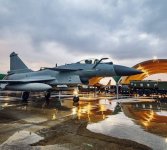
The Egyptian Air Force may have just taken delivery of its first batch of Chinese-made J-10CE fighter jets, now equipped with the advanced air-to-air missiles capable of engaging targets beyond visual range. This revelation comes courtesy of Húrin, who shared a photo on his X profile showing two of the J-10CEs in action.


BREAKING: Egypt receives J-10C with PL-15 air-to-air missile
Photo credit: X

Húrin’s post isn’t entirely new territory for keen observers. Last year, he dropped hints about Egypt’s potential acquisition of the J-10CE, referencing a photo from a Chinese defense exhibition. At the time, China had displayed a fully operational J-10CE designed for export, sparking speculation about its availability to foreign buyers like Egypt.

Egypt’s decision to acquire Chinese J-10CE fighter jets marks a significant shift in its military procurement strategy, reflecting a broader trend of diversifying its defense partnerships away from traditional Western suppliers, particularly the United States.


Reports indicate that Egypt signed an agreement with China on August 19, 2024, to purchase these advanced fourth-generation multirole fighters, known as the “Vigorous Dragon,” to replace its aging fleet of American-made F-16 Fighting Falcons.


This move positions Egypt as the second international customer for the J-10C, following Pakistan, and underscores Cairo’s growing military ties with Beijing, especially after Egypt joined the China-led BRICS bloc earlier that year.

The deal, which has not been officially confirmed by either Egypt or China, emerged after the J-10C was prominently displayed at the first Egypt International Air Show in September 2024, where it performed its inaugural demonstration in Africa.

The J-10C, developed by Chengdu Aircraft Industry Corporation, is equipped with advanced features such as an active electronically scanned array radar, modern avionics, and the capability to carry both air-to-air and air-to-ground weaponry, including the PL-10 and PL-15 missiles.

Its design, featuring a delta wing and canard configuration, enhances maneuverability and lift, making it a competitive alternative to Western fighters like the F-16. Analysts note that the J-10C offers superior combat capabilities at a lower cost, with unit prices estimated at $40 to $50 million, compared to the $65 to $70 million for the latest F-16 variants.


Egypt’s decision to opt for the Chinese jets came after rejecting offers from the United States to upgrade its F-16s to the F-16V standard and from Russia for MiG-29 fighters, reflecting frustrations with restrictions and high costs associated with Western suppliers.


Geopolitical dynamics play a critical role in Egypt’s pivot toward China. Cairo has long relied on American military aid and equipment, operating one of the largest F-16 fleets globally, but these aircraft are equipped with outdated technology and lack advanced beyond-visual-range missiles due to U.S. restrictions, partly influenced by its alliance with Israel. In contrast, China imposes fewer political constraints on arms sales, providing Egypt with greater operational flexibility.

The acquisition aligns with Egypt’s broader strategy to modernize its air force and reduce dependence on Western systems, a trend also evident in its purchases of French Rafale jets and Russian MiG-29s. However, integrating Chinese aircraft into Egypt’s diverse fleet, which includes American, French, and Russian platforms, poses logistical challenges, such as maintenance and training.

Egypt’s growing relationship with China extends beyond military hardware, as evidenced by its BRICS membership and increasing economic ties. The J-10C deal is seen as part of a strategic alignment with Beijing, which offers not only cost-effective military solutions but also fewer political strings attached compared to Western partners.

Some analysts suggest that Egypt’s decision may also be a response to regional tensions, including concerns over Israeli military operations in Gaza and the need to maintain a credible deterrence capability.

While the exact number of J-10C jets Egypt plans to acquire remains undisclosed, reports suggest an initial interest in a dozen units, with potential for further orders depending on performance and integration success.

The move has sparked mixed reactions domestically and internationally. Within Egypt, the acquisition is viewed by some as a step toward greater military independence and a pragmatic response to Western limitations, while others worry about the long-term implications of shifting away from established U.S. partnerships.

Internationally, the deal highlights China’s expanding influence in the Middle East and North Africa, challenging the dominance of Western arms suppliers.

Critics of the establishment narrative caution that while the J-10C offers advanced capabilities, its reliance on Chinese technology and support could create new dependencies, potentially complicating Egypt’s strategic autonomy in the long run.

Nevertheless, Egypt’s acquisition of the J-10CE fighter jets signals a bold step in its defense modernization efforts, reflecting a multipolar approach to global military cooperation.


Egypt’s acquisition of the Chinese PL-15 beyond-visual-range air-to-air missile marks a significant shift in its military strategy, reflecting both its regional ambitions and the constraints imposed by Western powers.

The PL-15, a sophisticated long-range missile with an estimated range of up to 300 kilometers in its domestic version, offers Egypt a capability it has long sought but been denied by its traditional Western allies.

This move comes as Cairo has faced repeated refusals from the United States and European nations to supply advanced air-to-air munitions, such as the AIM-120 AMRAAM or the MBDA Meteor, due to geopolitical considerations and concerns over regional balance, particularly in relation to Israel’s military edge.

The Egyptian Air Force has historically relied on a mix of Western and Soviet-era platforms, including F-16s, Rafales, and MiG-29s, but its ability to fully leverage these aircraft has been hampered by restrictions on advanced weaponry.

For instance, Egypt’s F-16 fleet, one of the largest in the world, has been limited to older AIM-7 Sparrow missiles, which lack the range and sophistication of modern beyond-visual-range systems.

Similarly, while Egypt has acquired French Rafale jets, efforts to equip them with the Meteor missile, which boasts a range exceeding 100 kilometers, have reportedly been blocked by Western powers, influenced by Israel’s concerns about maintaining its qualitative military advantage in the region.

These restrictions have left Egypt’s air force at a disadvantage, particularly in scenarios requiring long-range engagement capabilities against potential adversaries.

China’s willingness to supply the PL-15, particularly in its export variant, the PL-15E, which has a reduced but still formidable range of around 145 kilometers, represents a strategic pivot for Egypt.

This missile, designed for use with advanced fighters like the Chengdu J-10C, which Egypt has reportedly contracted to purchase, provides Cairo with a fire-and-forget capability, allowing its pilots to engage targets at extended ranges without needing to maintain radar lock.

The PL-15E’s active radar homing and potential resistance to electronic countermeasures make it a potent tool for air superiority, bringing Egypt closer to parity with regional powers that possess similar advanced systems.

This acquisition not only enhances Egypt’s deterrence posture but also signals a diversification of its arms suppliers, reducing its dependence on Western nations that have imposed stringent conditions on military sales.

The refusal of Western countries to provide Egypt with comparable beyond-visual-range missiles stems from a complex web of political and strategic factors. The United States, as Egypt’s primary military benefactor, provides $1.3 billion annually in aid but has consistently withheld advanced air-to-air munitions to avoid upsetting the delicate balance of power in the Middle East.

Israel, a key U.S. ally, has lobbied to ensure its air force retains a technological edge, particularly through access to cutting-edge systems like the F-35 and AIM-120. European nations, including France and Italy, have also faced pressure to limit the capabilities of the weapons they supply to Egypt, as seen in the exclusion of the Meteor from Rafale deals and the potential restrictions on arming Eurofighter Typhoons, which Egypt has sought to acquire.
These decisions reflect a broader Western policy of managing Egypt’s military capabilities to prevent escalation in the region, even as Cairo seeks to modernize its forces to address threats from Libya, Ethiopia, and the Red Sea.


Egypt’s turn to China for the PL-15 and J-10C fighters underscores a growing frustration with these Western limitations and a pragmatic approach to securing its defense needs. Unlike the U.S. or Europe, China has demonstrated flexibility in its arms exports, offering advanced systems without the political strings attached by Western suppliers.

This partnership aligns with Egypt’s broader strategy of counterbalancing its reliance on the West, a tactic reminiscent of Cold War-era diversification. By integrating Chinese missiles and aircraft into its arsenal, Egypt not only gains access to cutting-edge technology but also sends a message to its Western partners about the consequences of their restrictive policies.


However, this shift is not without risks, as it could strain relations with the U.S. and complicate interoperability with Egypt’s existing Western-supplied platforms.

The strategic implications of Egypt’s acquisition of the PL-15 extend beyond its borders, potentially reshaping aerial dynamics in the Middle East and North Africa. With the ability to engage targets at long ranges, Egypt could project power more effectively in contested regions, bolstering its role as a regional security player.

Yet, this development also raises questions about the future of Egypt’s military alignment and the broader competition between Western and Chinese influence in the global arms market. As Cairo continues to navigate its complex relationships with both powers, the PL-15 serves as a symbol of its determination to overcome Western constraints and assert greater autonomy in its defense strategy.

https://bulgarianmilitary.com/2025/...receives-j-10c-with-pl-15-air-to-air-missile/
 

BREAKING: Egypt receives J-10C with PL-15 air-to-air missile

By Boyko Nikolov On Feb 10, 2025


The Egyptian Air Force may have just taken delivery of its first batch of Chinese-made J-10CE fighter jets, now equipped with the advanced air-to-air missiles capable of engaging targets beyond visual range. This revelation comes courtesy of Húrin, who shared a photo on his X profile showing two of the J-10CEs in action.


BREAKING: Egypt receives J-10C with PL-15 air-to-air missile
Photo credit: X

Húrin’s post isn’t entirely new territory for keen observers. Last year, he dropped hints about Egypt’s potential acquisition of the J-10CE, referencing a photo from a Chinese defense exhibition. At the time, China had displayed a fully operational J-10CE designed for export, sparking speculation about its availability to foreign buyers like Egypt.

Egypt’s decision to acquire Chinese J-10CE fighter jets marks a significant shift in its military procurement strategy, reflecting a broader trend of diversifying its defense partnerships away from traditional Western suppliers, particularly the United States.


Reports indicate that Egypt signed an agreement with China on August 19, 2024, to purchase these advanced fourth-generation multirole fighters, known as the “Vigorous Dragon,” to replace its aging fleet of American-made F-16 Fighting Falcons.


This move positions Egypt as the second international customer for the J-10C, following Pakistan, and underscores Cairo’s growing military ties with Beijing, especially after Egypt joined the China-led BRICS bloc earlier that year.

The deal, which has not been officially confirmed by either Egypt or China, emerged after the J-10C was prominently displayed at the first Egypt International Air Show in September 2024, where it performed its inaugural demonstration in Africa.

The J-10C, developed by Chengdu Aircraft Industry Corporation, is equipped with advanced features such as an active electronically scanned array radar, modern avionics, and the capability to carry both air-to-air and air-to-ground weaponry, including the PL-10 and PL-15 missiles.

Its design, featuring a delta wing and canard configuration, enhances maneuverability and lift, making it a competitive alternative to Western fighters like the F-16. Analysts note that the J-10C offers superior combat capabilities at a lower cost, with unit prices estimated at $40 to $50 million, compared to the $65 to $70 million for the latest F-16 variants.


Egypt’s decision to opt for the Chinese jets came after rejecting offers from the United States to upgrade its F-16s to the F-16V standard and from Russia for MiG-29 fighters, reflecting frustrations with restrictions and high costs associated with Western suppliers.


Geopolitical dynamics play a critical role in Egypt’s pivot toward China. Cairo has long relied on American military aid and equipment, operating one of the largest F-16 fleets globally, but these aircraft are equipped with outdated technology and lack advanced beyond-visual-range missiles due to U.S. restrictions, partly influenced by its alliance with Israel. In contrast, China imposes fewer political constraints on arms sales, providing Egypt with greater operational flexibility.

The acquisition aligns with Egypt’s broader strategy to modernize its air force and reduce dependence on Western systems, a trend also evident in its purchases of French Rafale jets and Russian MiG-29s. However, integrating Chinese aircraft into Egypt’s diverse fleet, which includes American, French, and Russian platforms, poses logistical challenges, such as maintenance and training.

Egypt’s growing relationship with China extends beyond military hardware, as evidenced by its BRICS membership and increasing economic ties. The J-10C deal is seen as part of a strategic alignment with Beijing, which offers not only cost-effective military solutions but also fewer political strings attached compared to Western partners.

Some analysts suggest that Egypt’s decision may also be a response to regional tensions, including concerns over Israeli military operations in Gaza and the need to maintain a credible deterrence capability.

While the exact number of J-10C jets Egypt plans to acquire remains undisclosed, reports suggest an initial interest in a dozen units, with potential for further orders depending on performance and integration success.

The move has sparked mixed reactions domestically and internationally. Within Egypt, the acquisition is viewed by some as a step toward greater military independence and a pragmatic response to Western limitations, while others worry about the long-term implications of shifting away from established U.S. partnerships.

Internationally, the deal highlights China’s expanding influence in the Middle East and North Africa, challenging the dominance of Western arms suppliers.

Critics of the establishment narrative caution that while the J-10C offers advanced capabilities, its reliance on Chinese technology and support could create new dependencies, potentially complicating Egypt’s strategic autonomy in the long run.

Nevertheless, Egypt’s acquisition of the J-10CE fighter jets signals a bold step in its defense modernization efforts, reflecting a multipolar approach to global military cooperation.


Egypt’s acquisition of the Chinese PL-15 beyond-visual-range air-to-air missile marks a significant shift in its military strategy, reflecting both its regional ambitions and the constraints imposed by Western powers.

The PL-15, a sophisticated long-range missile with an estimated range of up to 300 kilometers in its domestic version, offers Egypt a capability it has long sought but been denied by its traditional Western allies.

This move comes as Cairo has faced repeated refusals from the United States and European nations to supply advanced air-to-air munitions, such as the AIM-120 AMRAAM or the MBDA Meteor, due to geopolitical considerations and concerns over regional balance, particularly in relation to Israel’s military edge.

The Egyptian Air Force has historically relied on a mix of Western and Soviet-era platforms, including F-16s, Rafales, and MiG-29s, but its ability to fully leverage these aircraft has been hampered by restrictions on advanced weaponry.

For instance, Egypt’s F-16 fleet, one of the largest in the world, has been limited to older AIM-7 Sparrow missiles, which lack the range and sophistication of modern beyond-visual-range systems.

Similarly, while Egypt has acquired French Rafale jets, efforts to equip them with the Meteor missile, which boasts a range exceeding 100 kilometers, have reportedly been blocked by Western powers, influenced by Israel’s concerns about maintaining its qualitative military advantage in the region.

These restrictions have left Egypt’s air force at a disadvantage, particularly in scenarios requiring long-range engagement capabilities against potential adversaries.

China’s willingness to supply the PL-15, particularly in its export variant, the PL-15E, which has a reduced but still formidable range of around 145 kilometers, represents a strategic pivot for Egypt.

This missile, designed for use with advanced fighters like the Chengdu J-10C, which Egypt has reportedly contracted to purchase, provides Cairo with a fire-and-forget capability, allowing its pilots to engage targets at extended ranges without needing to maintain radar lock.

The PL-15E’s active radar homing and potential resistance to electronic countermeasures make it a potent tool for air superiority, bringing Egypt closer to parity with regional powers that possess similar advanced systems.

This acquisition not only enhances Egypt’s deterrence posture but also signals a diversification of its arms suppliers, reducing its dependence on Western nations that have imposed stringent conditions on military sales.

The refusal of Western countries to provide Egypt with comparable beyond-visual-range missiles stems from a complex web of political and strategic factors. The United States, as Egypt’s primary military benefactor, provides $1.3 billion annually in aid but has consistently withheld advanced air-to-air munitions to avoid upsetting the delicate balance of power in the Middle East.

Israel, a key U.S. ally, has lobbied to ensure its air force retains a technological edge, particularly through access to cutting-edge systems like the F-35 and AIM-120. European nations, including France and Italy, have also faced pressure to limit the capabilities of the weapons they supply to Egypt, as seen in the exclusion of the Meteor from Rafale deals and the potential restrictions on arming Eurofighter Typhoons, which Egypt has sought to acquire.
These decisions reflect a broader Western policy of managing Egypt’s military capabilities to prevent escalation in the region, even as Cairo seeks to modernize its forces to address threats from Libya, Ethiopia, and the Red Sea.


Egypt’s turn to China for the PL-15 and J-10C fighters underscores a growing frustration with these Western limitations and a pragmatic approach to securing its defense needs. Unlike the U.S. or Europe, China has demonstrated flexibility in its arms exports, offering advanced systems without the political strings attached by Western suppliers.

This partnership aligns with Egypt’s broader strategy of counterbalancing its reliance on the West, a tactic reminiscent of Cold War-era diversification. By integrating Chinese missiles and aircraft into its arsenal, Egypt not only gains access to cutting-edge technology but also sends a message to its Western partners about the consequences of their restrictive policies.


However, this shift is not without risks, as it could strain relations with the U.S. and complicate interoperability with Egypt’s existing Western-supplied platforms.

The strategic implications of Egypt’s acquisition of the PL-15 extend beyond its borders, potentially reshaping aerial dynamics in the Middle East and North Africa. With the ability to engage targets at long ranges, Egypt could project power more effectively in contested regions, bolstering its role as a regional security player.

Yet, this development also raises questions about the future of Egypt’s military alignment and the broader competition between Western and Chinese influence in the global arms market. As Cairo continues to navigate its complex relationships with both powers, the PL-15 serves as a symbol of its determination to overcome Western constraints and assert greater autonomy in its defense strategy.

https://bulgarianmilitary.com/2025/...receives-j-10c-with-pl-15-air-to-air-missile/

Bulgarianmilitary.com is not a reliable site at all - lets see what other more reliable people quote, eg Janes, etc. Hopefully the news is true and EAF finally has a credible BVR capability finally ..
 
Last edited:

BREAKING: Egypt receives J-10C with PL-15 air-to-air missile

By Boyko Nikolov On Feb 10, 2025


The Egyptian Air Force may have just taken delivery of its first batch of Chinese-made J-10CE fighter jets, now equipped with the advanced air-to-air missiles capable of engaging targets beyond visual range. This revelation comes courtesy of Húrin, who shared a photo on his X profile showing two of the J-10CEs in action.


BREAKING: Egypt receives J-10C with PL-15 air-to-air missile
Photo credit: X

Húrin’s post isn’t entirely new territory for keen observers. Last year, he dropped hints about Egypt’s potential acquisition of the J-10CE, referencing a photo from a Chinese defense exhibition. At the time, China had displayed a fully operational J-10CE designed for export, sparking speculation about its availability to foreign buyers like Egypt.

Egypt’s decision to acquire Chinese J-10CE fighter jets marks a significant shift in its military procurement strategy, reflecting a broader trend of diversifying its defense partnerships away from traditional Western suppliers, particularly the United States.


Reports indicate that Egypt signed an agreement with China on August 19, 2024, to purchase these advanced fourth-generation multirole fighters, known as the “Vigorous Dragon,” to replace its aging fleet of American-made F-16 Fighting Falcons.


This move positions Egypt as the second international customer for the J-10C, following Pakistan, and underscores Cairo’s growing military ties with Beijing, especially after Egypt joined the China-led BRICS bloc earlier that year.

The deal, which has not been officially confirmed by either Egypt or China, emerged after the J-10C was prominently displayed at the first Egypt International Air Show in September 2024, where it performed its inaugural demonstration in Africa.

The J-10C, developed by Chengdu Aircraft Industry Corporation, is equipped with advanced features such as an active electronically scanned array radar, modern avionics, and the capability to carry both air-to-air and air-to-ground weaponry, including the PL-10 and PL-15 missiles.

Its design, featuring a delta wing and canard configuration, enhances maneuverability and lift, making it a competitive alternative to Western fighters like the F-16. Analysts note that the J-10C offers superior combat capabilities at a lower cost, with unit prices estimated at $40 to $50 million, compared to the $65 to $70 million for the latest F-16 variants.


Egypt’s decision to opt for the Chinese jets came after rejecting offers from the United States to upgrade its F-16s to the F-16V standard and from Russia for MiG-29 fighters, reflecting frustrations with restrictions and high costs associated with Western suppliers.


Geopolitical dynamics play a critical role in Egypt’s pivot toward China. Cairo has long relied on American military aid and equipment, operating one of the largest F-16 fleets globally, but these aircraft are equipped with outdated technology and lack advanced beyond-visual-range missiles due to U.S. restrictions, partly influenced by its alliance with Israel. In contrast, China imposes fewer political constraints on arms sales, providing Egypt with greater operational flexibility.

The acquisition aligns with Egypt’s broader strategy to modernize its air force and reduce dependence on Western systems, a trend also evident in its purchases of French Rafale jets and Russian MiG-29s. However, integrating Chinese aircraft into Egypt’s diverse fleet, which includes American, French, and Russian platforms, poses logistical challenges, such as maintenance and training.

Egypt’s growing relationship with China extends beyond military hardware, as evidenced by its BRICS membership and increasing economic ties. The J-10C deal is seen as part of a strategic alignment with Beijing, which offers not only cost-effective military solutions but also fewer political strings attached compared to Western partners.

Some analysts suggest that Egypt’s decision may also be a response to regional tensions, including concerns over Israeli military operations in Gaza and the need to maintain a credible deterrence capability.

While the exact number of J-10C jets Egypt plans to acquire remains undisclosed, reports suggest an initial interest in a dozen units, with potential for further orders depending on performance and integration success.

The move has sparked mixed reactions domestically and internationally. Within Egypt, the acquisition is viewed by some as a step toward greater military independence and a pragmatic response to Western limitations, while others worry about the long-term implications of shifting away from established U.S. partnerships.

Internationally, the deal highlights China’s expanding influence in the Middle East and North Africa, challenging the dominance of Western arms suppliers.

Critics of the establishment narrative caution that while the J-10C offers advanced capabilities, its reliance on Chinese technology and support could create new dependencies, potentially complicating Egypt’s strategic autonomy in the long run.

Nevertheless, Egypt’s acquisition of the J-10CE fighter jets signals a bold step in its defense modernization efforts, reflecting a multipolar approach to global military cooperation.


Egypt’s acquisition of the Chinese PL-15 beyond-visual-range air-to-air missile marks a significant shift in its military strategy, reflecting both its regional ambitions and the constraints imposed by Western powers.

The PL-15, a sophisticated long-range missile with an estimated range of up to 300 kilometers in its domestic version, offers Egypt a capability it has long sought but been denied by its traditional Western allies.

This move comes as Cairo has faced repeated refusals from the United States and European nations to supply advanced air-to-air munitions, such as the AIM-120 AMRAAM or the MBDA Meteor, due to geopolitical considerations and concerns over regional balance, particularly in relation to Israel’s military edge.

The Egyptian Air Force has historically relied on a mix of Western and Soviet-era platforms, including F-16s, Rafales, and MiG-29s, but its ability to fully leverage these aircraft has been hampered by restrictions on advanced weaponry.

For instance, Egypt’s F-16 fleet, one of the largest in the world, has been limited to older AIM-7 Sparrow missiles, which lack the range and sophistication of modern beyond-visual-range systems.

Similarly, while Egypt has acquired French Rafale jets, efforts to equip them with the Meteor missile, which boasts a range exceeding 100 kilometers, have reportedly been blocked by Western powers, influenced by Israel’s concerns about maintaining its qualitative military advantage in the region.

These restrictions have left Egypt’s air force at a disadvantage, particularly in scenarios requiring long-range engagement capabilities against potential adversaries.

China’s willingness to supply the PL-15, particularly in its export variant, the PL-15E, which has a reduced but still formidable range of around 145 kilometers, represents a strategic pivot for Egypt.

This missile, designed for use with advanced fighters like the Chengdu J-10C, which Egypt has reportedly contracted to purchase, provides Cairo with a fire-and-forget capability, allowing its pilots to engage targets at extended ranges without needing to maintain radar lock.

The PL-15E’s active radar homing and potential resistance to electronic countermeasures make it a potent tool for air superiority, bringing Egypt closer to parity with regional powers that possess similar advanced systems.

This acquisition not only enhances Egypt’s deterrence posture but also signals a diversification of its arms suppliers, reducing its dependence on Western nations that have imposed stringent conditions on military sales.

The refusal of Western countries to provide Egypt with comparable beyond-visual-range missiles stems from a complex web of political and strategic factors. The United States, as Egypt’s primary military benefactor, provides $1.3 billion annually in aid but has consistently withheld advanced air-to-air munitions to avoid upsetting the delicate balance of power in the Middle East.

Israel, a key U.S. ally, has lobbied to ensure its air force retains a technological edge, particularly through access to cutting-edge systems like the F-35 and AIM-120. European nations, including France and Italy, have also faced pressure to limit the capabilities of the weapons they supply to Egypt, as seen in the exclusion of the Meteor from Rafale deals and the potential restrictions on arming Eurofighter Typhoons, which Egypt has sought to acquire.
These decisions reflect a broader Western policy of managing Egypt’s military capabilities to prevent escalation in the region, even as Cairo seeks to modernize its forces to address threats from Libya, Ethiopia, and the Red Sea.


Egypt’s turn to China for the PL-15 and J-10C fighters underscores a growing frustration with these Western limitations and a pragmatic approach to securing its defense needs. Unlike the U.S. or Europe, China has demonstrated flexibility in its arms exports, offering advanced systems without the political strings attached by Western suppliers.

This partnership aligns with Egypt’s broader strategy of counterbalancing its reliance on the West, a tactic reminiscent of Cold War-era diversification. By integrating Chinese missiles and aircraft into its arsenal, Egypt not only gains access to cutting-edge technology but also sends a message to its Western partners about the consequences of their restrictive policies.


However, this shift is not without risks, as it could strain relations with the U.S. and complicate interoperability with Egypt’s existing Western-supplied platforms.

The strategic implications of Egypt’s acquisition of the PL-15 extend beyond its borders, potentially reshaping aerial dynamics in the Middle East and North Africa. With the ability to engage targets at long ranges, Egypt could project power more effectively in contested regions, bolstering its role as a regional security player.

Yet, this development also raises questions about the future of Egypt’s military alignment and the broader competition between Western and Chinese influence in the global arms market. As Cairo continues to navigate its complex relationships with both powers, the PL-15 serves as a symbol of its determination to overcome Western constraints and assert greater autonomy in its defense strategy.

https://bulgarianmilitary.com/2025/...receives-j-10c-with-pl-15-air-to-air-missile/
Months ago yall said Egypt bought the meteor now your going back at it…what is this typo gymnastics
 
Bulgarianmilitary.com is not a reliable site at all - lets see what other more reliable people quote, eg Janes, etc. Hopefully the news is true and EAF finally has a credible BVR capability finally ..

Bulgarianmilitary.com is not a reliable site at all - lets see what other more reliable people quote, eg Janes, etc. Hopefully the news is true and EAF finally has a credible BVR capability finally ..
Some consider its entry into the Egyptian Air Force to be bad news for some regional rival countries. It will not be the best in the Egyptian Air Force, but it is a fighter. Tactical plays a role as part of the workhorse in the Egyptian Air Force and we are presenting the news that has begun to spread, but since 2022, we have been following the Egyptian-Chinese negotiations on a number of Chinese fighters and the development of relations between the two countries. Information leaked about the arrival of fighters to Egypt by some Chinese bloggers is not happening as some think. It is not intentional due to the high level of tensions in the Middle East. It is a continuation of the statements of the head of the Chinese delegation at the El Alamein Air Show and the deals for the aircraft already for Egypt and also Algeria, which also wants Chinese fighters. The J-10C aircraft represents a temporary solution for Egypt and also an alternative to the decline in the Russians' ability to supply fighters and their targeted developments. It is also considered a pressure tool on European suppliers and Egypt's negotiations with China on the J-20 aircraft. Therefore, the J-10C aircraft for Egypt is not the greatest and most important ambition, but it is necessary at this time. The French at the same time confirmed their support for the speedy supply of the Rafale against American and Israeli threats. The leak of the supply is also a message. For the Americans, they have been removed from the list of fighter jet suppliers as a start to their decline as a supplier of fighters to Africa and the Arab countries and the presence of a Chinese alternative. China will benefit from what Egypt will provide in terms of publicity for the existence of the aircraft as a certificate of its reliability with the Arab and African countries. As the message to all parties explained, leaking the announcement about it is not a problem, unlike the announcement of an aircraft like the J-20. In the end, it is a fourth-generation fighter and is not the highest ambition of the Egyptian Air Force, but rather for tactical combat roles. For some countries, it is their most important aircraft because they do not have any other, while Egypt is actually expanding its circle of options with multiple suppliers. The timing of the announcement is important. Egypt has been sending messages in the past months through a review of military teams, although it has not announced its latest that we are ready for any military tensions and deterrence, even with the least technical weapons, is within the Egyptian army, and not a review with the latest that we have, which will appear at the time of actual clashes.

News is analyzed by some according to their whims and dreams and not other matters. Egypt has had solutions regarding BVR missiles for a long time. Since 2021, it was announced that the second Rafale deal includes METEOR and that Egypt requested MICA NG with a range of 160 kilometers. Egypt has more than one deal for R-77 missiles and Indian offers and an important request to manufacture a new BVR missile show that it has expanded its options instead of relying on one model. There are also some solutions, not all of them. The news comes as confirmation to us and not that it is not credible, as some media use Western news that is not credible at all. Egypt does not provide reports on arms deals, but only announces some of them at the mouth of the mountain only, and some only want a tool to show that the Egyptian Air Force is modest due to the weakness of its country's Air Force to create an imaginary superiority that does not exist and is not interested in developing the capabilities of the Egyptian Air Force. What is published from news in a successive manner is confirmation of our credibility and the correctness of the information and facts that we were publishing. Some were determined to deny it for goals Another reason is that his country is a regional competitor and enemy in the Middle East.
 
It is also considered a pressure tool on European suppliers and Egypt's negotiations with China on the J-20 aircraft. .

China has been clear it wont sell the J20 to anyone. Countries like Pakistan have tried and failed, and both China and Pakistan are closer than Chinas relationship with Egypt.

If Egypt wants a stealth solution, it will have to be the J-35 platform that China is marketing as an export platform.
 
Egypt Police female Special Police Forces

To view this content we will need your consent to set third party cookies.
For more detailed information, see our cookies page.
 

BREAKING: Egypt receives J-10C with PL-15 air-to-air missile

By Boyko Nikolov On Feb 10, 2025


The Egyptian Air Force may have just taken delivery of its first batch of Chinese-made J-10CE fighter jets, now equipped with the advanced air-to-air missiles capable of engaging targets beyond visual range. This revelation comes courtesy of Húrin, who shared a photo on his X profile showing two of the J-10CEs in action.


BREAKING: Egypt receives J-10C with PL-15 air-to-air missile
Photo credit: X

Húrin’s post isn’t entirely new territory for keen observers. Last year, he dropped hints about Egypt’s potential acquisition of the J-10CE, referencing a photo from a Chinese defense exhibition. At the time, China had displayed a fully operational J-10CE designed for export, sparking speculation about its availability to foreign buyers like Egypt.

Egypt’s decision to acquire Chinese J-10CE fighter jets marks a significant shift in its military procurement strategy, reflecting a broader trend of diversifying its defense partnerships away from traditional Western suppliers, particularly the United States.


Reports indicate that Egypt signed an agreement with China on August 19, 2024, to purchase these advanced fourth-generation multirole fighters, known as the “Vigorous Dragon,” to replace its aging fleet of American-made F-16 Fighting Falcons.


This move positions Egypt as the second international customer for the J-10C, following Pakistan, and underscores Cairo’s growing military ties with Beijing, especially after Egypt joined the China-led BRICS bloc earlier that year.

The deal, which has not been officially confirmed by either Egypt or China, emerged after the J-10C was prominently displayed at the first Egypt International Air Show in September 2024, where it performed its inaugural demonstration in Africa.

The J-10C, developed by Chengdu Aircraft Industry Corporation, is equipped with advanced features such as an active electronically scanned array radar, modern avionics, and the capability to carry both air-to-air and air-to-ground weaponry, including the PL-10 and PL-15 missiles.

Its design, featuring a delta wing and canard configuration, enhances maneuverability and lift, making it a competitive alternative to Western fighters like the F-16. Analysts note that the J-10C offers superior combat capabilities at a lower cost, with unit prices estimated at $40 to $50 million, compared to the $65 to $70 million for the latest F-16 variants.


Egypt’s decision to opt for the Chinese jets came after rejecting offers from the United States to upgrade its F-16s to the F-16V standard and from Russia for MiG-29 fighters, reflecting frustrations with restrictions and high costs associated with Western suppliers.


Geopolitical dynamics play a critical role in Egypt’s pivot toward China. Cairo has long relied on American military aid and equipment, operating one of the largest F-16 fleets globally, but these aircraft are equipped with outdated technology and lack advanced beyond-visual-range missiles due to U.S. restrictions, partly influenced by its alliance with Israel. In contrast, China imposes fewer political constraints on arms sales, providing Egypt with greater operational flexibility.

The acquisition aligns with Egypt’s broader strategy to modernize its air force and reduce dependence on Western systems, a trend also evident in its purchases of French Rafale jets and Russian MiG-29s. However, integrating Chinese aircraft into Egypt’s diverse fleet, which includes American, French, and Russian platforms, poses logistical challenges, such as maintenance and training.

Egypt’s growing relationship with China extends beyond military hardware, as evidenced by its BRICS membership and increasing economic ties. The J-10C deal is seen as part of a strategic alignment with Beijing, which offers not only cost-effective military solutions but also fewer political strings attached compared to Western partners.

Some analysts suggest that Egypt’s decision may also be a response to regional tensions, including concerns over Israeli military operations in Gaza and the need to maintain a credible deterrence capability.

While the exact number of J-10C jets Egypt plans to acquire remains undisclosed, reports suggest an initial interest in a dozen units, with potential for further orders depending on performance and integration success.

The move has sparked mixed reactions domestically and internationally. Within Egypt, the acquisition is viewed by some as a step toward greater military independence and a pragmatic response to Western limitations, while others worry about the long-term implications of shifting away from established U.S. partnerships.

Internationally, the deal highlights China’s expanding influence in the Middle East and North Africa, challenging the dominance of Western arms suppliers.

Critics of the establishment narrative caution that while the J-10C offers advanced capabilities, its reliance on Chinese technology and support could create new dependencies, potentially complicating Egypt’s strategic autonomy in the long run.

Nevertheless, Egypt’s acquisition of the J-10CE fighter jets signals a bold step in its defense modernization efforts, reflecting a multipolar approach to global military cooperation.


Egypt’s acquisition of the Chinese PL-15 beyond-visual-range air-to-air missile marks a significant shift in its military strategy, reflecting both its regional ambitions and the constraints imposed by Western powers.

The PL-15, a sophisticated long-range missile with an estimated range of up to 300 kilometers in its domestic version, offers Egypt a capability it has long sought but been denied by its traditional Western allies.

This move comes as Cairo has faced repeated refusals from the United States and European nations to supply advanced air-to-air munitions, such as the AIM-120 AMRAAM or the MBDA Meteor, due to geopolitical considerations and concerns over regional balance, particularly in relation to Israel’s military edge.

The Egyptian Air Force has historically relied on a mix of Western and Soviet-era platforms, including F-16s, Rafales, and MiG-29s, but its ability to fully leverage these aircraft has been hampered by restrictions on advanced weaponry.

For instance, Egypt’s F-16 fleet, one of the largest in the world, has been limited to older AIM-7 Sparrow missiles, which lack the range and sophistication of modern beyond-visual-range systems.

Similarly, while Egypt has acquired French Rafale jets, efforts to equip them with the Meteor missile, which boasts a range exceeding 100 kilometers, have reportedly been blocked by Western powers, influenced by Israel’s concerns about maintaining its qualitative military advantage in the region.

These restrictions have left Egypt’s air force at a disadvantage, particularly in scenarios requiring long-range engagement capabilities against potential adversaries.

China’s willingness to supply the PL-15, particularly in its export variant, the PL-15E, which has a reduced but still formidable range of around 145 kilometers, represents a strategic pivot for Egypt.

This missile, designed for use with advanced fighters like the Chengdu J-10C, which Egypt has reportedly contracted to purchase, provides Cairo with a fire-and-forget capability, allowing its pilots to engage targets at extended ranges without needing to maintain radar lock.

The PL-15E’s active radar homing and potential resistance to electronic countermeasures make it a potent tool for air superiority, bringing Egypt closer to parity with regional powers that possess similar advanced systems.

This acquisition not only enhances Egypt’s deterrence posture but also signals a diversification of its arms suppliers, reducing its dependence on Western nations that have imposed stringent conditions on military sales.

The refusal of Western countries to provide Egypt with comparable beyond-visual-range missiles stems from a complex web of political and strategic factors. The United States, as Egypt’s primary military benefactor, provides $1.3 billion annually in aid but has consistently withheld advanced air-to-air munitions to avoid upsetting the delicate balance of power in the Middle East.

Israel, a key U.S. ally, has lobbied to ensure its air force retains a technological edge, particularly through access to cutting-edge systems like the F-35 and AIM-120. European nations, including France and Italy, have also faced pressure to limit the capabilities of the weapons they supply to Egypt, as seen in the exclusion of the Meteor from Rafale deals and the potential restrictions on arming Eurofighter Typhoons, which Egypt has sought to acquire.
These decisions reflect a broader Western policy of managing Egypt’s military capabilities to prevent escalation in the region, even as Cairo seeks to modernize its forces to address threats from Libya, Ethiopia, and the Red Sea.


Egypt’s turn to China for the PL-15 and J-10C fighters underscores a growing frustration with these Western limitations and a pragmatic approach to securing its defense needs. Unlike the U.S. or Europe, China has demonstrated flexibility in its arms exports, offering advanced systems without the political strings attached by Western suppliers.

This partnership aligns with Egypt’s broader strategy of counterbalancing its reliance on the West, a tactic reminiscent of Cold War-era diversification. By integrating Chinese missiles and aircraft into its arsenal, Egypt not only gains access to cutting-edge technology but also sends a message to its Western partners about the consequences of their restrictive policies.


However, this shift is not without risks, as it could strain relations with the U.S. and complicate interoperability with Egypt’s existing Western-supplied platforms.

The strategic implications of Egypt’s acquisition of the PL-15 extend beyond its borders, potentially reshaping aerial dynamics in the Middle East and North Africa. With the ability to engage targets at long ranges, Egypt could project power more effectively in contested regions, bolstering its role as a regional security player.

Yet, this development also raises questions about the future of Egypt’s military alignment and the broader competition between Western and Chinese influence in the global arms market. As Cairo continues to navigate its complex relationships with both powers, the PL-15 serves as a symbol of its determination to overcome Western constraints and assert greater autonomy in its defense strategy.

https://bulgarianmilitary.com/2025/...receives-j-10c-with-pl-15-air-to-air-missile/


That‘s total BS! Bulgarian-nonsense is not a credible site, in fact it is just a rumour conglomerate and IMO it is again the typical nonsense hyped up by some fan boys and stupid pages like this, where one posts a rumour, who’s is spread by another, hyped up my the next and presented as a fact by the very next only to be presented again as a done fact like now!

Don‘t you think this even would be covered by the media if true? Don‘t you think - exactly like with the PAF these EAF J-10s would have been spotted in China at CAC or GAIC first, test-flown there and seen by several spotters??

The point is again … a lot of text, in fact endless nonsense based on NOTHING and even more NO credible analyst claims this!
 
Last edited:
Sisi: "Israel....if Egypt could do it one time..it can do it all the time"

To view this content we will need your consent to set third party cookies.
For more detailed information, see our cookies page.


To view this content we will need your consent to set third party cookies.
For more detailed information, see our cookies page.


To view this content we will need your consent to set third party cookies.
For more detailed information, see our cookies page.
 
To view this content we will need your consent to set third party cookies.
For more detailed information, see our cookies page.
 

Users who are viewing this thread

Back
Top