CHINA UNVEILS NEXT-GEN AIRCRAFT
- Aviation Features
- China unveils next-gen aircraft
By
Andreas Rupprecht
18th March 2025
FEATURE
Two more advanced Chinese warplanes were revealed in December 2024, but were they fighters or bombers? Andreas Rupprecht analyses the evidence
China has once again defied expectations by unveiling not one, but two next-generation fighter prototypes, mirroring the surprise introduction of the Chengdu J-20 in 2011. While many analysts and military officials predicted that a Chinese counterpart to the US New Generation Air Defense (NGAD) programme would take years to surface, China has made significant advances with two distinct prototypes from Chengdu Aerospace Corporation (CAC) and Shenyang Aircraft Corporation (SAC). This marks a major milestone in China’s military aviation development, reflecting a unique vision for future aerial combat.
Several Chinese artists have rendered impressions of the two new fighters and this one is one of the most reasonable and realistic All images, Chinese internet 02/03
CAC’s J-36: a revolutionary design
The first of the new fighters, the CAC J-36, made its maiden flight on December 26, 2023. Leaked images and videos revealed a black, tailless, delta-shaped aircraft with a highly swept flying wing configuration. The design is particularly distinctive due to its three-engine design, fed by two prominent variable caret intakes on either side and a third dorsal DSI intake behind the cockpit. This unique configuration sparked speculation about its intended role and performance.
Rumours about the J-36’s development surfaced as early as 2018, with satellite images in 2021 hinting of the existence of a sub-scale demonstrator. However, the new aircraft is different and significantly larger than the J-20, estimated at around 22-24 metres in length and with a similar wingspan, with a weight exceeding 50 tonnes. It features an advanced avionics suite, including an active electronically scanned array (AESA) radar, electro-optical targeting systems (EOTS) and hexagonal side-looking conformal antennas. The aircraft’s large internal volume suggests a substantial fuel capacity and weapons bay, capable of carrying PL-17 VLRAAMs, PL-15/-16, and PL-10 air-to-air missiles.
The J-36’s three-engine design is one of its most debated aspects. Some analysts believe the additional engine is meant to generate sufficient electrical power for advanced radar and avionics, rather than simply enhancing speed. Others suggest that the aircraft’s configuration is optimised for a combination of high-speed operations and sustained endurance. The aircraft is expected to supercruise at high speeds and reach a maximum of more than Mach 2. Reports indicate the use of WS-15 turbofan engines, with possible thrust vectoring for enhanced maneuverability and a variable cycle engine at a later date.
In terms of aerodynamics, the J-36’s control surfaces are interesting. They feature six actuator control flaps and four pairs of split drag rudders at the wingtips, in addition to large landing gear doors to enhance stability at low speeds during landing. The trailing edges of the wings are believed to incorporate flexible control surfaces to assist with high-speed flight stability and agility. Additionally, its infrared signature appears to be minimised by shielding the engine exhaust under the trailing edge, a design reminiscent of the Northrop YF-23.
The role of the J-36 remains a topic of discussion. While some Western analysts suggest it might be a bomber, Chinese sources describe it as an advanced fighter designed for air dominance beyond the first island chain. It is expected to engage other stealth aircraft and loyal-wingman UAVs to conduct deep-penetration strikes. As part of China’s broader air superiority strategy, it would likely complement the J-20A and later J-20S, offering extended command and networking capabilities. Some Chinese experts have even labeled it an ‘airborne cruiser’ due to its multi-role capability and long-range operational profile.
Above and below: Unfortunately, only a handful of small and blurry images of SAC’s new fighter are available, but it appears to be a heavy tailless fighter similar in size to a J-16
SAC’s mystery fighter
Shortly before the J-36’s unveiling, blurry images suggested that SAC had also test-flown its own sixth-generation fighter. Initially dismissed as fake, clearer imagery and video clips posted on December 26, 2024, confirmed its existence. Unlike the J-36, SAC’s aircraft remains shrouded in mystery, with uncertainty over whether it is manned, unmanned or optionally piloted.
SAC has long been associated with stealth fighter-bomber concepts like the JH-XX, dating back to the 2000s. Some speculate this new fighter could be an evolution of those designs. The aircraft features a lambda-wing configuration without vertical or horizontal stabilisers and a pair of V-shaped DSI engine intakes extending to the engine nozzles. Reports suggest it is powered by two WS-15 engines with thrust vector control.
Compared to the J-36, SAC’s fighter appears to emphasise maneuverability over range and payload. Its tailless design suggests a high level of stealth optimisation, with all-moving surfaces and leading-edge extensions that could improve agility. The aircraft likely features a sophisticated sensor suite with advanced networking capabilities, allowing it to act as a command-and-control node for drone swarms and other aerial assets. Some reports indicate it may also be a contender for a carrier-based stealth fighter, potentially complementing the smaller J-35 on China’s future carriers.
This is one of the clearest images of the J-36 prototype 36011, clearly showing the unique pairs of split drag rudders at the wingtips.
Strategic and technological implications
The unveiling of these two aircraft has sparked an intense debate. Some rate this as a sign that China is surpassing the US in military aviation, while others compare it to the Soviet MiG-25 moment that led to the development of the F-15. Critics argue that the three-engine design suggests China still lags in engine technology, while proponents highlight China’s growing aerospace competence. In fact, we still don’t know enough about the new aircraft to reach confident conclusions.
The strategic implications of these developments are profound. Both fighters indicate a shift toward a network-centric warfare model, where manned fighters act as command nodes for autonomous drones and other supporting assets. This aligns with global trends in next-generation air combat, where information dominance and multi-platform co-ordination are as crucial as raw flight performance.
Yang Wei, chief designer of the
Chengdu J-20, suggests that the new aircraft are designed to penetrate heavily defended airspace, guide drone swarms and engage high-value targets at extended ranges. As such, the J-36 and SAC fighter represent a distinct Chinese approach to future aerial warfare, diverging from Western concepts. And China’s ability to develop two complementing next-generation designs suggests significant industrial and technological maturity, further reinforcing its position as a leading military power.
One key takeaway is the clear distinction between China’s approach and that of the US. While America has focused on its NGAD programme with a single winner expected, China appears to be pursuing multiple parallel designs to maximise capability and strategic flexibility. The public unveiling of these fighters could also be a political statement, signalling China’s increasing confidence in its military-industrial base.
Looking ahead
As the development of these aircraft progresses, several key questions remain. Will both prototypes enter service or will one be favoured over the other? How will they compare to Western sixth-generation aircraft in terms of performance and capability? Will China integrate these platforms into a broader strategy of unmanned warfare and AI-assisted combat operations? And, finally, when will all this happen?
What is clear is that China is no longer merely catching up with Western aerospace technology, it is actively shaping the future of air combat. The introduction of these two fighters marks a significant evolution in China’s strategic posture, with far-reaching implications for regional security and future conflicts in the Indo-Pacific. With additional test flights and more detailed images expected in the coming months, the world will be watching closely as China’s vision of next-generation aerial warfare unfolds.
Source: AFM




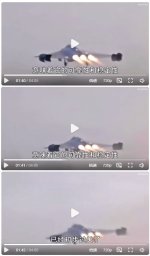
 and if I'm not mistaken
  - right on the beginning and from 1:40 on - it is indeed a brief video clip showing the J-36 taking off with reheat: