You also didn't understand important matters. America wants to thwart the Belt and Road Initiative, and Egypt and the Suez Canal are a key factor. Besides, China is already pumping large investments into exporting Chinese products from Egypt to Europe, Africa, and the United States. It exploits preferential trade agreements. Egypt is one of the countries that opened its markets to Chinese products since the late 1970s. Indeed, China benefited from Egypt's open-door policy, which was incorrectly implemented by Egypt in 1975, with China avoiding Egyptian mistakes. Therefore, development in China succeeded, unlike Egypt, which is led by corrupt regimes. Therefore, development in Egypt is limited. Sisi's agreement between Egypt and China is based on many issues, including preventing the fragmentation and division of countries, calming the situation in East Africa, expelling the US Navy from the southern Red Sea by resolving conflicts, and agreeing on the Palestinian issue and the Taiwan Islands. Neither Egypt nor China wants war, because they are chess players who believe that military conflicts weaken countries. Therefore, Egypt considers military conflict as the last resort.
When I mentioned that China is investing in Sinai ports, logistics zones, and the Suez Canal Economic Zone, The main sea route between the southern Red Sea and Europe is part of the Belt and Road Initiative. Closing it would harm Chinese trade.
To prevent any war between Egypt and Israel, Egypt must possess the deterrent capability to do so.
Egypt is not using China as a pressure tool against the Americans to allow the passage of European arms deals, which have been stalled since 2021.
I gave the example of China and Egypt cooperating on manufacturing programs to obtain weapons in large quantities. I explained in previous responses that Egypt is a gateway for Chinese weapons sales to Arab and African countries. After Egypt purchased 150 F-7 and 90 F-6 fighter jets, the fighters assembled in Egypt were re-exported to Iraq via Jordan and Sudan. The same applies to the H-6 bomber deal in 1976, which China offered to upgrade to Egypt between 2000 and 2009. At that time, China did not possess more modern aircraft.
This YouTuber analyzes a Tactical Report article from March 2025 about the deal for 15 fighter jets. J-20
The disagreement between Egypt and China relates to Egypt's request to carry out maintenance locally, rather than having the Chinese do so.
Integrating the J-20 into the command and control system, just as the MIG-29M fighter jets were integrated, has been under negotiation since 2019.
Egypt is even talking about integrating its AESA radar technology into other air platforms. The article explains that China, as a result of its development of sixth-generation, fifth-generation, and 4++-generation fighters, has no problem exporting them. China will not provide the latest versions of the J-20 to Egypt. This is normal for arms-producing countries to keep some secrets to themselves, not the entire system.
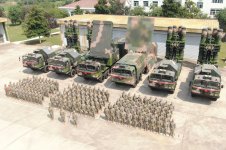
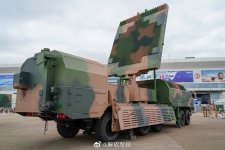
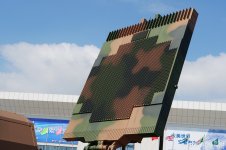
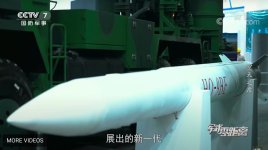
The Americans are objecting to the deal and are trying to sabotage it under the pretext of pressure. Egypt responded to the Americans by refusing, and the Americans forced the Europeans not to sell the EUROFIGHTER TYPHOON fighter jets to Egypt, as well as to export FREMM frigates and air defense systems. Even the pressure of delaying the delivery of Rafale fighters and the full requirement for ammunition was met with an announcement of deals. Arms with China as a pressure card does not mean abandoning Chinese weapons, as they represent the amount of armament in Egypt, which cannot be obtained in the same quantities from America or Europe. Egypt made it clear to America that its bias towards Israel is unacceptable and that Egypt will raise its relations with other countries as long as relations with America do not meet Egyptian needs, whether investments or pressure cards that America has used against Egypt, such as the Gulf. Egypt also cooperated with Iran as a pressure card against the Gulf and Israel. Egypt may appear to care about American objections, but in reality, Egypt simply rejects the relationship with North Korea, which continues to this day militarily. When America exerted pressure on Egypt, it announced its severance, but in reality, the same thing does not happen. The weapons that Egypt was subjected to under CAATSA are not actually canceled, but they suggest that the deals are frozen or canceled. Simply put, in exchange for the Sukhoi deal, Egypt was supposed to have the F-15EX, and as long as the American deals have not been completed, it is natural that Egypt will not give up the Sukhoi 35. There is constant media manipulation and deception, but countries are looking out for their own interests, and pressure is being applied. Overcoming it, Egypt is not an occupied country with American bases, like some countries that were forced to do so when images of the Chinese H-200 radar, which has been in operation since 2005, showed. It is quite natural for these systems to be re-developed and integrated into newer systems, as long as the SA-2 systems have been retired. Therefore, when leaks emerged about Egypt possessing systems like the HQ-9, this remained within this framework.
Another point that has escaped some people's attention is China's production of J-16/20 fighters, at a rate of 100 for each model. It is the main one on the production line. China has become saturated with J-10 fighters, so basically, it is...
Egypt is moving toward heavy fighters because future battles and the command of heavy fighters for UCAV aircraft, which requires fighters with longer range and longer air endurance, change countries' fighter requirements. The J-10C tactical fighter is in demand for Egypt because Israel is adjacent to Egypt, and the consumption of tactical fighters is high in war, and rapidly as a result of violent clashes. Therefore, Egypt's focus has been on tactical fighters during the peace period. 1982-2015: Egypt shifted to twin-engine fighter jets in new deals. Things are not as advertised at arms fairs or in the media, as they are all controlled and convey what countries want, not the full facts. The Americans themselves are well aware that Egypt, in return for its interests, will ignore any American pressure. Rather, Egypt uses its international relations with other countries as a message to the American side: If your relationship with Egypt is not beneficial, expelling the Americans from Egypt will be much faster than expelling the Soviets from Egypt in 1972.
Egypt has begun to demand technology transfer, not just weapons purchases, and to become part of the international supply chain for weapons and their components. Therefore, what Egypt requests from France, it requests from all countries, including South Korea, Turkey, and China. Egypt is maneuvering among all countries to meet its requirements, whether military or even industrial.
View attachment 112779