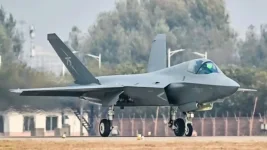
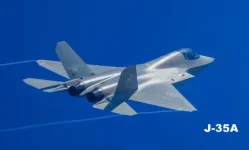
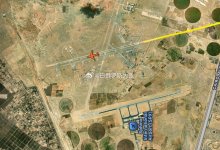
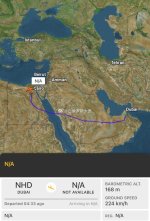
The Egyptian Air Force is evaluating the Chinese stealth J-35A
View attachment 122667
May 21, 2025:
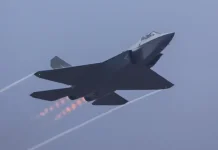
During the recently held "Eagles of Civilization Eagles" atmosphere in Egypt, the commander of the Egyptian Air Force, Lieutenant General Mahmoud Fouad Abdel Gawad, raised the attention of Chinese media when he personally expressed a strong interest in the Chinese ghost fighter from the fifth generation J-35. Rather, he went to the extent of the proposal of an official visit to China to inspect this plane closely, in a clear indication of a significant possible transformation in Egypt's future strategy to acquire combat aircraft.
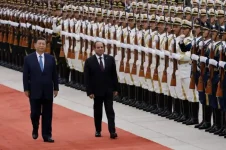
This trend is not the result of the moment, but rather is based on a previous visit by Lieutenant General Abdel-Gawad to China in July 2024, where he celebrated the 45th anniversary of cooperation between the Egyptian Air Force and its Chinese counterpart, during which he commended the Chinese combat aircraft and air combat systems, and also showed clear interest in platforms such as J-10C and J-35. This coincided with previous reports of Egypt's assessment of the J-10CE plane and Chinese air defense systems such as HQ-9Be, indicating an increasing rapprochement in the Egyptian Air Force track with Beijing.
This comes at a critical time, after Pakistan confirmed the use of J-10C aircraft to shoot down the Indian "Rafale" fighters, which strengthened the attractiveness of Chinese platforms, especially with the Air Force in the Middle East, which closely monitors the regional air force balance transformations.
During the July 2024 visit, Lieutenant General Abdel-Gawad, led by the Air Force of the Chinese People's Liberation Army, met, looked at a number of advanced aircraft, and took a picture in front of the stealth fighter J-20. He praised the J-10C and J-16 fighters, and expressed his apparent admiration for the design of J-20 and its strategic capabilities, as well as closely continued the developments of China in the areas of early warning aircraft and fuel-refueling systems. This visit was a turning point in Egypt's future directions in the field of air armament, and reactivated the acquisition of Chinese systems, including its previous evaluation of the long-term HQ-9Be system, as part of Cairo's efforts to diversify the sources of arming away from the traditional dependence on Western suppliers.
View attachment 122668
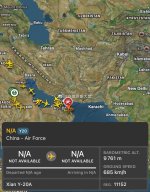
China has sent to Egypt during the "Civilization Eagles 2025" exercise an advanced set of aircraft, including J-10C and J-10 fighters, early warning aircraft KJ-500, and Y-20 fuel platforms. This exercise allowed the Egyptian crews closely to the integrated combat doctrine of China, including the concepts of engagement behind the extent of vision, multi -platform coordinated attacks, and linking data between the sensor and the fire outlet in real time.
Chinese media reported that the Egyptian side expressed great admiration for the performance of Chinese aircraft, especially with regard to the accurate ability to hit targets, the flexibility of driving systems, and the concept of "AG Guides B" where a plane directs other plane ammunition. During this same exercise, the team, Abdel-Gawad, submitted a personal request to Chinese officials to visit China again and preview the J-35.
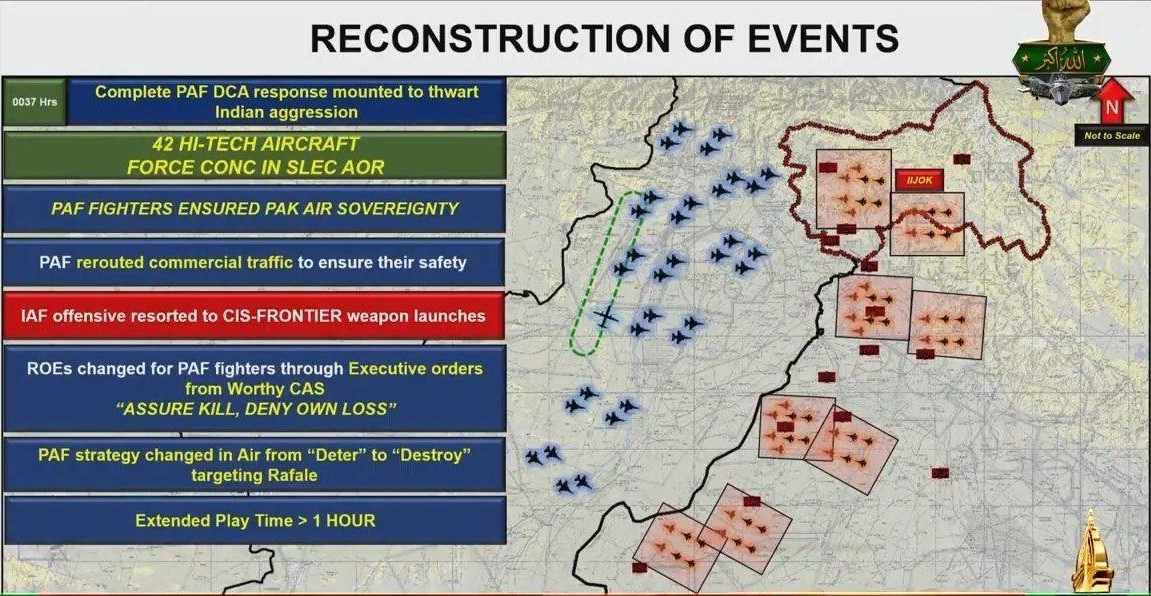
The team's conviction increased the capabilities of Chinese fighters after its practical experience in the battlefield. In the last conflict between India and Pakistan, the Pakistani Air Force J-10Ce aircraft has succeeded in shooting down several Indian "Rafale" fighters, which is one of the French aircraft classified among the best 4.5 generation fighters globally. This is the first confirmed combat projection of J-10CE, and a strategic landmark in the Chinese military aviation march.
This incident caused a shock to military analysts in the world, and proved the efficiency of China radars, missiles and sensors, and showed that advanced Chinese aircraft are able to excel in the face of NATO fighters. For countries like Egypt, which historically relied on a mixture of American, French and Russian aircraft, Pakistani success was a strong incentive to reassess its future options.
This Egyptian transformation is closely followed in Israel. The Israeli air forces, which operate the F-35i "Edir" ghosts, and have one of the most advanced air networks, view the possibility of entering the J-35 to the Egyptian fleet as a threat to regional balance. It has already started studying the success of J-10Ce in South Asia, and is being evaluated by how Chinese ghostly fighters may affect their traditional air superiority.
View attachment 122669
Chinese early warning systems have developed significantly, transcending in some aspects its counterparts that China had previously been seeking to import from Israel before the United States intervened to stop these deals.
The growing fear now is that China technology in navigation, fighters designed to reduce the radar fingerprint, and air command centers equipped with ASA, the Egyptian Air Force, can possess a new ability to stay and kill the battlefield, which would complicate the strategic accounts of Israel.
Pakistan's experience in the use of Chinese platforms, especially J-10CE, has changed the world's view of these weapons, which are no longer just theoretical alternatives, but rather tools that have proven efficient in the fields of fighting. This has strengthened the credibility of China in the arms market, especially among the countries of the Middle East, which are looking for effective alternatives in terms of cost compared to Western aircraft that are often associated with political restrictions.
Egypt is a clear example of this transformation. While it had previously held military partnerships with France and the United States via Rafale and F-16 fighters, the repercussions of the air battle between India and Pakistan pushed the Chinese platforms to the interface of strategic options.
Countries such as Saudi Arabia, Algeria and the UAE are following this Egyptian transformation with great interest. It became clear that Chinese weapons are no longer a "second degree", but rather are now considered reliable deterrent tools, and if necessary, military decisiveness tools.
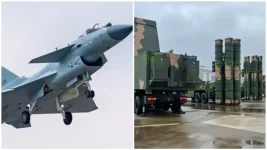
Reports from several defensive sources indicate that Egypt has shown great interest in the J-10C fighter and the HQ-9Be air defense system. J-10Ce is with its advanced electronic systems and combat capabilities an important tributary to strengthen the Egypt fleet of multi-task fighters, while HQ-9BE, a long-range air defense system, offers an effective and low-cost alternative compared to Western systems such as American Patriot.
View attachment 122671
With the increasing complexity of the security scene in the Middle East, Egypt is looking to diversify the sources of arming it, and HQ-9Be is an ideal choice thanks to its advanced radars and its long interception, which enhances Egypt's ability to address modern air threats. The Chinese technology also provides greater flexibility in modernization and future support, which is in line with Egypt's desire for greater independence in its defensive strategy.
Despite its strong relations with Western weapons suppliers, the F-16 fighter fleet faces increasing challenges, due to its age and its lack of long-range air-to-air missiles and advanced sensors compared to fifth generation fighters or 4.5. With the development of the nature of the air fighting, the F-16 becomes less able to confront opponents who possess superior rocket-propelled systems and radars, putting Egypt in an uncomfortable position in the event of a regional conflict.
In recent years, Egypt has invested in the French Rafale fighters, which is characterized by its multiple multiple capabilities, but the excessive dependence on the Raval revealed some limitations. Egypt does not possess long-range air-to-air missiles on these aircraft, which may weaken its position in the battles that require engagement from a long time and air hide. Also, the connection of the Raval with French supply chains restricts Cairo with the Paris foreign policies, which makes it vulnerable to geopolitical transformations.
In light of the success of the Pakistani Air Force using the Chinese J-10CE fighters against the Indian Raval, Egypt reconsidates its options, including the expansion of the acquisition of Chinese ghost fighters to counter the increasing weather threats. The team's recent request reflects the J-35 inspection, in addition to his previous visit and his continuous praise of the Chinese air systems, a deep institutional transformation within the Egyptian Air Force.
What started as leaks today is supported by real field experiences, operational performance data, and strategic repositioning. The Pakistani combat experience has contributed to accelerating this trend, prompting many Middle Eastern countries to reconsider their weapons style.
And if Egypt decides to move forward with the acquisition of Stealth fighters such as J-35, this will not only reshape its air combat belief, but will constitute a direct challenge to Israel's aerial superiority in the region. A single air battle may have changed the global view of the superiority of the fighters, and the Chinese series "J" is approaching the new center of gravity in the fighting world.





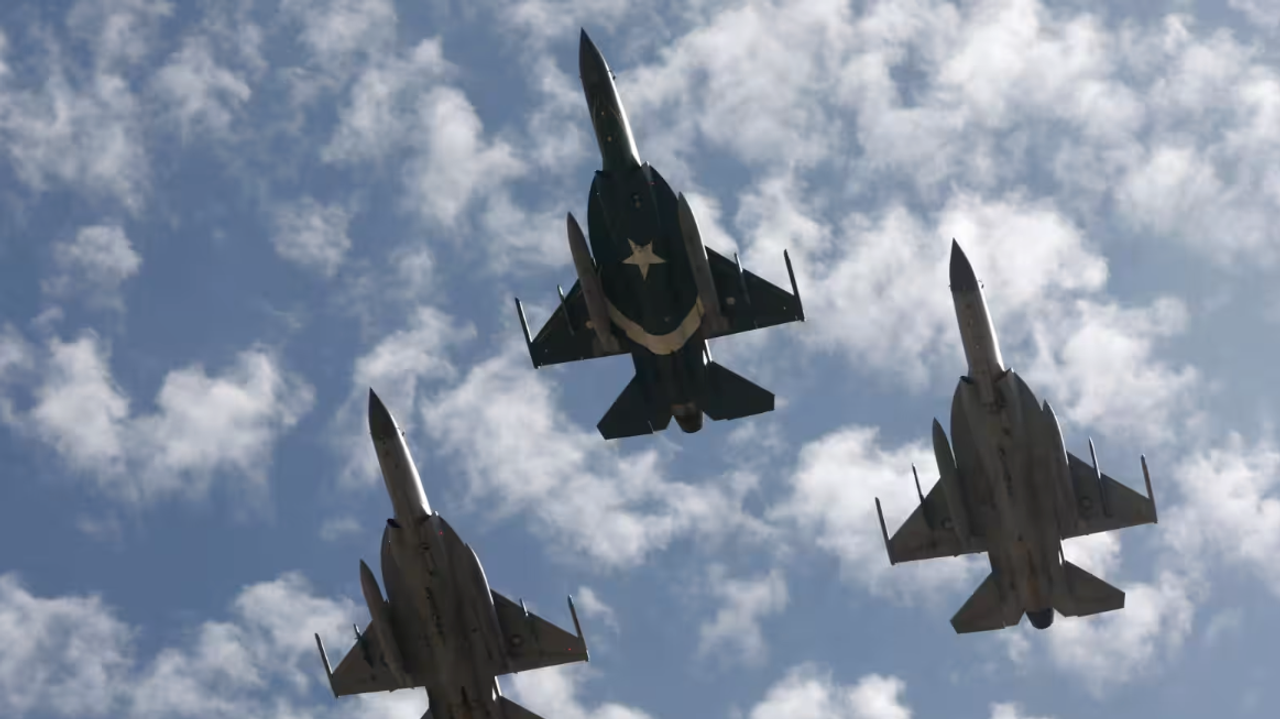


 . Rafale, MIG-29, F16 and maybe Chinese fighters in the future?