Egyptian Armed Forces

We are talking about the FA-50.. and you switched to economy..

Thing you have no idea of Egypt's economy is double when you take into account the dark economy.. and beyond that..Egypt's economy is linked directly to GCC economy.. keep your negative thoughts for yourself next time as you are showing a lot of ignorance on the MR here..

Be it South Korea. Japan or China.. without the Western capital and technological input you wouldn't be where you are now.. So keep that as a secret... and don't be too arrogant here..
Wow, apparently understanding that building a decent military industry requires a strong economy isn’t considered common sense here. Oops—my bad. If that’s too hard to grasp, just look at Russia: despite having less than half of Japan’s GDP, its military industry is struggling. They handcraft just 7–9 Su-57s, haven’t produced a single warship over 6,000 tons, and can’t even repair their only aircraft carrier. So, take a look at your country’s GDP and military equipment, and fits it into Russia’s model.

As for Egypt’s economy, I’ll admit—I’m pretty much in the dark. All I’ve seen is that, according to Wikipedia, its GDP in 2025 will be $347 billion. Now Pardon my ignorance, lecture me about Egypt's dark/GCC economy and help to answer those question below. Aslo bring GCC countries in if it will help to answer it.
  • What Egyptian companies are known worldwide?
  • What high-quality industrial products does Egypt offer on the global market?
  • What advanced technologies is Egypt capable of producing right now?

BTW, if you want to know the answer of those three questions for China, Japan, or South Korea. I'm happy to provide you one, but it will be a very very very long list.


original-1544855196684.jpg
 
Why you like to write such long responses without proper paragraph breaks? It's really hard to read—especially the last part.

First of all, buying FA-50s—not 36, not 56, but 100! What kind of air force buys 100 FA-50s?
A. Country with a tiny budget and nearly no existing air power. they want to buy a number of FA-50s to train pilots and maybe drop a few bombs on terrorists in the forest at same time, since they cant afford anything more.
B. The air forces that want just a few high-performance trainers to complete their advanced pilot training programs.

So what is Egypt doing buying 100 of them? Is your enemy some ragtag group hiding in the forest? Or do you have such a massive air force that you actually need 100 advanced trainers? I don’t think so.

If your opposing force is even more powerful than the Pakistan Air Force (PAF), then FA-50s will just be expensive flying targets—burning your already tight budget.


Did you even look closely at the May 7th air fight? That wasn’t just another skirmish—it was the biggest air combat engagement since the 1982 Lebanon War (Bekaa Valley Air Battle). And this time, there was no unfair tech advantage. India used the most advanced European fighter available—the Rafale, which, by the way, Egypt just spent a fortune on.

India launched about 80 aircraft in a coordinated combat formation. Can Egypt’s air force even get 80 planes in the air at once today? You wish the Egyptian Air Force could do what the IAF pulled off that night.
98c681f259c5e615.jpeg

To view this content we will need your consent to set third party cookies.
For more detailed information, see our cookies page.


Yeah, sure. You’ll definitely crush the J-10CE + PL-15E combo with 100 F-35s + AIM-120D-3.


I’m not sure what kind of Chinese cars you saw in Egypt that gave you that impression. But with Egypt’s current economy, I can say with 100% confidence that you will not seeing those chinese car models on the streets of China.

20k USD class Economy car for normal Chinese family.
To view this content we will need your consent to set third party cookies.
For more detailed information, see our cookies page.

40k USD class car for middle class Chinese family.
To view this content we will need your consent to set third party cookies.
For more detailed information, see our cookies page.

60k USD class car for middle-upper class Chinese family.
To view this content we will need your consent to set third party cookies.
For more detailed information, see our cookies page.

Here are the FORD CFO
To view this content we will need your consent to set third party cookies.
For more detailed information, see our cookies page.


I didn't mention the Korean FA-50, which is more of an advanced trainer, a light fighter for numerical increase, clearing the skies of drones, and using it for air patrols on the Sudanese and Libyan borders, which lack real air-to-air weapons. Even a real alternative to the F-16 would be a medium fighter with 25% more performance. Therefore, we're talking about fighters like the KF-21/FC-35AE.
Egypt considers the J-10CE, even with its best upgrades, a modern alternative to the MIG-21/F-7 fighter. It's not suitable for missions deep in the Mediterranean or against Ethiopia, so an air brigade for air defense missions may be required, but nothing more. The focus will be on medium-heavy fighters.
For 50 years, Chinese products have been synonymous with cheap, low-quality products. I cited the example of the miserable F-6 and even the reliability of the K-8E, which Egypt invested a long time in rehabilitating for reliable service in the Egyptian Air Force. This is the reason for Egypt's reluctance to purchase the aircraft. The L-15 is an alternative to previous bad experience.
Chinese cars, such as Chery, which Egypt has been producing for the past twenty years, are poor vehicles. Most Chinese car brands only last two years in the Egyptian market and then disappear. Japanese cars are preferred by middle-class families in Egypt. Low incomes are the reason for Chinese cars entering the Egyptian market, and they have very low resale prices. You may offer a good product, but the important thing is performance. You are trying to promote that the Chinese product is better, and this does not convince people. Just one small battle with India. So why did Egypt hold training exercises with China? Because it does not trust Chinese propaganda, it requested to test Chinese products during what is close to real-world clashes.
Chinese products are not reliable until they have been tested for a period and guarantees of continuity. As I explained previously, China has a path and greater effort ahead after the PL-15 missile's capabilities were exposed and fell into the hands of India and the West. This is similar to the MIG-21 aircraft falling into the hands of the Americans in the 1960s to neutralize its capabilities.
 
I didn't mention the Korean FA-50, which is more of an advanced trainer, a light fighter for numerical increase, clearing the skies of drones, and using it for air patrols on the Sudanese and Libyan borders, which lack real air-to-air weapons. Even a real alternative to the F-16 would be a medium fighter with 25% more performance. Therefore, we're talking about fighters like the KF-21/FC-35AE.
Egypt considers the J-10CE, even with its best upgrades, a modern alternative to the MIG-21/F-7 fighter. It's not suitable for missions deep in the Mediterranean or against Ethiopia, so an air brigade for air defense missions may be required, but nothing more. The focus will be on medium-heavy fighters.
For 50 years, Chinese products have been synonymous with cheap, low-quality products. I cited the example of the miserable F-6 and even the reliability of the K-8E, which Egypt invested a long time in rehabilitating for reliable service in the Egyptian Air Force. This is the reason for Egypt's reluctance to purchase the aircraft. The L-15 is an alternative to previous bad experience.
Chinese cars, such as Chery, which Egypt has been producing for the past twenty years, are poor vehicles. Most Chinese car brands only last two years in the Egyptian market and then disappear. Japanese cars are preferred by middle-class families in Egypt. Low incomes are the reason for Chinese cars entering the Egyptian market, and they have very low resale prices. You may offer a good product, but the important thing is performance. You are trying to promote that the Chinese product is better, and this does not convince people. Just one small battle with India. So why did Egypt hold training exercises with China? Because it does not trust Chinese propaganda, it requested to test Chinese products during what is close to real-world clashes.
Chinese products are not reliable until they have been tested for a period and guarantees of continuity. As I explained previously, China has a path and greater effort ahead after the PL-15 missile's capabilities were exposed and fell into the hands of India and the West. This is similar to the MIG-21 aircraft falling into the hands of the Americans in the 1960s to neutralize its capabilities.
“Using it for air patrols on the Sudanese and Libyan borders, which lack real air-to-air weapons.”
Wait... you're buying 100 advanced fighters for border patrols—against countries with no real air force? That’s like bringing a tank to chase sheep. and you need 100 of them? You know there's UAV for this right?

"Egypt considers the J-10CE, even with its best upgrades, a modern alternative to the MiG-21/F-7."
Sure, but this “modern alternative” of F-7 flies with PL-15E missiles and AESA radar. In a 4.5gen fight, it took out Rafales at 120+ km, without the Rafale pilot even realizing they’re targeted.

"It's not suitable for missions deep in the Mediterranean or against Ethiopia."
Pardon my ignorance, so Ethiopia is Egypt’s main enmey? Not Israel? You do realize Ethiopia is 2,500 km away, right? what combat aircraft have combat radius of 2500km?? Plus, Ethiopia is a landlocked country—you can’t even reach it without flying through other nations’ airspace!
blow-mind-mind-blown.gif


“Just one small battle with India.”
Look into my eyes, tell me, bro, tell me! Can Egypt air force even get 80 combat aircrafts into the air at same time, in a combat formation, today?

Massive India-Pakistan clash in skies involved 125 jets, largest "dogfight" since WW2

"China has work ahead after the PL-15's capabilities were exposed to India and the West."
Exposed? Please. The PL-15E isn’t some “Death Star” secret. If you want to study it, go to the Zhuhai Air Show, buy a few J-10CEs, grab a batch of PL-15Es, disassemble five for R&D, and you still have some left to hunt Rafales. All for less than the cost of three Rafales at $280M a pop.
 
Last edited:
“Using it for air patrols on the Sudanese and Libyan borders, which lack real air-to-air weapons.”
Wait... you're buying 100 advanced fighters for border patrols—against countries with no real air force? That’s like bringing a tank to chase sheep. and you need 100 of them? You know there's UAV for this right?

"Egypt considers the J-10CE, even with its best upgrades, a modern alternative to the MiG-21/F-7."
Sure, but this “modern alternative” of F-7 flies with PL-15E missiles and AESA radar. In a 4.5gen fight, it took out Rafales at 120+ km, without the Rafale pilot even realizing they’re targeted.

"It's not suitable for missions deep in the Mediterranean or against Ethiopia."
Pardon my ignorance, so Ethiopia is Egypt’s main enmey? Not Israel? You do realize Ethiopia is 2,500 km away, right? what combat aircraft have combat radius of 2500km?? Plus, Ethiopia is a landlocked country—you can’t even reach it without flying through other nations’ airspace!
blow-mind-mind-blown.gif


“Just one small battle with India.”
Look into my eyes, tell me, bro, tell me! Can Egypt air force even get 80 combat aircrafts into the air at same time, in a combat formation, today?

Massive India-Pakistan clash in skies involved 125 jets, largest "dogfight" since WW2

"China has work ahead after the PL-15's capabilities were exposed to India and the West."
Exposed? Please. The PL-15E isn’t some “Death Star” secret. If you want to study it, go to the Zhuhai Air Show, buy a few J-10CEs, grab a batch of PL-15Es, disassemble five for R&D, and you still have some left to hunt Rafales. All for less than the cost of three Rafales at $280M a pop.

In a clash Egypt Airforce will be as Indians, look to ther equipments like India :ROFLMAO:. Rafale, MIG-29, F16 and maybe Chinese fighters in the future?

IF you read the reason why they have lost the battle is because off this stupid mix off fighters. Pakistan vice versa they sticked to 1 supplier, J10 and JF17. Ther Chinese Awacs and ther Chinese Airdefence systems.

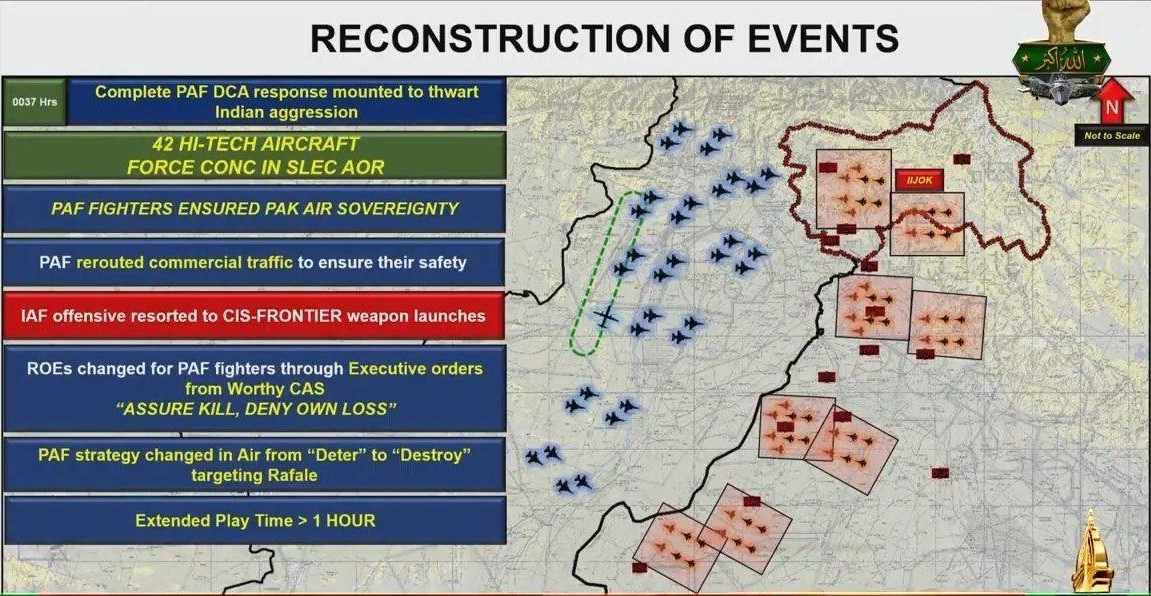
What does this do with the war was Pakistan was doing network centric warfare.

1747264037720.png

It was not only the strong J10 radar and PL15 missile. If you compare Egyptian airforce with India. Ther destiny will be the same:ROFLMAO:. SU30, Rafale, Israel airdefence systems and S400 what else do they have?

Egyptians have Russians and they are going for German Iris systems. This is cluster fak tactics what does not work and this is proven by Indians.

This sami guy do not understand what modern warfare is, he is unguided projectile who write things:ROFLMAO:.


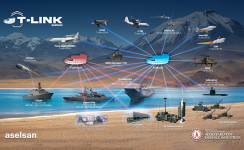
Kudos to China, they have a good Network Centric Warfare systems.
 
Wow, apparently understanding that building a decent military industry requires a strong economy isn’t considered common sense here. Oops—my bad. If that’s too hard to grasp, just look at Russia: despite having less than half of Japan’s GDP, its military industry is struggling. They handcraft just 7–9 Su-57s, haven’t produced a single warship over 6,000 tons, and can’t even repair their only aircraft carrier. So, take a look at your country’s GDP and military equipment, and fits it into Russia’s model.

As for Egypt’s economy, I’ll admit—I’m pretty much in the dark. All I’ve seen is that, according to Wikipedia, its GDP in 2025 will be $347 billion. Now Pardon my ignorance, lecture me about Egypt's dark/GCC economy and help to answer those question below. Aslo bring GCC countries in if it will help to answer it.
  • What Egyptian companies are known worldwide?
  • What high-quality industrial products does Egypt offer on the global market?
  • What advanced technologies is Egypt capable of producing right now?

BTW, if you want to know the answer of those three questions for China, Japan, or South Korea. I'm happy to provide you one, but it will be a very very very long list.


View attachment 120290
Actually Russia is doing well and outdo Europe in all military manufacturing.. you seem to be more expert than experts stating this all over the world..

Egypt and GCC seek self sufficiency, R&D, Systems' integration..upgrading their weapon systems continuously ...etc

Economy-wise Egypt has the higher GDP in Africa..there are only Egypt, South Africa and Nigeria exchanging that top place from time to time..

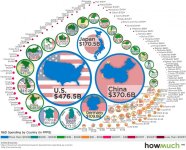
Your figure depicts What the US did to those countries to have them at the top of the world..the Marshal plan wasn't just for Europe..it included Japan, South Korea, and later China..
 
In a clash Egypt Airforce will be as Indians, look to ther equipments like India :ROFLMAO:. Rafale, MIG-29, F16 and maybe Chinese fighters in the future?

IF you read the reason why they have lost the battle is because off this stupid mix off fighters. Pakistan vice versa they sticked to 1 supplier, J10 and JF17. Ther Chinese Awacs and ther Chinese Airdefence systems.

What does this do with the war was Pakistan was doing network centric warfare.

View attachment 120812

It was not only the strong J10 radar and PL15 missile. If you compare Egyptian airforce with India. Ther destiny will be the same:ROFLMAO:. SU30, Rafale, Israel airdefence systems and S400 what else do they have?

Egyptians have Russians and they are going for German Iris systems. This is cluster fak tactics what does not work and this is proven by Indians.

This sami guy do not understand what modern warfare is, he is unguided projectile who write things:ROFLMAO:.


Kudos to China, they have a good Network Centric Warfare systems.
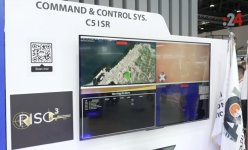
Unlike India..Egypt has its own integration system for all its weapon system.. it is called RISC2 and now was upgraded to RISC3

WDS 2022: Details emerge on Egypt's RISC3 C5I system​


1747435477579.jpeg

The Egyptian military operates a disparate fleet of aircraft from a variety of countries, including French Dassault Rafales, American Lockheed Martin F-16C/Ds, Northrop Grumman E-2C Hawkeye airborne early warning and control (AEW&C) aircraft, as well as Russian-made MiG-29M/M2 aircraft. As a result, distributing data that comes from a wide variety of standards and security is a complex task.

The RISC2 C4 system was first revealed in 2018, and was developed by Egyptian engineers from AOI to help overcome the challenges created in force management and control, and has now been upgraded to integrate civil air traffic management, naval platforms and systems, as well as de-conflicting artillery fires from flight paths.


https://www.janes.com/osint-insight...022-details-emerge-on-egypts-risc3-c5i-system


It is an indigenous (command, control, communications, computer, cyber, intelligence surveillance and reconnaissance) C5ISR system that can interact with both western and eastern defence systems.

1747436041289.jpeg

The “C5ISR can deal with hybrid defence systems from different countries and following different protocols.” This is essential for Egypt which operates several platforms from across the world.

Egypt operates air defence radars [of] US, Chinese, Ukrainian, Russian and British origins, so we have been trying to collect the data from these sources in one system for operational efficiency,” Badawi said.

Likewise, Egypt’s air force operates aircraft from several manufacturers which include French-made Rafale and Mirage fighter jets and American F-16 Block 52 fighters, AH-64D Apache Longbow helicopters, and early warning E-2C Hawkeye planes. It also operates Eastern-origin aircraft including MiG-29M fighter jets, Ka-52 Alligator armed reconnaissance helicopters and Mi-24 combat multirole helicopters.

Thus, coordinating the operations of these disparate defence systems from different origins may be difficult during military activities.

ACME SAICO, Integrated Engineering Systems had earlier 2018 designed the RISC2 (Radar Integration and Surveillance Command Center) version of the system, which was upgraded to RISC 3 so it could perform combined missions with radars, missiles, aircraft, land forces, and counter-terrorism.

A further iteration, the RISC3 for aircraft operations, and other versions called CTC2 (Counter Terrorism Command Center) for land vehicle operations, and NAVC3 (Navy Combined command Center) for naval vessel operations.

“The system is operational and certified with Egyptian armed forces, it was integrated on all operational aircraft with the air force and will be in the aircraft to be received by them,” Badawi said.

Although there is little public knowledge about this system, however, the tech employs “interface layers,” which are basically a separate hardware and software bundle that acts like an interpreter, Badawi said. “For example, if you want to share information between a Rafale and a MiG-29, which use different types and formats of data, you need an interface layer, which receives data from both aircraft, translates them into each other’s ‘language’ and sends to the recipient. Needless to say, this process needs to be executed in real-time.”

Egypt is in the process of integrating the systems on land vehicles up to MRAP vehicles. Meanwhile, since last year, Egypt and Lockheed Martin are collaborating on a more advanced C6ISR development.


https://www.military.africa/2023/02/egypt-unveils-hybrid-c5isr-system-at-idex-2023/

RISC3​

Radar Integration and Surveillance Combined Command Center Ver 3.0


Area & Sector (Operation-tactical) Level​


  • C5ISR (Command – Control – Communication – Computer – Cyber security – Intelligence – Surveillance – Reconnaissance).

  • Development of the RISC2 system to manage combined operations with :
– Radar systems

_ Civil

_ Military

_ Coastal

_ Weather

_ Personal

– Missiles

_ Surface

_ Air

– Ground Control Interceptor

  • Full Integration of :
– MEZ (Missile Engagement Zone)

– Surveillance

– Weapon Assignment

– GCI (Ground Control Interceptor)

– Flight Plan

– Safety Net

– Threat Evaluation

– Threat Management

  • Full collaboration between:
– Land force units

– Navy units

– Air force units

– Air defense units


Beyond that Egypt operates only 50 Mig-29M-M2


* You failed to talk about 220 Egyptian F-16s up to block 52.. unlike India..
Do you have a complex about that..or you just wanted to compare apples with oranges..!?
 
Unlike India..Egypt has its own integration system for all its weapon system.. it is called RISC2 and now was upgraded to RISC3

WDS 2022: Details emerge on Egypt's RISC3 C5I system​


View attachment 121460

The Egyptian military operates a disparate fleet of aircraft from a variety of countries, including French Dassault Rafales, American Lockheed Martin F-16C/Ds, Northrop Grumman E-2C Hawkeye airborne early warning and control (AEW&C) aircraft, as well as Russian-made MiG-29M/M2 aircraft. As a result, distributing data that comes from a wide variety of standards and security is a complex task.

The RISC2 C4 system was first revealed in 2018, and was developed by Egyptian engineers from AOI to help overcome the challenges created in force management and control, and has now been upgraded to integrate civil air traffic management, naval platforms and systems, as well as de-conflicting artillery fires from flight paths.


https://www.janes.com/osint-insight...022-details-emerge-on-egypts-risc3-c5i-system


It is an indigenous (command, control, communications, computer, cyber, intelligence surveillance and reconnaissance) C5ISR system that can interact with both western and eastern defence systems.

View attachment 121461

The “C5ISR can deal with hybrid defence systems from different countries and following different protocols.” This is essential for Egypt which operates several platforms from across the world.

Egypt operates air defence radars [of] US, Chinese, Ukrainian, Russian and British origins, so we have been trying to collect the data from these sources in one system for operational efficiency,” Badawi said.

Likewise, Egypt’s air force operates aircraft from several manufacturers which include French-made Rafale and Mirage fighter jets and American F-16 Block 52 fighters, AH-64D Apache Longbow helicopters, and early warning E-2C Hawkeye planes. It also operates Eastern-origin aircraft including MiG-29M fighter jets, Ka-52 Alligator armed reconnaissance helicopters and Mi-24 combat multirole helicopters.

Thus, coordinating the operations of these disparate defence systems from different origins may be difficult during military activities.

ACME SAICO, Integrated Engineering Systems had earlier 2018 designed the RISC2 (Radar Integration and Surveillance Command Center) version of the system, which was upgraded to RISC 3 so it could perform combined missions with radars, missiles, aircraft, land forces, and counter-terrorism.

A further iteration, the RISC3 for aircraft operations, and other versions called CTC2 (Counter Terrorism Command Center) for land vehicle operations, and NAVC3 (Navy Combined command Center) for naval vessel operations.

“The system is operational and certified with Egyptian armed forces, it was integrated on all operational aircraft with the air force and will be in the aircraft to be received by them,” Badawi said.

Although there is little public knowledge about this system, however, the tech employs “interface layers,” which are basically a separate hardware and software bundle that acts like an interpreter, Badawi said. “For example, if you want to share information between a Rafale and a MiG-29, which use different types and formats of data, you need an interface layer, which receives data from both aircraft, translates them into each other’s ‘language’ and sends to the recipient. Needless to say, this process needs to be executed in real-time.”

Egypt is in the process of integrating the systems on land vehicles up to MRAP vehicles. Meanwhile, since last year, Egypt and Lockheed Martin are collaborating on a more advanced C6ISR development.


https://www.military.africa/2023/02/egypt-unveils-hybrid-c5isr-system-at-idex-2023/

RISC3​

Radar Integration and Surveillance Combined Command Center Ver 3.0


Radar Integration and Surveillance Combined Command Center Ver 3.0


Area & Sector (Operation-tactical) Level​


  • C5ISR (Command – Control – Communication – Computer – Cyber security – Intelligence – Surveillance – Reconnaissance).

  • Development of the RISC2 system to manage combined operations with :
– Radar systems

_ Civil

_ Military

_ Coastal

_ Weather

_ Personal

– Missiles

_ Surface

_ Air

– Ground Control Interceptor

  • Full Integration of :
– MEZ (Missile Engagement Zone)

– Surveillance

– Weapon Assignment

– GCI (Ground Control Interceptor)

– Flight Plan

– Safety Net

– Threat Evaluation

– Threat Management

  • Full collaboration between:
– Land force units

– Navy units

– Air force units

– Air defense units


Beyond that Egypt operates only 50 Mig-29M-M2


* You failed to talk about 220 F-16 up to block 52.. unlike India..
Do you have a complex about that..or you just wanted to compare apples with oranges..!?
Clearly some people are ignorant of what Egypt has accomplished with its own networking system.
 
Speaking of game changing weapons. China is currently doing r and d for its future h20 stealth bomber. It’ll basically phase out all h6 bomber and other plane variants in plaaf service. The eaf has valuable experience with the older Soviet Tu-16 and h6 bombers in the Cold War days and the 1990s. They should’ve never given up on those strategic aircrafts since it gives a military edge to the eaf against other nearby states. If not given up then retired from active service in some warehouse in the country. Frankly they must capitalize on either buying those highly upgraded h6’s from China when the time arrives or pull the old airframes out of shelf and conduct massive refurbishment and upgrading along with their Chinese counterparts.
 
“Using it for air patrols on the Sudanese and Libyan borders, which lack real air-to-air weapons.”
Wait... you're buying 100 advanced fighters for border patrols—against countries with no real air force? That’s like bringing a tank to chase sheep. and you need 100 of them? You know there's UAV for this right?

"Egypt considers the J-10CE, even with its best upgrades, a modern alternative to the MiG-21/F-7."
Sure, but this “modern alternative” of F-7 flies with PL-15E missiles and AESA radar. In a 4.5gen fight, it took out Rafales at 120+ km, without the Rafale pilot even realizing they’re targeted.

"It's not suitable for missions deep in the Mediterranean or against Ethiopia."
Pardon my ignorance, so Ethiopia is Egypt’s main enmey? Not Israel? You do realize Ethiopia is 2,500 km away, right? what combat aircraft have combat radius of 2500km?? Plus, Ethiopia is a landlocked country—you can’t even reach it without flying through other nations’ airspace!
blow-mind-mind-blown.gif


“Just one small battle with India.”
Look into my eyes, tell me, bro, tell me! Can Egypt air force even get 80 combat aircrafts into the air at same time, in a combat formation, today?

Massive India-Pakistan clash in skies involved 125 jets, largest "dogfight" since WW2

"China has work ahead after the PL-15's capabilities were exposed to India and the West."
Exposed? Please. The PL-15E isn’t some “Death Star” secret. If you want to study it, go to the Zhuhai Air Show, buy a few J-10CEs, grab a batch of PL-15Es, disassemble five for R&D, and you still have some left to hunt Rafales. All for less than the cost of three Rafales at $280M a pop.
To clarify many things, I originally preferred an advanced training aircraft for Egypt, such as the LCA TEJAS, with an engine developed from the RD-33, especially after the Russians announced that they were developing a version with a thrust capacity of up to 12 tons, and India was offering a wide technology transfer, especially radar. The Egyptians preferred the FA-50 as an advanced training aircraft and a light fighter, not a first-class tactical fighter. Regarding Egypt’s request for 100 aircraft, this is an initial request that may be met with an additional 30 aircraft. You are ignoring the fact that Egypt’s fleet of training aircraft exceeds 436 aircraft, and Egypt owns 45 AlphaJet and 48 L-59 aircraft, in addition to 120-160 K-8 aircraft. Using a light fighter like the FA-50 in large quantities saves on air patrols in operating costs, and even though it is a light aircraft equipped with a cruise missile with a range exceeding 300 kilometers in the first stage, it is a good thing, as the aircraft, with its radar design, will be low. You are forgetting an important matter: the Egyptian Air Force at the beginning The eighties were very big, they had 476 MIG-21 aircraft, 150 F-7. 90 F-6s and 82 MIRAGE-5s were increased to 118 by acquiring used versions from Congo and France, in addition to the fleet of F-16s, F-4Es, and MIRAGE-2000s. 100 light tactical aircraft share components and spare parts with the F-16s, and at a cost of $36 million, this is a good thing. Let's talk about the J-10C. We want it for one purpose: Egypt had a plan to acquire a batch of 50 MIG-35s, in addition to compensating for the losses of the MIG-29M aircraft, estimated at 12 aircraft. Some rumors say that Egypt executed the MIG-35 deal with the Russians without announcing it, after the Russians succeeded in producing the ZHUK-AE radar with a range exceeding 260 kilometers. Also, due to Egypt's desire to acquire the R-77ME missile with a range of 193 kilometers, and to develop 300 other previous R-77 missiles. The Russians also announced the integration of the R-37M missile into the MIG-35 tactical aircraft, as Egypt had requested. 12-52 J-10C aircraft depend on whether the MIG-35 deal was implemented from the outset. It is also in Egypt's interest to continue with the MIG-35, making the local spare parts manufacturing offered by India more economically viable. Russia's flexibility in integrating non-Russian munitions into the aircraft and local reconstruction to replace the MIG-21 overhaul lines with a MIG-29/35 overhaul line. This is the reason Egypt is interested in the Rafale, as the overhaul line and spare parts production will shift from the MIRAGE-5 to the Rafale overhaul line.

We said that the replacement of the Egyptian F-16 will be a fifth-generation fighter. The emergence of the J-35 fighter model and rumors that Egypt has already established a new aircraft factory outside the failed AOI, similar to the way it assembled the J-7 and J-6 fighters in the 1980s, as part of a larger project to rearm African countries in the Horn of Africa and the Nile Basin. China also wants Egypt as an advanced industrial base against its own plans. The Indian Cotton Road and the Struggle of Ancient Civilizations Against America

You look at the matter from the perspective of the J-10C fighter jet competing with the FA-50, and you forget many things: the aircraft also has a role in clearing the airspace of drones and air density, especially since Samar is currently negotiating with France for a comprehensive development of the Rafale aircraft and the purchase of another batch through technology transfer, exploiting the tactical battle in which India lost the Rafale to transfer related technologies to Egypt. Egypt even offered to France to produce advanced training aircraft. It is important for Egypt not to rely on a single country for armaments for many reasons: Egypt will be cut off from a number of its armament sources during wartime; no single country can meet Egypt's needs during wartime; and Egypt cannot trust a single country or a single camp. Once relations with a superpower, Eastern or Western, begin to impose pressure, just as the Soviets and Americans did with Egypt. Therefore, Egypt cannot throw all its eggs in one basket. Furthermore, Egypt's desire to manufacture weapons for Africa is why it is the agent for South Korea. For weapons export to Africa, and therefore we force the Turks to establish arms production lines for export if they want contracts with Egypt. Also, Egypt does not depend, for example, on the Chinese in drones, but rather on local products, and also in cooperation with other countries as a protectionist policy. Also, since Egypt’s requirements for weapons are large, you look at the matter from the interests of China and Egypt’s interests for the Egyptians are more important.

Egypt has requested the production of 1,000 PL-15 missiles as an initial batch for Egypt, as well as 200 missiles for export to Algeria. They will be integrated into air defense systems. China has a problem, as the secrets of the missile have become known to India and Europe after a number of them fell intact, which requires a radical development program to ensure its effectiveness in any future war, because everyone will work to neutralize it. China initially refused, but recently agreed.

Therefore, it has nothing to do with the J-10C aircraft. Egypt was requesting the production of the missile under a separate contract, but of course, there must be Chinese platforms in service with the Egyptian Air Force, even if Egypt integrates it into other fighters, with or without the consent of the countries supplying the fighters. These are matters that are being worked on to overcome any restrictions, and they appear during times of war.
 
Last edited:
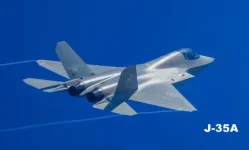
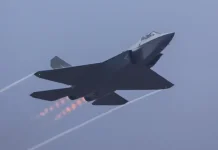
The Egyptian Air Force is evaluating the Chinese stealth J-35A
1747848724806.webp
May 21, 2025:

During the recently held "Eagles of Civilization Eagles" atmosphere in Egypt, the commander of the Egyptian Air Force, Lieutenant General Mahmoud Fouad Abdel Gawad, raised the attention of Chinese media when he personally expressed a strong interest in the Chinese ghost fighter from the fifth generation J-35. Rather, he went to the extent of the proposal of an official visit to China to inspect this plane closely, in a clear indication of a significant possible transformation in Egypt's future strategy to acquire combat aircraft.

This trend is not the result of the moment, but rather is based on a previous visit by Lieutenant General Abdel-Gawad to China in July 2024, where he celebrated the 45th anniversary of cooperation between the Egyptian Air Force and its Chinese counterpart, during which he commended the Chinese combat aircraft and air combat systems, and also showed clear interest in platforms such as J-10C and J-35. This coincided with previous reports of Egypt's assessment of the J-10CE plane and Chinese air defense systems such as HQ-9Be, indicating an increasing rapprochement in the Egyptian Air Force track with Beijing.

This comes at a critical time, after Pakistan confirmed the use of J-10C aircraft to shoot down the Indian "Rafale" fighters, which strengthened the attractiveness of Chinese platforms, especially with the Air Force in the Middle East, which closely monitors the regional air force balance transformations.

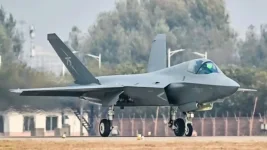
During the July 2024 visit, Lieutenant General Abdel-Gawad, led by the Air Force of the Chinese People's Liberation Army, met, looked at a number of advanced aircraft, and took a picture in front of the stealth fighter J-20. He praised the J-10C and J-16 fighters, and expressed his apparent admiration for the design of J-20 and its strategic capabilities, as well as closely continued the developments of China in the areas of early warning aircraft and fuel-refueling systems. This visit was a turning point in Egypt's future directions in the field of air armament, and reactivated the acquisition of Chinese systems, including its previous evaluation of the long-term HQ-9Be system, as part of Cairo's efforts to diversify the sources of arming away from the traditional dependence on Western suppliers.

1747848836772.webp

China has sent to Egypt during the "Civilization Eagles 2025" exercise an advanced set of aircraft, including J-10C and J-10 fighters, early warning aircraft KJ-500, and Y-20 fuel platforms. This exercise allowed the Egyptian crews closely to the integrated combat doctrine of China, including the concepts of engagement behind the extent of vision, multi -platform coordinated attacks, and linking data between the sensor and the fire outlet in real time.

Chinese media reported that the Egyptian side expressed great admiration for the performance of Chinese aircraft, especially with regard to the accurate ability to hit targets, the flexibility of driving systems, and the concept of "AG Guides B" where a plane directs other plane ammunition. During this same exercise, the team, Abdel-Gawad, submitted a personal request to Chinese officials to visit China again and preview the J-35.

The team's conviction increased the capabilities of Chinese fighters after its practical experience in the battlefield. In the last conflict between India and Pakistan, the Pakistani Air Force J-10Ce aircraft has succeeded in shooting down several Indian "Rafale" fighters, which is one of the French aircraft classified among the best 4.5 generation fighters globally. This is the first confirmed combat projection of J-10CE, and a strategic landmark in the Chinese military aviation march.

This incident caused a shock to military analysts in the world, and proved the efficiency of China radars, missiles and sensors, and showed that advanced Chinese aircraft are able to excel in the face of NATO fighters. For countries like Egypt, which historically relied on a mixture of American, French and Russian aircraft, Pakistani success was a strong incentive to reassess its future options.

This Egyptian transformation is closely followed in Israel. The Israeli air forces, which operate the F-35i "Edir" ghosts, and have one of the most advanced air networks, view the possibility of entering the J-35 to the Egyptian fleet as a threat to regional balance. It has already started studying the success of J-10Ce in South Asia, and is being evaluated by how Chinese ghostly fighters may affect their traditional air superiority.

1747848922206.webp

Chinese early warning systems have developed significantly, transcending in some aspects its counterparts that China had previously been seeking to import from Israel before the United States intervened to stop these deals.

The growing fear now is that China technology in navigation, fighters designed to reduce the radar fingerprint, and air command centers equipped with ASA, the Egyptian Air Force, can possess a new ability to stay and kill the battlefield, which would complicate the strategic accounts of Israel.

Pakistan's experience in the use of Chinese platforms, especially J-10CE, has changed the world's view of these weapons, which are no longer just theoretical alternatives, but rather tools that have proven efficient in the fields of fighting. This has strengthened the credibility of China in the arms market, especially among the countries of the Middle East, which are looking for effective alternatives in terms of cost compared to Western aircraft that are often associated with political restrictions.

Egypt is a clear example of this transformation. While it had previously held military partnerships with France and the United States via Rafale and F-16 fighters, the repercussions of the air battle between India and Pakistan pushed the Chinese platforms to the interface of strategic options.

Countries such as Saudi Arabia, Algeria and the UAE are following this Egyptian transformation with great interest. It became clear that Chinese weapons are no longer a "second degree", but rather are now considered reliable deterrent tools, and if necessary, military decisiveness tools.

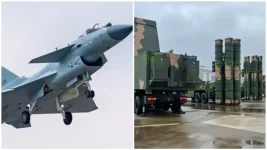
Reports from several defensive sources indicate that Egypt has shown great interest in the J-10C fighter and the HQ-9Be air defense system. J-10Ce is with its advanced electronic systems and combat capabilities an important tributary to strengthen the Egypt fleet of multi-task fighters, while HQ-9BE, a long-range air defense system, offers an effective and low-cost alternative compared to Western systems such as American Patriot.

1747848988028.webp

With the increasing complexity of the security scene in the Middle East, Egypt is looking to diversify the sources of arming it, and HQ-9Be is an ideal choice thanks to its advanced radars and its long interception, which enhances Egypt's ability to address modern air threats. The Chinese technology also provides greater flexibility in modernization and future support, which is in line with Egypt's desire for greater independence in its defensive strategy.

Despite its strong relations with Western weapons suppliers, the F-16 fighter fleet faces increasing challenges, due to its age and its lack of long-range air-to-air missiles and advanced sensors compared to fifth generation fighters or 4.5. With the development of the nature of the air fighting, the F-16 becomes less able to confront opponents who possess superior rocket-propelled systems and radars, putting Egypt in an uncomfortable position in the event of a regional conflict.

In recent years, Egypt has invested in the French Rafale fighters, which is characterized by its multiple multiple capabilities, but the excessive dependence on the Raval revealed some limitations. Egypt does not possess long-range air-to-air missiles on these aircraft, which may weaken its position in the battles that require engagement from a long time and air hide. Also, the connection of the Raval with French supply chains restricts Cairo with the Paris foreign policies, which makes it vulnerable to geopolitical transformations.

In light of the success of the Pakistani Air Force using the Chinese J-10CE fighters against the Indian Raval, Egypt reconsidates its options, including the expansion of the acquisition of Chinese ghost fighters to counter the increasing weather threats. The team's recent request reflects the J-35 inspection, in addition to his previous visit and his continuous praise of the Chinese air systems, a deep institutional transformation within the Egyptian Air Force.

What started as leaks today is supported by real field experiences, operational performance data, and strategic repositioning. The Pakistani combat experience has contributed to accelerating this trend, prompting many Middle Eastern countries to reconsider their weapons style.

And if Egypt decides to move forward with the acquisition of Stealth fighters such as J-35, this will not only reshape its air combat belief, but will constitute a direct challenge to Israel's aerial superiority in the region. A single air battle may have changed the global view of the superiority of the fighters, and the Chinese series "J" is approaching the new center of gravity in the fighting world.
 
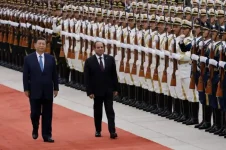
A prospective visit to the Chinese president to Egypt after the success of the recent air exercises between the Chinese and Egyptian army
May 21, 2025:

Egyptian Prime Minister Mustafa Madbouly said that he is looking forward to the upcoming visit of Chinese President Xi Jinping to Egypt, describing it as a pivotal moment that would make a major shift in bilateral relations and open new horizons for cooperation, stressing that the current regional and international climate imposes the necessity of deepening cooperation between Egypt and China, especially in the areas of sustainable development and promoting regional stability.

1747849118798.webp
 
The Egyptian Air Force is evaluating the Chinese stealth J-35A
View attachment 122667
May 21, 2025:

During the recently held "Eagles of Civilization Eagles" atmosphere in Egypt, the commander of the Egyptian Air Force, Lieutenant General Mahmoud Fouad Abdel Gawad, raised the attention of Chinese media when he personally expressed a strong interest in the Chinese ghost fighter from the fifth generation J-35. Rather, he went to the extent of the proposal of an official visit to China to inspect this plane closely, in a clear indication of a significant possible transformation in Egypt's future strategy to acquire combat aircraft.

This trend is not the result of the moment, but rather is based on a previous visit by Lieutenant General Abdel-Gawad to China in July 2024, where he celebrated the 45th anniversary of cooperation between the Egyptian Air Force and its Chinese counterpart, during which he commended the Chinese combat aircraft and air combat systems, and also showed clear interest in platforms such as J-10C and J-35. This coincided with previous reports of Egypt's assessment of the J-10CE plane and Chinese air defense systems such as HQ-9Be, indicating an increasing rapprochement in the Egyptian Air Force track with Beijing.

This comes at a critical time, after Pakistan confirmed the use of J-10C aircraft to shoot down the Indian "Rafale" fighters, which strengthened the attractiveness of Chinese platforms, especially with the Air Force in the Middle East, which closely monitors the regional air force balance transformations.

During the July 2024 visit, Lieutenant General Abdel-Gawad, led by the Air Force of the Chinese People's Liberation Army, met, looked at a number of advanced aircraft, and took a picture in front of the stealth fighter J-20. He praised the J-10C and J-16 fighters, and expressed his apparent admiration for the design of J-20 and its strategic capabilities, as well as closely continued the developments of China in the areas of early warning aircraft and fuel-refueling systems. This visit was a turning point in Egypt's future directions in the field of air armament, and reactivated the acquisition of Chinese systems, including its previous evaluation of the long-term HQ-9Be system, as part of Cairo's efforts to diversify the sources of arming away from the traditional dependence on Western suppliers.

View attachment 122668

China has sent to Egypt during the "Civilization Eagles 2025" exercise an advanced set of aircraft, including J-10C and J-10 fighters, early warning aircraft KJ-500, and Y-20 fuel platforms. This exercise allowed the Egyptian crews closely to the integrated combat doctrine of China, including the concepts of engagement behind the extent of vision, multi -platform coordinated attacks, and linking data between the sensor and the fire outlet in real time.

Chinese media reported that the Egyptian side expressed great admiration for the performance of Chinese aircraft, especially with regard to the accurate ability to hit targets, the flexibility of driving systems, and the concept of "AG Guides B" where a plane directs other plane ammunition. During this same exercise, the team, Abdel-Gawad, submitted a personal request to Chinese officials to visit China again and preview the J-35.

The team's conviction increased the capabilities of Chinese fighters after its practical experience in the battlefield. In the last conflict between India and Pakistan, the Pakistani Air Force J-10Ce aircraft has succeeded in shooting down several Indian "Rafale" fighters, which is one of the French aircraft classified among the best 4.5 generation fighters globally. This is the first confirmed combat projection of J-10CE, and a strategic landmark in the Chinese military aviation march.

This incident caused a shock to military analysts in the world, and proved the efficiency of China radars, missiles and sensors, and showed that advanced Chinese aircraft are able to excel in the face of NATO fighters. For countries like Egypt, which historically relied on a mixture of American, French and Russian aircraft, Pakistani success was a strong incentive to reassess its future options.

This Egyptian transformation is closely followed in Israel. The Israeli air forces, which operate the F-35i "Edir" ghosts, and have one of the most advanced air networks, view the possibility of entering the J-35 to the Egyptian fleet as a threat to regional balance. It has already started studying the success of J-10Ce in South Asia, and is being evaluated by how Chinese ghostly fighters may affect their traditional air superiority.

View attachment 122669

Chinese early warning systems have developed significantly, transcending in some aspects its counterparts that China had previously been seeking to import from Israel before the United States intervened to stop these deals.

The growing fear now is that China technology in navigation, fighters designed to reduce the radar fingerprint, and air command centers equipped with ASA, the Egyptian Air Force, can possess a new ability to stay and kill the battlefield, which would complicate the strategic accounts of Israel.

Pakistan's experience in the use of Chinese platforms, especially J-10CE, has changed the world's view of these weapons, which are no longer just theoretical alternatives, but rather tools that have proven efficient in the fields of fighting. This has strengthened the credibility of China in the arms market, especially among the countries of the Middle East, which are looking for effective alternatives in terms of cost compared to Western aircraft that are often associated with political restrictions.

Egypt is a clear example of this transformation. While it had previously held military partnerships with France and the United States via Rafale and F-16 fighters, the repercussions of the air battle between India and Pakistan pushed the Chinese platforms to the interface of strategic options.

Countries such as Saudi Arabia, Algeria and the UAE are following this Egyptian transformation with great interest. It became clear that Chinese weapons are no longer a "second degree", but rather are now considered reliable deterrent tools, and if necessary, military decisiveness tools.

Reports from several defensive sources indicate that Egypt has shown great interest in the J-10C fighter and the HQ-9Be air defense system. J-10Ce is with its advanced electronic systems and combat capabilities an important tributary to strengthen the Egypt fleet of multi-task fighters, while HQ-9BE, a long-range air defense system, offers an effective and low-cost alternative compared to Western systems such as American Patriot.

View attachment 122671

With the increasing complexity of the security scene in the Middle East, Egypt is looking to diversify the sources of arming it, and HQ-9Be is an ideal choice thanks to its advanced radars and its long interception, which enhances Egypt's ability to address modern air threats. The Chinese technology also provides greater flexibility in modernization and future support, which is in line with Egypt's desire for greater independence in its defensive strategy.

Despite its strong relations with Western weapons suppliers, the F-16 fighter fleet faces increasing challenges, due to its age and its lack of long-range air-to-air missiles and advanced sensors compared to fifth generation fighters or 4.5. With the development of the nature of the air fighting, the F-16 becomes less able to confront opponents who possess superior rocket-propelled systems and radars, putting Egypt in an uncomfortable position in the event of a regional conflict.

In recent years, Egypt has invested in the French Rafale fighters, which is characterized by its multiple multiple capabilities, but the excessive dependence on the Raval revealed some limitations. Egypt does not possess long-range air-to-air missiles on these aircraft, which may weaken its position in the battles that require engagement from a long time and air hide. Also, the connection of the Raval with French supply chains restricts Cairo with the Paris foreign policies, which makes it vulnerable to geopolitical transformations.

In light of the success of the Pakistani Air Force using the Chinese J-10CE fighters against the Indian Raval, Egypt reconsidates its options, including the expansion of the acquisition of Chinese ghost fighters to counter the increasing weather threats. The team's recent request reflects the J-35 inspection, in addition to his previous visit and his continuous praise of the Chinese air systems, a deep institutional transformation within the Egyptian Air Force.

What started as leaks today is supported by real field experiences, operational performance data, and strategic repositioning. The Pakistani combat experience has contributed to accelerating this trend, prompting many Middle Eastern countries to reconsider their weapons style.

And if Egypt decides to move forward with the acquisition of Stealth fighters such as J-35, this will not only reshape its air combat belief, but will constitute a direct challenge to Israel's aerial superiority in the region. A single air battle may have changed the global view of the superiority of the fighters, and the Chinese series "J" is approaching the new center of gravity in the fighting world.
I thought the rafales were confirmed to have meteors….
 
The Egyptian Air Force is evaluating the Chinese stealth J-35A
View attachment 122667
May 21, 2025:

During the recently held "Eagles of Civilization Eagles" atmosphere in Egypt, the commander of the Egyptian Air Force, Lieutenant General Mahmoud Fouad Abdel Gawad, raised the attention of Chinese media when he personally expressed a strong interest in the Chinese ghost fighter from the fifth generation J-35. Rather, he went to the extent of the proposal of an official visit to China to inspect this plane closely, in a clear indication of a significant possible transformation in Egypt's future strategy to acquire combat aircraft.

This trend is not the result of the moment, but rather is based on a previous visit by Lieutenant General Abdel-Gawad to China in July 2024, where he celebrated the 45th anniversary of cooperation between the Egyptian Air Force and its Chinese counterpart, during which he commended the Chinese combat aircraft and air combat systems, and also showed clear interest in platforms such as J-10C and J-35. This coincided with previous reports of Egypt's assessment of the J-10CE plane and Chinese air defense systems such as HQ-9Be, indicating an increasing rapprochement in the Egyptian Air Force track with Beijing.

This comes at a critical time, after Pakistan confirmed the use of J-10C aircraft to shoot down the Indian "Rafale" fighters, which strengthened the attractiveness of Chinese platforms, especially with the Air Force in the Middle East, which closely monitors the regional air force balance transformations.

During the July 2024 visit, Lieutenant General Abdel-Gawad, led by the Air Force of the Chinese People's Liberation Army, met, looked at a number of advanced aircraft, and took a picture in front of the stealth fighter J-20. He praised the J-10C and J-16 fighters, and expressed his apparent admiration for the design of J-20 and its strategic capabilities, as well as closely continued the developments of China in the areas of early warning aircraft and fuel-refueling systems. This visit was a turning point in Egypt's future directions in the field of air armament, and reactivated the acquisition of Chinese systems, including its previous evaluation of the long-term HQ-9Be system, as part of Cairo's efforts to diversify the sources of arming away from the traditional dependence on Western suppliers.

View attachment 122668

China has sent to Egypt during the "Civilization Eagles 2025" exercise an advanced set of aircraft, including J-10C and J-10 fighters, early warning aircraft KJ-500, and Y-20 fuel platforms. This exercise allowed the Egyptian crews closely to the integrated combat doctrine of China, including the concepts of engagement behind the extent of vision, multi -platform coordinated attacks, and linking data between the sensor and the fire outlet in real time.

Chinese media reported that the Egyptian side expressed great admiration for the performance of Chinese aircraft, especially with regard to the accurate ability to hit targets, the flexibility of driving systems, and the concept of "AG Guides B" where a plane directs other plane ammunition. During this same exercise, the team, Abdel-Gawad, submitted a personal request to Chinese officials to visit China again and preview the J-35.

The team's conviction increased the capabilities of Chinese fighters after its practical experience in the battlefield. In the last conflict between India and Pakistan, the Pakistani Air Force J-10Ce aircraft has succeeded in shooting down several Indian "Rafale" fighters, which is one of the French aircraft classified among the best 4.5 generation fighters globally. This is the first confirmed combat projection of J-10CE, and a strategic landmark in the Chinese military aviation march.

This incident caused a shock to military analysts in the world, and proved the efficiency of China radars, missiles and sensors, and showed that advanced Chinese aircraft are able to excel in the face of NATO fighters. For countries like Egypt, which historically relied on a mixture of American, French and Russian aircraft, Pakistani success was a strong incentive to reassess its future options.

This Egyptian transformation is closely followed in Israel. The Israeli air forces, which operate the F-35i "Edir" ghosts, and have one of the most advanced air networks, view the possibility of entering the J-35 to the Egyptian fleet as a threat to regional balance. It has already started studying the success of J-10Ce in South Asia, and is being evaluated by how Chinese ghostly fighters may affect their traditional air superiority.

View attachment 122669

Chinese early warning systems have developed significantly, transcending in some aspects its counterparts that China had previously been seeking to import from Israel before the United States intervened to stop these deals.

The growing fear now is that China technology in navigation, fighters designed to reduce the radar fingerprint, and air command centers equipped with ASA, the Egyptian Air Force, can possess a new ability to stay and kill the battlefield, which would complicate the strategic accounts of Israel.

Pakistan's experience in the use of Chinese platforms, especially J-10CE, has changed the world's view of these weapons, which are no longer just theoretical alternatives, but rather tools that have proven efficient in the fields of fighting. This has strengthened the credibility of China in the arms market, especially among the countries of the Middle East, which are looking for effective alternatives in terms of cost compared to Western aircraft that are often associated with political restrictions.

Egypt is a clear example of this transformation. While it had previously held military partnerships with France and the United States via Rafale and F-16 fighters, the repercussions of the air battle between India and Pakistan pushed the Chinese platforms to the interface of strategic options.

Countries such as Saudi Arabia, Algeria and the UAE are following this Egyptian transformation with great interest. It became clear that Chinese weapons are no longer a "second degree", but rather are now considered reliable deterrent tools, and if necessary, military decisiveness tools.

Reports from several defensive sources indicate that Egypt has shown great interest in the J-10C fighter and the HQ-9Be air defense system. J-10Ce is with its advanced electronic systems and combat capabilities an important tributary to strengthen the Egypt fleet of multi-task fighters, while HQ-9BE, a long-range air defense system, offers an effective and low-cost alternative compared to Western systems such as American Patriot.

View attachment 122671

With the increasing complexity of the security scene in the Middle East, Egypt is looking to diversify the sources of arming it, and HQ-9Be is an ideal choice thanks to its advanced radars and its long interception, which enhances Egypt's ability to address modern air threats. The Chinese technology also provides greater flexibility in modernization and future support, which is in line with Egypt's desire for greater independence in its defensive strategy.

Despite its strong relations with Western weapons suppliers, the F-16 fighter fleet faces increasing challenges, due to its age and its lack of long-range air-to-air missiles and advanced sensors compared to fifth generation fighters or 4.5. With the development of the nature of the air fighting, the F-16 becomes less able to confront opponents who possess superior rocket-propelled systems and radars, putting Egypt in an uncomfortable position in the event of a regional conflict.

In recent years, Egypt has invested in the French Rafale fighters, which is characterized by its multiple multiple capabilities, but the excessive dependence on the Raval revealed some limitations. Egypt does not possess long-range air-to-air missiles on these aircraft, which may weaken its position in the battles that require engagement from a long time and air hide. Also, the connection of the Raval with French supply chains restricts Cairo with the Paris foreign policies, which makes it vulnerable to geopolitical transformations.

In light of the success of the Pakistani Air Force using the Chinese J-10CE fighters against the Indian Raval, Egypt reconsidates its options, including the expansion of the acquisition of Chinese ghost fighters to counter the increasing weather threats. The team's recent request reflects the J-35 inspection, in addition to his previous visit and his continuous praise of the Chinese air systems, a deep institutional transformation within the Egyptian Air Force.

What started as leaks today is supported by real field experiences, operational performance data, and strategic repositioning. The Pakistani combat experience has contributed to accelerating this trend, prompting many Middle Eastern countries to reconsider their weapons style.

And if Egypt decides to move forward with the acquisition of Stealth fighters such as J-35, this will not only reshape its air combat belief, but will constitute a direct challenge to Israel's aerial superiority in the region. A single air battle may have changed the global view of the superiority of the fighters, and the Chinese series "J" is approaching the new center of gravity in the fighting world.

Interesting, though I do wonder how much is just 'window shopping', or hustling for better negotiations elsewhere in terms of price and capability. In terms of stealth, the recent purchase of the KAI T-50 to me points to the KF-21 being more of a front runner for Egypt's stealth requirements than the J-35 as large portions of the tooling, infrastructure and training for the KAI T-50 can be reused for the KF-21 I assume. However Korea may be quite far from having an integrated kill-chain that China offers as a capability between the IADS, AEW&C and Jets as it is a all in one integrated solution, with the possibility of the use of Chinese satellites as part of the chain.

However, Egypt's procurement decisions have their 'own logic' that many of us here on the forum don't understand despite the war and piece articles written by sami_1 etc ! So, lets see how this plays out for China and Egypt.

( the J-35 is a nice looking bird though, looks right, will fly right for sure. )
 
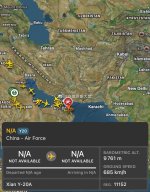
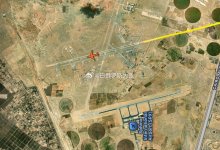
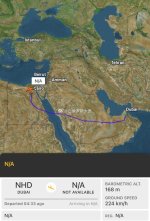
On May 21, PLAAF Y-20As landed at an airbase in Egypt. The purpose of the trip is not yet clear.
This formation of transport aircraft consists of 3 Y-20A's. They are: 11152, 11252, 20543.
006N46Ydgy1i1nbl5lnjuj30mz0td79r.jpg006N46Ydgy1i1nbl30qoyj30qo0i9q7s.jpg006N46Ydgy1i1nbl00hv8j30n00xvq7d.jpg
 
Last edited:
To view this content we will need your consent to set third party cookies.
For more detailed information, see our cookies page.


What a good video.

These 2 countries should forge a alliance to liberate Palestine, with outside help from the Iranian missile force and Pakistani Navy.
 

Users who are viewing this thread

Back
Top