View attachment 132090
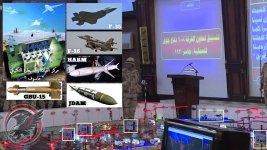
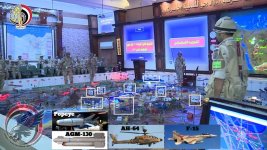
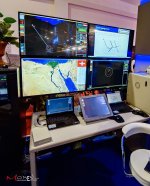
I'm talking about linking the entire armament system, not just some air defense systems. I'm talking about linking land, air, sea, and air defense systems, not linking a limited number of them as simply as you might imagine. Let's illustrate with simple examples: the first phase of the command and control systems in the 1980s for Project 777 cost $250 million. The cumulative construction process of these complex systems to link all branches of the military is enormous and costs billions.
View attachment 132096
Integrating everything in your military with satellites could cost billions of dollars per satellite. A satellite network of at least three in an organization that includes (command, control, communications,
View attachment 132099
computer, cyber, intelligence, surveillance, and reconnaissance) for all branches of the armed forces, and the process of building it takes years. The Egyptian system was built over more than six years and has been redeveloped several times.
View attachment 132092
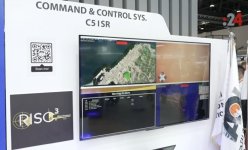
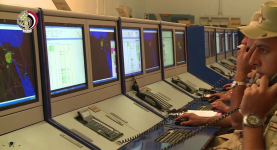
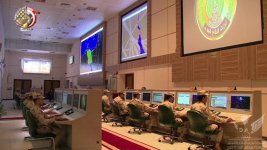
Command and control centers vary according to the following:
A - By type:
(1) Main command center:
- Contains all components of the command center and the complete and interoperable means for implementing the communications network. All procedures for achieving control requirements are carried out there.
(2) Interchange command center:
- Established to ensure continuity in the event of (failure/destruction/necessity of transferring command).
B - By fortification:
(1) Fully fortified in shelters:
- The command center is occupied within pre-equipped concrete bunkers.
(2) Field in equipped vehicles:
- Established during transitions deep within the enemy's mission lines during offensive operations.
C - By mission:
(1) Non-joint command centers:
- Control of missile and anti-aircraft artillery fire is carried out from these centers only through tactical warning radars.
(2) Joint command centers:
- These demonstrate cooperation with the air force in implementing command and control over missile, anti-aircraft artillery, and fighter units and elements. Interceptors..
D - In terms of level:
- Command and control centers are formed for each command level within the Air Defense Forces, down to the lowest level in the State Air Defense/Land Formations, as follows:
(1) The main command center for the Air Defense Forces..
(2) The command center for the Air Defense Formation..
(3) The command center (for units/sub-units) of the State Air Defense..
(4) The command center for the Air Defense within the Land Formations..
(5) The command center (for units/sub-units/radar and warning regiments)..
2 - Command and control centers are formed at all levels to carry out fixed tasks as follows:
A - Receiving timely warnings of enemy air attacks..
B - Assessing the information received and classifying it according to danger and priority..
C - Understanding the air situation and making timely decisions..
D - Assigning tasks to fire elements in a timely manner..
E - Supervising the execution of the forces' tasks and taking the necessary measures to ensure security..
F - Compiling reports, combat reports, and analysis to benefit from combat experiences. ..
Z - Providing the best conditions for effective fire and tactical cooperation.
View attachment 132102
Command and Control Methods
A - Centralized Command and Control:
- It is characterized by achieving the best cooperation between all different air defense assets and is used in some situations, such as when forces are stationed in a forward waiting area / engagement line / second echelon advance.
B - Decentralized Command and Control:
- It is carried out by issuing prior instructions to commanders at various levels to carry out tasks within their sector of responsibility in the following situations:
(1) Repelling a surprise air attack / complex air situation.
(2) Repelling a large-scale air attack in a large-scale confrontation.
(3) Communications failure and failure to communicate orders to subordinates.
(4) When attacks occur at low and very low altitudes.
4 - Command and control systems have undergone numerous developments to meet the demands of continuous and ongoing development in the characteristics, capabilities, and combat methods of various air defense assets, including fighters, missiles, and anti-aircraft artillery.
5 - Manual Command and Control System
- Manual command and control centers are designed to meet the requirements necessary to implement command and control procedures. and sufficient information for decision-making.
6 - The General Structure of the Manual Command and Control Center
- The command and control center includes several locations for different departments, each with a chief. These departments have a single goal: to ensure the command center carries out its assigned tasks and meets the aforementioned requirements. These departments are:
A - Operations Management Room
B - Communications Center Rooms (Signal Center)
C - Air Force Operations Group
D - Meteorology Department
7 - The command and control centers are linked to the tactical command radar sites that detect air targets according to the device's characteristics, the "Visually Inspected Air Observation" information gathering center, and the fire units. At some levels, they may serve as a link between anti-aircraft artillery and anti-aircraft missile launchers to command these units/sub-units, depending on the level of engagement and the execution of combat missions.
8 - Operation is carried out "manually" using general air situation maps, which are prepared manually by observers and recorders, based on the limited capabilities of the human operator to monitor in reverse order from the maps. ...which is prepared by dividing the globe (according to the lines of longitude and latitude, and dividing the country's airspace within the sector of responsibility of the command and control center) into large squares (96 x 108) km. The large squares are divided into medium squares (16 x 18) km, which in turn are divided into nine small squares. This is called the (GEOREFF) system. Targets are reported on wireless communication networks from the radars that detect them or the information gathering centers in air traffic control, directly to the command and control centers or by rebroadcasting from the command and control center at the highest level. The center, in turn, assigns tasks to ((units/sub-units/air defense fire elements)) that directly deal with air targets, intercepting and destroying them in the air.
9 - Many problems have emerged with the (manual command and control system), as follows:
A - Long delay and reaction times due to reliance on individuals to broadcast and monitor targets, which used to reach (2) minutes.
B - Inaccurate information due to the use of the (GEOREFF) system in monitoring Objectives:
C - Increased volume of information with increased efficiency and speed of aircraft.
D - High consumption rate for operation in advanced readiness modes to compensate for reaction time.
E - Difficulty securing friendly movements due to the expanded use of air forces.
10 - Previous Uses of the Manual Command and Control Center in the Air Defense Forces
View attachment 132103
- Command and control was previously performed using manual systems in the following command and control centers:
A - Anti-aircraft artillery battalion command center within the brigade organization (mechanized infantry armored).
B - Air defense regiment command center within the division organization (mechanized infantry armored).
C - Air defense division command center (mechanized infantry armored).
D - Self-propelled short- and medium-range missile (CHAPARRAL CROTAL-NG KAVADRAT) command center.
E - Anti-aircraft artillery (battalion/brigade) command center (within the field army's air defense organization).
F - Command center The (BLACK HYENA II / IGLA-S) Battalion / (SHILKA ZSU-23-4MA) Self-Propelled Regiment.
11 - Semi-Automated Command and Control System:
- This system operates primarily using electronic devices, with the human factor being essential as a complementary element to the system's operational cycle. This system began operating in the 1950s in Canada and the United States of America and was called (SAGGY).
The NADGE System: Egyptian Air Defense Forces
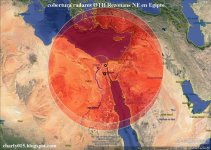
- The system was established in 1967 and completed in 1973. It included a number of radar sites, reaching (85) radar sites. This system contained equipment for collecting and processing information, using a set of electronic computers that collaborated with radar devices to collect information, distinguish targets, identify and warn of enemy formations, assign targets to active air defense weapons, and direct combat operations.
B - The American Airborne Command and Control System (AWACS):
- Early warning aircraft operate as an aerial command and control center capable of managing operations. They can also be linked to the main ground command center and operate as an early warning unit. The capabilities of this system include a detection range of up to (400-4800) km and the display of up to (600) targets on displays.
15 - With the tremendous technological development in electronic systems and the advent of laptop computers, it became possible to introduce automated systems. For command and control of "ground formation air defense", we mention the following:
A - The (PORI P1M) Automated System:
- This is an automated command center that controls the air defense capabilities of the brigade/division with the following capabilities:
(1) Receiving and processing information for identification and display on displays.
(2) Commanding up to (7) battalion command centers and tracking up to (50) targets. The system consists of (3) mobile vehicles that organize the management of combat operations.
B - The (PORI P2M) Automated System:
- The center consists of (4) mobile vehicles containing all the computers, displays, and communication units necessary to manage active air defense combat operations and receive information from (radar devices and visual air surveillance networks). The system is characterized by the ability to interact with (16) battalion command centers for ground formation air defense and display up to (32) automatic targets.
C - The Russian (RANGILER) System:
- It consists of a tracked vehicle technically equipped with computers. The equipment enables it to operate as a command center at various levels after modifications to achieve compatibility with mobile missile, radar, and artillery systems. This system achieves the same capabilities as the PORIP2M system. The system is characterized by its rapid readiness for movement and engagement, taking (6) minutes to disassemble and assemble.
D - The SABOC System:
- This is a "mixed missile brigade command center" characterized by agility and quick reaction. It assesses the air situation, processes air movement information, assigns tasks to missile battalions, and issues engagement orders.
E - The Chinese (DMOC) System:
- It consists of a lorry equipped to operate as an automated command center for "ground formation air defense assets", and to track, prepare, and equip "ground formation air defense assets".
F - The Short Range Air Defense (SHORAD) System:
- The system commands and controls short-range air defense assets (artillery missiles) that It operates as a direct defense against ground formations. The system's basic concept is to receive information from warning sources within the area of responsibility and higher-level commands, display it on displays, assess its severity, and then assign targets to appropriate air defense assets.
G - French CROTAL BRIGUDE OPERATION CENTER (CBOC) system:
- The system can command and control ground formation air defense assets (short-range missiles and artillery) and manage combat operations.
H - Mobile command and control centers (BOOZ ALLEN & HMILTON):
- Centers equipped in PRIME MOVER vehicles, which provide agility, endurance, and low maintenance requirements.
All of this is linked to the Strategic Command Center
- the largest of the world's strategic command centers.
- It includes several centers that ensure control and smooth management of all state institutions and preparedness to confront any crises or emergencies.
- It spans an area of 22,000 acres and includes 13 regions, each with its own unique nature. It also includes a center for coordinating state defense operations, as well as the state's unified strategic data center.
- It contains all data related to state institutions.
- A communications network control center.
- A large number of warehouses that secure the state's needs for strategic goods.
- The State Command Center is supported by two Republican Guard units and other security measures.
- A closed strategic network control center to control the state's administrative apparatus.
- A management and operations center to control state facilities.
- It includes several places of worship, clubs, hotels, schools, sports stadiums, residential projects, shopping malls, several hospitals, and service and administrative complexes.
I think that the matter is not as simple as some expect, but the reason for the presentation is to know the extent of the importance, seriousness and complexity of the matter.


![_فيلم -درع السماء-_ - YouTube[(017796)2017-07-01-05-07-27].JPG](https://defencepk.com/forums/data/attachments/132/132094-69a27d097cf8807b0ffdac3964a2b803.jpg?hash=dPbCW5FoP5 "_فيلم -درع السماء-_ - YouTube[(017796)2017-07-01-05-07-27].JPG")
![فيلم قوات الدفاع الجوى درع السلام[(008709)2019-06-29-13-10-35].JPG](https://defencepk.com/forums/data/attachments/132/132102-897a72eff4ff7329cd511c51bef4ea9e.jpg?hash=6PZZmeWQ_m "فيلم قوات الدفاع الجوى درع السلام[(008709)2019-06-29-13-10-35].JPG")
![فيلم قوات الدفاع الجوى درع السلام[(008775)2019-06-29-13-10-53].JPG](https://defencepk.com/forums/data/attachments/132/132103-d50884176a71ed2d427da5d868e1f118.jpg?hash=zaD1KnvCGv "فيلم قوات الدفاع الجوى درع السلام[(008775)2019-06-29-13-10-53].JPG")