Iranian Air Force (IRIAF/IRGC-ASF) | News and Discussions

You didnt place an order for a reason, my friend. Your leadership is not stupid, they know how the world works.
As for the other, can you please provide an article or something, where some of your leadership is saying that Russia is not delivering the planes? You all keep talking about these stupid Su-35s as if you have read the contract and you know the exact deadline day that is written there, nonsense really.

China benefit from the West and from the Western system as a whole is absolutely huge. Thanks to the West they are buying your oil for peanuts at the moment, while they are flooding you markets with their cheap goods, while they are supper strict when it comes to the Western sanctions on you or providing you some kind of tech. They do the same to us by the way. So good luck with the Judaism, the big noses and the glorious Chinese politicians. Im sure they will build you a tremendous air force and AD that will let you go toe to toe against they partners from the West.
I think Putin has made Russia's stance on Iran quite clear to us with just two sentences:

Sentence 1: There are many Russian-speaking people in Israel and we will take that into consideration.
Sentence 2: Russia-Israel relations are based on mutual trust.

For me, sentence 1 means that Russia considers Israel a brotherly nation and sentence 2 means that Russia would never do something that is against the interests of Israel.

If our politicians are sane, those two sentences should mean a complete termination of our military ties with Russia as Russia is in bed with our sworn enemy. If our politicians don't do that, then there's something wrong with them.
 
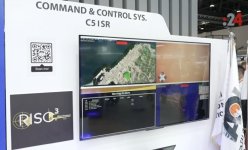
Iran has imported a CETC JY-10 air defense command system from China. It is already in operation in Iran.

JY-10 air defense command system is a low-end foreign trade type product launched by CETC. It specific is:
1. Extremely wide range of compatibility. It can Whether it is the SA-2 air defense missiles in the Soviet period, or the current S300/S400 air defense missiles; whether it is the Russian system, NATO system, Chinese system, or even Iranian system; it is fully compatible.
2, low price. It uses a lot of commercial grade electronic components instead of military grade electronic components. This leads to its low price. Of course, there are still many differences between its capabilities in some areas and military grade electronics.

The chain of command itself doesn't have any discovery or combat capability, it just integrates a variety of various radars with completely different systems, different data standards, and different interfaces, and then automatically processes the information to respond accurately in the shortest possible time.

If you have a radar system of your own that can't detect a target, the chain of command won't react. If your air defense missiles themselves have range and firing accuracy problems, the chain of command can't do anything about it.

However, Iran has only purchased this command system and has not purchased China's advanced radar system or advanced air defense missiles.

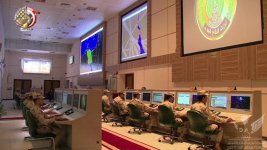
egypt-c5isr-scaled-750x455.jpeg
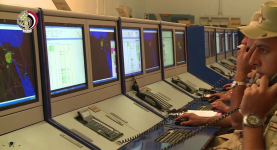
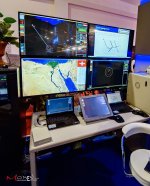
I'm talking about linking the entire armament system, not just some air defense systems. I'm talking about linking land, air, sea, and air defense systems, not linking a limited number of them as simply as you might imagine. Let's illustrate with simple examples: the first phase of the command and control systems in the 1980s for Project 777 cost $250 million. The cumulative construction process of these complex systems to link all branches of the military is enormous and costs billions.
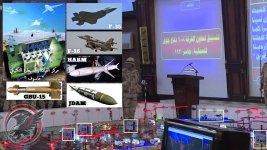
_فيلم -درع السماء-_ - YouTube[(017796)2017-07-01-05-07-27].JPG
Integrating everything in your military with satellites could cost billions of dollars per satellite. A satellite network of at least three in an organization that includes (command, control, communications,
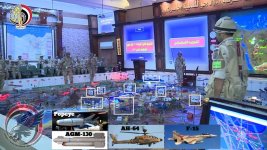
1715079942480.png

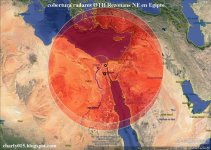
computer, cyber, intelligence, surveillance, and reconnaissance) for all branches of the armed forces, and the process of building it takes years. The Egyptian system was built over more than six years and has been redeveloped several times.


FpvGI2SXoAAgCYx.jpg


Command and control centers vary according to the following:
A - By type:

(1) Main command center:

- Contains all components of the command center and the complete and interoperable means for implementing the communications network. All procedures for achieving control requirements are carried out there.
(2) Interchange command center:

- Established to ensure continuity in the event of (failure/destruction/necessity of transferring command).
B - By fortification:

(1) Fully fortified in shelters:

- The command center is occupied within pre-equipped concrete bunkers.
(2) Field in equipped vehicles:

- Established during transitions deep within the enemy's mission lines during offensive operations.
C - By mission:

(1) Non-joint command centers:

- Control of missile and anti-aircraft artillery fire is carried out from these centers only through tactical warning radars.
(2) Joint command centers:

- These demonstrate cooperation with the air force in implementing command and control over missile, anti-aircraft artillery, and fighter units and elements. Interceptors..
D - In terms of level:

- Command and control centers are formed for each command level within the Air Defense Forces, down to the lowest level in the State Air Defense/Land Formations, as follows:
(1) The main command center for the Air Defense Forces..
(2) The command center for the Air Defense Formation..
(3) The command center (for units/sub-units) of the State Air Defense..
(4) The command center for the Air Defense within the Land Formations..
(5) The command center (for units/sub-units/radar and warning regiments)..
2 - Command and control centers are formed at all levels to carry out fixed tasks as follows:

A - Receiving timely warnings of enemy air attacks..
B - Assessing the information received and classifying it according to danger and priority..
C - Understanding the air situation and making timely decisions..
D - Assigning tasks to fire elements in a timely manner..
E - Supervising the execution of the forces' tasks and taking the necessary measures to ensure security..
F - Compiling reports, combat reports, and analysis to benefit from combat experiences. ..
Z - Providing the best conditions for effective fire and tactical cooperation.

img_20104554.jpg

Command and Control Methods

A - Centralized Command and Control:

- It is characterized by achieving the best cooperation between all different air defense assets and is used in some situations, such as when forces are stationed in a forward waiting area / engagement line / second echelon advance.
B - Decentralized Command and Control:

- It is carried out by issuing prior instructions to commanders at various levels to carry out tasks within their sector of responsibility in the following situations:
(1) Repelling a surprise air attack / complex air situation.
(2) Repelling a large-scale air attack in a large-scale confrontation.
(3) Communications failure and failure to communicate orders to subordinates.
(4) When attacks occur at low and very low altitudes.
4 - Command and control systems have undergone numerous developments to meet the demands of continuous and ongoing development in the characteristics, capabilities, and combat methods of various air defense assets, including fighters, missiles, and anti-aircraft artillery.

5 - Manual Command and Control System

- Manual command and control centers are designed to meet the requirements necessary to implement command and control procedures. and sufficient information for decision-making.
6 - The General Structure of the Manual Command and Control Center

- The command and control center includes several locations for different departments, each with a chief. These departments have a single goal: to ensure the command center carries out its assigned tasks and meets the aforementioned requirements. These departments are:
A - Operations Management Room
B - Communications Center Rooms (Signal Center)
C - Air Force Operations Group
D - Meteorology Department
7 - The command and control centers are linked to the tactical command radar sites that detect air targets according to the device's characteristics, the "Visually Inspected Air Observation" information gathering center, and the fire units. At some levels, they may serve as a link between anti-aircraft artillery and anti-aircraft missile launchers to command these units/sub-units, depending on the level of engagement and the execution of combat missions.
8 - Operation is carried out "manually" using general air situation maps, which are prepared manually by observers and recorders, based on the limited capabilities of the human operator to monitor in reverse order from the maps. ...which is prepared by dividing the globe (according to the lines of longitude and latitude, and dividing the country's airspace within the sector of responsibility of the command and control center) into large squares (96 x 108) km. The large squares are divided into medium squares (16 x 18) km, which in turn are divided into nine small squares. This is called the (GEOREFF) system. Targets are reported on wireless communication networks from the radars that detect them or the information gathering centers in air traffic control, directly to the command and control centers or by rebroadcasting from the command and control center at the highest level. The center, in turn, assigns tasks to ((units/sub-units/air defense fire elements)) that directly deal with air targets, intercepting and destroying them in the air.
9 - Many problems have emerged with the (manual command and control system), as follows:

A - Long delay and reaction times due to reliance on individuals to broadcast and monitor targets, which used to reach (2) minutes.
B - Inaccurate information due to the use of the (GEOREFF) system in monitoring Objectives:
C - Increased volume of information with increased efficiency and speed of aircraft.
D - High consumption rate for operation in advanced readiness modes to compensate for reaction time.
E - Difficulty securing friendly movements due to the expanded use of air forces.
10 - Previous Uses of the Manual Command and Control Center in the Air Defense Forces
aoaa_a10.jpg
- Command and control was previously performed using manual systems in the following command and control centers:
A - Anti-aircraft artillery battalion command center within the brigade organization (mechanized infantry armored).
B - Air defense regiment command center within the division organization (mechanized infantry armored).
C - Air defense division command center (mechanized infantry armored).
D - Self-propelled short- and medium-range missile (CHAPARRAL CROTAL-NG KAVADRAT) command center.
E - Anti-aircraft artillery (battalion/brigade) command center (within the field army's air defense organization).
F - Command center The (BLACK HYENA II / IGLA-S) Battalion / (SHILKA ZSU-23-4MA) Self-Propelled Regiment.

11 - Semi-Automated Command and Control System:

- This system operates primarily using electronic devices, with the human factor being essential as a complementary element to the system's operational cycle. This system began operating in the 1950s in Canada and the United States of America and was called (SAGGY).

The NADGE System: Egyptian Air Defense Forces

- The system was established in 1967 and completed in 1973. It included a number of radar sites, reaching (85) radar sites. This system contained equipment for collecting and processing information, using a set of electronic computers that collaborated with radar devices to collect information, distinguish targets, identify and warn of enemy formations, assign targets to active air defense weapons, and direct combat operations.

B - The American Airborne Command and Control System (AWACS):

- Early warning aircraft operate as an aerial command and control center capable of managing operations. They can also be linked to the main ground command center and operate as an early warning unit. The capabilities of this system include a detection range of up to (400-4800) km and the display of up to (600) targets on displays.
15 - With the tremendous technological development in electronic systems and the advent of laptop computers, it became possible to introduce automated systems. For command and control of "ground formation air defense", we mention the following:
A - The (PORI P1M) Automated System:

- This is an automated command center that controls the air defense capabilities of the brigade/division with the following capabilities:
(1) Receiving and processing information for identification and display on displays.
(2) Commanding up to (7) battalion command centers and tracking up to (50) targets. The system consists of (3) mobile vehicles that organize the management of combat operations.
B - The (PORI P2M) Automated System:

- The center consists of (4) mobile vehicles containing all the computers, displays, and communication units necessary to manage active air defense combat operations and receive information from (radar devices and visual air surveillance networks). The system is characterized by the ability to interact with (16) battalion command centers for ground formation air defense and display up to (32) automatic targets.
C - The Russian (RANGILER) System:

- It consists of a tracked vehicle technically equipped with computers. The equipment enables it to operate as a command center at various levels after modifications to achieve compatibility with mobile missile, radar, and artillery systems. This system achieves the same capabilities as the PORIP2M system. The system is characterized by its rapid readiness for movement and engagement, taking (6) minutes to disassemble and assemble.
D - The SABOC System:

- This is a "mixed missile brigade command center" characterized by agility and quick reaction. It assesses the air situation, processes air movement information, assigns tasks to missile battalions, and issues engagement orders.
E - The Chinese (DMOC) System:

- It consists of a lorry equipped to operate as an automated command center for "ground formation air defense assets", and to track, prepare, and equip "ground formation air defense assets".
F - The Short Range Air Defense (SHORAD) System:
- The system commands and controls short-range air defense assets (artillery missiles) that It operates as a direct defense against ground formations. The system's basic concept is to receive information from warning sources within the area of responsibility and higher-level commands, display it on displays, assess its severity, and then assign targets to appropriate air defense assets.
G - French CROTAL BRIGUDE OPERATION CENTER (CBOC) system:

- The system can command and control ground formation air defense assets (short-range missiles and artillery) and manage combat operations.
H - Mobile command and control centers (BOOZ ALLEN & HMILTON):

- Centers equipped in PRIME MOVER vehicles, which provide agility, endurance, and low maintenance requirements.


All of this is linked to the Strategic Command Center

- the largest of the world's strategic command centers.

- It includes several centers that ensure control and smooth management of all state institutions and preparedness to confront any crises or emergencies.

- It spans an area of 22,000 acres and includes 13 regions, each with its own unique nature. It also includes a center for coordinating state defense operations, as well as the state's unified strategic data center.

- It contains all data related to state institutions.

- A communications network control center.

- A large number of warehouses that secure the state's needs for strategic goods.

- The State Command Center is supported by two Republican Guard units and other security measures.

- A closed strategic network control center to control the state's administrative apparatus.

- A management and operations center to control state facilities.

- It includes several places of worship, clubs, hotels, schools, sports stadiums, residential projects, shopping malls, several hospitals, and service and administrative complexes.


I think that the matter is not as simple as some expect, but the reason for the presentation is to know the extent of the importance, seriousness and complexity of the matter.
 
Both the J10CE and JF17C have low production runs because both the China and PAF and don't view those aircraft as the tip of their spear any more with them being viewed more of a commodity platform that they can incrementally work on over time. Pakistan may scale up production rates of the JF17C after localisation of the entire platform is done in Pakistan and China may do so if it sees serious export demand for the J10CE, though that will still time to scale up.

Rather the focus for Iran should be (if China is willing of course) the J-35AE as it is a new platform that is being scaled up for large scale deliveries to the Chinese Armed forces, Pakistan and there is talk of Egypt looking at it one point after they get their J10CE deliveries and even UAE(i am not sure on that one given they cannot be trusted). The J-35AE can be purchased on mass once the manufacturing pipelines are setup and China can size her manufacturing pipeline from the outset to meet large orders.

The J-35AE will give Iran the ability to push the IAF back over to Syria/Israel as any aircraft refuellers can be tracked down and shot down with ease. Iran does not need to engage IAF fighters directly at all, just to take down the air-to-air refuellers and that makes IAF operations massively difficult with only limited level of operations possible.

The J10CE and J17Cs can help fill significant capability holes that Iran has right now, and it will help build the required ecosystem to be able to induct J-35AE's down the road when they are available.

Iran needs to make quick decisions now as time is not on their side for their usual theatrics of trying to pitch people off against each other and general manoeuvring that never goes anywhere...

فيلم قوات الدفاع الجوى درع السلام[(008709)2019-06-29-13-10-35].JPG

Only China is no longer purchasing the J-10C, due to Pakistan's order book of 188 aircraft. It is forced to manufacture locally for its air force, simply because the size of the aircraft it is retiring is large, such as the MIRAGE-III/5 and F-7 fighters. Even the production of the J-35AE fighter, contracting and implementing the first delivery requires at least a year,
فيلم قوات الدفاع الجوى درع السلام[(008775)2019-06-29-13-10-53].JPG

and China itself is in low production, not full production. Therefore, its production volume may not exceed 24-40 aircraft per year. China is focusing on the large production of the J-20 and J-16 aircraft, which possess nearly 400 aircraft of each model.

14095802_931437406968729_7856840951043818908_n11.jpg
Trump began threatening Iran that he would carry out another strike to force it to agree to dismantle its uranium enrichment and limit the program to nuclear weapons, in exchange for the Gulf funding the Iranian nuclear program with $30 billion and releasing $6 billion in funds held in South Korea. The coming war could start within two weeks. Every rumor spread that Iran obtained HQ-16 & HQ-17AE systems are probably to provide limited air defense and it is not believed that Iran has obtained large numbers of the two systems. Iran is really in a bad situation and its only solution is to increase its stocks of ballistic missiles with quick deliveries from North Korea and perhaps Pakistan and China because it is the only weapon available to it quickly and easily to carry out strikes by Iran, despite the fact that America does not want to get rid of the Iranian regime to use it as a threat card against the Gulf, but the Israeli side wants to overthrow the regime, fragment it and divide Iran into several countries. Thus, war is almost inevitable. The only point is when and to what extent Iran will be able to provide preparations.

14040183_931437480302055_3633050622191709649_n.jpg
 
The Imperial Air Force had about 80 F-14s, 225 F-4s, and 166 F-5s. The Shah even had a backorder plan for 100–150 F-15s that was never delivered because of the 1979 revolution.

To match that kind of capability today, we’d need around 60–80 J-20 stealth fighters to hunt F-35s and take on stealth-on-stealth engagements. About 180–200 J-16s would handle long-range interception, including hunting F-15Is launching blue sparrow missiles from Iraq. 150–200 JF-17 fighters would provide affordable, modern air defense in high numbers. We’d also need 10–12 KJ-500 for early warning and coordination to cover Iran itself, monitor threats from Iraq, the GCC, and Azerbaijan, and direct intercepts. We also need probably 6-8 tankers to stay on patrol, and also so we can move airbases deeper inside Iran, so they aren’t as vulnerable to Israeli strikes.

But even that’s only part of the challenge. We’d need a huge number of advanced air defense systems to protect these aircraft while they’re on the ground, along with extensive networks of hardened shelters and underground hangars so they can survive preemptive strikes. Honestly, I just don’t think the IRI will ever be able to afford, protect, and maintain such an air force. As a result, we’ll probably always be vulnerable from the air.
 
The Imperial Air Force had about 80 F-14s, 225 F-4s, and 166 F-5s. The Shah even had a backorder plan for 100–150 F-15s that was never delivered because of the 1979 revolution.

To match that kind of capability today, we’d need around 60–80 J-20 stealth fighters to hunt F-35s and take on stealth-on-stealth engagements. About 180–200 J-16s would handle long-range interception, including hunting F-15Is launching blue sparrow missiles from Iraq. 150–200 JF-17 fighters would provide affordable, modern air defense in high numbers. We’d also need 10–12 KJ-500 for early warning and coordination to cover Iran itself, monitor threats from Iraq, the GCC, and Azerbaijan, and direct intercepts. We also need probably 6-8 tankers to stay on patrol, and also so we can move airbases deeper inside Iran, so they aren’t as vulnerable to Israeli strikes.

But even that’s only part of the challenge. We’d need a huge number of advanced air defense systems to protect these aircraft while they’re on the ground, along with extensive networks of hardened shelters and underground hangars so they can survive preemptive strikes. Honestly, I just don’t think the IRI will ever be able to afford, protect, and maintain such an air force. As a result, we’ll probably always be vulnerable from the air.
That’s 10s of billions in oil and you would need Chinese to be stationed at many bases for the foreseeable future to make sure the Israelis just don’t bomb them reinforcing shelters and surveillance around all bases for miles something the Chinese could do if they want to do it but at what cost if it had been before this war would have been feasible over several years but right now with the cost of rebuilding might be out of reach for a very long time
 
View attachment 132090
I'm talking about linking the entire armament system, not just some air defense systems. I'm talking about linking land, air, sea, and air defense systems, not linking a limited number of them as simply as you might imagine. Let's illustrate with simple examples: the first phase of the command and control systems in the 1980s for Project 777 cost $250 million. The cumulative construction process of these complex systems to link all branches of the military is enormous and costs billions.
View attachment 132096
Integrating everything in your military with satellites could cost billions of dollars per satellite. A satellite network of at least three in an organization that includes (command, control, communications,
View attachment 132099

computer, cyber, intelligence, surveillance, and reconnaissance) for all branches of the armed forces, and the process of building it takes years. The Egyptian system was built over more than six years and has been redeveloped several times.


View attachment 132092


Command and control centers vary according to the following:
A - By type:

(1) Main command center:

- Contains all components of the command center and the complete and interoperable means for implementing the communications network. All procedures for achieving control requirements are carried out there.
(2) Interchange command center:

- Established to ensure continuity in the event of (failure/destruction/necessity of transferring command).
B - By fortification:

(1) Fully fortified in shelters:

- The command center is occupied within pre-equipped concrete bunkers.
(2) Field in equipped vehicles:

- Established during transitions deep within the enemy's mission lines during offensive operations.
C - By mission:

(1) Non-joint command centers:

- Control of missile and anti-aircraft artillery fire is carried out from these centers only through tactical warning radars.
(2) Joint command centers:

- These demonstrate cooperation with the air force in implementing command and control over missile, anti-aircraft artillery, and fighter units and elements. Interceptors..
D - In terms of level:

- Command and control centers are formed for each command level within the Air Defense Forces, down to the lowest level in the State Air Defense/Land Formations, as follows:
(1) The main command center for the Air Defense Forces..
(2) The command center for the Air Defense Formation..
(3) The command center (for units/sub-units) of the State Air Defense..
(4) The command center for the Air Defense within the Land Formations..
(5) The command center (for units/sub-units/radar and warning regiments)..
2 - Command and control centers are formed at all levels to carry out fixed tasks as follows:

A - Receiving timely warnings of enemy air attacks..
B - Assessing the information received and classifying it according to danger and priority..
C - Understanding the air situation and making timely decisions..
D - Assigning tasks to fire elements in a timely manner..
E - Supervising the execution of the forces' tasks and taking the necessary measures to ensure security..
F - Compiling reports, combat reports, and analysis to benefit from combat experiences. ..
Z - Providing the best conditions for effective fire and tactical cooperation.

View attachment 132102

Command and Control Methods

A - Centralized Command and Control:

- It is characterized by achieving the best cooperation between all different air defense assets and is used in some situations, such as when forces are stationed in a forward waiting area / engagement line / second echelon advance.
B - Decentralized Command and Control:

- It is carried out by issuing prior instructions to commanders at various levels to carry out tasks within their sector of responsibility in the following situations:
(1) Repelling a surprise air attack / complex air situation.
(2) Repelling a large-scale air attack in a large-scale confrontation.
(3) Communications failure and failure to communicate orders to subordinates.
(4) When attacks occur at low and very low altitudes.
4 - Command and control systems have undergone numerous developments to meet the demands of continuous and ongoing development in the characteristics, capabilities, and combat methods of various air defense assets, including fighters, missiles, and anti-aircraft artillery.

5 - Manual Command and Control System

- Manual command and control centers are designed to meet the requirements necessary to implement command and control procedures. and sufficient information for decision-making.
6 - The General Structure of the Manual Command and Control Center

- The command and control center includes several locations for different departments, each with a chief. These departments have a single goal: to ensure the command center carries out its assigned tasks and meets the aforementioned requirements. These departments are:
A - Operations Management Room
B - Communications Center Rooms (Signal Center)
C - Air Force Operations Group
D - Meteorology Department
7 - The command and control centers are linked to the tactical command radar sites that detect air targets according to the device's characteristics, the "Visually Inspected Air Observation" information gathering center, and the fire units. At some levels, they may serve as a link between anti-aircraft artillery and anti-aircraft missile launchers to command these units/sub-units, depending on the level of engagement and the execution of combat missions.
8 - Operation is carried out "manually" using general air situation maps, which are prepared manually by observers and recorders, based on the limited capabilities of the human operator to monitor in reverse order from the maps. ...which is prepared by dividing the globe (according to the lines of longitude and latitude, and dividing the country's airspace within the sector of responsibility of the command and control center) into large squares (96 x 108) km. The large squares are divided into medium squares (16 x 18) km, which in turn are divided into nine small squares. This is called the (GEOREFF) system. Targets are reported on wireless communication networks from the radars that detect them or the information gathering centers in air traffic control, directly to the command and control centers or by rebroadcasting from the command and control center at the highest level. The center, in turn, assigns tasks to ((units/sub-units/air defense fire elements)) that directly deal with air targets, intercepting and destroying them in the air.
9 - Many problems have emerged with the (manual command and control system), as follows:

A - Long delay and reaction times due to reliance on individuals to broadcast and monitor targets, which used to reach (2) minutes.
B - Inaccurate information due to the use of the (GEOREFF) system in monitoring Objectives:
C - Increased volume of information with increased efficiency and speed of aircraft.
D - High consumption rate for operation in advanced readiness modes to compensate for reaction time.
E - Difficulty securing friendly movements due to the expanded use of air forces.
10 - Previous Uses of the Manual Command and Control Center in the Air Defense Forces
View attachment 132103
- Command and control was previously performed using manual systems in the following command and control centers:
A - Anti-aircraft artillery battalion command center within the brigade organization (mechanized infantry armored).
B - Air defense regiment command center within the division organization (mechanized infantry armored).
C - Air defense division command center (mechanized infantry armored).
D - Self-propelled short- and medium-range missile (CHAPARRAL CROTAL-NG KAVADRAT) command center.
E - Anti-aircraft artillery (battalion/brigade) command center (within the field army's air defense organization).
F - Command center The (BLACK HYENA II / IGLA-S) Battalion / (SHILKA ZSU-23-4MA) Self-Propelled Regiment.

11 - Semi-Automated Command and Control System:

- This system operates primarily using electronic devices, with the human factor being essential as a complementary element to the system's operational cycle. This system began operating in the 1950s in Canada and the United States of America and was called (SAGGY).

The NADGE System: Egyptian Air Defense Forces

- The system was established in 1967 and completed in 1973. It included a number of radar sites, reaching (85) radar sites. This system contained equipment for collecting and processing information, using a set of electronic computers that collaborated with radar devices to collect information, distinguish targets, identify and warn of enemy formations, assign targets to active air defense weapons, and direct combat operations.

B - The American Airborne Command and Control System (AWACS):

- Early warning aircraft operate as an aerial command and control center capable of managing operations. They can also be linked to the main ground command center and operate as an early warning unit. The capabilities of this system include a detection range of up to (400-4800) km and the display of up to (600) targets on displays.
15 - With the tremendous technological development in electronic systems and the advent of laptop computers, it became possible to introduce automated systems. For command and control of "ground formation air defense", we mention the following:
A - The (PORI P1M) Automated System:

- This is an automated command center that controls the air defense capabilities of the brigade/division with the following capabilities:
(1) Receiving and processing information for identification and display on displays.
(2) Commanding up to (7) battalion command centers and tracking up to (50) targets. The system consists of (3) mobile vehicles that organize the management of combat operations.
B - The (PORI P2M) Automated System:

- The center consists of (4) mobile vehicles containing all the computers, displays, and communication units necessary to manage active air defense combat operations and receive information from (radar devices and visual air surveillance networks). The system is characterized by the ability to interact with (16) battalion command centers for ground formation air defense and display up to (32) automatic targets.
C - The Russian (RANGILER) System:

- It consists of a tracked vehicle technically equipped with computers. The equipment enables it to operate as a command center at various levels after modifications to achieve compatibility with mobile missile, radar, and artillery systems. This system achieves the same capabilities as the PORIP2M system. The system is characterized by its rapid readiness for movement and engagement, taking (6) minutes to disassemble and assemble.
D - The SABOC System:

- This is a "mixed missile brigade command center" characterized by agility and quick reaction. It assesses the air situation, processes air movement information, assigns tasks to missile battalions, and issues engagement orders.
E - The Chinese (DMOC) System:

- It consists of a lorry equipped to operate as an automated command center for "ground formation air defense assets", and to track, prepare, and equip "ground formation air defense assets".
F - The Short Range Air Defense (SHORAD) System:
- The system commands and controls short-range air defense assets (artillery missiles) that It operates as a direct defense against ground formations. The system's basic concept is to receive information from warning sources within the area of responsibility and higher-level commands, display it on displays, assess its severity, and then assign targets to appropriate air defense assets.
G - French CROTAL BRIGUDE OPERATION CENTER (CBOC) system:

- The system can command and control ground formation air defense assets (short-range missiles and artillery) and manage combat operations.
H - Mobile command and control centers (BOOZ ALLEN & HMILTON):

- Centers equipped in PRIME MOVER vehicles, which provide agility, endurance, and low maintenance requirements.


All of this is linked to the Strategic Command Center

- the largest of the world's strategic command centers.

- It includes several centers that ensure control and smooth management of all state institutions and preparedness to confront any crises or emergencies.

- It spans an area of 22,000 acres and includes 13 regions, each with its own unique nature. It also includes a center for coordinating state defense operations, as well as the state's unified strategic data center.

- It contains all data related to state institutions.

- A communications network control center.

- A large number of warehouses that secure the state's needs for strategic goods.

- The State Command Center is supported by two Republican Guard units and other security measures.

- A closed strategic network control center to control the state's administrative apparatus.

- A management and operations center to control state facilities.

- It includes several places of worship, clubs, hotels, schools, sports stadiums, residential projects, shopping malls, several hospitals, and service and administrative complexes.


I think that the matter is not as simple as some expect, but the reason for the presentation is to know the extent of the importance, seriousness and complexity of the matter.
I don't know where you copied so much content from. But, we are not talking about the same level of things.

There are many barriers to interconnection between different weapon systems in modern armies.

The world's weapon system manufacturers have completely different data systems. Even the products of the same company have different data systems at different times.
For example:
According to reports from the United States, the F-22 and F-35 cannot communicate directly. They need data transfer (command center or AEW&C) to establish communication.
The Su-35 fighter jets purchased by China from Russia cannot communicate directly with other Chinese fighter jets. Until China cracks the relevant subsystems, these Su-35s can perform formation missions with Chinese fighter jets.
This refers to the data level rather than the public walkie-talkie channel.

Although all weapon systems have data sharing interfaces with certain capabilities, the information of these shared data is very limited. They cannot communicate with the underlying data. If these different weapon systems are to establish underlying data communication, the underlying core data code must be obtained. And these codes are the core secrets of weapon manufacturers, and they will not be open.

India claimed to have established C4ISR very early. However, judging from the voice dialogue in the "5.7 India-Pakistan Air Battle", the pilots are still communicating with each other through voice intercoms and visual communication.
Many countries in the world also claim to have established C4ISR/C5ISR...... We can know the situation from their weapon systems, not through their propaganda.

At the same time, in most countries in the world, it is impossible to achieve coordinated operations between the services. The ground forces, navy, air force, etc. have their own independent systems, and they cannot cooperate seamlessly. This is not only related to the weapon system, but also to their military organization and military command system.
One of the important tasks that China has been doing since the military reform in 2016 is to break the boundaries between the services. The theater commander can directly and arbitrarily deploy and command all the resources of all the services in the theater without going through the service command organization. ------ Our work is still in progress and has not been completely completed.

As for Egypt/Iran...…I don’t comment.
================================
In the early days, all mobile phone manufacturers in the world had completely different data cable interfaces and charging cable interfaces. Even Nokia's own mobile phones have many completely different interfaces.
Now, most mobile phone manufacturers in the world use the "Type-C" interface. But these seemingly identical interfaces still have many differences. They are only compatible with each other's lowest mode, while those advanced modes remain independent. If you want to experience its advanced mode, you must use its dedicated data cable.
This is the basic logic of our world. The principle of the weapon system is exactly the same.
 
Last edited:
I don't know where you copied so much content from. But, we are not talking about the same level of things.

There are many barriers to interconnection between different weapon systems in modern armies.

The world's weapon system manufacturers have completely different data systems. Even the products of the same company have different data systems at different times.
For example:
According to reports from the United States, the F-22 and F-35 cannot communicate directly. They need data transfer (command center or AEW&C) to establish communication.
The Su-35 fighter jets purchased by China from Russia cannot communicate directly with other Chinese fighter jets. Until China cracks the relevant subsystems, these Su-35s can perform formation missions with Chinese fighter jets.
This refers to the data level rather than the public walkie-talkie channel.

Although all weapon systems have data sharing interfaces with certain capabilities, the information of these shared data is very limited. They cannot communicate with the underlying data. If these different weapon systems are to establish underlying data communication, the underlying core data code must be obtained. And these codes are the core secrets of weapon manufacturers, and they will not be open.

India claimed to have established C4ISR very early. However, judging from the voice dialogue in the "5.7 India-Pakistan Air Battle", the pilots are still communicating with each other through voice intercoms and visual communication.
Many countries in the world also claim to have established C4ISR/C5ISR...... We can know the situation from their weapon systems, not through their propaganda.

At the same time, in most countries in the world, it is impossible to achieve coordinated operations between the services. The ground forces, navy, air force, etc. have their own independent systems, and they cannot cooperate seamlessly. This is not only related to the weapon system, but also to their military organization and military command system.
One of the important tasks that China has been doing since the military reform in 2016 is to break the boundaries between the services. The theater commander can directly and arbitrarily deploy and command all the resources of all the services in the theater without going through the service command organization. ------ Our work is still in progress and has not been completely completed.

As for Egypt/Iran...…I don’t comment.
================================
In the early days, all mobile phone manufacturers in the world had completely different data cable interfaces and charging cable interfaces. Even Nokia's own mobile phones have many completely different interfaces.
Now, most mobile phone manufacturers in the world use the "Type-C" interface. But these seemingly identical interfaces still have many differences. They are only compatible with each other's lowest mode, while those advanced modes remain independent. If you want to experience its advanced mode, you must use its dedicated data cable.
This is the basic logic of our world. The principle of the weapon system is exactly the same.

If you are the main manufacturer of system , then you can develop integrated network which all of your system communicate through common protocol and use same standard as data layer ...

As far as I know , only USA and NATO and China have this capabilities which allow them to wage network backed war against adversary.... that why even f16 would be more deadly in hand of USA than f35 in hand of Iran ...

For now , we can't have this because we are dar behind in electronic field and we didn't invest in microprocessor and network and software field ...
 
If you are the main manufacturer of system , then you can develop integrated network which all of your system communicate through common protocol and use same standard as data layer ...

As far as I know , only USA and NATO and China have this capabilities which allow them to wage network backed war against adversary.... that why even f16 would be more deadly in hand of USA than f35 in hand of Iran ...
Yes.
No weapons manufacturer will disclose the underlying source code to customers unless they have complete control over the other party's military. If it is a weapon system that is not used by the country's military, it may be disclosed to customers in certain special circumstances.
Any country that uses a large number of imported weapon systems, especially from many different countries, has no chance of building a "real" C4ISR/C5ISR.
If they import a large number of weapon systems from a single country, then they may be able to build a "real" C4ISR/C5ISR.
For now , we can't have this because we are dar behind in electronic field and we didn't invest in microprocessor and network and software field ...
The JY-10 air defense command system is indeed more suitable for Iran's current reality. However, Iran's other related systems are too backward and urgently need to be upgraded.
 
Yes.
No weapons manufacturer will disclose the underlying source code to customers unless they have complete control over the other party's military. If it is a weapon system that is not used by the country's military, it may be disclosed to customers in certain special circumstances.
Any country that uses a large number of imported weapon systems, especially from many different countries, has no chance of building a "real" C4ISR/C5ISR.
If they import a large number of weapon systems from a single country, then they may be able to build a "real" C4ISR/C5ISR.

The JY-10 air defense command system is indeed more suitable for Iran's current reality. However, Iran's other related systems are too backward and urgently need to be upgraded.

The problem is that our military just look at hardware and don't put emphasis on software ....

It's hard to make old guys with low scientific capabilities to understand these concepts ...

They even didn't design indigenous communication network with indigenous network protocol ... and they are wondering why the west could disable our AD and communication network in first hours of war ...
 
The Imperial Air Force had about 80 F-14s, 225 F-4s, and 166 F-5s. The Shah even had a backorder plan for 100–150 F-15s that was never delivered because of the 1979 revolution.

To match that kind of capability today, we’d need around 60–80 J-20 stealth fighters to hunt F-35s and take on stealth-on-stealth engagements. About 180–200 J-16s would handle long-range interception, including hunting F-15Is launching blue sparrow missiles from Iraq. 150–200 JF-17 fighters would provide affordable, modern air defense in high numbers. We’d also need 10–12 KJ-500 for early warning and coordination to cover Iran itself, monitor threats from Iraq, the GCC, and Azerbaijan, and direct intercepts. We also need probably 6-8 tankers to stay on patrol, and also so we can move airbases deeper inside Iran, so they aren’t as vulnerable to Israeli strikes.

But even that’s only part of the challenge. We’d need a huge number of advanced air defense systems to protect these aircraft while they’re on the ground, along with extensive networks of hardened shelters and underground hangars so they can survive preemptive strikes. Honestly, I just don’t think the IRI will ever be able to afford, protect, and maintain such an air force. As a result, we’ll probably always be vulnerable from the air.
The optimistic side of your comment is that the IADS network can be expanded and mass-produced, considering the SAM systems that have been revealed to the public in recent years, especially Iran, which desperately needs long-range SAMs to be put into mass service.

Everything else will take time and will require assistance and support from other countries.
 
I don't know where you copied so much content from. But, we are not talking about the same level of things.

There are many barriers to interconnection between different weapon systems in modern armies.

The world's weapon system manufacturers have completely different data systems. Even the products of the same company have different data systems at different times.
For example:
According to reports from the United States, the F-22 and F-35 cannot communicate directly. They need data transfer (command center or AEW&C) to establish communication.
The Su-35 fighter jets purchased by China from Russia cannot communicate directly with other Chinese fighter jets. Until China cracks the relevant subsystems, these Su-35s can perform formation missions with Chinese fighter jets.
This refers to the data level rather than the public walkie-talkie channel.

Although all weapon systems have data sharing interfaces with certain capabilities, the information of these shared data is very limited. They cannot communicate with the underlying data. If these different weapon systems are to establish underlying data communication, the underlying core data code must be obtained. And these codes are the core secrets of weapon manufacturers, and they will not be open.

India claimed to have established C4ISR very early. However, judging from the voice dialogue in the "5.7 India-Pakistan Air Battle", the pilots are still communicating with each other through voice intercoms and visual communication.
Many countries in the world also claim to have established C4ISR/C5ISR...... We can know the situation from their weapon systems, not through their propaganda.

At the same time, in most countries in the world, it is impossible to achieve coordinated operations between the services. The ground forces, navy, air force, etc. have their own independent systems, and they cannot cooperate seamlessly. This is not only related to the weapon system, but also to their military organization and military command system.
One of the important tasks that China has been doing since the military reform in 2016 is to break the boundaries between the services. The theater commander can directly and arbitrarily deploy and command all the resources of all the services in the theater without going through the service command organization. ------ Our work is still in progress and has not been completely completed.

As for Egypt/Iran...…I don’t comment.
================================
In the early days, all mobile phone manufacturers in the world had completely different data cable interfaces and charging cable interfaces. Even Nokia's own mobile phones have many completely different interfaces.
Now, most mobile phone manufacturers in the world use the "Type-C" interface. But these seemingly identical interfaces still have many differences. They are only compatible with each other's lowest mode, while those advanced modes remain independent. If you want to experience its advanced mode, you must use its dedicated data cable.
This is the basic logic of our world. The principle of the weapon system is exactly the same.
Your statement is potentially two-pronged: true or false. Most of the world's interconnection systems are entirely Eastern or entirely Western, but there is one country that has integrated all of its systems with its own local interface: Egypt. This came at a great cost. My response to Asab illustrates the complexity of such systems. What you mentioned is part of the Egyptian system, with aircraft, for example, the E-2C, which communicated with F-16, Rafale, and MIG-29 fighters, and before that, the MIG-21. This is because the system, since its inception in the 1980s, was built on this basis. Egypt has its own IFF systems and interconnection systems that are different from NATO's. Its construction process used commercial components or special components from countries like Japan. What is important and fundamental is the local design. As for the electronic components, many of which come from sources such as South Korea, Japan, and China, you don't buy a system; you build it, even for some commercial and military destinations, in an integrated design. You may have noticed that Pakistan also has its own interconnection system, LINK-17, locally, perhaps because it possesses fighter jets. From several sources, the previous response showed how difficult it is to build such systems in a limited period of time, as this is difficult because it requires long periods of time. In the event of purchasing a Chinese system, it will be specialized in linking Chinese fighters and Chinese air defense systems, and perhaps with it Russian fighters and Russian systems only. And because Iran is considered to be in a state of war with Israel now, the temporary truce between Iran and Israel is only related to re-providing ammunition to Israel, especially after most of the air defense missiles have been used up, and trying to develop Israeli air defense systems in preparation for the next round. Iran has no solution except to focus on striking military facilities and the Dinan reactor in response to striking Iranian nuclear facilities. The Jews do not respect those who strike them hard now. They greatly underestimate Iran and imagine that they are stronger. Therefore, the Iranians must support their firepower and destructive capabilities to force the Israelis to accept peace. They imagine that they have carried out softening strikes against Iran and liquidating some of the leadership as a start to completing the strikes to destroy the Iranian regime and bring it down. Iran has a profession. It is difficult to complete the destruction of the largest possible amount of Israeli military and economic capabilities, so Israel will have years to prepare its capabilities, and I expect Israel to collapse within two years if it continues its military conflicts, because it is exhausted and economically it will not be able to bear the continuation of wars and conflicts.
 
Your statement is potentially two-pronged: true or false. Most of the world's interconnection systems are entirely Eastern or entirely Western, but there is one country that has integrated all of its systems with its own local interface: Egypt. This came at a great cost. My response to Asab illustrates the complexity of such systems. What you mentioned is part of the Egyptian system, with aircraft, for example, the E-2C, which communicated with F-16, Rafale, and MIG-29 fighters, and before that, the MIG-21. This is because the system, since its inception in the 1980s, was built on this basis. Egypt has its own IFF systems and interconnection systems that are different from NATO's. Its construction process used commercial components or special components from countries like Japan. What is important and fundamental is the local design. As for the electronic components, many of which come from sources such as South Korea, Japan, and China, you don't buy a system; you build it, even for some commercial and military destinations, in an integrated design. You may have noticed that Pakistan also has its own interconnection system, LINK-17, locally, perhaps because it possesses fighter jets. From several sources, the previous response showed how difficult it is to build such systems in a limited period of time, as this is difficult because it requires long periods of time. In the event of purchasing a Chinese system, it will be specialized in linking Chinese fighters and Chinese air defense systems, and perhaps with it Russian fighters and Russian systems only. And because Iran is considered to be in a state of war with Israel now, the temporary truce between Iran and Israel is only related to re-providing ammunition to Israel, especially after most of the air defense missiles have been used up, and trying to develop Israeli air defense systems in preparation for the next round. Iran has no solution except to focus on striking military facilities and the Dinan reactor in response to striking Iranian nuclear facilities. The Jews do not respect those who strike them hard now. They greatly underestimate Iran and imagine that they are stronger. Therefore, the Iranians must support their firepower and destructive capabilities to force the Israelis to accept peace. They imagine that they have carried out softening strikes against Iran and liquidating some of the leadership as a start to completing the strikes to destroy the Iranian regime and bring it down. Iran has a profession. It is difficult to complete the destruction of the largest possible amount of Israeli military and economic capabilities, so Israel will have years to prepare its capabilities, and I expect Israel to collapse within two years if it continues its military conflicts, because it is exhausted and economically it will not be able to bear the continuation of wars and conflicts.
There is so much conjecture on your part that you completely ignore the basic rules of this world.

But I'm not going to discuss Egypt with you, this is an Iranian Air Force thread.
 
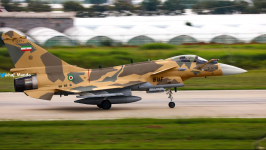
This art paint ......It's very Iranian.

The fighter is a PLAAF J-10C.
if you want to do an Iranian version with an artistic paint job, you should use the PAF version or the public show version of the J-10CE to do the modifications.
1751167504039.png
To view this content we will need your consent to set third party cookies.
For more detailed information, see our cookies page.
 

Users who are viewing this thread

Pakistan Defence Latest

Country Watch Latest

Latest Posts

Back
Top