
Pakistani Dragon
Elite Member


What are the latest rumours of further PAF inductions of J-10Cs?
Follow along with the video below to see how to install our site as a web app on your home screen.
Note: This feature may not be available in some browsers.

Pakistan will face serious problems in the next conflict. India is expanding the production of BrahMos missiles. Next time, India will launch more than 100 BrahMos missiles at a time.You don't need to explain this. They have always believed that it was their Swedish AWACS that guided the PL-15. I think this statement is a joke. But they thought it was true. You're wasting your breath. Did you see what Michael said about this?
Public information in China states that Pakistan has four HQ9 and eight HQ16 missile systems. Each HQ9 system has 16 rounds of ammunition (with four launch vehicles), while each HQ16 system has 24 rounds, for a total of 256 rounds. However, public information indicates that the HQ9 system is expensive, costing $200 million per system. If this price is true, Pakistan really cannot afford it.Pakistan will face serious problems in the next conflict. India is expanding the production of BrahMos missiles. Next time, India will launch more than 100 BrahMos missiles at a time.
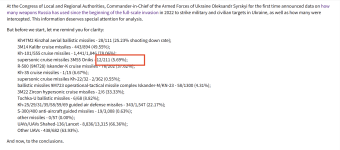
Judging from the Ukrainian army's success rate in intercepting P800, Pakistan will suffer heavy losses.
View attachment 138705
5.69% success rate,This is considering that Ukraine has a large number of PAC-2/3,IRIS-T SLM,NASAMS
There are only about 2-3 HQ9 and 7-8 HQ16 units in Pakistan,The success rate will only be lower

I have always been skeptical about this issue. But the latest official video explains the process in full. So, the answer is yes: “The Erieye AEW&C can guide PL-15 missiles.” But it is very different from the KJ-500.You don't need to explain this. They have always believed that it was their Swedish AWACS that guided the PL-15. I think this statement is a joke. But they thought it was true. You're wasting your breath. Did you see what Michael said about this?
Therefore, need to rely KJ500 expand the HQ-9 interception envelopePublic information in China states that Pakistan has four HQ9 and eight HQ16 missile systems. Each HQ9 system has 16 rounds of ammunition (with four launch vehicles), while each HQ16 system has 24 rounds, for a total of 256 rounds. However, public information indicates that the HQ9 system is expensive, costing $200 million per system. If this price is true, Pakistan really cannot afford it.
turkey shot down the Su-24 a few years ago using this tactic. The F-16 did not turn on its radar, and all target information was provided by the E-7.Guidance Mode Two:
The AEW&C continuously sends updated data to the fighter via the datalink, and the fighter continuously guides the PL-15 missile based on the AEW&C's data using the fighter's fire control radar. Until the PL-15's AESA turns on and completes lock-on, the fighter guidance mission ends. Please It should be noted that in this state, the fighter's radar does not detect the target throughout the entire mission, and it relies solely on the AEW&C data and continues to work until the PL-15's own AESA is turned on, then it can leave. there is no direct communication between the PL-15 missile and the AEW&C throughout the entire mission.
Doesn't the second mode still mean the fighter is guiding the PL-15? We're discussing the AWACS's ability to directly guide the PL-15. The Erieye aircraft clearly can't directly guide the PL-15. What they have always said is that during this process the J10C radar is not turned on and is only responsible for launching PL15.I have always been skeptical about this issue. But the latest official video explains the process in full. So, the answer is yes: “The Erieye AEW&C can guide PL-15 missiles.” But it is very different from the KJ-500.
The AEW&C finds the target, but the J-10CE's radar does not. the AEW&C transmits the targeting information to the fighter via a datalink, and the fighter launches the PL-15 missile.
Guidance Mode One:
The AEW&C takes over guidance of the PL-15 missile, and the fighter returns to or leaves its combat position. When the PL-15 is about to approach the target, the AESA it carries turns on, and when it finds and locks on to the target, the AEW&C ends the guidance work. the PL-15 completes the subsequent mission completely autonomously.
Guidance Mode Two:
The AEW&C continuously sends updated data to the fighter via the datalink, and the fighter continuously guides the PL-15 missile based on the AEW&C's data using the fighter's fire control radar. Until the PL-15's AESA turns on and completes lock-on, the fighter guidance mission ends. Please It should be noted that in this state, the fighter's radar does not detect the target throughout the entire mission, and it relies solely on the AEW&C data and continues to work until the PL-15's own AESA is turned on, then it can leave. there is no direct communication between the PL-15 missile and the AEW&C throughout the entire mission.
Only PLAAF's AEW&Cs can use both modes to guide the PL-15 missile; other AEW&Cs can only use the second guidance mode.
In the latest official video of the J-10C defeating the J-20, it is using the second guidance mode.
The disadvantage of this mode is that after the fighter launches the missile, it needs to guide the PL-15 missile continuously and cannot leave the combat position.
Furthermore, I suspect that aircraft 01 and 02 were working together during the video. According to your explanation, if it were simply guidance, there would be no need for the radars of aircraft 01 and 02 to illuminate the same target simultaneously. During this period, the J10C should rely on the coordination of its onboard radar to guide the PL15. The AWACS aircraft was not involved. Otherwise, aircraft 03 would not have been requested to coordinate the scan.I have always been skeptical about this issue. But the latest official video explains the process in full. So, the answer is yes: “The Erieye AEW&C can guide PL-15 missiles.” But it is very different from the KJ-500.
The AEW&C finds the target, but the J-10CE's radar does not. the AEW&C transmits the targeting information to the fighter via a datalink, and the fighter launches the PL-15 missile.
Guidance Mode One:
The AEW&C takes over guidance of the PL-15 missile, and the fighter returns to or leaves its combat position. When the PL-15 is about to approach the target, the AESA it carries turns on, and when it finds and locks on to the target, the AEW&C ends the guidance work. the PL-15 completes the subsequent mission completely autonomously.
Guidance Mode Two:
The AEW&C continuously sends updated data to the fighter via the datalink, and the fighter continuously guides the PL-15 missile based on the AEW&C's data using the fighter's fire control radar. Until the PL-15's AESA turns on and completes lock-on, the fighter guidance mission ends. Please It should be noted that in this state, the fighter's radar does not detect the target throughout the entire mission, and it relies solely on the AEW&C data and continues to work until the PL-15's own AESA is turned on, then it can leave. there is no direct communication between the PL-15 missile and the AEW&C throughout the entire mission.
Only PLAAF's AEW&Cs can use both modes to guide the PL-15 missile; other AEW&Cs can only use the second guidance mode.
In the latest official video of the J-10C defeating the J-20, it is using the second guidance mode.
The disadvantage of this mode is that after the fighter launches the missile, it needs to guide the PL-15 missile continuously and cannot leave the combat position. More accurately, the AEW&C does not guide PL-15 missiles in this model, but it enhances the fighter's guidance capability.
So, the claim that “Erieye AEW&C can't guide PL-15 missiles” is also valid.
That's the situation.
This approach creates a chicken and egg scenario for the export of Chinese weapons systems. If China wants to develop a weapons export industry, then it needs to work out an effective approach. Maybe the reason why Chinese weapons exports are so low, are precisely because of the approach you have articulated ?
Research on simultaneously operating aircraft A and B to counter stealth fighters has long been conducted in China. Aircraft B receives the transmissions from aircraft A, and aircraft A receives the transmissions from aircraft B. However, no one knows how far this method has progressed.I have always been skeptical about this issue. But the latest official video explains the process in full. So, the answer is yes: “The Erieye AEW&C can guide PL-15 missiles.” But it is very different from the KJ-500.
The AEW&C finds the target, but the J-10CE's radar does not. the AEW&C transmits the targeting information to the fighter via a datalink, and the fighter launches the PL-15 missile.
Guidance Mode One:
The AEW&C takes over guidance of the PL-15 missile, and the fighter returns to or leaves its combat position. When the PL-15 is about to approach the target, the AESA it carries turns on, and when it finds and locks on to the target, the AEW&C ends the guidance work. the PL-15 completes the subsequent mission completely autonomously.
Guidance Mode Two:
The AEW&C continuously sends updated data to the fighter via the datalink, and the fighter continuously guides the PL-15 missile based on the AEW&C's data using the fighter's fire control radar. Until the PL-15's AESA turns on and completes lock-on, the fighter guidance mission ends. Please It should be noted that in this state, the fighter's radar does not detect the target throughout the entire mission, and it relies solely on the AEW&C data and continues to work until the PL-15's own AESA is turned on, then it can leave. there is no direct communication between the PL-15 missile and the AEW&C throughout the entire mission.
Only PLAAF's AEW&Cs can use both modes to guide the PL-15 missile; other AEW&Cs can only use the second guidance mode.
In the latest official video of the J-10C defeating the J-20, it is using the second guidance mode.
The disadvantage of this mode is that after the fighter launches the missile, it needs to guide the PL-15 missile continuously and cannot leave the combat position. More accurately, the AEW&C does not guide PL-15 missiles in this model, but it enhances the fighter's guidance capability.
So, the claim that “Erieye AEW&C can't guide PL-15 missiles” is also valid.
That's the situation.
For missiles like BrahMos,Saab AWACS is difficult to play its due role
The detection range of ground radar for this Low altitude supersonicmissile is no more than 70 km. interception window not exceed 10S
.The most effective way to counter BrahMos missiles is AWACS guided HQ9,
View attachment 138702
That is CEC,this is USA solution solve USSR hypersonic missiles,Similar to China,
E2D guides Sm-6.Saab AWACS cannot guide Chinese missiles,Unable to intercept BrahMos
View attachment 138703
It is not appropriate to talk about matters related to Turkey as a Chinese in this forum. In order to minimize unnecessary trouble, you are advised not to discuss topics involving Turkey in the future.turkey shot down the Su-24 a few years ago using this tactic. The F-16 did not turn on its radar, and all target information was provided by the E-7.
The customer is God! What the customer says is right!What they have always said is that during this process the J10C radar is not turned on and is only responsible for launching PL15.
Specific details cannot be discussed.Furthermore, I suspect that aircraft 01 and 02 were working together during the video. According to your explanation, if it were simply guidance, there would be no need for the radars of aircraft 01 and 02 to illuminate the same target simultaneously. During this period, the J10C should rely on the coordination of its onboard radar to guide the PL15. The AWACS aircraft was not involved. Otherwise, aircraft 03 would not have been requested to coordinate the scan.


