Pakistan Solar Power: News & Updates

Pakistan tyre maker commissions 2.5MW solar power system at manufacturing facility

BR Web Desk
1755787947616.png

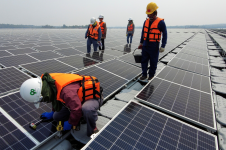
Panther Tyres Limited, a Pakistani tyre maker, has commissioned a 2.5MW solar power system at its manufacturing facility, marking a significant step toward renewable energy adoption.

The listed company disclosed the development in its notice to the Pakistan Stock Exchange (PSX) on Thursday.

“We are pleased to inform you that Panther Tyres Limited has successfully commissioned a 2.5MW solar power system at its manufacturing facility,” read the notice.

The company was of the view that the commissioning would strengthen its energy mix by meeting a considerable portion of its power requirements through clean and renewable sources.
 
There has been a growing shift towards alternative energy sources in Pakistan, especially solar, which has become increasingly popular among residential and commercial sectors.

This rising trend has left decision-makers grappling with its implications for the national grid and energy sector, as electricity consumption remains stagnant.

Nonetheless, several projects have been initiated to exploit this relatively cheaper energy source.

Earlier this month, Kohinoor Mills Limited (KML) announced plans of installing a 7.2-megawatt solar power system as part of its push for sustainable operations and cost efficiency.

Dewan Cement Limited successfully commissioned a 6 MW solar power system at its manufacturing facility in Karachi.

In May, International Steels Limited (ISL), a subsidiary of International Industries Limited, completed and activated a 6.4-megawatt (MW) solar power project at its factory in Karachi.

In March, Tariq Corporation Limited (TCORP), engaged in the manufacturing of sugar and its by-products, announced plans to set up a 200KW solar power system at its facility.
 
The 10pc decline in power demand in the public grid between 2022 and 2023, while the economy grew, can be partly explained by examining the import statistics for PV panels. In 2024 alone, the imported solar generation capacity amounted to 22GW (compared to 46GW of mostly conventional capacity operating in the public grid in 2023), primarily adding to private installations behind the meter.

“The chaotic development, intensified by sharply rising public electricity prices and unsatisfactory reliability of the grid, is creating new opportunities but also causing social problems,” it said. It highlighted new challenges in managing the transition in emerging economies with intense sunshine. “In the case of Pakistan, it appears that a combination of key cost trends has reached a systemic tipping point,” the report said.

Pakistan’s renewable electricity capacity was 15.2GW in 2024, up from 14.2GW in 2023. While hydropower, with a total capacity of 11.5 GW, was the most important component of this capacity, solar energy is the fastest-growing source of energy. In 2024, the total capacity of solar energy was 1.4GW, up from 1.2GW at the end of 2023, while wind constituted 1.8 GW, the same as the two previous years.
 
Hello lads,

I wanted to know if setting up reasonable size solar farm ( 300sqm) in rural village, gujar Khan area, is of benefit? Primarily I wanted to your view on;

1. Will the cost of installation/maintenance equal to the income from the grid?

2. What’s the best shelf life can one expect of solar installations in pk?

3. Is there a market in the rural villages to sell solar energy via renting out fully charged batteries.

Thank you Gentlemen!
Flying Rasta
 
Hello lads,

I wanted to know if setting up reasonable size solar farm ( 300sqm) in rural village, gujar Khan area, is of benefit? Primarily I wanted to your view on;

1. Will the cost of installation/maintenance equal to the income from the grid?

2. What’s the best shelf life can one expect of solar installations in pk?

3. Is there a market in the rural villages to sell solar energy via renting out fully charged batteries.

Thank you Gentlemen!
Flying Rasta
Salam bro,

I know a few people who have set up battery banks on their land in rural Punjab. The problem is this is mostly done under the radar because of the red-tape associated with getting thr required NOC and approvals from government.

So its more of a cottage industry. There are government solar parks including a 50 MV solar farm in Cholistan and a 900 MV solar park in Bahawalpur.

This doesn't include the solar farm in Gawadar which is operated by China.

There is a pre feasibility business plan for such projects, it is dated but will give you some food for thought and a rough idea on financials. I'm attaching the PDF doc here.
 

Attachments

Ws RR,

It’s intended to benefit my house; and the surplus energy to be either sold to grid, or if more lucrative, sold as rented charged batteries to local householders within a 100 house village.

The size of the farm would be reactively small - 300 sq meters.

If anyone has expertise in this sector and willing to engage for a chat, please pm me.

FR.
Jzk
 
Ws RR,

It’s intended to benefit my house; and the surplus energy to be either sold to grid, or if more lucrative, sold as rented charged batteries to local householders within a 100 house village.

The size of the farm would be reactively small - 300 sq meters.

If anyone has expertise in this sector and willing to engage for a chat, please pm me.

FR.
Jzk

Grid won't buy any surplus electricity you generate off you sadly. But you can run a battery farm there is no law against that as you are generating your own electricity.

People also rent out charged batteries in shops in rural areas and even offer phone charging stations so if your home is situated in a rural area where there is a reasonable population - this is an option for you to generate an income from any surplus.

My advise if possible have a look around some of the small battery farms in Bhakkar.

Aside from that hope you get linked with someone who can help further.
 
At the moment the solar production in rural areas is mainly used to run tube wells for irrigation. Our farm does it. People are also slowly adapting solar power to run their lights and fans.
 
At the moment the solar production in rural areas is mainly used to run tube wells for irrigation. Our farm does it. People are also slowly adapting solar power to run their lights and fans.
So no market for charging UPS type batteries and renting to local residents - obviously at prices cheaper than charging them through mains electricity.
 

Solar-powered farming is digging Pakistan into a water catastrophe

Reuters

View attachment 150906

A worker installs a folding solar panel unit, to run a tube well, the motorised pump that taps groundwater, in a rice field in Muridke, Sheikhupura District in Punjab province. Photo: Reuters

MURIDKE: Karamat Ali’s cows and buffalos once provided his multi-generational family with milk. But earlier this year, the 61-year-old sold about a dozen bovine - and spent the proceeds on a set of solar panels.

The rice farmer in Pakistan’s Punjab province now uses his panels to power a tube well, which is composed of a water well and a motorised groundwater pump.

The device allows Ali to irrigate his crops with greater ease and frees him from depending on the erratic electricity grid and pricey diesel to power the pump.

“Water supply to my paddy feed is smoother than before,” he said. As Pakistan undergoes a solar revolution, farmers like Ali are increasingly ditching diesel and grid power for sun-powered tube wells, according to interviews with 10 growers, as well as government officials and analysts.
 
The solar boom has coincided with the rapid depletion of water tables in Pakistan’s most populous province, according to previously unreported Punjab water authority documents viewed by Reuters.

The documents did not pinpoint any cause.

Six of the farmers told Reuters that they had started irrigating their rice paddies far more regularly - including up to several times a day as part of a practice known as pulse irrigation - which would not have been possible without solar water pumps.

Farmers are also choosing to grow more thirsty rice crops than in previous years, with the size of rice fields in Pakistan increasing 30% between 2023 and 2025, US Department of Agriculture data show. Meanwhile, the amount of land dedicated to growing less water-intensive maize fell 10%.

There are no recent official estimates on the number of tube wells in Pakistan, which doesn’t require their registration.

But so widespread is their use that farmers choosing to power the devices with solar are set to drive a 45% collapse in the amount of grid electricity consumed by the agriculture sector in the three years through 2025, said energy economist Ammar Habib, who serves as an advisor to Pakistan’s power minister.

His estimate was based on consumption data published by the national energy authority.

Reuters’ calculations based on Habib’s data, which were reviewed by Habib and Lahore-based renewables analyst Syed Faizan Ali Shah, indicate that some 400,000 tube wells that once relied on grid electricity have switched to solar.

Farmers using solar panels have likely purchased an additional 250,000 tube wells since 2023, Habib estimates, signalling that the sun now powers roughly 650,000 such devices across Pakistan.

Details about the scale of Pakistani agriculture’s transition to solar and its impact on groundwater are being reported for the first time.

The solar boom in Pakistan, which was encouraged by a sharp increase in power tariffs in 2023, is being replicated worldwide.
 
Heavy production of solar panels in China has driven an 80% collapse in prices of the modules since 2017, prompting farmers from lushly forested Brazil to drought-prone Iraq to turn to the sun to power their irrigation systems.

The explosion in availability of cheap solar panels is posing a particular threat to water levels in the South Asian bread basket of Punjab.

The water table has shrunk below 60 feet - a level designated as critical by the provincial irrigation department - across 6.6% of Punjab as of 2024, according to maps published for internal use by water authorities and seen by Reuters.

That marks an increase of some 25% between 2020 and 2024, while the deepest pockets - with water levels beyond 80 feet - more than doubled in size during the same period.

Pakistan power minister Awais Leghari told Reuters in June that it was a “misconception that solar tube wells are depleting groundwater.”
 
The switch to solar has allowed 61-year-old Mohammad Naseem to save some 2 million rupees (about $7,000) - or more than quadruple Pakistan’s gross domestic product per capita - in power costs since he bought his panels four years ago.

The ability to irrigate at will has increased production modestly by between 400 and 600 kg of rice each year, he said, though the quality of the crop yield has improved, allowing Naseem to obtain better prices.

“I wash it with water. I sleep near it,” said Naseem, who prizes his panels so much that he dismantles them every evening and brings them home from the fields to prevent possible theft.

“Solar panels should be installed at all costs,” said 38-year-old subsistence farmer Rai Abdul Ghafoor, who has been saving for a purchase.

While poorer farmers like Ghafoor are still reliant on diesel and grid power, many agriculture-dependent villages have pooled sums to purchase the panels as communal property.

Haji Allah Rakha, an 80-year-old farmer who has 16 panels, shares them with two other families. “They contribute, and we all benefit,” he said.

“Farmers share, rent and move panels like tractors,” said Lahore-based solar-panel merchant Shahab Qureshi.

“They sell land, jewellery, or take loans just to get it. Within five to six months, your return on investment is fulfilled.”
 
The switch to solar has allowed 61-year-old Mohammad Naseem to save some 2 million rupees (about $7,000) - or more than quadruple Pakistan’s gross domestic product per capita - in power costs since he bought his panels four years ago.

The ability to irrigate at will has increased production modestly by between 400 and 600 kg of rice each year, he said, though the quality of the crop yield has improved, allowing Naseem to obtain better prices.

“I wash it with water. I sleep near it,” said Naseem, who prizes his panels so much that he dismantles them every evening and brings them home from the fields to prevent possible theft.

“Solar panels should be installed at all costs,” said 38-year-old subsistence farmer Rai Abdul Ghafoor, who has been saving for a purchase.

While poorer farmers like Ghafoor are still reliant on diesel and grid power, many agriculture-dependent villages have pooled sums to purchase the panels as communal property.

Haji Allah Rakha, an 80-year-old farmer who has 16 panels, shares them with two other families. “They contribute, and we all benefit,” he said.

“Farmers share, rent and move panels like tractors,” said Lahore-based solar-panel merchant Shahab Qureshi.

“They sell land, jewellery, or take loans just to get it. Within five to six months, your return on investment is fulfilled.”

Good news, solar tubewells will save $$$. But government need to start working on managing and educating farmers. Work on recharging ground water, educating farmers to use less ground water etc
 
To mitigate rising fuel costs, Artistic Denim Mills Limited (ADML), a leading player in Pakistan’s textile industry, has turned to renewable energy solutions.

In its annual report, made available to the Pakistan Stock Exchange (PSX) on Friday, the company announced the successful commissioning of a 2.32MW solar power facility, while installation work on an additional 2.57MW project is currently underway, with completion targeted for the first quarter of the financial year 2025-26.

The development comes at a time when high fuel and energy costs continue to trim margins across the textile industry, a vital sector for Pakistan’s economy.

ADML, engaged in manufacturing and selling rope dyed denim fabrics, yarn, noted that the textile industry continues to contribute substantially to GDP, employment generation, and export earnings.
 

Users who are viewing this thread

Back
Top