IMF Data: Türkiye now the world's largest Muslim-majority economy, surpassing Indonesia

Malaysia get huge benefit from semi conductor investment from US companies for decades

Its export around 300 billion USD per year (almost comparable with its total GDP) where semi conductors are the dominant portion of its total export

They also has much oil and gas (relative to its low population) that is essential to build much of its infrastructure in its beginning period (Petronas SOE), and with having relatively big land in mainland SEA and Borneo Island that enable them to be second biggest producer of Palm Oil within vast agriculture land

Malaysia’s semiconductor exports were robust in 2024, reaching approximately 575 billion ringgit, or US$130 billion.

The country contributes about 13 percent of the world’s semiconductor testing and packaging, with increasing investments in integrated circuit (IC) design aimed at establishing a major IC design hub.

Additionally, Malaysia holds about 7 percent of the global semiconductor market, with aspirations to double this share to 14 percent by 2029 through strategic investments and advancements in chip design.

 
should look at PPP for more accurate picture, not USD nominal numbers

Each unit has its own advantages and disadvantages. Personally, I rely on PPP to assess if a country can achieve its self-set objectives in sectors such as domestic infrastructure and technology or scientific fields. Conversely, hard dollars (current USD) represent the currency used in trade agreements and realpolitik which is currently more relevant IMO.

GDP PPP (IMF):

- Indonesia: $5.02 trillion
- Turkey: $3.77 trillion
- Saudi: $2.69 trillion
- Egypt: $2.38 trillion
- Iran: $1.88 trillion
- Pakistan: $1.67 trillion
- Malaysia: $1.48 trillion
- UAE: $0.93 trillion
- Qatar: $0.38 trillion

Egypt seems to be underperforming considering it has 120 million population and no sanctions

Egypt is a mystery. Despite being on the brink of financial and economic collapse, the Egyptian state continues to operate, and the citizens of Egypt seem to accept their unfortunate situation. I mean, go out, protest?!

Iran would be Turkey++ without 50 years of US economic embargo and incompetent government, as Iran has the 5th most valuable mineral reserves of any country in the world
Iran's economy would be much larger than it currently is, that's undeniable. Probably on the same level as Türkiye right now but not much larger. I have my doubts about the likelihood of your statement, considering the attitude of the Iranian leadership. After the JCPOA was signed, I clearly recall how many Iranian initiatives were suddenly dropped over night in favor of their Western equivalents. Cars, solar projects, wind trubines, white goods, medical stuff were among these projects. I remember having read about it and some Iranian nationalists were unhappy about this.

Nevertheless, it's true that Iran would be far more successful and wiser than Saudi Arabia with all those financial resources.


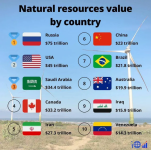
The ranking lacks reliability. Venezuela has greater proven oil reserves compared to Saudi Arabia. Iran's natural resources surpass those of Saudi Arabia because of its extensive mineral deposits and so on...
 
considering neither country has major mineral reserves, it's quite impressive from Indonesia. although you benefit from existing in a more peaceful neighbourhood than Pakistan and other countries on this list.

Indonesia is rich. The country has vast amounts of natural resources like oil, gas, nickel, copper, gold, coal, timber, palm oil, fertile lands and so on. I believe they have the world's largest nickel reserves. Without nickel no EV industry.
 
Malaysia’s semiconductor exports were robust in 2024, reaching approximately 575 billion ringgit, or US$130 billion.

The country contributes about 13 percent of the world’s semiconductor testing and packaging, with increasing investments in integrated circuit (IC) design aimed at establishing a major IC design hub.

Additionally, Malaysia holds about 7 percent of the global semiconductor market, with aspirations to double this share to 14 percent by 2029 through strategic investments and advancements in chip design.


Despite huge export for countries like Malaysia and Vietnam, but overall to see country economic benefit from trade need to see the trade surplus

Despite much smaller than Vietnam total export and smaller than Malaysia export, Indonesia still be able to post better trade surplus, at least so far until August 2025

-----------


Notes & sources
  • Indonesia’s Jan–Aug 2025 cumulative surplus: USD 29.14 bn (BPS press release).
  • Malaysia’s Jan–Aug 2025 cumulative surplus: RM 86.07 bn (MATRADE/DOSM). Converted using the average monthly USD per MYR over Jan–Aug 2025 (~0.23042), yielding ≈ USD 19.83 bn.
  • Vietnam’s Jan–Aug 2025 cumulative surplus: USD 13.99 bn (Reuters citing GSO).
Quick takeaway: Indonesia leads (≈ USD 29.1 bn), followed by Malaysia (≈ USD 19.8 bn), then Vietnam (≈ USD 14.0 bn) for Jan–Aug 2025.
 
Anyway impressive by Turkey but helps being closely integrated with the European market (for the past 100 years) and having almost 90 million people. Still not sure how it can be this high when Turkey has a continuous trade deficit almost every single year.
Although it remains an issue, its significance has diminished over the years.

Turkey Current Account to GDP
2022: -5.1%
2023: -3,5%
2024: -0,8%

This has happened because of our expanding economy (exports) and the weakening currency. Our existing deficit arises from significant gold and energy imports; however, when excluding gold, Turkiye's current account is basically zero.

Turkey's proximity to European markets, or her geographical location in general, has certainly been advantageous. There is also a European narrative that is frequently ignored by some Muslims and certain racists in the West. We are a Middle Eastern and a Eruopean nation at the same time. The Ottoman Empire was a Balkan Empire from the beginning.
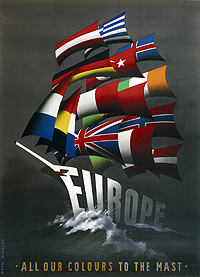
So, indeed, we have benefited from our strong ties with Europe. We were included in the Marshall Plan.

Affiche-ERP-Dirksen-1950.jpg


On the other hand, Saudi Arabia's relationship with the US/UK is far more deep and profound than anything the Turks have established with the Europeans. That is also a fact. They basically built Saudi Arabia's economy from scratch. The mindblowing revenue that Riyadh is earning from its energy resources is almost incomprehensible for the average person.

This is why many well-educated Muslims and Arabs feel disappointed with you guys. The Kingdome is significantly underachieving considering the resources it has. Many projects are just superficial, often times masking the need for real change and reforms. FYI, I am not claiming that Türkiye is perfect, far from it, but Saudi Arabia is the textbook example of a rentier state.

I genuinely hope for change. It is in our interest to have a modern, competitive and independent Saudi Arabia.
 
Last edited:
Despite huge export for countries like Malaysia and Vietnam, but overall to see country economic benefit from trade need to see the trade surplus

Despite much smaller than Vietnam total export and smaller than Malaysia export, Indonesia still be able to post better trade surplus, at least so far until August 2025

-----------


Notes & sources
  • Indonesia’s Jan–Aug 2025 cumulative surplus: USD 29.14 bn (BPS press release).
  • Malaysia’s Jan–Aug 2025 cumulative surplus: RM 86.07 bn (MATRADE/DOSM). Converted using the average monthly USD per MYR over Jan–Aug 2025 (~0.23042), yielding ≈ USD 19.83 bn.
  • Vietnam’s Jan–Aug 2025 cumulative surplus: USD 13.99 bn (Reuters citing GSO).
Quick takeaway: Indonesia leads (≈ USD 29.1 bn), followed by Malaysia (≈ USD 19.8 bn), then Vietnam (≈ USD 14.0 bn) for Jan–Aug 2025.
Exports aren't just about earning money. They're about building our industries and creating jobs for our people. Vietnam's low trade surplus is easy to understand when you look closer. We don't have many resource-based or primary commodity exports. Most of what we sell abroad are electronics, but the high-value parts of that supply chain are still controlled by South Korean and Chinese firms. Beyond that, our main exports are agricultural products, footwear, and garments, which continue to rely heavily on labor-intensive production.
 
All the Muslim countries together have a nominal GDP of $9.1 trillion and PPP GDP of $28 trillion.

The GDP of the European Union is $19 trillion nominal and $29-54 trillion PPP.

So, if Muslims had an EU like structure they would be a major power in the world, instead of the helpless victims of every Tom, Dickstien, and Hanuman.
 
Iran would be Turkey++ without 50 years of US economic embargo and incompetent government, as Iran has the 5th most valuable mineral reserves of any country in the world


1 -- What about the economic costs of separatist PKK Terrorism in Turkiye since 1984 ?

Numan Kurtulmuş, a member of the Ak party and former government spokesman "PKK’s terrorism costs Turkiye $2 trillion since 1984"

Souce : https://www.democraticprogress.org/...12/The-Impact-of-Four-Decades-of-Conflict.pdf


-----------------------------------


2 -- What about the economic costs of USA backed military coups in Turkiye by 1960 , 1971 , 1980 , 1997 , 2016 ?

From 1950 to the end of 2002, total of 58 governments were formed. The average lifespan of these governments during this period was less than one year

Furthermore, constantly changing electoral systems, economic stabilization packages and devaluations, and constitutions that were completely or partially amended after each military intervention indicate serious political instability in Turkiye

The conclusion reached as a result of the econometric study is that coups and coup attempts had a negative impact on the Turkiye's GDP of approximately 26%

If there had been no military coups since 1960, Turkish GDP would have been 26% larger...... ( Turkiye would have $1,9 trillion of GDP instead of $1,5 trillion )

Source : https://dergipark.org.tr/tr/download/article-file/223238


-----------------------------------

3 -- What about the economic costs of USA-France backed attacks on Turkiye - Turkish economy between 2013 and 2020 inside Turkiye , in Syria , Libya and in the Eastern Mediterranean ?

Turkiye's GDP reached $957 billion in 2013, decreased to $720 billion dollars by 2020. When Turkiye’s national income is calculated on a USD basis, we see that it has decreased by 25% in 7 years


-----------------------------------

4 -- Turkiye doesn't have rich oil and gas reserves unlike Iran , S.Arabia

In 2024, agriculture contributed 5.59 % to GDP, while Industry 25.94 %
and services accounted for 56.82 % respectively


Despite all these negativities, Turkiye has the largest economy in the Islamic world.
 
Before ERDOGAN and After ERDOGAN ( 2001 - 2025 )


Germany vs Turkiye

in 2001
almost 10 x Turkiye = 1 Germany
Germany : $1,96 trillion
Turkiye : $201 billion

in 2025
almost 3 x Turkiye = 1 Germany
Germany : $5 trillion
Turkiye : $1,57 trillion

---------------------------

Greece vs Turkiye

in 2001
Greece : $132 billion
Turkiye : $201 billion

in 2025
Greece : $282 billion
Turkiye : $1,57 trillion

-----------------------------

Türkiye's economy has been growing for 21 consecutive quarters
Accordingly, the Turkish economy has been one of the fastest growing economies among OECD countries in the last 10 years, growing by an average annual rate of 4.9%
 
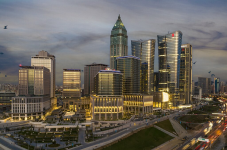
Turkiye’s key economic sectors are tourism, banking, construction, home appliances, electronics, automotive, shipbuilding , trains, locomotives and wagons , defense industry , textiles , furniture , shoe , oil refining, petrochemical products, food , iron and steel, machine industry, mining (coal, chromite, copper, boron , marble ), lumber, paper. plastic , glass and Agricultural sector

Industry
Tourism
Construction
Transport
Banking and Finance
1760505068914.png

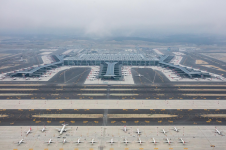
-- New ISTANBUL Airport contribute $44 billion to the Turkiye's GDP
-- Turkish Airlines total contribution to the Turkish Economy will be $140 billion by 2033
1760506308774.png

Turkish Airlines plans major fleet expansion with 813 Aircraft by 2033
( Turkish Airlines buys 575 new Planes for $100 billion to become 1 of top 5 in the world )

AIRBUS
-- 80 A350-900
-- 20 A350-1000
-- 250 A321 NEO

BOEING
-- 150 737 MAX
-- 75 787 Dreamliner
1760505809402.png
 
should look at PPP for more accurate picture, not USD nominal numbers

GDP PPP (IMF):

- Indonesia: $5.02 trillion
- Turkey: $3.77 trillion
- Saudi: $2.69 trillion
- Egypt: $2.38 trillion
- Iran: $1.88 trillion
- Pakistan: $1.67 trillion
- Malaysia: $1.48 trillion
- UAE: $0.93 trillion
- Qatar: $0.38 trillion

Egypt seems to be underperforming considering it has 120 million population and no sanctions

Indonesia has 280 million population so makes sense it is the largest economy

Iran would be Turkey++ without 50 years of US economic embargo and incompetent government, as Iran has the 5th most valuable mineral reserves of any country in the world

View attachment 154043

As Mark Twain said: "There are lies, damned lies and statistics".

First of all, IMF doesn't produce its own data on GDP, but relies on statistical data collected by Statistical Agencies of different countries. IMF then process this data and publishes its own IMF statistics based on information provided by Statistical Agencies of different countries.

Second, Statistical Agencies of different countries either include partially or don't include at all Shadow economy in their GDP calculation.

Shadow economy = Informal Economy + Illegal Economy.

Fore example, in 2019 Russian Statistical Agency estimated shadow economy of Russia at 12% of GDP and included this data in its GDP and provided this data to the IMF.

But independent IMF research on shadow economy of different countries put Russian shadow economy size at 35% of GDP. So in 2019 Russian economy was significantly underestimated.

The most precise data on GDP is that of EU countries. These countries has small shadow economies but even this is estimated by Statistical Agencies of EU countries and included in their GDPs.

EU countries even include illegal prostitution and drug trade in their GDP calculation and this adds another 1% to their GDP.

But even EU countries still have some 4% of GDP as shadow economy that is missed in calculations and is not included in their GDPs.

In Iran shadow economy is large because of sanctions, smuggling, cash transactions and is estimated to be 35-40% of GDP.

So real GDP PPP of Iran is not 1,88trln$ but 2,53trln$ assuming 35% shadow economy.

Then there are countries like India and Egypt that have overestimated GDPs due to defected data collection methods and defected GDP calculations.

Lets compare Egypt with Iran by other indicators of economy size like electricity consumption and car sales.

According to IMF:
Egypt's GDP PPP is 2,38trln$ and GDP PPP per capita is 20.000$
Iran's GDP PPP is 1,88trnl$ and GDP PPP per capita is 20.000$

So you might assume that Egypt has larger economy than Iran while Egyptians enjoy the same standard of living as Iranians.

But lets compare other indicators:

Egypt:
population: 116,5mln
urbanization rate: 43% (50mln urban dwellers)
electricity consumption: 218 bln Kwh
electricity consumption per capita: 1871 Kwh
car sales: 180.000 cars per year (1 car per 647 people)

Iran:
population: 92,5mln
urbanization rate: 77% (71mln urban dwellers)
electricity consumption: 380 bln Kwh
electricity consumption per capita: 4108 Kwh
car sales: 1000.000 cars per year (1 car per 92,5 people)

How come Egypt which has less urban population than Iran, consumes 1,75 times less electricity than Iran (despite having larger population), consumes 2,2 times less electricity per capita and has only 1 sold car per 647 people compared to 1 sold car per 92 people in Iran, has "LARGER" economy than Iran and "SAME" standard of living?

The truth is that Egyptian economy is significantly overestimated and in reality is substantially smaller than Iran's, while Iran's economy is probably underestimated by some 35-40%.
 
Last edited:
Human development Index


The HDI measures Countries' achievements in health, education, and standard of living

Uneducated - poor Kurdish Population and PKK terrorism lowering Turkiye's HDI

Istanbul : 888
West Anatolia : 871
North East Anatolia : 809
South East Anatolia : 805

Turkiye's HDI value rose from 0.598 in 1990 to 0.855 in 2022

Türkiye ranks 45th among 193 countries in this year’s edition of the Human Development Index (HDI)


-----------------------------------------

Countries with huge GDP like China and India have smaller HDI

Turkiye : 855
Kazakhstan : 837
Russia : 832
Maleysia : 819
Iran : 799
China : 797
Azerbaijan : 789
Mexico : 789
Brazil : 786
Egypt : 754
Indonesia : 728
India : 685
Bangladesh : 685
Pakistan : 544
Afghanistan : 496

Source : https://worldpopulationreview.com/country-rankings/hdi-by-country
 
Although it remains an issue, its significance has diminished over the years.

Turkey Current Account to GDP
2022: -5.1%
2023: -3,5%
2024: -0,8%

This has happened because of our expanding economy (exports) and the weakening currency. Our existing deficit arises from significant gold and energy imports; however, when excluding gold, Turkiye's current account is basically zero.

Turkey's proximity to European markets, or her geographical location in general, has certainly been advantageous. There is also a European narrative that is frequently ignored by some Muslims and certain racists in the West. We are a Middle Eastern and a Eruopean nation at the same time. The Ottoman Empire was a Balkan Empire from the beginning.
So, indeed, we have benefited from our strong ties with Europe. We were included in the Marshall Plan.

Affiche-ERP-Dirksen-1950.jpg


On the other hand, Saudi Arabia's relationship with the US/UK is far more deep and profound than anything the Turks have established with the Europeans. That is also a fact. They basically built Saudi Arabia's economy from scratch. The mindblowing revenue that Riyadh is earning from its energy resources is almost incomprehensible for the average person.

This is why many well-educated Muslims and Arabs feel disappointed with you guys. The Kingdome is significantly underachieving considering the resources it has. Many projects are just superficial, often times masking the need for real change and reforms. FYI, I am not claiming that Türkiye is perfect, far from it, but Saudi Arabia is the textbook example of a rentier state.

I genuinely hope for change. It is in our interest to have a modern, competitive and independent Saudi Arabia.
Turkey has had a trade deficit of 67 billion USD this year alone.

Turkey’s trade deficit widened to USD 6.9 billion in September 2025, from USD 5.2 billion in the same month of the previous year, according to preliminary data from the Trade Ministry. This marked the largest gap since June, as imports increased by 8.8% year-on-year to USD 29.5 billion, while exports rose at a softer pace of 3% to USD 22.6 billion. From January to September, exports rose by 4.1% to USD 200.625 billion, while imports grew by 5.9% to USD 267.651 billion, widening the trade gap to USD 67 billion.​


https://tradingeconomics.com/turkey/balance-of-trade

There is also the question of debt and low currency value of the lira.


KSA is doing very well lately. The fastest growing G20 member state, the largest economy in the world compared to population size (currently). Almost a 5% annual growth rate and in particular an impressive growth in the non-oil sector. Fastest growing in the world in fact in the past many years.

Very little debt, strong currency value, one of the largest trade surplus balances in the world, one of the largest and fastest growing sovereign wealth funds approaching 1.5 trillion combined, strong scientific growth, one of the largest and fastest growing women participations in the work force in the last few years.

KSA is in a very good place compared to just 10 years ago. The changes on all fronts have been tremendous to put it mildly.

Speaking about infrastructure projects, outside of a few vanity projects created for the sake of publicity mostly (worked very well).

KSA is basically one giant construction site nowadays.

Case in point:

Saudi Arabia construction tops $1.5 trillion as Kingdom presses ahead with ‘giga projects’​


A good overview of some of the ongoing giga projects in KSA.


The Kingdom’s total number of mega-projects has surged from just 64 in 2010 to 476 by 2025, placing it among the top three countries globally in terms of volume.


The report, titled The Future of Major Programme Delivery, defines mega-projects as those valued at $1 billion or more, while giga-projects are classified as projects worth $10 billion or more.


Saudi Arabia currently shares second place with India for the number of giga-projects, with each country hosting 43 such developments. The United States ranks first globally, with 88 active or completed giga-projects.


Overall, the United States tops the rankings for combined mega and giga-projects with 1,663, followed by India (729), Saudi Arabia (577), and the United Kingdom (484). The United Arab Emirates ranks seventh with 233 projects.​


Not bad.

In terms of tourism:


Practically in every sector you look at, KSA is taking massive strides for the better and competing on a global scale.

Of course like for any country, there is always room for improvement, KSA is no different by any means, but your post would have made much more sense just 10 years ago.

BTW all this occurs WITHOUT any taxation basically.

Taxation's share of a country's GDP varies significantly, with the OECD average at 33.9% in 2023, while some European countries like France and Belgium reached above 44%. Richer countries generally have a higher tax-to-GDP ratio than poorer countries. The World Bank suggests a tax revenue of above 15% of GDP is a key ingredient for economic growth and poverty reduction.
​
If KSA had taxation, we would be approaching an almost 2 trillion GDP (nominal) dollar economy easily.

Now imagine all of the above with 3 times the population size.

I did not even talk about natural resource and mineral wealth.

1760515596155.png


Anyway the idea that KSA was underperforming for years (largely due to self-sabotage - for instance excluding de facto half of your population (women) from your economy due to stupid laws - thankfully a thing of the past) and other factors, is for certain, but KSA of 2025, is in a completely different sphere and place. Far ahead in terms of implementing modern solutions (AI, tech) than most Western European countries. Same story with much of the GCC. We are just seeing the tip of the iceberg in terms of the upcoming Saudi Arabian generation (highly educated) and with a chip on their shoulder ready to prove themselves, in particular the women.

So yes, as you can see, there is no reason NOT to be very optimistic now that the self-inflicted harm is no longer relevant and given all the underlying data and ground realities.
 
Last edited:
Turkey has had a trade deficit of 67 billion USD this year alone.

and what ?
The USA trade gap widened sharply to $78.3 billion in July 2025


The energy import bill was $97 billion in 2022
Turkiye's energy imports decreased to $65.5 billion in 2024

The reason for the foreign trade deficit is energy imports

AKKUYU Nuclear Power Plant , renewable energy projects and domestic gas-oil production will reduce energy imports ... Foreign trade deficit will automatically decrease too

what a big money
Turkiye pays minimum $65 billion for enegry imports every year

10 years x $65 billion = $650 billion


S.Arabia and Iran are so lucky with their huge oil-gas reserves
or They would be similar to Yemen without oil-gas reserves
 

Users who are viewing this thread

Back
Top