All things SpaceX - Updates and Discussion

To view this content we will need your consent to set third party cookies.
For more detailed information, see our cookies page.


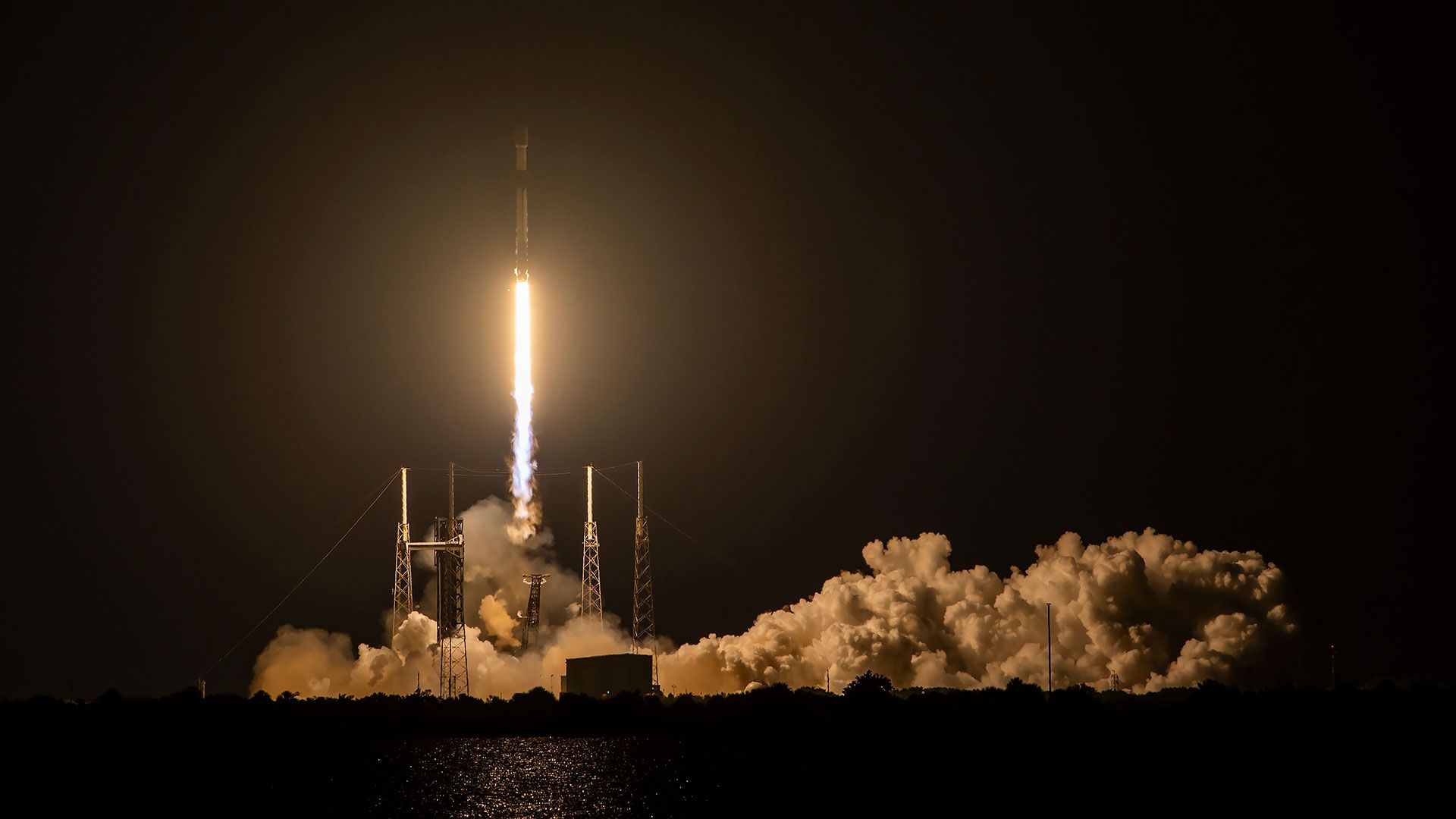
SpaceX launches the Axiom-4 mission to the ISS; lands booster 467th time, 78th launch of year
 
To view this content we will need your consent to set third party cookies.
For more detailed information, see our cookies page.


SpaceX launches another 27 Starlink satellites; lands booster 468th time, 79th launch of year
 

SpaceX has secured an $81.6 million contract to launch a U.S. military weather-monitoring satellite in 2027.

The contract for the mission designated USSF-178 was awarded on June 27 by the Space Systems Command and represents SpaceX’s third consecutive win under the National Security Space Launch (NSSL) Phase 3 Lane 1 program.

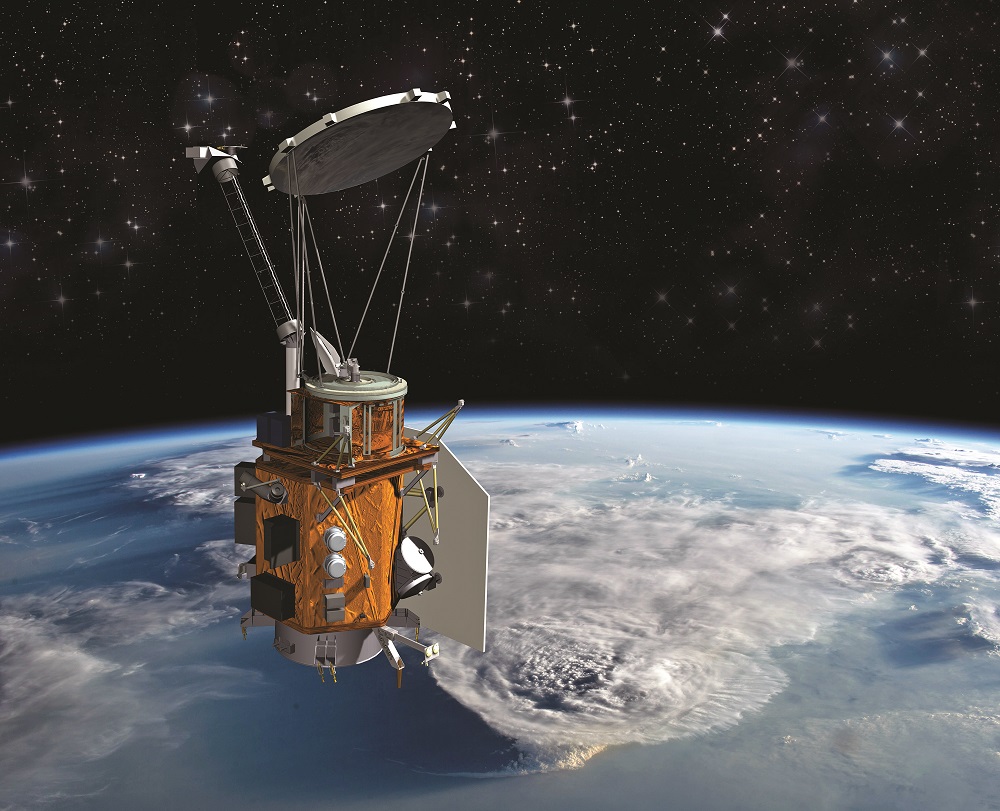
The mission will carry the Weather System Follow-on – Microwave Space Vehicle 2 (WSF-M2), along with a secondary payload of experimental small satellites called BLAZE-2.

WSF-M2 represents the second and final satellite in the WSF-M program, following its predecessor WSF-M1, which SpaceX launched to orbit in April 2024.

Weather monitoring capabilities​

Both WSF-M satellites were constructed by BAE Systems and are designed to operate in sun-synchronous orbit, providing global coverage for weather monitoring. The satellites pack sophisticated sensor arrays capable of measuring ocean surface vector winds — critical data for assessing tropical cyclone intensity and tracking storm development. Beyond hurricane monitoring, the satellites also characterize energetic charged particles in low Earth orbit, providing valuable space weather data that affects satellite operations and communications.

The WSF-M constellation also has capabilities for sea ice characterization, soil moisture assessment, and snow depth measurement.

The secondary BLAZE-2 payload will carry experimental small satellites developed by various defense agencies.

“It is a strategic advantage when we can flexibly manifest small satellites on our launch vehicles with additional capacity to support emergent operational requirements and the research and development community,” said Col. Matthew Flahive, chief of Launch Mission Solutions Delta at the Space Systems Command.

SpaceX’s NSSL dominance​

The USSF-178 contract solidifies SpaceX’s early dominance in the NSSL Phase 3 program, having secured all three of the first task orders issued under Lane 1. The previous two awards, worth a combined $733.5 million, were granted earlier this year for launching seven Space Development Agency missions and two National Reconnaissance Office missions.

The NSSL Phase 3 Lane 1 program operates as an Indefinite Delivery, Indefinite Quantity (IDIQ) contract — a flexible procurement structure that allows the government to issue task orders as needed without renegotiating terms for each mission. The total Lane 1 contract is valued at approximately $5.6 billion over five years, with SpaceX competing alongside Blue Origin and United Launch Alliance (ULA) for individual missions. Rocket Lab and Stoke Space have also been selected as vendors but cannot yet compete for task orders until their rockets achieve operational status.

Mission assurance tiers​

Lane 1 distinguishes itself from previous NSSL phases by accommodating missions with less stringent assurance requirements. The program spans from Tier 0 missions requiring no government oversight to Tier 3 missions involving more comprehensive assurance protocols for higher-risk payloads.

USSF-178 marks a milestone as the first Phase 3 Lane 1 Tier 3 mission assurance mission. The Space Systems Command designated WSF-M2 as Tier 3 due to its substantial operational risk profile — being the final satellite in a critical environmental monitoring program that directly supports military operations.
 
To view this content we will need your consent to set third party cookies.
For more detailed information, see our cookies page.


SpaceX launches another 27 Starlink satellites; lands booster 469th time, 80th launch of year
 
To view this content we will need your consent to set third party cookies.
For more detailed information, see our cookies page.


SpaceX launches another 26 Starlink satellites; lands booster 470th time, 81st launch of year
 
To view this content we will need your consent to set third party cookies.
For more detailed information, see our cookies page.


SpaceX launches the MTG-S1 mission; lands booster 471st time, 82nd launch of year
 
Trump vs Elon fued keeps growing

May be Elon Musk will relocate to Canada or Europe
 
To view this content we will need your consent to set third party cookies.
For more detailed information, see our cookies page.


SpaceX launches another 27 Starlink satellites; lands booster 472nd time, 83rd launch of year
 
To view this content we will need your consent to set third party cookies.
For more detailed information, see our cookies page.


SpaceX launches another 27 Starlink satellites; lands booster 472nd time, 83rd launch of year


SpaceX’s Falcon Rocket Hits 500 Launches, Proves Reusable Rockets Are the Future​


Booster 1067, separated from its upper stage and flew back to a landing on the drone ship "A Shortfall of Gravitas" in the Atlantic Ocean. It was the 29th successful recovery for this stage, three more than any other in SpaceX's fleet.
 
Last edited:
To view this content we will need your consent to set third party cookies.
For more detailed information, see our cookies page.


SpaceX launches another 28 Starlink satellites; lands booster 473rd time, 84th launch of year
 
To view this content we will need your consent to set third party cookies.
For more detailed information, see our cookies page.


SpaceX launches the Commercial GTO-1 mission; lands booster 474th time, 85th launch of year
 
To view this content we will need your consent to set third party cookies.
For more detailed information, see our cookies page.


SpaceX launches another 26 Starlink satellites; lands booster 475th time, 86th launch of year
 
To view this content we will need your consent to set third party cookies.
For more detailed information, see our cookies page.


SpaceX launches the KF-01 mission; lands booster 476th time, 87th launch of year
 

STARLINK'S SPEED AND LATENCY RADICALLY IMPROVED​


Median Peak-Hour Downlink in US ~200 Mbps
Median Peak-Hour Latency in US 25.7 Milliseconds
Cumulative Capacity Launched To-Date ~450 Tbps

Over the past year, Starlink has expanded to 42 new countries, territories and other markets around the world while growing by 2.7 million+ active customers globally and serving more than 6 million and counting with high-speed, low-latency internet. During that time, the SpaceX team has also launched more than 100 Starlink missions, adding 2,300+ satellites to the constellation, and invested heavily in our ground infrastructure, network backbone, and internal technologies and systems.

As a result, Starlink can provide download speeds of 100s of Mbps to individual customers. In the United States alone, the median download speed across more than 2 million active Starlink customers during times of peak demand is nearly 200 Mbps as of July 2025. Even Starlink’s lower speed tier offering currently serves customers with 100 Mbps download and 20 Mbps upload speeds in most states and territories. And as we continue to connect more people with high-speed internet around the world in the months and years ahead, the Starlink team is focused on ensuring the overall quality of service for new and existing customers continually improves.


CURRENT NETWORK PERFORMANCE​


Starlink’s speed and latency have radically improved over the past year. With an unprecedented level of growth, and more than 6 million active customers and counting globally, the network serves exponentially more users. For example, in the United States the average household is approximately 2.5 people. Starlink also connects schools, health centers, and businesses – including most major cruise lines and several commercial airlines who provide Starlink’s high-speed internet to tens of millions of passengers a year. With an ever-growing number of people using the network in the United States and around the world, the Starlink team has laid the foundation for a massive step-increase in capacity over the next few years.


networkupdate_carousel1_m.jpg


As previously detailed, Starlink engineering teams have been focused on improving the performance of our network – driving latency as low as possible, with the goal of delivering a service with stable 20 millisecond (ms) median latency and minimal packet loss.

Latency refers to the amount of time, usually measured in milliseconds, that it takes for a packet to be sent from the Starlink router to the internet and for the response to be received. This is also known as “round-trip time”, or RTT. Latency is one of the most important factors in perceived experience when using the internet – web pages load faster, audio and video calls feel closer to real-life, and online gaming is responsive.

Starlink has also deployed the largest satellite ground network ever. More than 100 gateway sites in the United States alone – comprising a total of over 1,500 antennas – are strategically placed to deliver the lowest possible latency, especially for those who live in rural and remote areas. Starlink produces these gateway antennas at our factory in Redmond, Washington where we rapidly scaled production to match satellite production and launch rate.

To measure Starlink’s latency, we collect anonymized measurements from millions of Starlink routers every 15 seconds. In the U.S., Starlink routers perform hundreds of thousands of speed test measurements and hundreds of billions of latency measurements every day. This high-frequency automated measurement assures consistent data quality, with minimal sampling bias, interference from Wi-Fi conditions, or bottlenecks from third-party hardware.

As of June 2025, Starlink is delivering median peak-hour latency of 25.7 milliseconds (ms) across all customers in the United States. In the US, fewer than one percent of measurements exceed 55 ms, significantly better than even some terrestrial operators.


NETWORK RESILIENCE​


With more than 7,800 satellites in orbit, Starlink customers always have multiple satellites in view, as well as multiple gateway sites and internet points-of-presence locations (PoPs). As a result, Starlink customers benefit from continuous service even when terrestrial broadband is suffering from fiber cuts, subsea cable damage, and power outages that can deny service to millions of individuals for days.

Additionally, each Starlink satellite is equipped with cutting-edge optical links that ensure they can relay hundreds of gigabits of traffic directly with each other, no matter what happens on the ground. This laser network enables Starlink satellites to consistently and reliably deliver data around the world and route traffic around any ground conditions that affect terrestrial service at speeds that are physically impossible on Earth.
 

Users who are viewing this thread

Pakistan Defence Latest

Latest Posts

Back
Top