Bangladesh Socio-Political Crisis 2024 and onwards

There is a rumour circulating from yesterday that there had been a rowdy meeting between the Chief Advisor Muhammad Yunus and the army chief Waqar-uz-Zaman at Jamuna House but subsequently denied by deputy press secretary to the chief adviser and coordinator Sarajis Alam -

View attachment 70987

View attachment 70988

View attachment 70989

People in social media calling it Laylatul Gujob 2.0.

Another BAL attempt to spread mass misinformation. They tried it multiple times during the revolution.
 
How this SOB got out?

@LeonBlack08 @Afif

To view this content we will need your consent to set third party cookies.
For more detailed information, see our cookies page.
 
How this SOB got out?

@LeonBlack08 @Afif

To view this content we will need your consent to set third party cookies.
For more detailed information, see our cookies page.


I am not too well versed with his misdeeds. I know that he did good work for cricket. How does his rap sheet look like?
 
Everyday Asif Nazrul is being exposed ...

Prof. Asif Nazrul's acolytes such as Adilur Rahman Khan and Md. Asaduzzaman share the same perspective to Asif Nazrul regarding Sheikh Mujbur Rahman of whom they have a very high opinion and so none of them can be trusted which is something that I have been saying for a long time.

They are completely unscrupulous and mere opportunists…

GZfuDOpbAAAzVYI.jpg
 
Looks like I just repeated an earlier post. I am pretty sure I heard Hasina claiming the same, just can’t locate the source now.
 
World Bank projects growth to fall to 4% amid political changes

bdnews24.com - 10 Oct 2024


The World Bank forecasts that Bangladesh’s economic growth will drop to 4 percent in the 2024-25 fiscal year, highlighting uncertainties amid the changing political landscape following a power shift.

In its latest outlook released on Thursday, the World Bank noted this significant decline from its previous April prediction of 5.7 percent. The development partner cited political changes and other factors for this abrupt revision.

While South Asian economies are beginning to recover, Bangladesh stands out as an exception.

The region’s growth is shifting broadly in the opposite direction compared to earlier expectations, remaining on the right track.

The Asian Development Bank, or ADB, another development partner, has also revised its forecast for the current fiscal year. It previously projected growth at 6.6 percent but now estimates it will fall to 5.1 percent amid chaos in industry and production stagnation following the power change.

The ousted Awami League government had planned a budget for the 2024-25 fiscal year based on a growth target of 6.75 percent.

However, the political turmoil triggered by movements for quota reforms in government jobs eventually led to a change in circumstances.

Following the fall of Sheikh Hasina administration, the interim government has announced plans for state reforms and economic recovery.

The World Bank's "South Asia Development" report, published two months after the interim government took office, says Bangladesh's growth will slow to between 3.2 percent and 5.2 percent, with the midpoint at 4 percent.

Previously, in April, the World Bank had forecast a growth rate of 5.7 percent for the current fiscal year.

The updated report says sluggish garment exports and the current political situation following mass protests are contributing factors to the decline in growth.

Political uncertainty is likely to hamper investment and industrial growth in the near future, while recent floods are expected to negatively affect the economy, particularly agricultural production.

The World Bank projects economic growth in Bangladesh for the fiscal year 2023-24 at 5.2 percent, slowing to 4 percent by 2024-25.

The interim government took office on Aug 8 following the resignation of the former prime minister Hasina amid widespread student-led protests.

These events have caused significant economic disruptions, including a decline in industrial and service sector activities and reduced flows of export shipments and remittances.

Despite these challenges, the report notes recent improvements in economic stability and an increase in remittance inflows.

Inflation outlooks remain less optimistic. The Washington-based institution highlights that while inflation across South Asia peaked in 2022 and has begun to decline, this has not yet occurred in Bangladesh.

Despite other countries lowering their policy interest rates to bring inflation under control, Bangladesh has not achieved this.

However, Finance Advisor Salehuddin Ahmed claims their administration has managed to halt rising inflation within two months of taking office.

He said if people remained patient, there would be relief in the prices of essential goods.

He urged the public to exercise patience for some time to access affordable goods, adding: “Officially, inflation has decreased by 1 percent. We have managed to stabilise inflation at a reasonable level.”

----------------------​

World Bank cuts Bangladesh's growth forecast to 4pc amidst 'uncertainty'​


FE ONLINE DESK

Published :

Oct 10, 2024 18:12

The World Bank (WB) has downsized its growth forecast for Bangladesh to 4 per cent for the current fiscal year, citing “significant uncertainty.”

The multilateral lender pointed to weak growth in investment and industry, alongside moderate growth in agriculture, which has been impacted by recent flooding.

However, the WB has noted that the actual growth for South Asia is likely to be higher than its previous forecast.

In its South Asia Development Update released on Wednesday, the global lender projected Bangladesh’s growth to slow down to between 3.2 per cent and 5.2 per cent. The midpoint of this range is 4 per cent.

Earlier in April, the Washington-based financial institution had forecast a 5.7 per cent growth for the current 2024-25 fiscal year.
 
Last edited:
The power contract with Adani is not cancelled

adani-67095dd57a693.jpg

Bangladesh will continue to buy electricity from Indian industrial group Adani Power. Despite objections over power prices, the contract with the company is not being canceled due to legal complications and concerns over power supply in the country. This is what the Reuters news agency said in a report about two sources directly connected with the matter.

Reports published today (October 11) said the deal is being scrutinized due to pricing concerns in power purchases. The project meets about one-tenth of Bangladesh's electricity needs, said a source on condition of anonymity because the matter is sensitive. So it will be difficult to cancel Adani's deal outright.

Another source said, without strong evidence, there is a risk of failure in the legal challenge in the international court. In such cases, if it is not possible to withdraw from the agreement, the only possible alternative would be a mutual agreement to reduce the duty.

In this regard, Fawzul Kabir Khan, Energy Advisor of the Interim Government, said that the committee is currently reviewing the matter and it would not be appropriate to make any comments in this regard.

It is to be noted that in 2017, during the Awami League government, Bangladesh signed an agreement with Adani Group to purchase electricity from the 1600 MW power plant located in Jharkhand's Godda for 25 years.

Then on August 5, Sheikh Hasina fled from power in a student coup. Then the interim government took over. Since assuming office, Sheikh Hasina has constituted an expert committee to verify whether the agreements made by the government have protected the interest of the nation. The committee will scrutinize projects mainly initiated under special laws and lacking transparency.

 
Crown gifted by Modi to Bangladesh temple stolen, India seeks probe

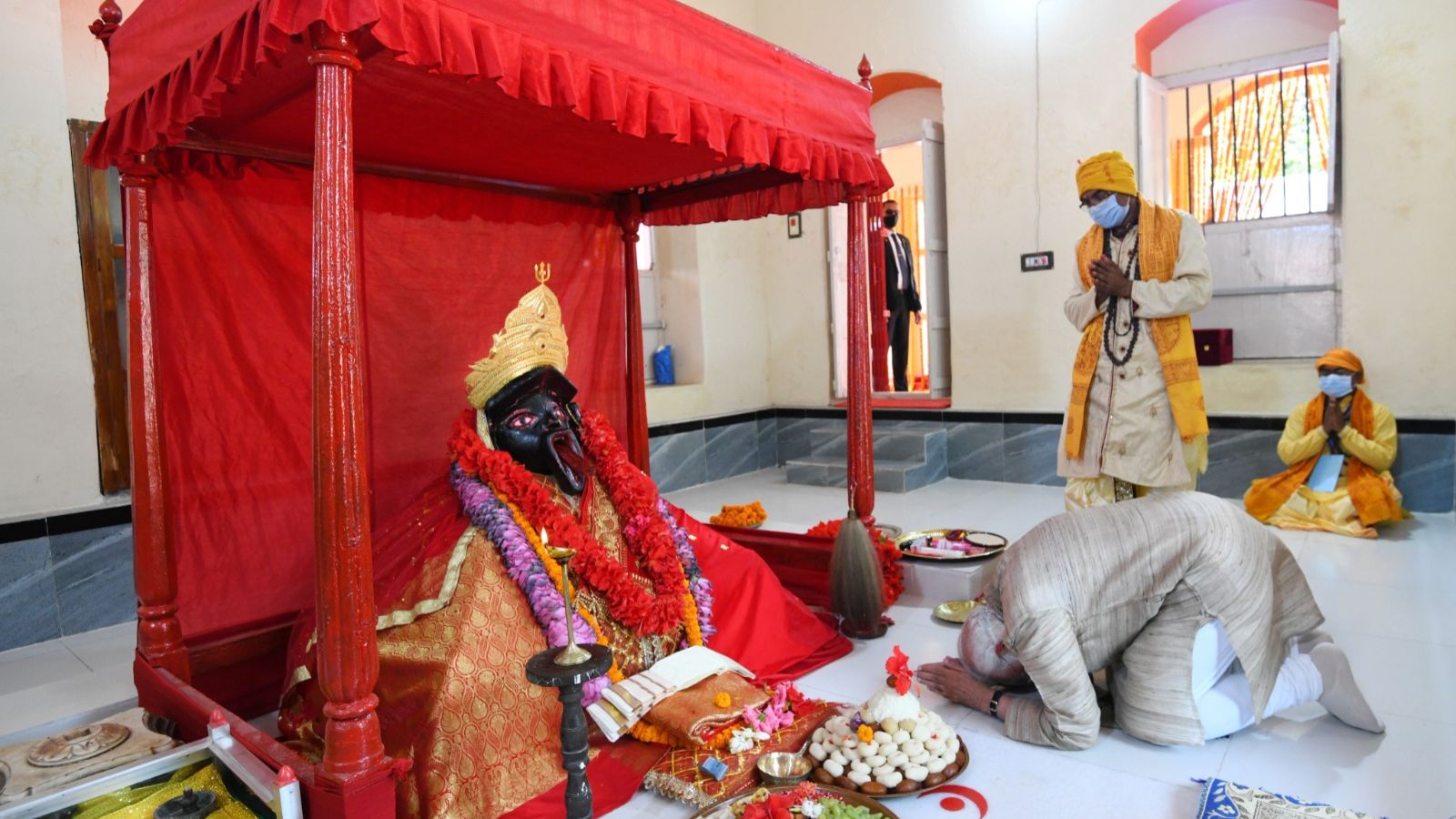
The crown was offered by Prime Minister Narendra Modi at Jeshoreshwari Temple during his visit to Bangladesh in 2021.

Written by Divya A
Updated: October 12, 2024

Left-to-right-2024-10-11T120809.510.jpg

EXPRESSING “DEEP concern” over the reported theft of a crown gifted by Prime Minister Narendra Modi to Jeshoreshwari Kali temple in Bangladesh, India on Friday asked Dhaka to “investigate” the matter.

In a post on X, the Indian High Commission in Dhaka said: “We have seen reports of theft of the crown gifted by PM Modi to Jeshoreshwari Kali Temple (Satkhira) in 2021 during his visit to Bangladesh… We express deep concern and urge Govt of Bangladesh to investigate theft, recover the crown and take action against the perpetrators.”

According to local media reports, the gold-plated crown offered to Goddess Kali was stolen on Thursday afternoon. The theft was noticed by cleaning staff who entered the temple after the priest left at about 2 pm, The Daily Star reported.

Modi had visited the Jeshoreshwari Temple on March 27, 2021, as part of his visit which coincided with the celebrations of Bangladesh’s ‘Golden Jubilee of Independence’ and the birth centenary of its founding leader, Sheikh Mujibur Rahman.

Sources said the Indian High Commission in Dhaka is in touch with the local authorities regarding the matter. “The Bangladesh law enforcement authorities have been urged to investigate the incident, recover the stolen article and bring the guilty to book,” said sources.

Earlier this year, after taking charge as Bangladesh Chief Advisor on August 8, Muhammad Yunus had reached out to the Hindu minority with a visit to the Dhakeshwari Temple where he met community leaders and assured “justice” and “equal rights” for all. The community had faced attacks in the wake of the political turmoil after Sheikh Hasina resigned as Prime Minister and fled to India on August 5.

Modi had earlier urged Yunus to ensure “the safety and protection of Hindus and all other minority communities”.

 
Former Indian High Commissioner to Bangladesh Pinak Ranjan Chakravarty on the ties between the two countries and the interim government in Bangladesh. The session was moderated by Shubhajit Roy, Diplomatic Affairs Editor

Written by Shubhajit Roy
New Delhi | October 12, 2024
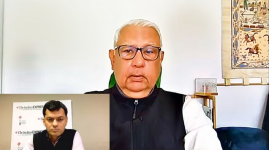
‘Sheikh-Hasina-didn’t-anticipate-her-downfall…-if-you’re-in-power-for-15-years-you-feel-all-is...png

This Explained Live event was held on August 30. Since then, the interim government has announced a nine-member commission to review and evaluate the country’s Constitution and recommend necessary reforms. Muhammad Yunus, the Chief Adviser to the government, expressed discomfort at Sheikh Hasina making statements about Bangladesh from India, where she has been since she fled the country amid protests. However, Yunus recently said Dhaka-Delhi relations should be “very close” despite the regime change, saying it would be in the interest of both countries. On the economic front, inflation remains high in Bangladesh.

On what the Sheikh Hasina government meant for Bangladesh​

It certainly meant that Bangladesh became one of the fastest-growing economies in Asia. It also had a stable relationship with India. Indian investments were made in Bangladesh, and we developed energy connectivity, railway and transport links. The two economies were increasingly getting integrated to benefit both, and trade grew to almost $18 billion (pre-Covid figures). Bangladeshis also became the largest set of foreign visitors to India.

On the negative side, there were allegations of elections not being free and fair. The other major party, the Bangladesh Nationalist Party (BNP), also boycotted the polls. Then the Jamaat-e-Islami was banned as a political organisation and a party.

Hasina also banned the Jamaat’s student wing, the Islamic Chhatra Shibir. Plus, she instituted the International War Crimes Tribunal, for the Jamaat leaders who were pro-Pakistan in 1971. Those leaders were convicted and hanged; that created bad blood. Then the BNP’s leader Khaleda Zia was convicted of corruption. Such domestic developments gave the feeling that Sheikh Hasina was becoming increasingly authoritarian. India had no role to play in those things; they were entirely domestic.

On India’s relationship with the Bangladesh govt under Hasina​

India’s problems with the previous BNP-Jamaat government were over security issues and their dalliance with Pakistan’s Inter-services Intelligence (ISI). The BNP has always been a little right-wing and pro-Pakistan. Jamaat, of course, has always been very pro-Pakistan, although they now claim that they are different. The BNP, too, claims they have changed.

But when Sheikh Hasina came to power in 2009, she said they would not allow their soil to be used against Indian security interests. This was something she lived up to. The United Liberation Front of Asom (ULFA) Assam insurgency leaders were handed over to India. She ensured the insurgents’ camps were uprooted and handed over. So on that score, Hasina fulfilled one of our major concerns, of security.

She also realised that on the economic side, it would be best to cooperate fully with India. I remember how Hasina first told me that she needed electricity from India. That is how the project began for connecting the grids. Today, we provide almost 1,200 megawatts. We also planned the Numaligarh refinery pipeline to northern Bangladesh, to provide diesel and petroleum products, which helps our economy by powering boats and other riverine cargo that goes everywhere, as it is a country of rivers.

On the dissatisfaction with the economy, especially among the youth​

I think people welcomed the economic growth until the Ukraine war broke out and the energy and food prices went sky high. Further, Bangladesh’s growth was probably not equitable. The jobs created were insufficient and a younger generation was entering the economy. That’s why the anti-quota agitation came in since quotas blocked employment in the government. Plus, with the elections, the new voters felt that they were not getting a choice. That also added to the rising dissatisfaction.

The quota system started in 1972 after the 1971 War of Liberation. The government then decided to give some preference to those who fought for Bangladesh’s freedom and fixed a quota for them in public jobs. Over the years, once that generation passed on, they demanded that the quota be continued and given to their children, and later to their grandchildren.

The dissent stemmed from the fact that if you include the other quotas for minorities, women, etc., it came to almost 56 per cent. In 2012, an anti-quota movement first began. In 2018, Sheikh Hasina decided to remove the quotas and issued a government order cancelling them, which was challenged by those benefitting from the provision. The High Court then stayed the order and that’s when the agitation began again.

On how the anti-quota agitation grew​

I believe the agitation would have stopped after the Supreme Court judgment, which reduced the quota to only 7 per cent. More than 300 people died during those agitations. The protesters returned with a nine-point demand. They wanted the resignation of ministers, the police commissioner, and so on. Now, why they did that is a mystery. And my view is that there were other influences at work there — mostly foreign and some internal. Since Hasina obviously did not agree to sack her ministers they went on a rampage again. And this time, I think, it was a very well-oiled machine backing them.

Why did it turn so political, with the march to Dhaka and demands for the PM’s resignation? That is also a question. I would say that ultimately it was the army that unseated her by saying that, no, we can’t protect you. We will not fire on these protesters.

On whether India saw this coming​

Did we know about the things happening in Bangladesh? Of course, we knew. But the question is whether Sheikh Hasina anticipated her downfall. My sense is that she didn’t, maybe if you stay for 15 years in power, then you feel that everything is okay.

On the interim government led by Muhammad Yunus​

It comprises different kinds of people. There is a leader of the far-right group Hefazat-e-Islam Bangladesh. Then there are BNP sympathisers. And then, of course, Professor Yunus is there. He’s a big, internationally-known figure. I would say he’s very anti-Hasina and she has slammed several legal cases against him, for things such as embezzlement. My worry is, will they (different sections) be able to work together? All of them could pull the government in different directions. There are two student leaders in the advisory council and apparently, there are two student appointees in every ministry to oversee what it does. Of course, some indicators are there. For example, Prof Yunus has said we must revive the South Asian Association for Regional Cooperation (SAARC). He has also reportedly said that he would want Bangladesh to join The Association of Southeast Asian Nations (ASEAN). But ultimately, reality will bite. Things are still all over the place. Hindus were also attacked, unfortunately, they are seen as Awami League supporters. In 2001, when the BNP-Jamaat government came to power, the same thing happened.

On Sheikh Hasina’s presence in India​

She’s been here before, stayed from 1975 to ’81, when her whole family was murdered as part of a political plot. She’s back again. Does she have a future as a political leader of the Awami League (AL)? I would say we cannot dismiss the possibility that the AL reorganises, they are not a party that will disappear. They will participate in the next elections. Would Hasina then go back? She’ll have to face cases and inquiries, and they might put her in jail. It’s what was done to Khaleda Zia, and revenge politics is very much possible. But will the AL produce a new leader? These are all possibilities. Whether Hasina will continue to stay here, is her choice. I don’t think the government of India is going to push her out.
 
The most intriguing part of the interview -

On whether India saw this coming​

Did we know about the things happening in Bangladesh? Of course, we knew. But the question is whether Sheikh Hasina anticipated her downfall. My sense is that she didn’t, maybe if you stay for 15 years in power, then you feel that everything is okay.
 
The most intriguing part of the interview -

On whether India saw this coming​

Did we know about the things happening in Bangladesh? Of course, we knew. But the question is whether Sheikh Hasina anticipated her downfall. My sense is that she didn’t, maybe if you stay for 15 years in power, then you feel that everything is okay.

Of course they knew there was an expiry date on their asset. Unfortunate for them their asset didn't know it. And it is because of that arrogance of Sheikh Hasina, she accelerated her downfall rapidly.

As for Indian government - even though Hasina is gone, they have the system in place, i.e. the ultra secular Islamophobic left (the Shahbagis) and the Hindutva flag bearers. There is a wonderful harmony between these two groups in Bangladesh. And from these group they will bring in their replacement for their asset Hasina.

We are already seeing reputation repair and sabotaging of reforms in motion simultaneously in Bangladesh. On one hand you have the mainstream media with the likes of Prothom Alo and Daily Star. And on the other hand you have social media where rumours are being generated non-stop. And also the dual agents within the CG itself.

The objective is to create chaos, divide people and then introduce BAL 2.0 with fresh faces, who nonetheless will serve the same role as that of Hasina.
 
Last edited:

Users who are viewing this thread

Pakistan Defence Latest

Latest Posts

Back
Top