China Auto Thread

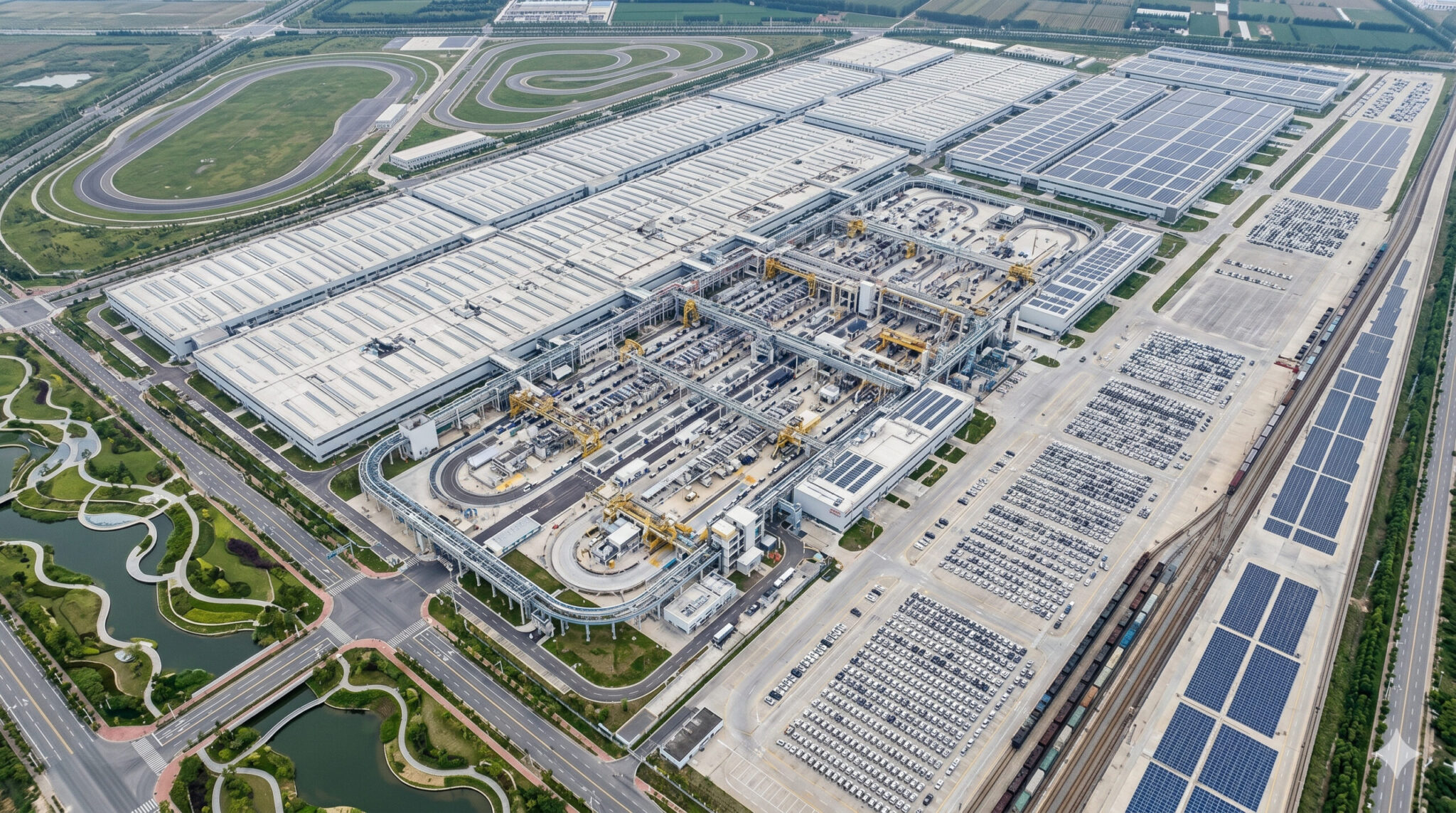
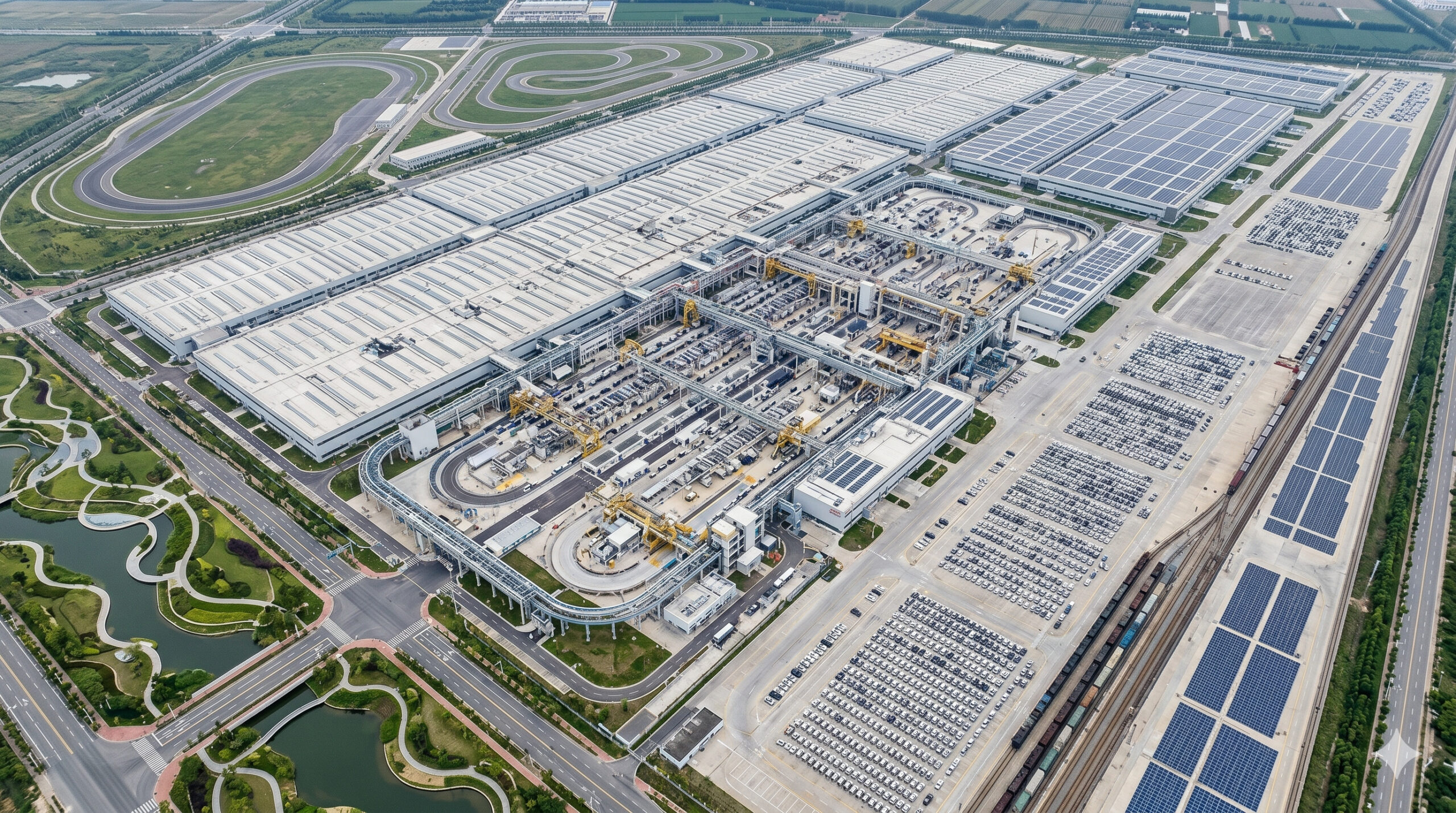
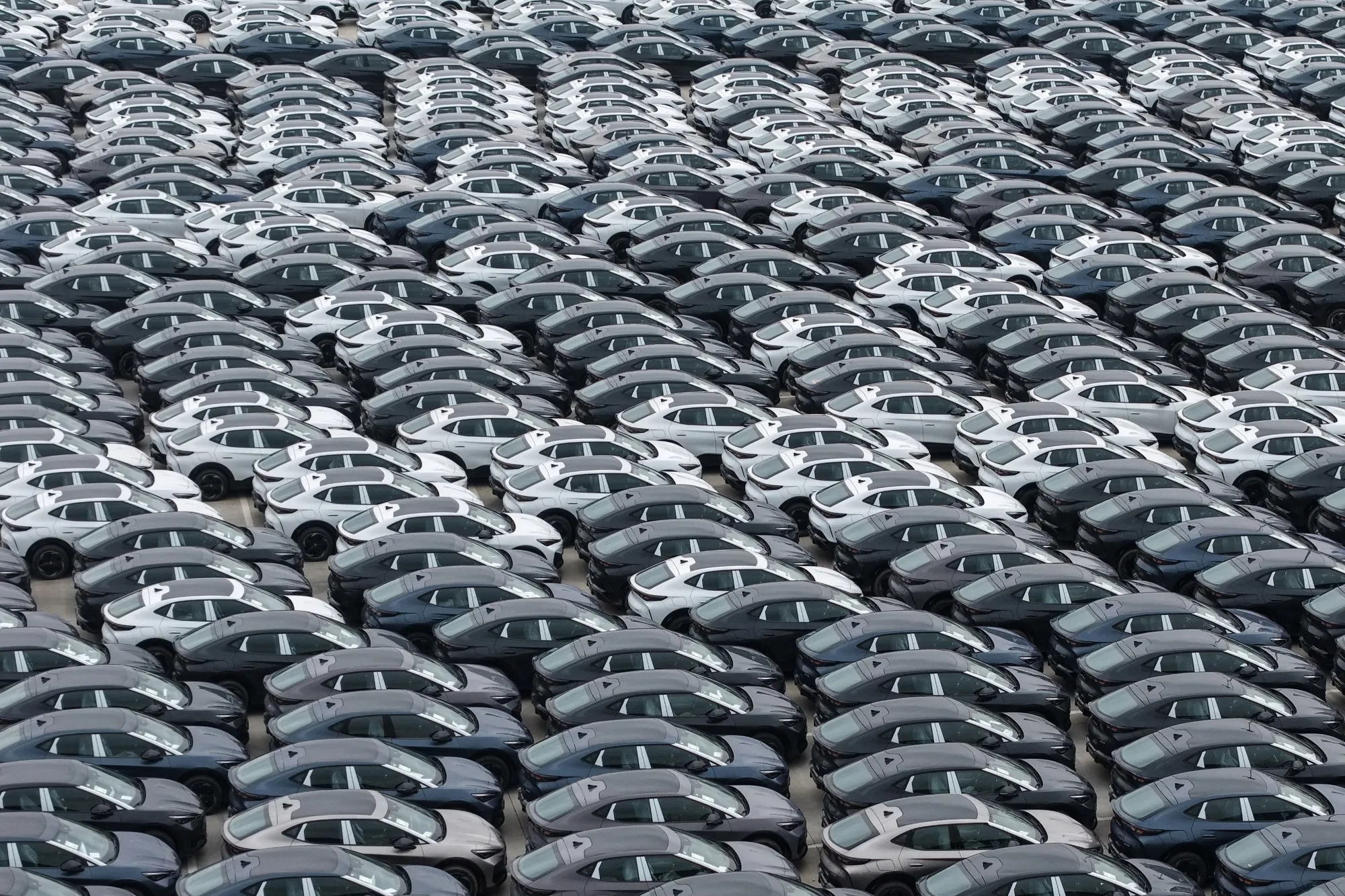
BYD produces up to 4,400 cars per day and one vehicle every 20 seconds at its largest factory in Xi’an, surpasses Tesla in industrial pace, leaves Volkswagen far behind in pure electric vehicles, and consolidates China as the birthplace of the world’s largest electric car manufacturer.​

byd-produces-up-to-4400-cars-per-day-and-one-vehic-2048x1143.jpeg


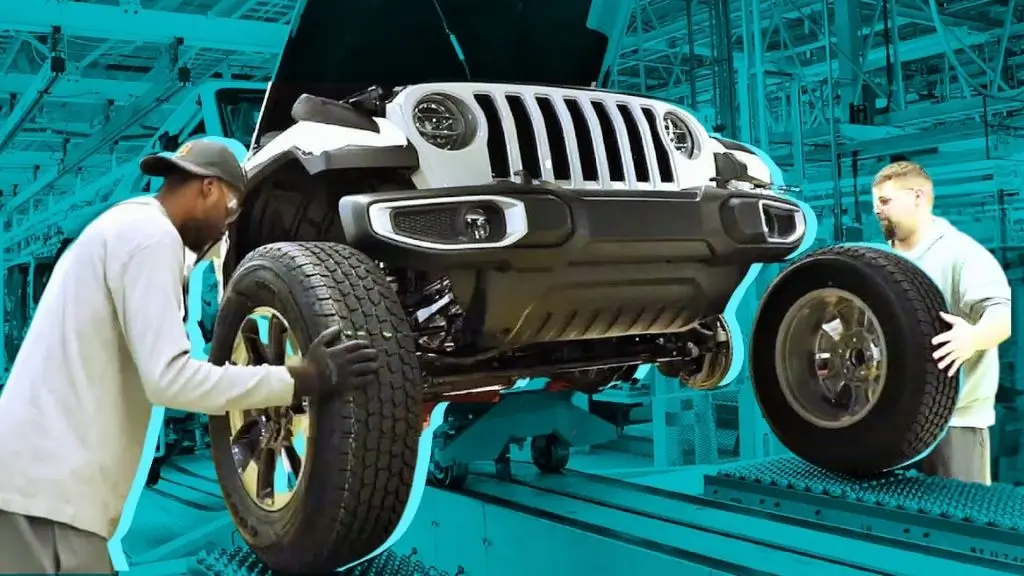
Stellantis is expanding its electric-vehicle strategy in China through a new $1.17 billion partnership with Dongfeng Group to produce Peugeot and Jeep new-energy vehicles at a joint-venture factory in Wuhan.

The agreement reflects a broader shift across the global auto industry as Western automakers increasingly partner with Chinese manufacturers to access EV technology, batteries, software, and production expertise.

Under the deal, Stellantis and Dongfeng will co-manufacture two all-new Peugeot new energy vehicles and two Jeep NEVs, including fully electric and plug-in hybrid models. Production is scheduled to begin in 2027, with the vehicles slated for sale in China and overseas markets.
 

Stellantis is expanding its electric-vehicle strategy in China through a new $1.17 billion partnership with Dongfeng Group to produce Peugeot and Jeep new-energy vehicles at a joint-venture factory in Wuhan.

The agreement reflects a broader shift across the global auto industry as Western automakers increasingly partner with Chinese manufacturers to access EV technology, batteries, software, and production expertise.

Under the deal, Stellantis and Dongfeng will co-manufacture two all-new Peugeot new energy vehicles and two Jeep NEVs, including fully electric and plug-in hybrid models. Production is scheduled to begin in 2027, with the vehicles slated for sale in China and overseas markets.
Recently, a highly unusual rumor has been circulating quietly within China's automotive circles, though its veracity remains unknown.

Rumors suggest that:

Huawei, JAC, and the Stellantis Group are currently engaged in confidential discussions with the aim of launching a new sedan or sports car co-branded under both the Maserati and Huawei names.
The Stellantis Group is responsible for the vehicle's exterior design and the licensing of the Maserati brand.
Huawei is responsible for the vehicle's full-stack design and technical support.
JAC is responsible for the vehicle's manufacturing and production.

The veracity of this rumor remains to be seen.

However, if it ultimately proves to be true, it would be absolutely explosive news.
 

China takes over Europe’s decaying car factories

Fears rise as the Continent’s automotive manufacturing base risks falling into Beijing’s hands
Published 23 May 2026 2:00pm BST

Chinese cars being manufactured Illustration

Politicians and car industry bosses have long feared that the rising Chinese giants will flood Europe with cheap electric vehicles EV.

Brussels and Beijing even teetered on the edge of a trade war because of the matter last year.

But times have changed. With Europe’s automotive titans unable to sell enough vehicles to run their huge assembly lines profitably, they are inviting the Chinese in through the front door.

European car makers are starting to sell space on their half-unused factory floor to their Chinese rivals.

The likes of BYD, Geely, Dongfeng, Chery and Leapmotor can use these deals to reposition themselves as local producers, skirting EU tariffs and “Made in Europe” rules.

Whole factories may yet fall into Chinese hands, and the Europeans will even help the Chinese sell the product. It is a case of “if you can’t beat them, join them”.

“This is effectively the beginning of the ownership transfer of a fairly significant chunk of Europe’s automotive manufacturing base to the Chinese,” says Simon Vessey, a car industry consultant.

Stellantis, owner of brands such as Vauxhall, Fiat and Peugeot, is leading the charge. It has the capacity to make at least 800,000 more cars in Europe than it can sell. So it is offering space to the Chinese.

Its factory in the French town of Rennes, will produce Voyah cars in a joint venture with state-owned carmaker Dongfeng, while two Spanish factories will start churning out vehicles with Leapmotor.

Other deals are in the offing. Nissan sold a Spanish factory to Chery, and is now in talks to share its plant in Sunderland. Ford also reportedly plans to sell part of a Spanish plant to Geely.

German media reports say Volkswagen (VW) has weighed up sharing its assembly lines with one or more Chinese companies, including SAIC and Xpeng. The company is said to have surplus capacity of 500,000 units at its European factories.

Oliver Blume, the chief executive of VW, said this week that the company had “currently no plans or discussions with Chinese manufacturers”.

However, Elvis Cheng, an executive at Xpeng, told a Financial Times conference earlier this month that his company had held talks with VW and other companies about “whether there is a suitable location here in Europe”.

BYD, the biggest of China’s behemoths, is building its own factory in Hungary. But it, too, has been knocking on the Europeans’ doors.

“We are talking to not only Stellantis, we’re talking to other companies too. We are looking for any available plant in Europe because we do want to utilise this kind of spare capacity,” Stella Li, the vice-president of BYD, said recently.

On the face of it, it’s a win-win. The Europeans have high fixed costs on these assembly lines, which they can bring down only by producing more cars.

“These plants are running far, far below where they should be. And there are really only two options. You can divert into manufacturing military kit. Or you can find somebody else who needs a car factory, and the Chinese are the only game in town,” says Vessey.

Handing the keys to the Chinese has a big advantage for the Europeans: it prevents expensive factory closures and politically unpalatable job losses.

The Europeans might also be able to cut costs by tapping into their Chinese partners’ cheaper supply chains.

Matthias Schmidt, the proprietor of Schmidt Automotive Research, says Stellantis’s Chinese deals should boost its bottom line, although “there’s a question about how much of the profit will filter back to China, and how much will remain in Amsterdam, at Stellantis”.

But Vessey says the Europeans’ short-run operational and financial gains are outweighed by the strategic wins to the Chinese.

He ticks off a list: “Regulatory access to the markets, because it’s local production. Ready-made industrial infrastructure, in markets where this is important. Ready-made labour relations frameworks, that they don’t have to think about. Supply chain access to the existing industrial system in Europe. And made-in-Europe brand legitimacy.”

‘Made in Europe’ drive​

The deals could make sense for the European side, says Sander Tordoir, of the Centre for European Reform, but only if Brussels, Berlin and Paris ensure there are strings attached.

“It would be naive to sell Germany’s excess car plants to Chinese competitors without setting any type of conditions, both on value-add requirements to employ German workers and engineers, and for Chinese battery and EV producers to engage in technology transfer,” he says.

He predicts European leaders would be in a position to make these demands of the Chinese if they start signalling to Beijing now that they’re prepared to play hardball with tougher trade and industrial policies.
Stellantis factory

Stellantis, owner of brands such as Peugeot, Fiat and Vauxhall, is offering factory space to the Chinese Credit: Marcos Cebrian/Europa Press via Getty Images
The EU has been making life more difficult for the Chinese.

The “Made in Europe” provisions in the bloc’s proposed Industrial Accelerator Act will prevent car makers from getting EU subsidies or tax breaks unless at least 70pc of an EV’s inputs, excluding the battery, are of European origin.

But ironically, says Vessey, it’s this very rule that has spurred the flurry of potential Chinese dealmaking regarding existing factories.

“The policy response was designed to protect the European manufacturing volume, but it is encouraging the Chinese to maybe come in with local manufacturing earlier than they would have otherwise done,” he says.

The push for Chinese tie-ups is still in its infancy. But if it takes hold, Schmidt envisages a future in which European car makers might do little more than pin their high-value badge to a cut-price Chinese chassis and engine.

“Stellantis’s Chinese joint ventures are a low-cost fundamental that sits underneath the skin, basically. Stellantis will then just hammer home branding, really push the brand image of Peugeot, Citroën, Fiat et al,” he says.

But Li said her company would even like to buy the brands. She described Stellantis’s Maserati marque as “very interesting”.

This sounds like kite-flying, at least for now. But it signals that the Chinese car makers’ march into Europe may still have plenty of mileage yet to come.


The Future of Long-Haul Trucking Is Already on China’s Roads​

Bloomberg Television

To view this content we will need your consent to set third party cookies.
For more detailed information, see our cookies page.
 

The Dragon’s assembly line: How China quietly took over the global car industry​

May 26, 2026

https%3A%2F%2Fsubstack-post-media.s3.amazonaws.com%2Fpublic%2Fimages%2Fdb2dc7e2-01c4-4114-80af-2a5ff29c6dcc_770x510.jpeg


FOR decades, the global automotive industry operated like an exclusive club.

Japan mastered reliability. Germany owned engineering prestige. America dominated scale and culture. Korea emerged later with aggressive pricing and rapid quality gains. China, meanwhile, was dismissed as the world’s copycat factory — good at imitation, but incapable of leadership.

That illusion is now dead.

The latest numbers coming out of China’s automotive sector are not merely impressive. They are historic: a 35.6-percent share of the global auto market, more than 7.1 million vehicles exported in a single year, and new energy vehicle (NEV) exports doubling to 2.62 million units.

Perhaps the most symbolic development of all is that Chinese brands are no longer chasing the global giants. They are replacing them.


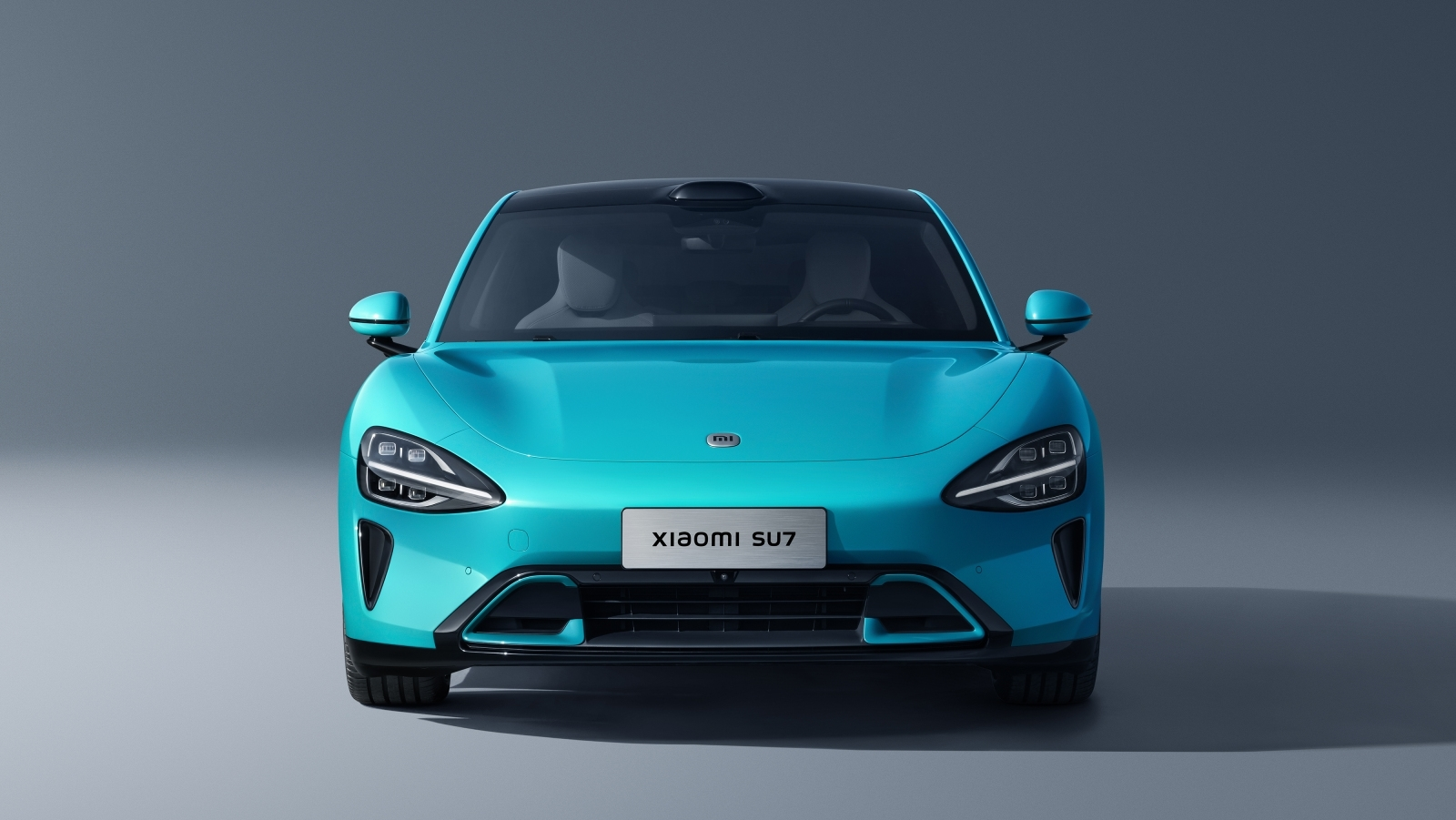
Xiaomi SU7 delivery times drastically cut in China, now available in as little as 6 weeks​


To view this content we will need your consent to set third party cookies.
For more detailed information, see our cookies page.

Tesla Made $1,332 Per Car. Xiaomi Lost $5,689, Same Quarter​

:unsure:
 

The world's carmakers are struggling to compete with China

9 hours ago
BBC
Suranjana Tewari

Global carmakers are facing a reckoning as US, European and Japanese brands lose ground to Chinese rivals setting the pace not only in electric vehicles, but also in batteries, design and software.

The BBC visited factory floors in Beijing and Hefei on the sidelines of Auto China 2026 - the world's largest car show - and found striking levels of automation and software development speed, leaving foreign brands that once dominated the Chinese market struggling to keep up.

"We have no chance against this," Honda chief executive Toshihiro Mibe told Japanese media after visiting a highly automated factory in Shanghai.

Ford chief executive Jim Farley has also warned that Western carmakers, are "in a fight for our lives" as Chinese rivals expand globally.

After decades spent investing in joint ventures with Chinese partners to build vehicles, foreign carmakers are now changing the nature of those partnerships to stay competitive.

"The biggest mistake that the developed world is making is believing that the transition is only about electric cars," says Shanghai-based auto analyst Bill Russo. "It's about who will lead the next generation of mobility technology."

Smartphones on wheels​

China's dominance goes beyond the cars themselves.

It makes the most exports in more than 315 product categories, up from 163 in 2016, according to a report by Rhodium Group. Many of these are linked to electric vehicle (EV) supply chains, including batteries, components and manufacturing machinery.

The International Energy Agency estimates it is at least 30% cheaper to produce a small electric SUV in China than in more advanced economies, largely because of lower battery costs and elaborate supply chains.

That advantage was built through years of state support. Rhodium estimates China has channelled tens of billions of dollars into EV and battery manufacturing in recent years alone.

Those subsidies, heavily criticised in the EU and US for distorting markets, have helped companies expand rapidly and cut prices.

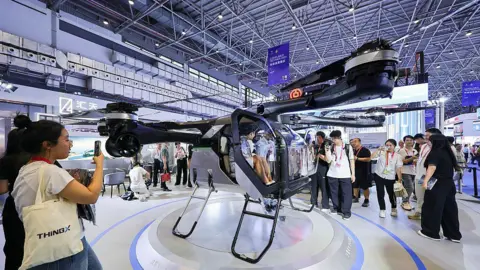
Getty Images 'Land Aircraft Carrier' flying car developed by Xpeng Aeroht on display
Getty Images
Xpeng told the BBC it is now prioritising the development of robots and flying cars
Competition inside China has also sped up innovation. Tech giants like Xiaomi, Huawei and Alibaba are now making EVs, bringing consumer technology into the car industry.

"They're not racing the West anymore," says Russo. "They're racing each other."

As cars increasingly rely on software, from driver assistance to entertainment systems, these companies are giving Chinese carmakers yet another edge.

The shift is most visible inside Xiaomi's EV factory outside Beijing, where a car rolls off the production line roughly every 76 seconds.

Xiaomi only launched its first EV in 2024 but it is already one of China's top-selling brands. Its strategy is to connect cars with phones, apps and smart-home devices to create a single system.

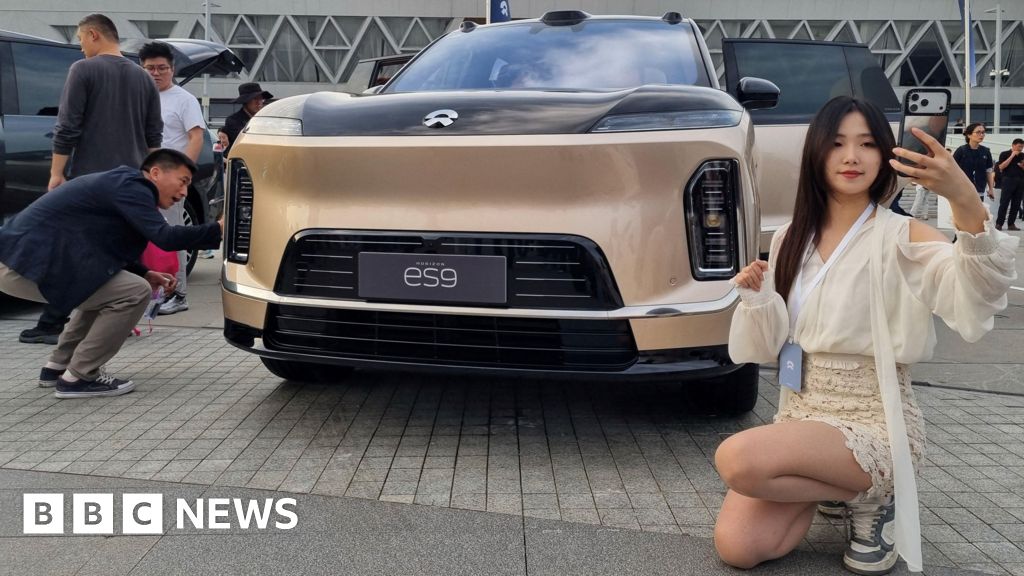
At Nio's Hefei plant, parts of the production line are almost fully automated.

BYD has developed ultra-fast charging systems capable of adding 400km (249 miles) of range in around five minutes, close to the time it takes to refuel a car with petrol.

XPeng's founder and CEO He Xiaopeng told the BBC the company is prioritising humanoid robots and flying cars alongside EVs.

"In the next decade, any car company will also be a robotics company," he said.

Rethinking China​

Foreign carmakers already rely on China to supply global markets. Tesla exports Shanghai-built Model 3s to Europe, while BMW's Chinese-made electric Minis are also sold overseas.

But many have struggled inside China itself.

Foreign brands' share of China's car market has fallen from 64% in 2020 to 32% this year, according to consultancy Automobility.

The decline has hit earnings at General Motors (GM) and German manufacturers, which once relied heavily on China for profits.

Luxury brands are also under pressure. Huawei's Maextro S800 luxury sedan has become China's best-selling car above $100,000 (£74,145), outselling imports like Porsche Panamera and the BMW 7 series combined, which once dominated the Chinese market.

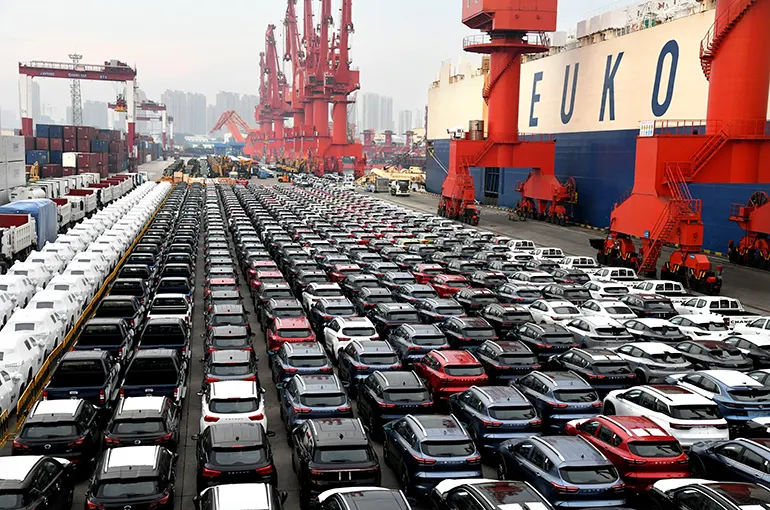
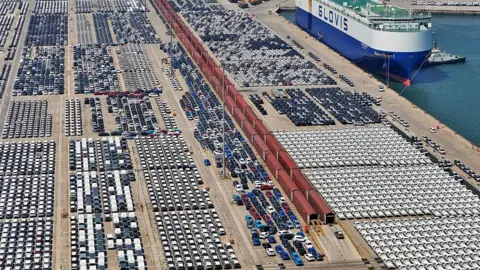
Getty Images Export cars are gathered at a commodity vehicle roll on/roll off terminal waiting to be loaded onto a ship in Yantai, Shandong, China on May 11, 2026
Getty Images
China exports about seven million cars a year, nearly half of which are EVs
For decades, foreign carmakers brought technology and branding while local partners provided factories and a market.

Now that relationship is changing.

Stellantis has just signed a €1bn ($1.16bn; £863m) deal with state-backed Dongfeng to produce Peugeot and Jeep models in China to sell at home and abroad.

Stellantis will also bring Dongfeng's Voyah electric brand into Europe, and has said it is exploring producing Chinese-designed vehicles at a plant in France.

Volkswagen is paying $700m for access to XPeng's software architecture and autonomous driving systems to develop its next generation of EVs - technology it has acknowledged it could not develop fast enough at home.

XPeng's He says the relationship is two-way: "We study each other, so we trust each other, so we help each other."

Toyota, Hyundai, Ford and Nissan are also expanding research operations in China or exploring production of Chinese-designed vehicles in overseas factories - using local talent and knowledge for development rather than simply manufacturing.

Not every strategy is working though.

Audi has had to offer heavy discounts on its E5 model, which it had specifically made for China, after weaker-than-expected demand.

GM has written down billions of dollars from its China operations and reported a more than 21% decline in sales in the first three months of this year.

Japanese manufacturers have been slower to shift towards fully electric vehicles, leaving them vulnerable in China and, increasingly, in South East Asia, where Chinese brands are rapidly gaining market share.

In early 2026, Volkswagen briefly regained the position of the top-selling car brand in China, but that may have been because of the end of Beijing's EV subsidies, which, in turn, weakened domestic rivals.

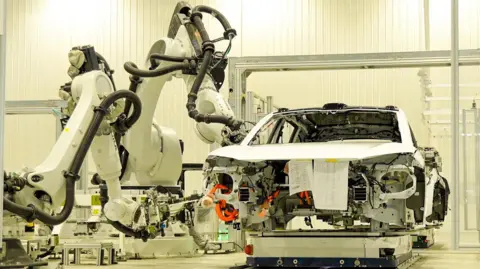
A car being assembled with robots inside the Nio factory in Hefei

The BBC visited EV factories in China which were highly automated
China's domestic market is cooling more broadly too. Growth has slowed after years of expansion, while overcapacity and an intense price war are squeezing profits across the industry.

That is partly why Chinese manufacturers are expanding abroad. Brands such as BYD, Chery and SAIC are pushing into Europe and emerging markets despite tariffs of up to 45% in the EU.

Chery's Jaecoo 7 became one of the UK's best-selling new models within 14 months of its launch. But tariffs of more than 100% have effectively locked Chinese brands out of the US market.

Experts warn that as more vehicle production, battery technology and software development shifts towards China, manufacturing hubs in South East Asia and Europe could suffer, affecting jobs and local economies.

Tariffs will not necessarily protect them, says consultant James Pearson: "If you lock them out of one market, they will just find another."

Bill Russo says the industry's centre of gravity has already shifted.

The companies willing to collaborate have a chance, he says, while those trying to stop China's rise risk falling behind.


World's Appetite for AI Makes China Less Afraid of Stronger Yuan​

The global AI investment boom is powering a new wave of Chinese exports and making Beijing more comfortable with a stronger yuan.

Bloomberg News
May 28 2026

(Bloomberg) — The global AI investment boom is powering a new wave of Chinese exports and making Beijing more comfortable with a stronger yuan.

The tightly managed onshore currency is set for a sixth quarter of gains against the dollar — a streak not seen since 2013. In the past, such a move would have drawn a more forceful response from Beijing, which is usually wary it could hurt exports and economic growth.

But even as the yuan climbed to its strongest level since 2023 and the economy looked more fragile, policymakers have shown little urgency to step in.

That’s in large part because the AI investment boom is changing China’s trade structure.

The country once relied on low-cost manufacturing, with producers of garments, furniture and household goods operating on razor-thin margins that made exchange-rate swings matter more. Now, more companies are riding a lucrative wave as demand for semiconductors, servers and other AI hardware becomes a powerful new export driver, easing the pressure a stronger yuan would traditionally place on manufacturers.

Equally striking has been the surge in imports this year, outpacing export growth as China buys more chips and semiconductor equipment. Deutsche Bank AG noted that the last two times inbound shipments grew much faster than outbound — in 2010-11 and 2017 — the yuan strengthened against the dollar. A stronger currency makes imports cheaper.

“What has changed is exports appear less sensitive to currency moves than previously thought, meaning the benefits of currency appreciation carry more weight in exchange rate policy,” said Duncan Wrigley, chief China economist at Pantheon Macroeconomics.

Since 2013, China’s export engine has expanded dramatically as the yuan fell against the dollar. The country’s trade surplus widened from around $260 billion in 2013 to record levels approaching $1.2 trillion last year.

Over that period, the yuan weakened from around 6 per dollar to beyond 7 at various points. Beijing largely tolerated — and at times appeared to encourage — currency weakness when the economy was under strain, including during the 2015 devaluation that shocked global markets and the 2018-20 trade war with the US. The yuan also faced sustained pressure from 2022 through early 2025 as China’s interest rates fell below US levels and the property downturn deepened.

By contrast, when the yuan rose sharply between 2020 and late 2021, the People’s Bank of China warned against one-way appreciation through verbal guidance, adjusted foreign-exchange reserve requirements and lowered the costs for forward FX purchases.

Now, even as the yuan strengthened, exports hit another record in April. About half of export growth came from semiconductors and computers, while traditional categories such as clothing and furniture were flat or shrinking.

At the same time, the economy is faltering after a strong first quarter. Yet the PBOC kept daily fixings near the strongest in three years, signaling greater comfort with currency strength. Exporters have also been converting more dollar earnings into yuan, a sign they expect the renminbi to remain stable or strengthen further.

“As Chinese firms continue moving up the value chain, their competitiveness is less dependent on a weak exchange rate,” said Rajeev De Mello, portfolio manager at Gama Asset Management SA.

The PBOC didn’t immediately respond to a Bloomberg News request for comment on its exchange-rate policy.

The trend has emboldened more analysts to bet on further gains. Goldman Sachs Group Inc. estimates the yuan is more than 20% undervalued and may strengthen to about 6.5 per dollar in the coming year.

Others expect a bigger move. Macquarie Group said the yuan may hit 5 a dollar, while Alpine Macro Inc.’s strategist Yan Wang sees a chance it could even hit around 4 over the longer term. The consensus estimate compiled by Bloomberg shows a year-end level of 6.75. The onshore yuan traded around 6.79 on Thursday.

UBS Group AG’s top trade for 2026 was going long the yuan against its trade-weighted basket, a position that has returned 4% to 5% in the last six months, according to Rohit Arora, its head of Asia FX and rates strategy. The bank expects a further 3% to 4% gain in the coming months.

Policymakers are unlikely to welcome an unchecked rally. Domestic demand remains weak, the property slump continues to weigh on confidence, and external risks including trade frictions and slowing global growth have not gone away. A rapidly strengthening yuan could squeeze exporters’ margins, especially in sectors where competition remains fierce.

The costs are starting to show. Yuan appreciation weighed on some listed companies’ earnings, while policymakers remain sensitive to the risk of job losses. Regulators have urged companies and banks to step up hedging against currency swings, and the PBOC has repeatedly said it will prevent overshooting in the exchange rate.

But a stronger yuan serves Beijing’s interests in other ways. It helps shield the economy from imported inflation as the Iran war pushes up energy prices. It also fits with Xi’s ambition to make it a more “powerful” currency. Chinese officials have been encouraging greater use of the renminbi in trade, investment and central-bank reserves as part of efforts to reduce reliance on the dollar-dominated financial system.

A firmer yuan could ease longstanding criticism from Western governments that China keeps its exchange rate artificially weak. Those accusations intensified during earlier trade tensions with the US, when the currency weakened past the 7-per-dollar level.

“Appreciation signal for the yuan is a sort of olive branch for the trading partners who are becoming more uncomfortable with this ‘China shock 2.0’ in the advanced manufacturing segment,” said Homin Lee, strategist at Lombard Odier Singapore Ltd.

All of these forces combined may be changing Beijing’s calculus on the yuan.

While policymakers may have wanted a stronger exchange rate in the past, it was difficult to achieve until domestic activity stabilized, tech exports improved and the US dollar became less attractive, said Rory Green, chief China economist at TS Lombard.

“Today the politics and macro are lining up, allowing China to move towards the long-standing objective of a ‘strong currency’,” he added.


China Sold More Plugin Vehicles in 2025 Than the USA Bought Vehicles of All Types!

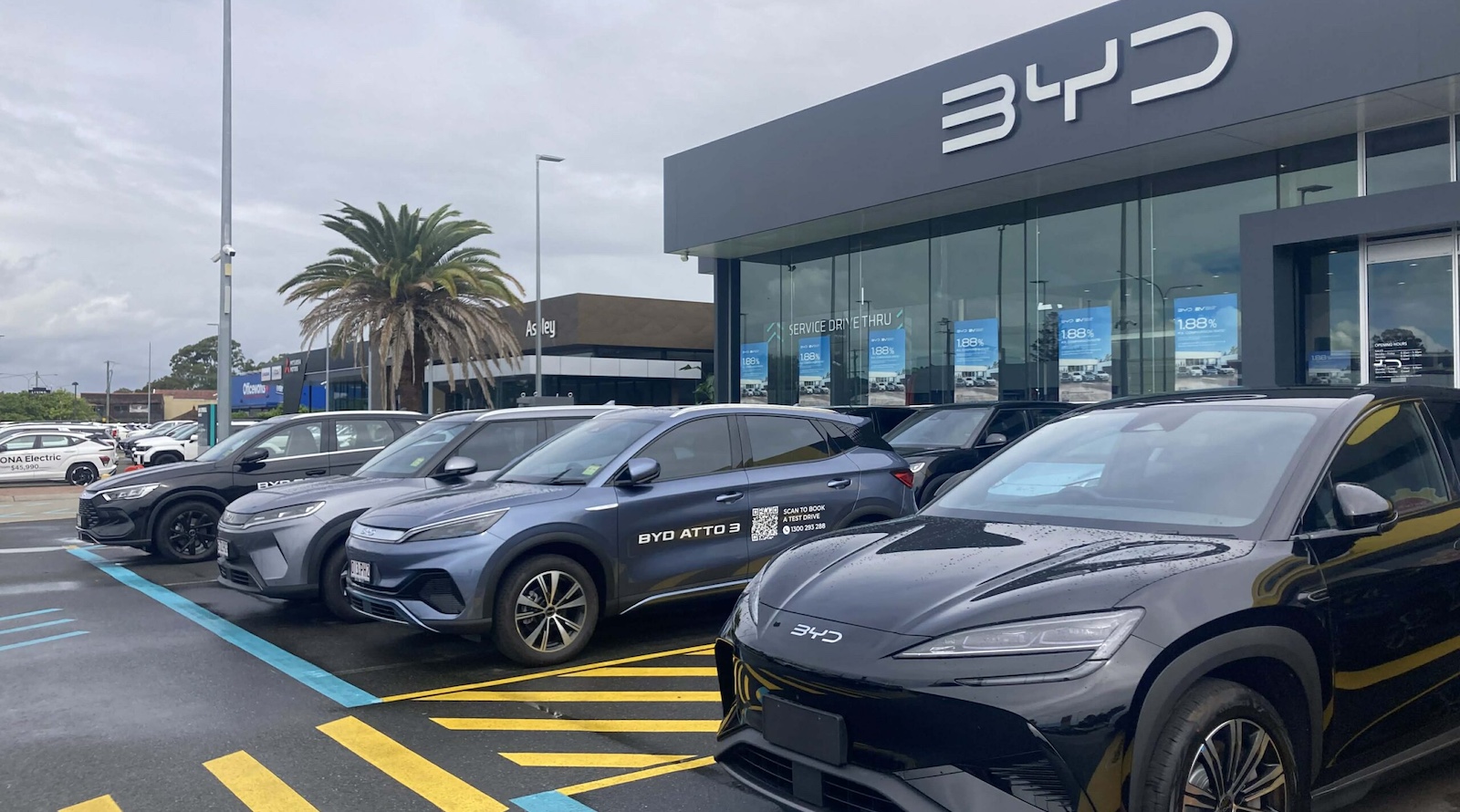
BYD-electric-vehicle-dealership-Australia-800x445.jpg


May 31 2026


China Overtakes Japan to Take Third Place in Korea's Imported Car Market​

BYD Leads China Past JapanZeekr to Enter Korea in Second Half

Published 2026.06.01. 09:25:37
By Shim Ki-moon

news-p.v1.20260408.168630f95cce4ef0930a0b2f70e9c517_P1.png

China, led by BYD, has overtaken Japan to take third place in South Korea's imported car market, behind Europe and the United States. Analysts say China is filling the void left by Japan, whose presence in the Korean market has been shrinking rapidly with brands such as Honda withdrawing.

According to the Korea Automobile Importers and Distributors Association (KAIDA) on Thursday, new car registrations from China reached 2,023 units in the imported car market in April. China ranked third, behind Europe with 16,385 units and the United States with 13,611 units.

China overtook Japan, which sold 1,974 units, for the first time. China's share of the overall imported car market also narrowly edged out Japan, accounting for 6.0 percent versus Japan's 5.8 percent.

Analysts attribute the shift to growing consumer preference for electric vehicles amid high oil prices, with Korean buyers turning to Chinese cars equipped with software-defined vehicle (SDV) features. In Korea's imported car market, where entry barriers have been higher than in other countries, preconceptions about Chinese-made vehicles are gradually fading.

In the second half of the year, brands including Geely Automobile Group's Zeekr are scheduled to enter the Korean market, drawing attention to whether Chinese-made vehicles will reshape the landscape of the country's imported car market. Zeekr opened its brand showroom, the "Zeekr Brand Gallery," last month on Yeongdong-daero in Seoul's Gangnam district, known as the "mecca of imported cars," signaling its full-fledged push into Korea.

 
搜狗截图20260602234341.png
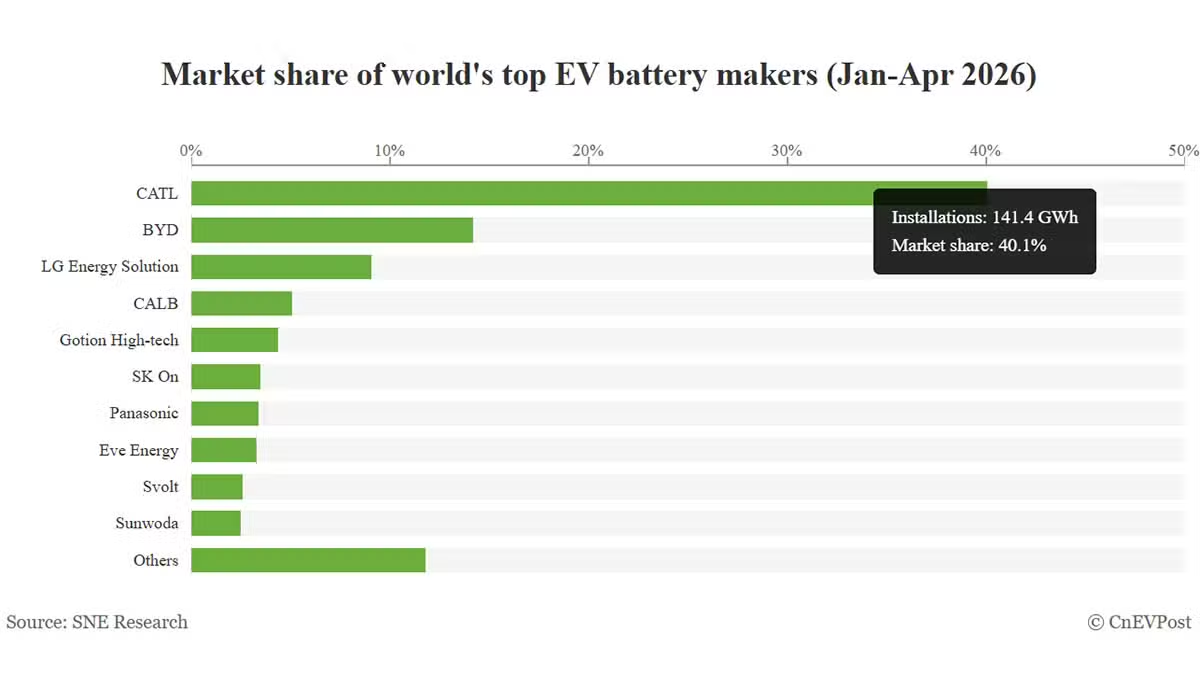
Global EV battery market share in January-April 2026: CATL 40.1%, BYD 14.2%
Phate Zhang

  • Seven Chinese companies rank among the top 10, commanding a combined 72.2% share of the global EV battery market.
  • CATL's market share increased compared to the same period last year, while BYD saw a slight decline.


Users who are viewing this thread

Latest Posts

Back
Top