Chinese 6th Generation Aircraft News & Discussions

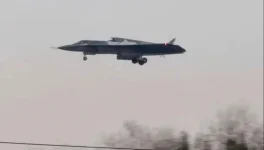
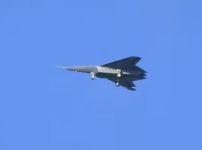
Impressive that China has left both Russia and USA in dust , with design of world's first 6th Generation Stealth Craft

Until 2009 people used to make fun of J-7 that China can only produce copies of old Russian planes , but in mere 10 years they have upgraded their ability's to produce vast Technological projects

The rate of Technology and Progress is quite amazing
I am not comparing with Rus or USA but this pic took on the day of J10 first flight really touched me and tells everything about how far we have come, people laughed, mocks Made in China but that doesn't matter at all, the same company is now manufacturing J20, J20S, J36.

1616475528925_260_959x598.jpg
 
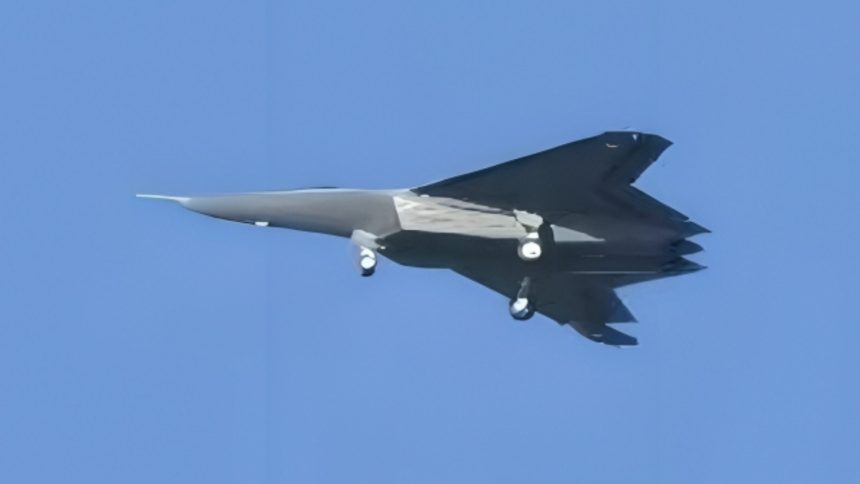
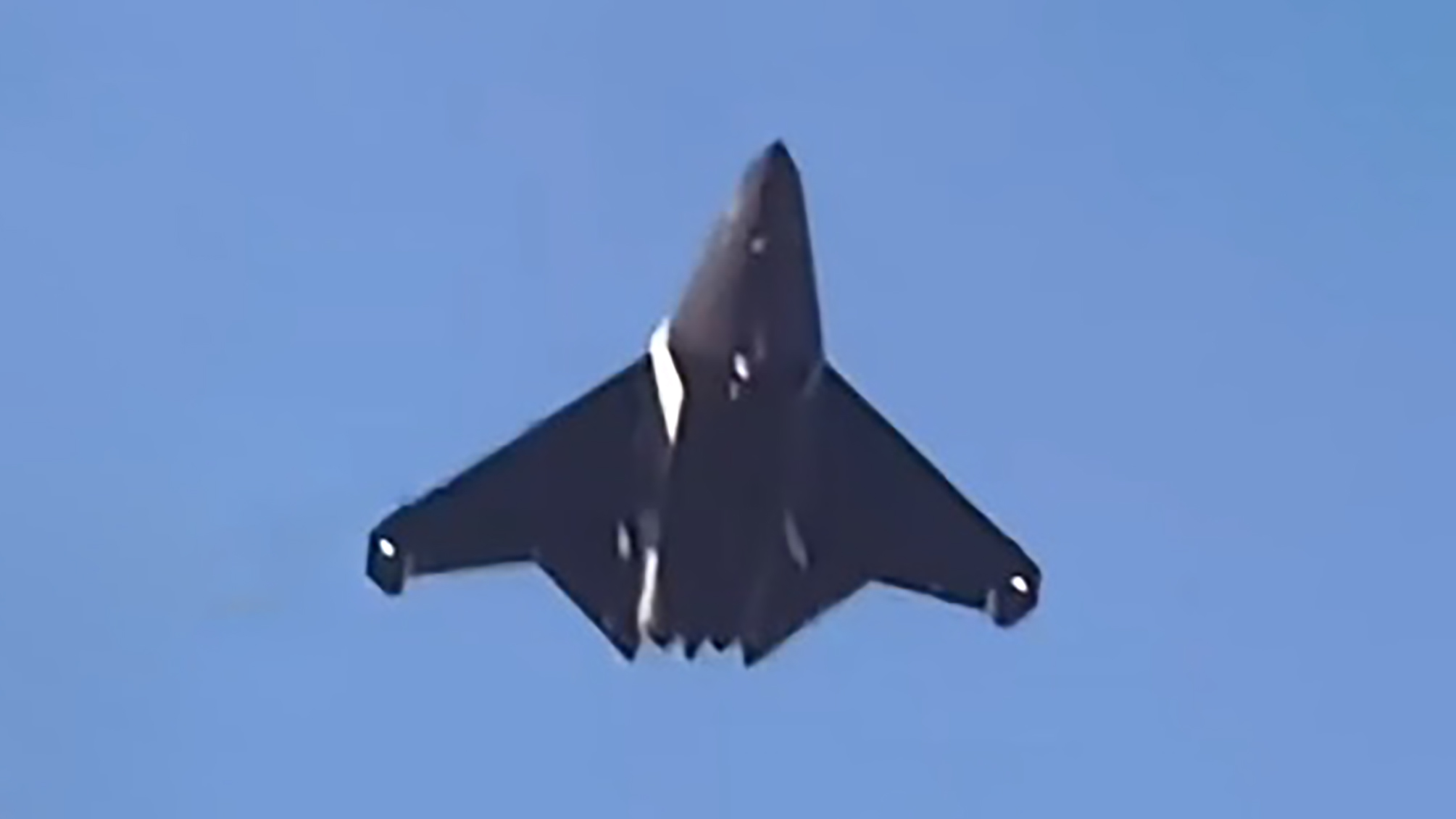
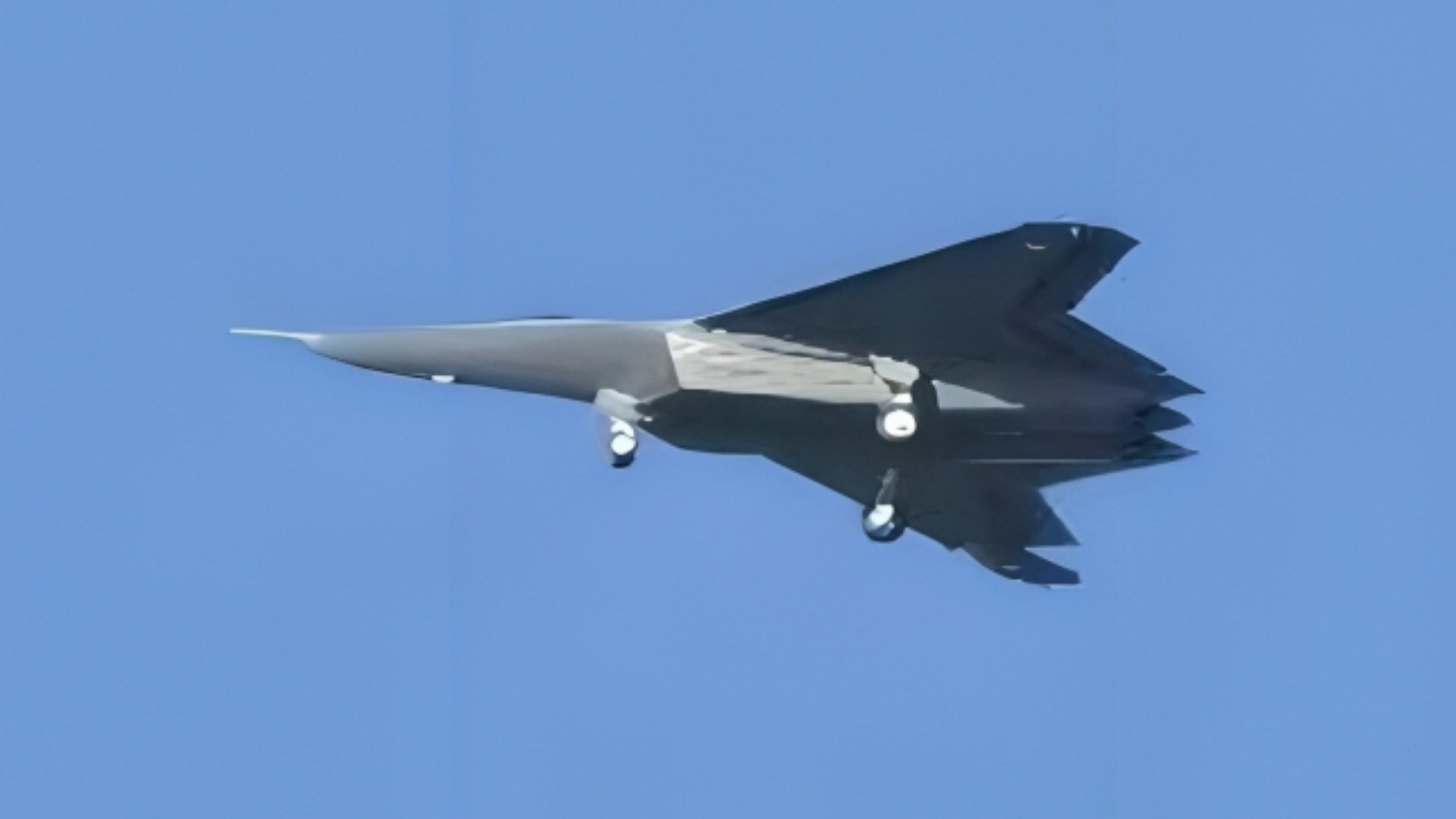
As it seems a new image - and IMO the clearest one so far - of SAC‘s next generation fighter project has been posted revealing some interesting previously not seen details.

(Image via @Captain小潇 from Weibo)

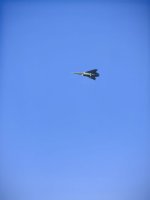
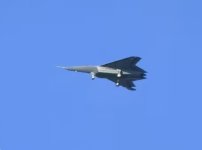
IMG_2117.jpegIMG_2118.jpeg
 
Don't know aerodynamics, but I read some comments from netizens who seemly get such expertise:

J-36's design is optimized for super-cruise range, its combat radius at sub-sonic speed wont be significantly better than its at super sonic speed. J-50's design is optimized for sub/trans sonic range.

So J-36 is optimized for penetrating air-superiority missions, have significantly better super-cruise range comparing to 5th gen fighters.

And J-50 is optimized for sub-sonic/trans-sonic range and long patrol time.

All in all, despite of the differences of the sizes between the 2, the two designs will have similiar combat radius (>=2000km?), but of cause J-36 can carry more missiles.
 

China’s ‘J-50’ Tailless Stealth Fighter Seen In New Imagery​

Additional imagery of China's other tailless next generation fighter has emerged over three months since the type was first spotted in the skies.
TYLER ROGOWAY
PUBLISHED APR 4, 2025 6:29 PM EDT

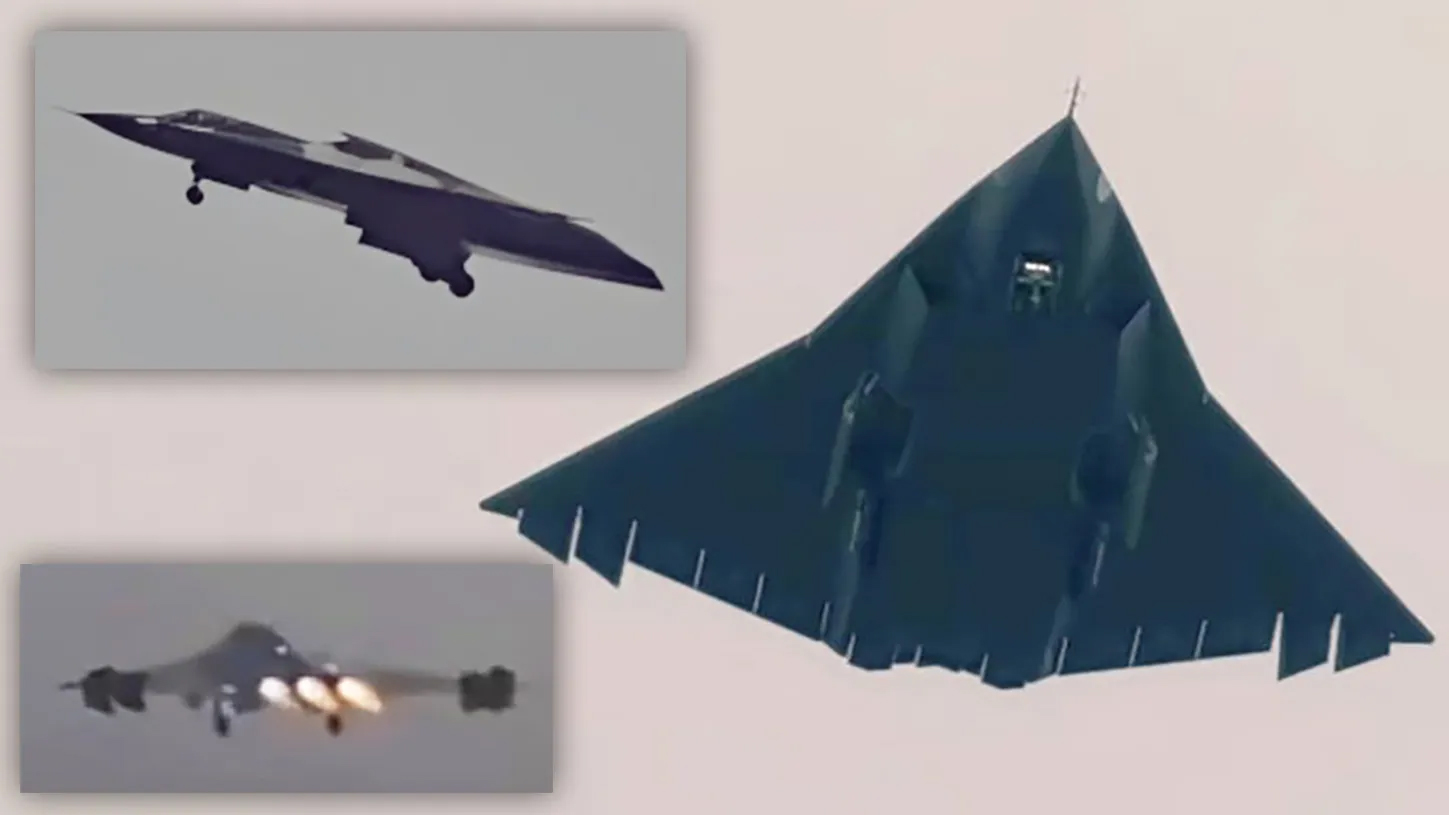
J50-china.jpg


Shenyang Aircraft Corporation’s tailless stealth fighter has appeared in new photos that offer additional insights into its exotic design. The aircraft, unofficially dubbed the ‘J-50,’ is one of two Chinese tailless heavy next-generation fighter designs that emerged on Dec. 26, 2024. The other larger three-engined type, colloquially referred to as the ‘J-36,’ is built by the Chengdu Aircraft Corporation. You can read our very in-depth previous analysis of both these aircraft here.

It isn’t clear if the new image comes from a recent test flight or is from the Dec. 26 sortie. While we have seen proof of the larger J-36 making additional test flights since its first publicly known one, the J-50 has not been spotted in the air for over three months.

Chinese-stealth-fighter-new-copy.jpg
Imagery from the J-50’s first and only known test flight. (Chinese Internet)

The new image shows a clearer side-on view of the advanced jet than any we have seen before. Notable are what could very well be the presence of side weapons bays, broadly similar to those found on the F-22A Raptor and the J-20. We also see an angular bulge under the nose, which could be an opaque placeholder for a faceted electro-optical system, similar to what is found on the F-35 and the J-20.

To view this content we will need your consent to set third party cookies.
For more detailed information, see our cookies page.


The canopy on this aircraft is just visible in the image, but we still don’t have a clear understanding of its shape and how it is blended into the fuselage. Some originally questioned if this aircraft was manned because of the lack of clarity regarding its cockpit area, but all indications point to it being a crewed fighter.

The aircraft’s pronounced lambda wing planform is also readily apparent here, and one of the jet’s strangest features — articulating wingtips — can also be seen, with the right wing’s tip deflected. Two-dimensional engine exhausts, possibly featuring thrust vectoring, are also visible. A two-wheeled nose landing gear is confirmed, with single wheels for the mains. This is not new, but it underscores the weight class difference between this design and Chengdu’s very heavy design, which features twin wheels for its main gear arranged in tandem. The nose gear door also gives us new evidence of the ventral centerline ‘tunnel’ that exists below the fuselage on this aircraft.

The inlets are arguably the most elegant-looking structure on this aircraft. Diverterless Supersonic Inlet (DSI) types that blend directly from the nose, with the trapezoidal inlet structures surrounding the DSI ‘hump,’ are really apparent here. This arrangement is more impressive than the F-22-like fenced intakes on the J-36, although that aircraft also features a DSI arrangement for its dorsal intake.

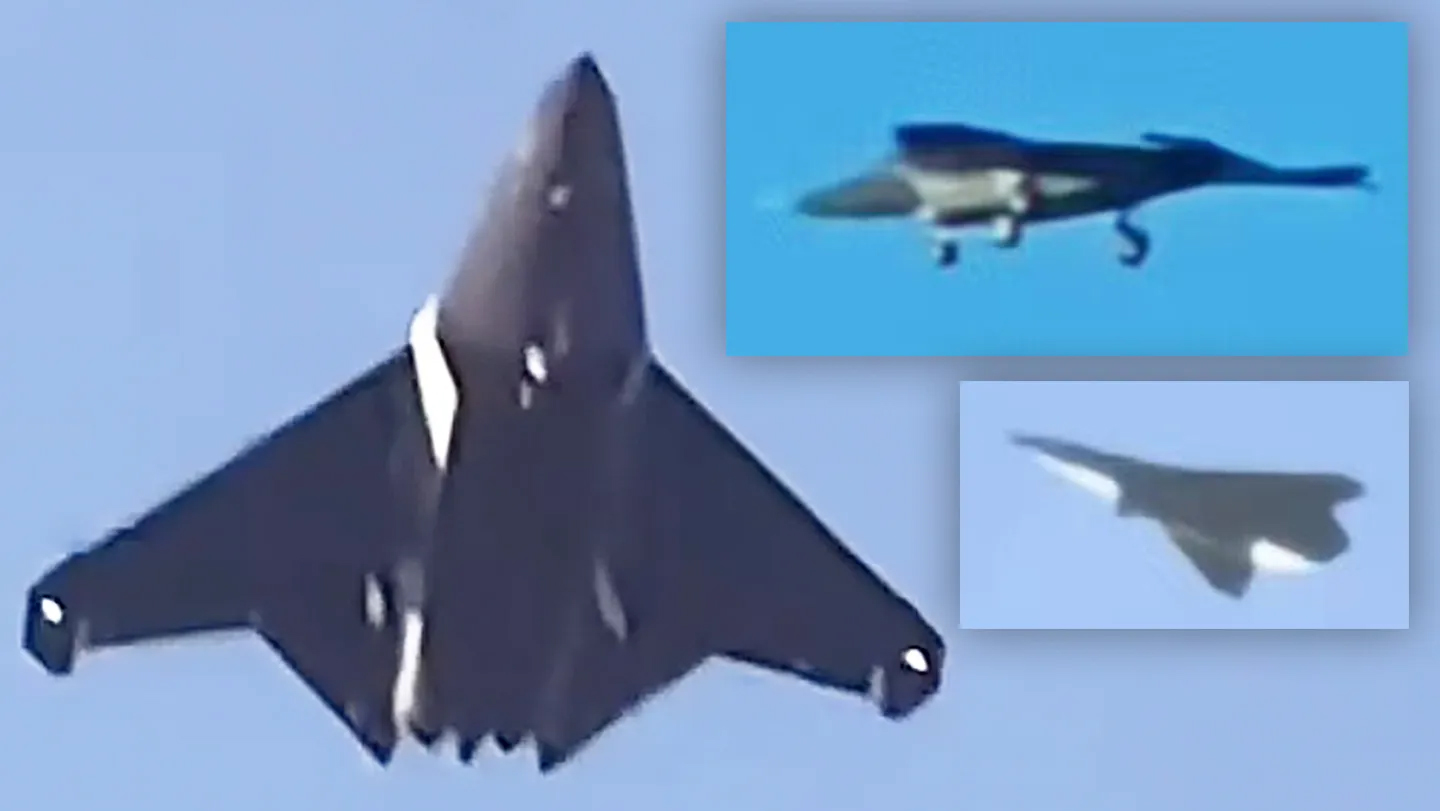
J36-china-copy.jpg
Image of the larger three-engined J-36. (Chinese Internet)

In some ways, this aircraft looks more advanced than its Chendgu counterpart, although they are really in different classes just in terms of size and weight. It remains unclear if these designs are tied to a single program and its defined objectives, or are for two separate programs focused on different capability sets with some overlap.

You can read all about this and the features described above in our in-depth initial analysis, which everything we are seeing today supports.

China’s big next-generation stealth fighter developments come as the U.S. Air Force is now formally pursuing a 6th generation fighter design as part of its wide-ranging Next Generation Air Dominance (NGAD) program under the new F-47 designation. Boeing won that contract and has so far put forward just two renderings of its aircraft, both of which show a low-observable design with canard foreplanes — a feature that is traditionally antithetical to stealth that is missing on both Chinese designs, but does exist on the operational J-20. The Navy is about to announce its own F/A-XX 6th generation fighter selection, as well.
 
IMO J-50 looks more like F-47. J-36 looks somewhat different.
 

China’s new stealth fighter spotted in flight trials

NEWSAVIATION
ByDylan Malyasov
Apr 4, 2025
Captures via Weibo

New photos circulating online appear to show a prototype of what could be China’s newest stealth fighter undergoing flight testing, with analysts pointing to a potentially indigenous sixth-generation design under development at the Shenyang Aircraft Corporation.

The aircraft was first observed in flight over Shenyang, Liaoning Province, in December 2024, but new images published in early 2025 offer a clearer look at its configuration.

Unofficially dubbed the “J-50” by some observers—or alternatively “J-XDS”—the fighter marks a possible departure from earlier Chinese strategies of replicating foreign designs, instead suggesting a platform purpose-built for China’s own operational needs.

The prototype exhibits a distinctive planform, including sharply swept lambda wings with downward-canted tips, twin under-fuselage air inlets with diverterless supersonic intake (DSI) features, and dual-engine nacelles. One of the most notable features, visible in recent images, is the presence of movable wingtips, which may function as additional control surfaces.

The aircraft’s design appears optimized for long-range patrols and stealth strike missions in contested airspace, rather than traditional close-range air combat. Analysts have noted the absence of certain features associated with dogfighting agility, suggesting the platform prioritizes endurance, radar signature reduction, and survivability in advanced air defense environments.

Though China officially classifies the aircraft as a sixth-generation system, most international defense experts categorize it within fifth-generation capabilities, in line with other current-generation low-observable platforms.

Regardless of designation, the fighter reflects a shift in China’s defense aerospace approach—moving from imitation to innovation, tailored to its own strategic objectives in potential future theaters.

 
The canopy seems very small?

It does indeed look abnormally small. Maybe with EO sensors the pilot don't need such a big canopy would be my educated guess.
 

New Images Give Clearest Look at Shenyang’s New Fighter​

Published on: April 4, 2025 at 6:56 PM

J-50 new photos

The new photo of the J-50 during flight testing. (Image credit: Chinese Internet)

Reportedly designated J-50, the mysterious aircraft is a stealthy tailless twin engine design with a lambda wing.
New photos emerged online are now providing the clearest look so far at the mysterious new aircraft designed by the Shenyang Aircraft Corporation (SAC). The aircraft is the second new design that was first spotted in December 2024, with the latter being the larger J-36 built by the Chengdu Aircraft Corporation (CAC).

The new images​

The new images allow for a better look at the new aircraft, which is called a sixth generation aircraft in some Chinese reports. At this time however it is not possible to classify the aircraft because its specifications and capabilities are not known and there isn’t yet a clear definition of what constitutes a sixth generation aircraft.

The first images emerged last year were low quality and did not allow to discern many details. What could be read from the images was that this aircraft is smaller than the J-36, with a stealthy possibly tailless design based on a lambda wing.

To view this content we will need your consent to set third party cookies.
For more detailed information, see our cookies page.


These details have now been confirmed by the new images, which clearly show the lambda wing planform and debunked an earlier hypothesis, based on a patent’s drawings, that the aircraft could feature a “convertible” wing, with the trailing edge of the inner half wings able to rotate around the root and transform into vertical tails at lower speeds, while the wing becomes a more traditional swept design.

This concept, while interesting, has a series of pros and cons, with the latter including increased complexity and thus weight, as well as lower structural efficiency and radar cross section (RCS) increase. Among the pros are the improved flight dynamics at lower speeds, where the presence of the vertical tails would allow increased directional stability and control, especially in complex conditions such as a single engine inoperative.

The lambda wing itself already provides advantages, as this planform increases the aspect ratio and improves the aerodynamic efficiency over a trapezoidal planform, such as the ones that Shenyang already used on the recently introduced J-35, while still complying with the constraints imposed on wing design by low observability requirements. However, the broken trailing edge degrades the structural efficiency and increases the wing’s weight.

To view this content we will need your consent to set third party cookies.
For more detailed information, see our cookies page.


Other details are now clearer, such as the design being a twin engine aircraft with what appears to be 2D thrust vectoring nozzles. The air inlets, positioned on the sides of the fuselage, could be Diverterless Supersonic Inlets (DSI), each feeding one engine.

The aircraft is equipped with the usual tricycle landing gear, with the nose landing gear being twin wheel. The jet might be equipped with both ventral and side weapon bays, although the images are not sharp enough to discern panels’ lining on the fuselage.

Finally, a bulge on the fuselage just below the cockpit could house an electro-optical sensor, similar to the EOTS-equivalent developed for the J-35, according to Chinese aviation observers. Also, the same reports mention that the wingtips of the aircraft could be movable, as in the image the tip of the right wing appears to pivot around a central point.

To view this content we will need your consent to set third party cookies.
For more detailed information, see our cookies page.


The jet’s first sighting​

The J-50 was first spotted on Dec. 26, 2024, few hours after the first images of China’s new supposed regional stealth bomber surfaced online. While the latter flew from Chengdu Aircraft Corporation’s (CAC) headquarters in Chengdu, the former flew from Shenyang Aircraft Corporation’s (SAC) facilities.

Although that was the first time it was spotted, as it flew over a densely populated area, according to some reports the jet flew for the first time the previous week. The jet was escorted by a Chinese Flanker derivative acting as chase, as is usual during flight testing.

The images didn’t allow to see whether a cockpit is present, although it is unlikely to be an unmanned aircraft and it is a general understanding among Chinese observers that this is indeed a manned aircraft. Also, it is unclear what would be the role of this aircraft, if it is another 5th generation design or the rumored 6th generation J-XX fighter.
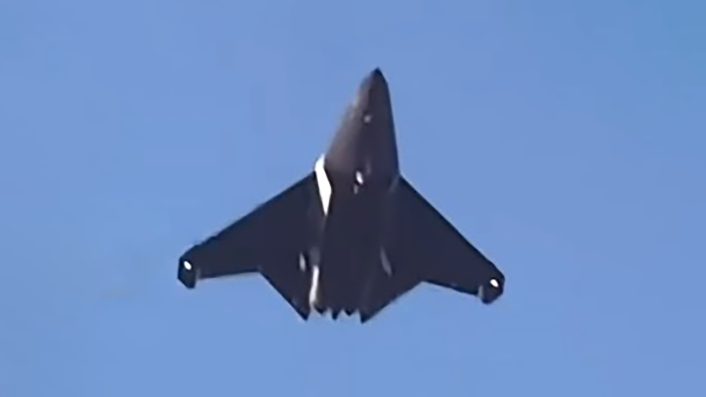
China second unknown new jetThe new jet developed by Shenyang and spotted in flight over populated areas. (Image credit: Chinese Internet)

The fact that the aircraft flew over populated areas is not casual, as Dec. 26 is an important day for China. In fact, it is the birthday of Mao Zedong, the founder of the Chinese Communist Party and the People’s Republic of China (PRC), and thus many important events are usually kept for this day. For an instance, the J-20 first emerged on Dec. 26 about a decade ago.

The two aircraft flew in broad daylight over densely populated areas, so there was no apparent effort to hide them even with the secrecy which usually surrounds new aircraft development in China. So far there are no official comments, however the fact that the images are being freely shared without any intervention by the authorities lead to the opinion that the decision to have the aircraft spotted during the flights was deliberate.


China's SAC J-50 Conducted New Flight Test​

To view this content we will need your consent to set third party cookies.
For more detailed information, see our cookies page.
 
All-moving v-tails but placed horizontally. It's brilliant! American 6th gen planes will always stick to the old fashion "horizontal" rudders and canards...

I still prefer the J-36, it is a heavy duty dragonfly while J-50 is a light duty damselfly.
 
One thing that I noticed, sixth gen seems to have a longer and pointy nose compared with previous generation aircraft. (I know pitot tube could be a factor here but still)

641.webp

IMG_2118.jpeg
 

Users who are viewing this thread

Pakistan Defence Latest

Latest Posts

Back
Top