Sales of consumer goods under China's policy-backed trade-in program exceeded 2.6 trillion yuan (about 369.9 billion U.S. dollars) last year, benefiting over 360 million people, data from the Ministry of Commerce showed Thursday.
www.china.org.cn
China's trade-in program drives consumer goods sales by 2.6 trln yuan in 2025
January 2, 2026
In the first 11 months of 2025, retail sales of consumer goods rose 4 percent year on year, with the trade-in program contributing over 1 percentage point to the growth, according to the ministry.
The initiative also drove industrial upgrading and the green transition. New energy vehicles accounted for nearly 60 percent of automobile trade-ins, helping push the retail market share of new energy passenger vehicles above 50 percent for nine consecutive months.
In 2025, the recycling volume of scrapped automobiles jumped 24.5 percent year on year, which facilitated the recycling of about 9.6 million tonnes of steel and 1.3 million tonnes of non-ferrous metals, reducing carbon emissions by approximately 24.5 million tonnes.
Since the program's implementation in September 2024, over 480 million subsidies have been issued directly to Chinese consumers, bringing green, low-carbon and smart products into their daily life, said the ministry.
Chinese authorities announced late last month that the trade-in subsidy program for consumer goods will be renewed in 2026 as part of the broader efforts to boost consumption, with 62.5 billion yuan in ultra-long special treasury bond funds allocated in advance to support this year's program.
The expansion of domestic demand is set to top China's major economic priorities this year, according to the recent Central Economic Work Conference, which also outlined plans to implement consumption-boosting campaigns, as well as plans to increase the incomes of urban and rural residents.
China has allocated 62.5 billion yuan (about 8.88 billion U.S. dollars) in ultra-long special treasury bond funds in advance to support the trade-ins of consumer goods for 2026, the country's top economic planner said Tuesday.
www.china.org.cn
China front-loads 62.5B yuan funds to support 2026 consumer goods trade-in program
December 31, 2025
China has allocated 62.5 billion yuan (about 8.88 billion U.S. dollars) in ultra-long special treasury bond funds in advance to support the trade-ins of consumer goods for 2026, the country's top economic planner said Tuesday.
The funds -- the first to support the trade-in program for 2026 -- were initiated by the National Development and Reform Commission (NDRC) and the Ministry of Finance, the NDRC said.
The move aims to ensure policy continuity and meet surging consumption demand during the upcoming New Year and Spring Festival holidays, the NDRC said, noting that it will guide local authorities to leverage the funds and implement the consumer goods trade-in program in an improved, orderly manner.
Also on Tuesday, the NDRC and the finance ministry issued a joint announcement, detailing policies and measures for the implementation of large-scale equipment renewal and consumer goods trade-in programs in 2026.
According to the announcement, consumers will continue to receive subsidies through trade-in programs for products ranging from automobiles to six types of home appliances: refrigerators, washing machines, televisions, air conditioners, computers and water heaters.
In one example, consumers can enjoy a 15 percent subsidy when purchasing a Grade-I energy-efficient home appliance product, to a maximum of 1,500 yuan of the sales price.
The consumer goods trade-in program for the purchase of new digital products will also be expanded to include smart products such as AI glasses and intelligent home products, including elderly-friendly home products.
As for equipment renewals, subsidy programs will be expanded to include elevators for installation in old residential buildings, equipment used in elderly care homes, and equipment used for firefighting, rescue or testing purposes, according to the announcement.
The expansion of domestic demand is set to top China's major economic priorities next year, according to the recent Central Economic Work Conference, which also outlined plans to implement consumption-boosting campaigns, as well as plans to increase the incomes of urban and rural residents.
China Posts Record Goods Trade Surplus in Third Quarter
By Wang Shiyu
Published: Jan. 2, 2026 2:43 p.m. GMT+8
A container terminal at the Qingdao Port in Qingdao, Shandong province. Photo: Visual China
China recorded a historic high goods trade surplus of $269.5 billion in the third quarter of 2025, data released Wednesday by the State Administration of Foreign Exchange showed.
China’s current account surplus reached $198.7 billion in the period, a 26% increase from a year earlier, according to official data. The services trade deficit narrowed 16% year on year to $49.3 billion, as service revenue rose faster than expenditure. Revenue increased by $11.9 billion, while spending grew by $2.7 billion.
China Posts Record Goods Trade Surplus in Third Quarter - China’s current account surplus reached $198.7 billion in the period, a 26% increase from a year earlier
Get the latest breaking news and headlines from the largest Arab News website. Get world news, sport news, business news, entertainment, lifestyle, video and photos.
www.arabnews.com
RIYADH: ACWA Power has announced significant progress in its strategic entry into the Chinese energy market, confirming that its China-based subsidiary received formal notification on Dec. 29 regarding the acquisition of wind power assets totaling 1,250 megawatts.
The transaction encompasses one operational site of 250 MW and four projects under construction totaling 1,000 MW, which are subject to conditional handover upon reaching operational readiness.
This development follows ACWA Power’s initial December 2024 announcement of its successful entry into China, through which the company secured over 1 gigawatt of renewable energy projects.
At the time, ACWA Power highlighted this milestone as its formal entry into the Chinese market, facilitated through strategic partnerships with local renewable energy developers.
The latest update, communicated by ACWA Power China, coincides with the signing of multiple Share Purchase Agreements for the targeted wind assets. The four under-construction projects will be incorporated into ACWA Power’s portfolio once they meet the company’s operational readiness conditions.
In its original announcement on Dec. 30, 2024, ACWA Power disclosed a portfolio of solar and wind projects across several Chinese provinces, to be owned fully or in partnership with local renewable energy firms, with implementation already underway. As of the most recent update, 333 MW from the development pipeline have met operational conditions and have been formally added to ACWA Power’s operational portfolio.
No changes to the costs associated with the transaction have been reported.
This move aligns with ACWA Power’s broader global strategy, which includes a pipeline of international investments valued at approximately $115 billion across renewable energy, water desalination, and green hydrogen.
Specifically, the company has outlined plans to invest up to $50 billion in China by 2030, targeting the acquisition and development of up to 20 gigawatts of clean energy assets.
The initiative underscores ACWA Power’s strategic focus on expanding its global footprint beyond Saudi Arabia, positioning China as a central market for long-term growth. Through these efforts, the company aims to support global energy transitions while reinforcing its role as a key international player in the clean energy sector.
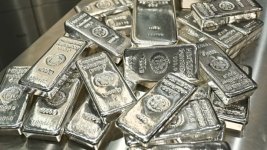
China’s move to restrict silver exports is set to keep the metal in the spotlight, with analysts warning of a supply crunch following weeks of volatile price swings.
Effective Thursday, the Ministry of Commerce will implement a two-year special government licence for exports of silver, along with tungsten and antimony. While Beijing says the measure is aimed at protecting resources and the environment, market watchers see it as a signal that supply to overseas markets will be further limited.
The new rules replace a quota system in place since 2000. Under the stricter regime, exporters must meet rigorous standards: firms need to prove they executed silver exports annually from 2022 to 2024, while new applicants must demonstrate annual production exceeding 80 tonnes and consistent export records.
“Compared with gold, silver has delivered a markedly stronger performance,” said Antonio Di Giacomo, senior market analyst at global multi-asset broker XS.com, noting that the divergence between gold and silver reflects the latter’s hybrid nature.
While the approach can help secure silver in China, it could affect access to the metal for firms and investors outside the country
Joseph Dahrieh, Tickmill
Zeng Ke, an analyst at Hualian Futures, said in a report on Sunday that the London silver and Shanghai silver prices recorded an accumulated surge of 175 per cent and 145 per cent, respectively, throughout 2025.
Joseph Dahrieh, managing principal at multi-asset broker Tickmill in London, said the licence system could add significant friction to the process of exporting silver, even though it is not an “outright ban”.
“The Ministry of Commerce’s December 12 review shows 44 firms qualified for exports in 2026-27, concentrating export rights and adding approval friction,” he explained. “While the approach can help secure silver in China, it could affect access to the metal for firms and investors outside the country.”
BEIJING — China is set to tighten controls on silver exports from Thursday, expanding restrictions on the once-ordinary metal critical to the U.S. industry and defense supply chains.
Tesla CEO Elon Musk criticized the move over the weekend on his social media platform X, responding to a post about the upcoming restrictions.
The following presents the core statistics on international students studying in China for the years 2023–2025 (as of January 2026). Data for 2023 is official statistics released by the Ministry of Education, while data for 2024–2025 are reasonable estimates based on public reports.
Core Data Overview (Unit: Person)
- 2023 (Official): Total enrolled students: 254,019; Newly admitted degree-seeking students: 131,432; Graduates and completers: Approximately 112,000
- 2024 (Estimated): Total enrolled students: 282,000; Newly admitted degree-seeking students: 153,000; Graduates and completers: Approximately 121,000
- 2025 (Estimated): Total enrolled students: 310,000; Newly admitted degree-seeking students: 170,000; Graduates and completers: 130,000
If you want to study science and technology, you can come to China.
If you are interested in hotel management, tourism management, business, or the liberal arts, you can choose universities in Europe or the United States
If you want to study science and technology, you can come to China.
If you are interested in hotel management, tourism management, business, or the liberal arts, you can choose universities in Europe or the United States
sorry did not specify, am asking for someone else, two of my staff members actually who already have some qualifications in this regards but wasting their time in my butcher ( good boys but this is not their line of work)
sorry did not specify, am asking for someone else, two of my staff members actually who already have some qualifications in this regards but wasting their time in my butcher ( good boys but this is not their line of work)
Every country’s education system has its own strengths and weaknesses.
China’s education system excels in science, technology, engineering, and mathematics (STEM) fields, such as mathematics, physics, chemistry, biology, electronic information, communications, mechanical engineering, electrical engineering, artificial intelligence, and biomedical science, among others.
University education in China is somewhat biased toward STEM fields and against the liberal arts, as people think liberal arts students don’t have much real expertise
Even for domestic students in China, it is difficult to find suitable jobs in the liberal arts and business fields
Most officials and leaders in China are only from engineering or technical backgrounds.
This is different from Europe and the US, where most leaders are professional politicians.
There are two main groups of international students in China — those from developed nations like Europe, the US and Japan, and those from China’s neighboring countries.
Students from the Middle East are quite rare by comparison.
Perhaps Middle Eastern countries prefer to send their students to Europe to study majors such as literature, the arts, and business
This site uses cookies to help personalise content, tailor your experience and to keep you logged in if you register.
By continuing to use this site, you are consenting to our use of cookies.