Chinese Economy: General News, Updates and Discussions

These universities will surely offer English classes if they enroll overseas students, but international students are better off learning Chinese.

After all, China’s college education system is totally different from Europe’s and America’s. European education is now commercialized.
China’s education is mainly about training talent for the country, and it’s fully funded by the government.
In China, if your kid can’t get into a Chinese university and you are rich, you can always pay to buy a quick course to get diploma in Europe.
However, the recognition of European and American diplomas in China is declining
 
Last edited:
Is the curriculum in English? Otherwise, it will be difficult for international students to master Mandarin.

I'm asking because Indian students went to medical schools in Russia and had to learn Russian.
According to current regulations, foreign students wishing to study in China must pass the HSK exam at level 4 or higher.

Some programs offered by Chinese universities in collaboration with foreign universities may be taught in English. This is primarily for Chinese students, not international students.

Previously, some foreign governments reached agreements with the Chinese government to establish special classes at certain Chinese universities specifically for students from their respective countries, and these classes were taught entirely in English. These programs did not require international students to pass the HSK exam. I don't know if such classes still exist today.

If foreign students come to China to study through regular channels rather than special programs, the HSK exam is a necessary requirement.
 
Last edited:
Alleged scam billionaire Chen Zhi arrested in Cambodia and extradited to China
https://www.scmp.com/policies-and-standards
Chen Zhi is accused of operating a transnational crime network, engaging in cryptocurrency fraud, human trafficking and money laundering. Photo: Prince Holding Group

Phoebe Zhang in Shenzhen
Published: 10:54am, 8 Jan 2026


Cambodia has extradited to China a billionaire businessman accused of operating a transnational crime network, engaging in cryptocurrency fraud, human trafficking and money laundering.

At the request of Chinese authorities, Cambodia arrested three Chinese nationals – including Chen Zhi, the founder of Prince Group – and transferred them to China on Tuesday, Cambodia China Times reported on Wednesday night.

The Cambodian Ministry of Interior said in a statement that law enforcement from both countries had investigated and cooperated on the case for months.


Alleged scam billionaire Chen Zhi arrested in Cambodia and extradited to China
https://www.scmp.com/policies-and-standards
Chen Zhi is accused of operating a transnational crime network, engaging in cryptocurrency fraud, human trafficking and money laundering. Photo: Prince Holding Group

Phoebe Zhang in Shenzhen
Published: 10:54am, 8 Jan 2026

Cambodia has extradited to China a billionaire businessman accused of operating a transnational crime network, engaging in cryptocurrency fraud, human trafficking and money laundering.

At the request of Chinese authorities, Cambodia arrested three Chinese nationals – including Chen Zhi, the founder of Prince Group – and transferred them to China on Tuesday, Cambodia China Times reported on Wednesday night.

The Cambodian Ministry of Interior said in a statement that law enforcement from both countries had investigated and cooperated on the case for months.
He is from Fujian, China, and went to Cambodia to develop his business in 2011, becoming a Cambodian citizen in 2014. There are reports that he also holds several other nationalities.

According to Cambodian sources, the King has ordered the revocation of his Cambodian citizenship.
 
Hope Cambodia roots out Scam business, thanks to Thailand's persuasion.

Otherwise, one day China need to capture and trial Hun Sen family.
 
CZ got arrested? Thank God. Finally.
Chen Zhi is merely a "front man" for the Hun Sen family. The real masterminds behind the telecommunications fraud scheme are the Hun Sen family.

However, China cannot directly arrest a head of state for this. The Hun Sen family handed Chen Zhi over to the Chinese government, thus ending the telecommunications fraud activities.
 
Chen Zhi is merely a "front man" for the Hun Sen family. The real masterminds behind the telecommunications fraud scheme are the Hun Sen family.

However, China cannot directly arrest a head of state for this. The Hun Sen family handed Chen Zhi over to the Chinese government, thus ending the telecommunications fraud activities.
US is arresting head of state on fake charges. China should with real evidence.
 

Cambodia extradites alleged scam mastermind to China after arrest​

Chen Zhi alongside a company building

Image source,Prince Group/Getty
Author,Simon Fraser
    • Role,Asia editor, BBC News website
    • 7 January 2026
Cambodia says it has extradited to China a billionaire businessman accused of masterminding a vast cryptocurrency scam in which trafficked workers were lured to forced labour camps to defraud victims globally.

Chen Zhi was among three Chinese nationals arrested on 6 January after a joint investigation into transnational crime lasting several months, Cambodia said.

The US charged the 37-year-old last October with running internet scams from Cambodia that it said had stolen billions in cryptocurrency. The UK also sanctioned his global business empire, Prince Group.

Cambodian authorities have also suspended the operations of Prince Bank, a subsidiary of Prince Group.
The bank has been placed under liquidation and banned from offering new banking services - though customers can still withdraw money and repay loans, the National Bank of Cambodia said on Thursday.

Last year, US authorities seized about $15bn (£11bn) worth of bitcoin that alleged belonged to Chen, in what FBI Director Kash Patel described as "one of the largest financial fraud takedowns in history".

The BBC contacted Prince Group for comment at the time. In the past, the Cambodia-based group has denied any involvement in scams. Its website says its businesses include property development, and financial and consumer services.
Since Chen Zhi was indicted by the US on fraud and money-laundering charges in October, his whereabouts have been unclear.
But on Wednesday, the Cambodian authorities said they had "arrested three Chinese nationals namely Chen Zhi, Xu Ji Liang, and Shao Ji Hui and extradited [them] to the People's Republic of China". The interior ministry statement did not say where Chen Zhi had been detained.

His Cambodian nationality had been revoked by royal decree last month, it added. The enigmatic tycoon had given up his Chinese nationality to become a Cambodian citizen in 2014.
The UN estimates that hundreds of thousands of people have been trafficked to South East Asia, many of them to Cambodia, lured by the promise of legitimate jobs and then forced to run online scams.

People are held against their will in the scam farms and made to defraud strangers online under the threat of punishment or torture. Many of those trapped are Chinese and targeted people in China.
People who were rescued from scam centers in Myanmar arrive in Thailand, at the Myanmar-Thai border of Phop Phra district, near Mae Sot, Tak province, northern Thailand, 12 February 2025

Image source,EPA
Image caption,Scam centres have proliferated in South East Asia - above, people rescued from compounds in Myanmar last February are seen arriving in Thailand

Chinese authorities have also been quietly investigating the Prince Group since at least 2020. The company is accused of running online fraud schemes in a number of court cases.

The Beijing Municipal Public Security Bureau established a task force to investigate the Prince Group, describing it as "a major transnational online gambling syndicate based in Cambodia".
Motorists ride past a branch of the Prince Bank in Phnom Penh on October 15, 2025.

Image source,AFP via Getty Images
Image caption,US authorities accuse Chen Zhi of turning Prince Group into one of Asia's largest transnational criminal organisations

Cambodia's ruling elite have been close to Chen Zhi for years. The government has said little since the US and UK sanctioned Prince Group, apart from urging US and UK authorities to be sure they had sufficient evidence for their allegations.

By some estimates, scam businesses may account for around half of the entire Cambodian economy.

"I think it's the sheer scale of his operations which really makes Chen Zhi stand out," Jack Adamovic Davies, a journalist who has investigated Chen Zhi, told the BBC last year.

He said it was shocking the Prince Group had been able to build a "global footprint" without raising alarm bells, given the serious criminal charges it now faces.

Additional reporting by South East Asia correspondent Jonathan Head
 

Cambodia extradites alleged scam mastermind to China after arrest​

Chen Zhi alongside a company building

Image source,Prince Group/Getty
Author,Simon Fraser
    • Role,Asia editor, BBC News website
    • 7 January 2026
Cambodia says it has extradited to China a billionaire businessman accused of masterminding a vast cryptocurrency scam in which trafficked workers were lured to forced labour camps to defraud victims globally.

Chen Zhi was among three Chinese nationals arrested on 6 January after a joint investigation into transnational crime lasting several months, Cambodia said.

The US charged the 37-year-old last October with running internet scams from Cambodia that it said had stolen billions in cryptocurrency. The UK also sanctioned his global business empire, Prince Group.

Cambodian authorities have also suspended the operations of Prince Bank, a subsidiary of Prince Group.
The bank has been placed under liquidation and banned from offering new banking services - though customers can still withdraw money and repay loans, the National Bank of Cambodia said on Thursday.

Last year, US authorities seized about $15bn (£11bn) worth of bitcoin that alleged belonged to Chen, in what FBI Director Kash Patel described as "one of the largest financial fraud takedowns in history".

The BBC contacted Prince Group for comment at the time. In the past, the Cambodia-based group has denied any involvement in scams. Its website says its businesses include property development, and financial and consumer services.
Since Chen Zhi was indicted by the US on fraud and money-laundering charges in October, his whereabouts have been unclear.
But on Wednesday, the Cambodian authorities said they had "arrested three Chinese nationals namely Chen Zhi, Xu Ji Liang, and Shao Ji Hui and extradited [them] to the People's Republic of China". The interior ministry statement did not say where Chen Zhi had been detained.

His Cambodian nationality had been revoked by royal decree last month, it added. The enigmatic tycoon had given up his Chinese nationality to become a Cambodian citizen in 2014.
The UN estimates that hundreds of thousands of people have been trafficked to South East Asia, many of them to Cambodia, lured by the promise of legitimate jobs and then forced to run online scams.

People are held against their will in the scam farms and made to defraud strangers online under the threat of punishment or torture. Many of those trapped are Chinese and targeted people in China.
People who were rescued from scam centers in Myanmar arrive in Thailand, at the Myanmar-Thai border of Phop Phra district, near Mae Sot, Tak province, northern Thailand, 12 February 2025

Image source,EPA
Image caption,Scam centres have proliferated in South East Asia - above, people rescued from compounds in Myanmar last February are seen arriving in Thailand

Chinese authorities have also been quietly investigating the Prince Group since at least 2020. The company is accused of running online fraud schemes in a number of court cases.

The Beijing Municipal Public Security Bureau established a task force to investigate the Prince Group, describing it as "a major transnational online gambling syndicate based in Cambodia".
Motorists ride past a branch of the Prince Bank in Phnom Penh on October 15, 2025.

Image source,AFP via Getty Images
Image caption,US authorities accuse Chen Zhi of turning Prince Group into one of Asia's largest transnational criminal organisations

Cambodia's ruling elite have been close to Chen Zhi for years. The government has said little since the US and UK sanctioned Prince Group, apart from urging US and UK authorities to be sure they had sufficient evidence for their allegations.

By some estimates, scam businesses may account for around half of the entire Cambodian economy.

"I think it's the sheer scale of his operations which really makes Chen Zhi stand out," Jack Adamovic Davies, a journalist who has investigated Chen Zhi, told the BBC last year.

He said it was shocking the Prince Group had been able to build a "global footprint" without raising alarm bells, given the serious criminal charges it now faces.

Additional reporting by South East Asia correspondent Jonathan Head
Chinese media outlets have uncovered more hidden clues, and Chen Zhi's story is quite legendary.

I estimate that many people will go to prison because of this in the next few years, but it probably won't be made public.
 
In 2009, a man named Cai Wen was pursued by the police for copyright infringement. While on the run in Chongqing, he met a highly skilled individual named Hu Xiaowei (a computer science graduate student at Chongqing University).
The two hit it off and began forming a team. This team rented servers in Chongqing to establish private server advertising websites, using hacking techniques to attack competitors and manipulate search engines to monopolize the market. The team recruited several highly skilled hackers (many of whom were graduate students in computer science). Chen Zhi was one of them.
Because the team frequently used "Knight" as a nickname, they were known externally as the "Knight Attack Group."

In September 2010, the Chinese Ministry of Public Security supervised the case, and the Chongqing Public Security Bureau handled the investigation.
In July 2011, Chongqing police cracked the case and arrested 19 people involved.
After earning a considerable amount of money, Chen Zhi left the team early and went to Cambodia, thus avoiding police detection.
The team's main culprit, Hu Xiaowei, escaped and was not apprehended by the Chongqing police.
In 2012, the case was adjudicated. The 19 criminals received suspended sentences after paying hefty fines and did not actually serve any prison time.

Chen Zhi began developing his business in Cambodia. Later, Hu Xiaowei fled to Cambodia and reunited with Chen Zhi. At that time, Taiwanese telecommunications fraud had already spread to the Fujian region of China.
Chen Zhi and Hu Xiaowei joined forces again, combining their advanced technical skills with the telecommunications fraud model, and once again widely recruited highly skilled personnel (some from the original "Knight Attack Group"). Simultaneously, Chen Zhi used the funds obtained from telecommunications fraud to gradually enter Cambodian politics, eventually establishing close ties with the Hun Sen family and obtaining their protection.

The subsequent story is more publicly known.
 

Belarus-China container train traffic surges tenfold​


Belarusian Railway Sent 1,050 Container Trains to China in 2025​


Cambodia extradites alleged ‘scam centre’ don to China

AFP
January 9, 2026

1767968212248.png

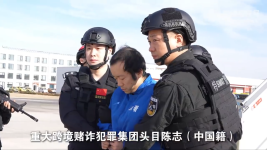
This frame grab taken from undated handout video footage released by China’s Ministry of Public Security on January 8, 2026 shows guards escorting handcuffed accused scam boss Chen Zhi (C) off a China Southern plane in Beijing. — AFP

PHNOM PENH: Accused scam boss Chen Zhi has been extradited to China from Cambodia, Beijing confirmed on Thursday, after he was indicted by the United States over alleged multibillion-dollar fraud.

Cambodia said earlier on Thursday that the bank founded by Chen, Prince Bank, had also been placed under liquidation.

The bank is a subsidiary of Chen’s Prince Holding Group, one of Cambodia’s biggest conglomerates, which Washington alleges has served as a front for “one of Asia’s largest transnational criminal organisations”.

China’s Ministry of Public Security said Chen had been “escorted” back to China from Phnom Penh and lauded the “major achievement in China-Cambodia law enforcement cooperation”.


Chinese authorities will soon issue arrest warrants for “the first batch of key members of Chen Zhi’s criminal group, and will resolutely apprehend the fugitives”, it said in a statement.

Phnom Penh to liquidate bank founded by Chen Zhi

The National Bank of Cambodia (NBC), the Southeast Asian country’s central bank, said Prince Bank had been placed under liquidation and “suspended from providing new banking services, including accepting deposits and providing credit”.

It said in a statement that auditor Morisonkak MKA has been appointed as liquidator. Prince Bank has about a billion dollars in assets under management, according to its website.

Customers “can withdraw money normally” and borrowers “must continue to fulfill their obligations”, the NBC said.

‘Building pressure’

Chinese-born Chen was sanctioned by Washington and London in October for directing an alleged cyberfraud run by hundreds of scammers who trafficked into compounds in Cambodia.

Cambodian authorities said they arrested Chen and two other Chinese nationals and extradited them on Tuesday at China’s request.

Chinese courts have sentenced people to death over involvement in scams, including more than a dozen people last year for their involvement in criminal groups with operations in Myanmar’s Kokang border region.

The US Justice Department declined to comment on Wednesday.

However, Amnesty International said last year that rights abuses in scam hubs were happening on a “mass scale”, and the government’s poor response suggested its complicity.

Chen would face up to 40 years in prison if convicted in the United States on wire fraud and money laundering conspiracy charges involving approximately 127,271 bitcoin seized by the United States, worth more than $11 billion at current prices.

Prince Group has denied the allegations.

Prince Bank and a law firm that stated on the group’s behalf in November did not respond immediately to requests for comment.

Former adviser

US prosecutors accused Chen of presiding over compounds in Cambodia where trafficked workers carried out cryptocurrency fraud schemes that netted billions.

Victims were targeted through “pig butchering” scams — investment schemes that build trust over time before stealing funds.

The operations have caused billions in global losses.

Scam centres across Cambodia, Myanmar, and the region lure foreign nationals — many Chinese — with fake job ads, then force them under threat of violence to commit online fraud.

Amnesty International has identified at least 53 scam compounds in Cambodia alone, where rights groups say criminal networks perpetrate human trafficking, forced labour, torture, and slavery.
 

Users who are viewing this thread

Country Watch Latest

Back
Top