Chinese Economy: General News, Updates and Discussions

Germany’s Merz eyes business opportunities at Chinese tech hub in Hangzhou​

German Chancellor visits eastern city, home to AI firm DeepSeek and e-commerce giant Alibaba, with business leaders.


Listen to this article | 3 mins
German Chancellor Friedrich Merz visits a Mercedes plant in Beijing

German Chancellor Friedrich Merz visits a Mercedes plant in Beijing on his inaugural official visit to China, on February 26, 2026 [Pedro Pardo/AFP]

By Al Jazeera Staff and AFP
Published On 26 Feb 202626 Feb 2026
Click here to share on social media
Share
Save
Add Al Jazeera on Google
German Chancellor Friedrich Merz has arrived in the tech hub of Hangzhou on the second day of his first official trip to China, flanked by a delegation of business leaders seeking contracts in the eastern city.

Merz travelled from Beijing to the city of some 12 million people on Thursday, where he was due to tour some leading companies, including Germany’s Siemens Energy and Unitree, a Chinese firm producing humanoid robots.

Recommended Stories​

list of 4 items
end of list
Hangzhou is a major hub in China’s tech sector, home to giants, including artificial intelligence company DeepSeek and e-commerce platform Alibaba.

Before leaving Beijing, Merz, who is being accompanied by a delegation, including executives of German car giants Volkswagen, BMW and Mercedes, visited a Mercedes plant in the Chinese capital where he tested a self-driving vehicle.
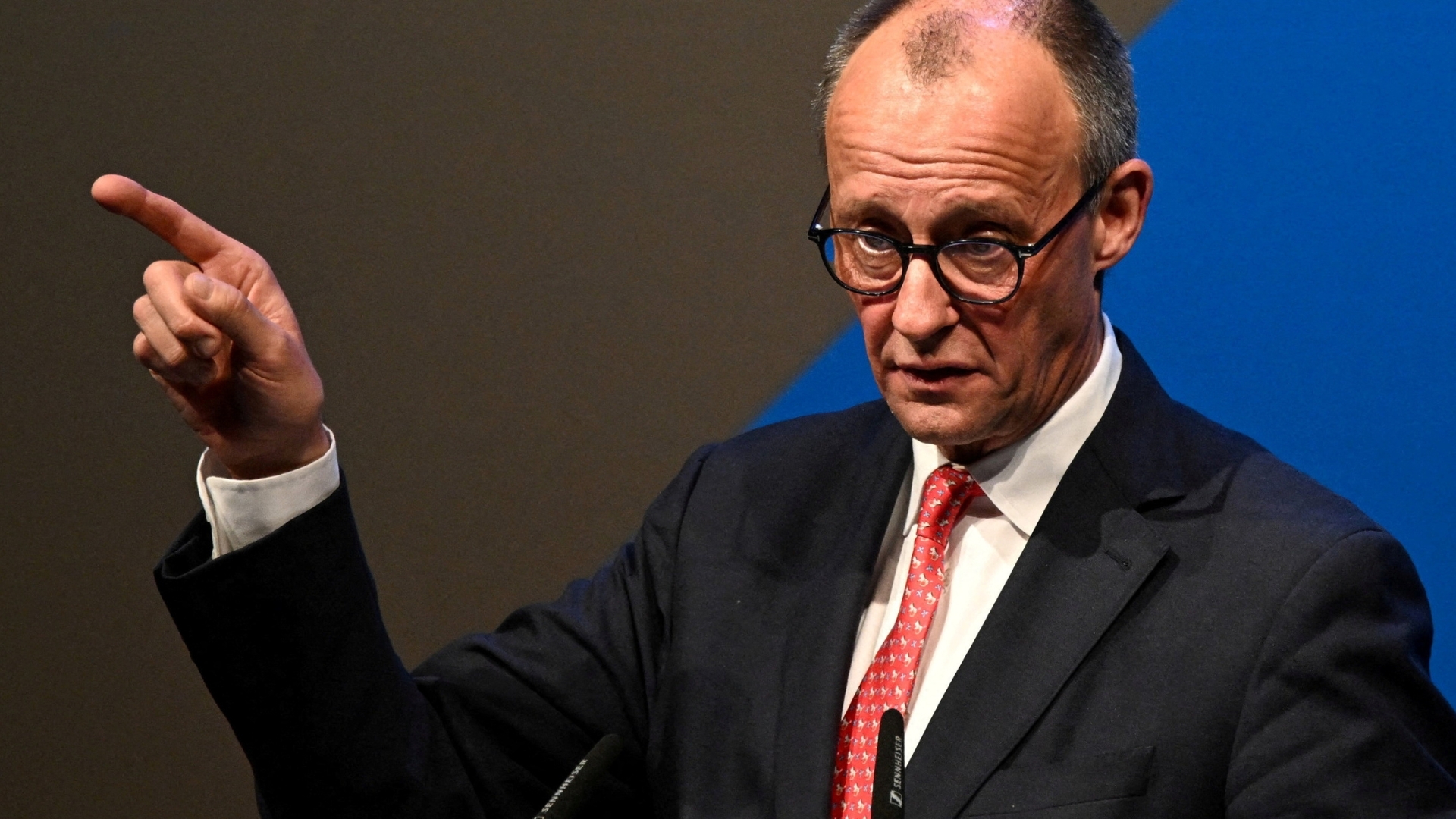


image.jpg


Play Video
2:31
  • Now Playing
    02:31

    German Chancellor heads to China: Friedrich Merz visits with trade delegation​

  • Next
    01:33

    International doctors forced to leave Gaza over Israeli demands​

  • 09:32

    Afghanistan says it launches attacks against Pakistan​

  • 01:11

    Syrian government forces and Druze factions exchange prisoners in Suwayda​

  • 25:00

    Where the Silence Breaks | Ep 3 – Colombia​


‘Improved’ trade relationship sought​

Merz’s trip to China, which became Germany’s largest trading partner last year, seeks to deepen decades-old economic ties with the world’s second-largest economy in the wake of tariffs imposed by the United States last year.

But he has also sought to address “challenges” in the relationship, most notably tackling the massive imbalance which saw Germany’s trade deficit with China hit a record 89 billion euros ($105bn) last year, fuelling complaints from German businesses that Chinese competitors are flooding the market with cheaper goods.

In a meeting with Chinese Premier Li Qiang in Beijing on Wednesday, before he met Chinese President Xi Jinping, Merz said he wanted “to improve and make fair” the cooperation between the countries.

Advertisement

Following the talks with Xi and top Chinese leaders, Merz said China had agreed to buy up to 120 Airbus aircraft, and said other contracts were in the pipeline.

The two leaders stressed their commitment to developing closer strategic relations, with Xi telling Merz he was willing to take relations to “new levels”.


image.jpg


Play Video
2:31
German Chancellor heads to China: Friedrich Merz visits with trade delegation


Ukraine, Taiwan discussed​

The talks between Xi and Merz also touched on geopolitical issues, with the German leader saying any “reunification” with Taiwan, the self-ruled island China claims as its territory, must be done peacefully.

Merz also told reporters that he asked the Chinese government to use its influence with Russia to help end the war in Ukraine, amid frustrations among European leaders that Beijing was not doing enough to bring the war to an end.

“We know that signals from Beijing are taken very seriously in Moscow,” Merz said.

Following the meeting, the two countries released a joint statement saying they supported efforts to achieve a ceasefire and lasting peace in Ukraine, emphasising the importance of fair competition and mutual market access, and committing to resolving any concerns through dialogue, Chinese state media reported.

Merz is the latest in a string of Western leaders to visit Beijing in recent months, including the United Kingdom Prime Minister Keir Starmer, French President Emmanuel Macron and Canadian PM Mark Carney, amid the fallout from the Trump administration’s tariffs on long-established trade partners.

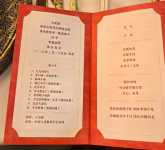
A post on the Chinese internet revealed the menu for the state banquet hosted by Premier Li Qiang for Merz.
1772213356210.png
======================================
This menu gives me the impression that

the Chinese government has no friendly expectations of Merz. I can almost predict that, a few days later, the two sides will continue their international disputes over the issue, and the economic war will continue...
 
To view this content we will need your consent to set third party cookies.
For more detailed information, see our cookies page.
 
  • Haha
Reactions: ety
To view this content we will need your consent to set third party cookies.
For more detailed information, see our cookies page.

Taiwanese media esp the Green ones are full of crap, lol. Yanks and Jews are trying to deflect their sinful war crimes against Iranians, lol.
 
Last edited:
Japan is white, China not. Asking the Germans to not cozy to Japan is unrealistic. But who knows, maybe in the future pigs can fly.
Unlike the Japanese and Russians, Chinese don't care about becoming so called "whites" or Westerners.

To view this content we will need your consent to set third party cookies.
For more detailed information, see our cookies page.
 
Last edited:
Unlike the Japanese and Russians, Chinese don't care about becoming so called "whites" or Westerners.

To view this content we will need your consent to set third party cookies.
For more detailed information, see our cookies page.

that’s something for people with inferiority complex.
Yes, If I was you, I would care less, too. China has vast military potential. Sometimes I wonder why the Japanese have no respect. The Vietnamese would never accept such a thing in ASEAN.
 
that’s something for people with inferiority complex.
Yes, If I was you, I would care less, too. China has vast military potential. Sometimes I wonder why the Japanese have no respect. The Vietnamese would never accept such a thing in ASEAN.
Yes, Singaporeans are also Westerners wannabes. Lee Kuan Yew had chosen to forget much of his Chinese roots opted for Westernization ie English for SG, maybe that's or was best for the tiny state. The Japanese national strategy since Meiji Restoration has been (脱亚入欧)“leaving Asia and becoming Europeans", white wannabes.
 
Last edited:

'What is the game plan?': The Iran war is unsettling China and its ambitions​


19 hours ago
Share
Save
Laura BickerChina correspondent
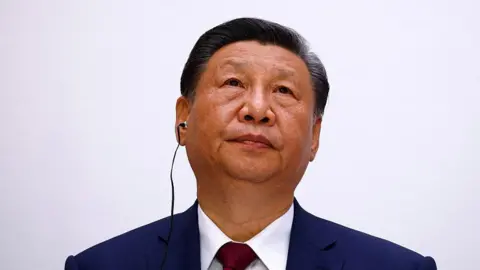
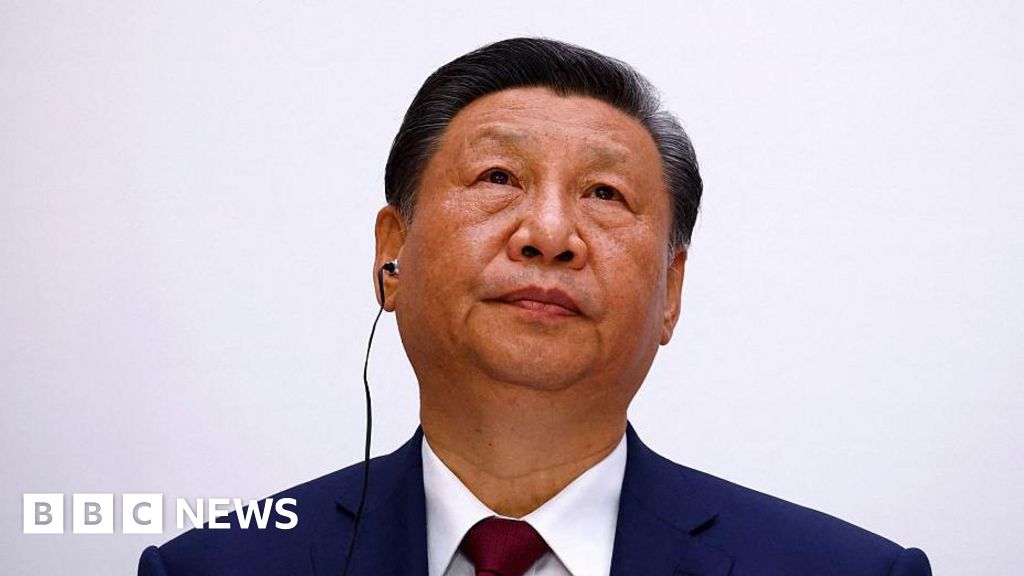
AFP via Getty Images Xi Jinping attends a joint statement with the French president at the Elysee Palace as part of his two-day state visit in France, in Paris, on May 6, 2024.
AFP via Getty Images
China is not feeling the shock of war in the Middle East - yet.
But it is feeling the ripples.
In the short-term, it has enough oil supplies for several months, after which it could turn to neighbour Russia for help.
But China will be calculating what this could mean long-term - not just for its investments in the Middle East, but also for its ambitions.
This week, thousands of Communist Party delegates are meeting in Beijing to discuss a roadmap for the world's second-largest economy as it continues to battle low consumption, a prolonged property crisis and huge local debt.
On Thursday, China lowered its annual economic growth target to the lowest level since 1991, even as Beijing continues its rapid development of high-tech and renewables industries.
China may have hoped to export its way out of economic trouble. But it has spent a year fighting a trade war with the United States, and now faces the prospect of upheaval in the Middle East, which supplies both its major shipping routes and a lot of its energy needs.
The longer the war drags on, the more it could hurt, especially if traffic through the Strait of Hormuz remains blocked.
"A prolonged period of turmoil and insecurity in the Middle East will disrupt other regions of importance for China," says Philip Shetler-Jones from the Royal United Services Institute.
"African economies, for instance, have been the beneficiary of substantial and steady flows of Gulf capital. If the investment tide goes out, this risks wider instability that undermines the sustainability of China's broader and longer-term interests."
That is, given China's global footprint, its investments and markets beyond the Middle East are also vulnerable to a protracted war. And like so many other countries, China too is wary of this fresh bout of unpredictability.
"I think China is thinking the same as everyone else," says Professor Kerry Brown, director of the China Lau Institute at King's College London.
"What is the game plan? Surely the Americans didn't go into this with no game plan."
But then, he adds: "Probably, along with everyone else, they would also be thinking, oh God, they really have gone into this with no plan at all. Right, we don't want to get dragged into this like we don't want to get dragged into anything else, but we also need to do something."


Not-so-firm friends​

Iran was always designated as an "ally" of China by many in the West.
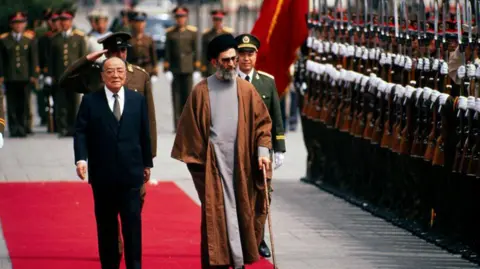
They have certainly been very friendly. The last foreign trip taken by Tehran's Supreme Leader Ali Khamenei was to Beijing in 1989. He had his photograph taken by the Great Wall.
Getty Images Chinese President Yang Shangkun (1907 - 1998) (center left) and Iranian President Ali Khamenei (center right) walk together during a welcoming ceremony for the latter's State Visit, Beijing, China, May 11, 1989.
Getty Images
Ali Khamenei with China's then-president Yang Shangkun in May 1989


The partnership between them deepened when Xi Jinping visited Tehran in 2016 and the two countries eventually signed a 25-year strategic partnership in 2021.
China promised to invest $400bn (£300bn) in Iran over 25 years and, in exchange, Iran would keep the oil flowing.
However, analysts believe only a fraction of that money has reached the Iranians. But the oil kept flowing.
China imported 1.38 million barrels of crude per day from Iran in 2025, according to the Center on Global Energy Policy - around 12% of China's total crude oil imports. Many of these barrels are alleged to have been relabelled as Malaysian to disguise their origin.
The research centre at Columbia University released a report claiming there are more than 46 million barrels of Iranian oil in floating storage in Asia, and even more in bonded storage, which is yet to be cleared by customs, in the Chinese ports of Dalian and Zhoushan, where the National Iranian Oil Company leases tanks.
There have also been allegations of arms sales between the two countries. China has denied selling Tehran anti-ship cruise missiles, but US intelligence has accused Beijing of supporting Iran's ballistic missile programme by training engineers and supplying components.
Rights groups have alleged that Iran's brutal crackdowns against protesters and critics of the regime has been fuelled by Chinese facial recognition and surveillance tech, shared by Beijing.
It may sound like the two were firm friends.
All of this even prompted tabloid headlines lumping China and Iran together as an "axis of upheaval" alongside North Korea and Russia. All four do want to challenge the US-led world order, but in truth their relationship was transactional.
"There's no real ideological or cultural reason why China would get on with Iran," Prof Brown says.
"China's almost 'divide and rule' strategy was sometimes well-served by Iran being a constant irritant to the US. So I think there are largely negative reasons for China wanting a relationship with Iran, rather than positive reasons.
"That's a really fragile basis for a relationship, and it worked - up to a point. But it wasn't a very deep relationship."
China does not view its "alliances" in the same way the West does. It does not sign mutual defence treaties and will not come rushing to its ally's aid.
Instead, Beijing is keen to stay out of any conflict.


Leading the charge​

But that does not mean China isn't deeply troubled by what is happening in the Middle East.
Beijing issued a predictable and muted condemnation and called for a ceasefire.
Chinese Foreign Minister Wang Yi said it was "unacceptable for the US and Israel to launch attacks against Iran... still less to blatantly assassinate a leader of a sovereign country and instigate regime change".
The truth is Washington's actions in Venezuela in January, and now in Iran, have highlighted the limits of those countries' partnerships with China.
On both occasions, Beijing has been left on the sidelines as an observer, incapable of helping those within its orbit.
China is trying to position itself as a "responsible counter-balance" to the US, says Philip Shetler-Jones from the Royal United Services Institute, but "in terms of military balance, the US is demonstrating what being a superpower really means, which is the ability to force outcomes in theatres across the globe".
Beijing, he argues, is not "a superpower on the same level" despite its economic might. "It is not equipped to protect its friends against this kind of action, even if it wanted to."
To counter these concerns, Xi will continue positioning himself as a stable and predictable global leader, in contrast to Donald Trump.
"China's argument will be that Donald Trump has once again demonstrated beyond any doubt the extent of western hypocrisy and western talk of the liberal international order," says Professor Steve Tsang, director of the SOAS China institute.
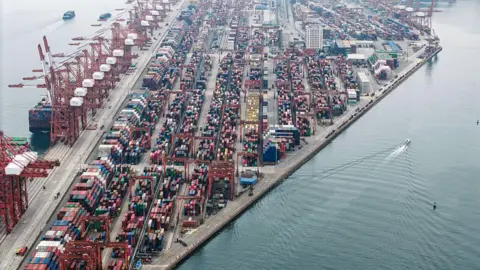
Getty Images Gantry cranes and shipping containers at the Chiwan container terminal in Shenzhen, China, on Friday, Feb. 27, 2026.
Getty Images
China's Shenzhen port is just one of many that relies on shipping routes which run through the Middle East


Disruptions to energy supply and air travel as a result of this conflict will "have far greater ramifications economically in the Global South than in the West", he adds.
"Some countries are going to have food shortage in a few months... and those are Global South countries. We're also already seeing the rupturing of the Western alliance, with the UK, Spain, being singled out for attack."
Beijing may also see a chance to help mediate talks along with other countries. Foreign Minister Wang Yi has already spoken to his counterparts in Oman and France, and China has announced it will send a special envoy to the Middle East.

Trump's looming visit​

Still, China is treading carefully because one of the biggest calculations for them is the mercurial US president, who is due to arrive for a much-awaited meeting later this month.
None of China's criticisms of US and Israeli strikes on Iran have targeted Trump directly, which may make a handshake a little easier.
Some have speculated if the visit can still go ahead. But there are signs it is still on. Officials from both sides are due to meet to discuss the trip, Reuters reports.
China may see this as a chance to "look for cues", says Shetler-Jones, on how Trump may respond to other flashpoints like Taiwan, the self-governed island it claims.
"To the extent this war proves unpopular, it might contribute to a growing trend of 'restraint' in US foreign and security policy that – if put into effect by a future administration – give China a freer hand to pursue its interests in its own region and the wider world."
This crisis presents some in China with an opportunity to paint Washington as warmongers, which the People's Liberation Army has done across social media.
But having such "an unpredictable and a dysfunctional actor" may be a source of unease for Beijing, Prof Brown says.
"I don't think China wants a world that's dominated by the US, but they don't really want a world where the US is such an unstable actor."


'What is the game plan?': The Iran war is unsettling China and its ambitions​


19 hours ago
Share
Save
Laura BickerChina correspondent
AFP via Getty Images Xi Jinping attends a joint statement with the French president at the Elysee Palace as part of his two-day state visit in France, in Paris, on May 6, 2024.
AFP via Getty Images
China is not feeling the shock of war in the Middle East - yet.
But it is feeling the ripples.
In the short-term, it has enough oil supplies for several months, after which it could turn to neighbour Russia for help.
But China will be calculating what this could mean long-term - not just for its investments in the Middle East, but also for its ambitions.
This week, thousands of Communist Party delegates are meeting in Beijing to discuss a roadmap for the world's second-largest economy as it continues to battle low consumption, a prolonged property crisis and huge local debt.
On Thursday, China lowered its annual economic growth target to the lowest level since 1991, even as Beijing continues its rapid development of high-tech and renewables industries.
China may have hoped to export its way out of economic trouble. But it has spent a year fighting a trade war with the United States, and now faces the prospect of upheaval in the Middle East, which supplies both its major shipping routes and a lot of its energy needs.
The longer the war drags on, the more it could hurt, especially if traffic through the Strait of Hormuz remains blocked.
"A prolonged period of turmoil and insecurity in the Middle East will disrupt other regions of importance for China," says Philip Shetler-Jones from the Royal United Services Institute.
"African economies, for instance, have been the beneficiary of substantial and steady flows of Gulf capital. If the investment tide goes out, this risks wider instability that undermines the sustainability of China's broader and longer-term interests."
That is, given China's global footprint, its investments and markets beyond the Middle East are also vulnerable to a protracted war. And like so many other countries, China too is wary of this fresh bout of unpredictability.
"I think China is thinking the same as everyone else," says Professor Kerry Brown, director of the China Lau Institute at King's College London.
"What is the game plan? Surely the Americans didn't go into this with no game plan."
But then, he adds: "Probably, along with everyone else, they would also be thinking, oh God, they really have gone into this with no plan at all. Right, we don't want to get dragged into this like we don't want to get dragged into anything else, but we also need to do something."


Not-so-firm friends​

Iran was always designated as an "ally" of China by many in the West.
They have certainly been very friendly. The last foreign trip taken by Tehran's Supreme Leader Ali Khamenei was to Beijing in 1989. He had his photograph taken by the Great Wall.
Getty Images Chinese President Yang Shangkun (1907 - 1998) (center left) and Iranian President Ali Khamenei (center right) walk together during a welcoming ceremony for the latter's State Visit, Beijing, China, May 11, 1989.'s State Visit, Beijing, China, May 11, 1989.
Getty Images
Ali Khamenei with China's then-president Yang Shangkun in May 1989


The partnership between them deepened when Xi Jinping visited Tehran in 2016 and the two countries eventually signed a 25-year strategic partnership in 2021.
China promised to invest $400bn (£300bn) in Iran over 25 years and, in exchange, Iran would keep the oil flowing.
However, analysts believe only a fraction of that money has reached the Iranians. But the oil kept flowing.
China imported 1.38 million barrels of crude per day from Iran in 2025, according to the Center on Global Energy Policy - around 12% of China's total crude oil imports. Many of these barrels are alleged to have been relabelled as Malaysian to disguise their origin.
The research centre at Columbia University released a report claiming there are more than 46 million barrels of Iranian oil in floating storage in Asia, and even more in bonded storage, which is yet to be cleared by customs, in the Chinese ports of Dalian and Zhoushan, where the National Iranian Oil Company leases tanks.
There have also been allegations of arms sales between the two countries. China has denied selling Tehran anti-ship cruise missiles, but US intelligence has accused Beijing of supporting Iran's ballistic missile programme by training engineers and supplying components.
Rights groups have alleged that Iran's brutal crackdowns against protesters and critics of the regime has been fuelled by Chinese facial recognition and surveillance tech, shared by Beijing.
It may sound like the two were firm friends.
All of this even prompted tabloid headlines lumping China and Iran together as an "axis of upheaval" alongside North Korea and Russia. All four do want to challenge the US-led world order, but in truth their relationship was transactional.
"There's no real ideological or cultural reason why China would get on with Iran," Prof Brown says.
"China's almost 'divide and rule' strategy was sometimes well-served by Iran being a constant irritant to the US. So I think there are largely negative reasons for China wanting a relationship with Iran, rather than positive reasons.
"That's a really fragile basis for a relationship, and it worked - up to a point. But it wasn't a very deep relationship."
China does not view its "alliances" in the same way the West does. It does not sign mutual defence treaties and will not come rushing to its ally's aid.
Instead, Beijing is keen to stay out of any conflict.


Leading the charge​

But that does not mean China isn't deeply troubled by what is happening in the Middle East.
Beijing issued a predictable and muted condemnation and called for a ceasefire.
Chinese Foreign Minister Wang Yi said it was "unacceptable for the US and Israel to launch attacks against Iran... still less to blatantly assassinate a leader of a sovereign country and instigate regime change".
The truth is Washington's actions in Venezuela in January, and now in Iran, have highlighted the limits of those countries' partnerships with China.
On both occasions, Beijing has been left on the sidelines as an observer, incapable of helping those within its orbit.
China is trying to position itself as a "responsible counter-balance" to the US, says Philip Shetler-Jones from the Royal United Services Institute, but "in terms of military balance, the US is demonstrating what being a superpower really means, which is the ability to force outcomes in theatres across the globe".
Beijing, he argues, is not "a superpower on the same level" despite its economic might. "It is not equipped to protect its friends against this kind of action, even if it wanted to."
To counter these concerns, Xi will continue positioning himself as a stable and predictable global leader, in contrast to Donald Trump.
"China's argument will be that Donald Trump has once again demonstrated beyond any doubt the extent of western hypocrisy and western talk of the liberal international order," says Professor Steve Tsang, director of the SOAS China institute.
Getty Images Gantry cranes and shipping containers at the Chiwan container terminal in Shenzhen, China, on Friday, Feb. 27, 2026.
Getty Images
China's Shenzhen port is just one of many that relies on shipping routes which run through the Middle East


Disruptions to energy supply and air travel as a result of this conflict will "have far greater ramifications economically in the Global South than in the West", he adds.
"Some countries are going to have food shortage in a few months... and those are Global South countries. We're also already seeing the rupturing of the Western alliance, with the UK, Spain, being singled out for attack."
Beijing may also see a chance to help mediate talks along with other countries. Foreign Minister Wang Yi has already spoken to his counterparts in Oman and France, and China has announced it will send a special envoy to the Middle East.

Trump's looming visit​

Still, China is treading carefully because one of the biggest calculations for them is the mercurial US president, who is due to arrive for a much-awaited meeting later this month.
None of China's criticisms of US and Israeli strikes on Iran have targeted Trump directly, which may make a handshake a little easier.
Some have speculated if the visit can still go ahead. But there are signs it is still on. Officials from both sides are due to meet to discuss the trip, Reuters reports.
China may see this as a chance to "look for cues", says Shetler-Jones, on how Trump may respond to other flashpoints like Taiwan, the self-governed island it claims.
"To the extent this war proves unpopular, it might contribute to a growing trend of 'restraint' in US foreign and security policy that – if put into effect by a future administration – give China a freer hand to pursue its interests in its own region and the wider world."
This crisis presents some in China with an opportunity to paint Washington as warmongers, which the People's Liberation Army has done across social media.
But having such "an unpredictable and a dysfunctional actor" may be a source of unease for Beijing, Prof Brown says.
"I don't think China wants a world that's dominated by the US, but they don't really want a world where the US is such an unstable actor."

China mostly depending on Russia now.
 
Yup pretty much yes for oil and gas

This Middle East war is supporting Russian financially
The biggest winner of the war against Iran is Russia. Putin laughes all the way to the bank.
 
People esp in the West have misconceptions. As far as I understand, China has only three allies. NK is a formal ally bound by military treaty and Pakistan and Russia are informal allies of China though there no formal treaties between them exist now. Iran is not China's ally esp in the security sense, it is China's important economic partner and a friendly country. So, don't expect China to get involved militarily directly in this war. Yes, looks like Trump is going after countries friendly to China and they fall in China-Russia camp.
 
The Chinese are probably waiting for massive infrastructure rebuilding contracts when the shooting stops. Beyond that I don't think anything changes for China. That is exactly what happened in Iraq,
 

'What is the game plan?': The Iran war is unsettling China and its ambitions​


19 hours ago
Share
Save
Laura BickerChina correspondent
AFP via Getty Images Xi Jinping attends a joint statement with the French president at the Elysee Palace as part of his two-day state visit in France, in Paris, on May 6, 2024.
AFP via Getty Images
China is not feeling the shock of war in the Middle East - yet.
But it is feeling the ripples.
In the short-term, it has enough oil supplies for several months, after which it could turn to neighbour Russia for help.
But China will be calculating what this could mean long-term - not just for its investments in the Middle East, but also for its ambitions.
This week, thousands of Communist Party delegates are meeting in Beijing to discuss a roadmap for the world's second-largest economy as it continues to battle low consumption, a prolonged property crisis and huge local debt.
On Thursday, China lowered its annual economic growth target to the lowest level since 1991, even as Beijing continues its rapid development of high-tech and renewables industries.
China may have hoped to export its way out of economic trouble. But it has spent a year fighting a trade war with the United States, and now faces the prospect of upheaval in the Middle East, which supplies both its major shipping routes and a lot of its energy needs.
The longer the war drags on, the more it could hurt, especially if traffic through the Strait of Hormuz remains blocked.
"A prolonged period of turmoil and insecurity in the Middle East will disrupt other regions of importance for China," says Philip Shetler-Jones from the Royal United Services Institute.
"African economies, for instance, have been the beneficiary of substantial and steady flows of Gulf capital. If the investment tide goes out, this risks wider instability that undermines the sustainability of China's broader and longer-term interests."
That is, given China's global footprint, its investments and markets beyond the Middle East are also vulnerable to a protracted war. And like so many other countries, China too is wary of this fresh bout of unpredictability.
"I think China is thinking the same as everyone else," says Professor Kerry Brown, director of the China Lau Institute at King's College London.
"What is the game plan? Surely the Americans didn't go into this with no game plan."
But then, he adds: "Probably, along with everyone else, they would also be thinking, oh God, they really have gone into this with no plan at all. Right, we don't want to get dragged into this like we don't want to get dragged into anything else, but we also need to do something."


Not-so-firm friends​

Iran was always designated as an "ally" of China by many in the West.
They have certainly been very friendly. The last foreign trip taken by Tehran's Supreme Leader Ali Khamenei was to Beijing in 1989. He had his photograph taken by the Great Wall.
Getty Images Chinese President Yang Shangkun (1907 - 1998) (center left) and Iranian President Ali Khamenei (center right) walk together during a welcoming ceremony for the latter's State Visit, Beijing, China, May 11, 1989.'s State Visit, Beijing, China, May 11, 1989.
Getty Images
Ali Khamenei with China's then-president Yang Shangkun in May 1989


The partnership between them deepened when Xi Jinping visited Tehran in 2016 and the two countries eventually signed a 25-year strategic partnership in 2021.
China promised to invest $400bn (£300bn) in Iran over 25 years and, in exchange, Iran would keep the oil flowing.
However, analysts believe only a fraction of that money has reached the Iranians. But the oil kept flowing.
China imported 1.38 million barrels of crude per day from Iran in 2025, according to the Center on Global Energy Policy - around 12% of China's total crude oil imports. Many of these barrels are alleged to have been relabelled as Malaysian to disguise their origin.
The research centre at Columbia University released a report claiming there are more than 46 million barrels of Iranian oil in floating storage in Asia, and even more in bonded storage, which is yet to be cleared by customs, in the Chinese ports of Dalian and Zhoushan, where the National Iranian Oil Company leases tanks.
There have also been allegations of arms sales between the two countries. China has denied selling Tehran anti-ship cruise missiles, but US intelligence has accused Beijing of supporting Iran's ballistic missile programme by training engineers and supplying components.
Rights groups have alleged that Iran's brutal crackdowns against protesters and critics of the regime has been fuelled by Chinese facial recognition and surveillance tech, shared by Beijing.
It may sound like the two were firm friends.
All of this even prompted tabloid headlines lumping China and Iran together as an "axis of upheaval" alongside North Korea and Russia. All four do want to challenge the US-led world order, but in truth their relationship was transactional.
"There's no real ideological or cultural reason why China would get on with Iran," Prof Brown says.
"China's almost 'divide and rule' strategy was sometimes well-served by Iran being a constant irritant to the US. So I think there are largely negative reasons for China wanting a relationship with Iran, rather than positive reasons.
"That's a really fragile basis for a relationship, and it worked - up to a point. But it wasn't a very deep relationship."
China does not view its "alliances" in the same way the West does. It does not sign mutual defence treaties and will not come rushing to its ally's aid.
Instead, Beijing is keen to stay out of any conflict.


Leading the charge​

But that does not mean China isn't deeply troubled by what is happening in the Middle East.
Beijing issued a predictable and muted condemnation and called for a ceasefire.
Chinese Foreign Minister Wang Yi said it was "unacceptable for the US and Israel to launch attacks against Iran... still less to blatantly assassinate a leader of a sovereign country and instigate regime change".
The truth is Washington's actions in Venezuela in January, and now in Iran, have highlighted the limits of those countries' partnerships with China.
On both occasions, Beijing has been left on the sidelines as an observer, incapable of helping those within its orbit.
China is trying to position itself as a "responsible counter-balance" to the US, says Philip Shetler-Jones from the Royal United Services Institute, but "in terms of military balance, the US is demonstrating what being a superpower really means, which is the ability to force outcomes in theatres across the globe".
Beijing, he argues, is not "a superpower on the same level" despite its economic might. "It is not equipped to protect its friends against this kind of action, even if it wanted to."
To counter these concerns, Xi will continue positioning himself as a stable and predictable global leader, in contrast to Donald Trump.
"China's argument will be that Donald Trump has once again demonstrated beyond any doubt the extent of western hypocrisy and western talk of the liberal international order," says Professor Steve Tsang, director of the SOAS China institute.
Getty Images Gantry cranes and shipping containers at the Chiwan container terminal in Shenzhen, China, on Friday, Feb. 27, 2026.
Getty Images
China's Shenzhen port is just one of many that relies on shipping routes which run through the Middle East


Disruptions to energy supply and air travel as a result of this conflict will "have far greater ramifications economically in the Global South than in the West", he adds.
"Some countries are going to have food shortage in a few months... and those are Global South countries. We're also already seeing the rupturing of the Western alliance, with the UK, Spain, being singled out for attack."
Beijing may also see a chance to help mediate talks along with other countries. Foreign Minister Wang Yi has already spoken to his counterparts in Oman and France, and China has announced it will send a special envoy to the Middle East.

Trump's looming visit​

Still, China is treading carefully because one of the biggest calculations for them is the mercurial US president, who is due to arrive for a much-awaited meeting later this month.
None of China's criticisms of US and Israeli strikes on Iran have targeted Trump directly, which may make a handshake a little easier.
Some have speculated if the visit can still go ahead. But there are signs it is still on. Officials from both sides are due to meet to discuss the trip, Reuters reports.
China may see this as a chance to "look for cues", says Shetler-Jones, on how Trump may respond to other flashpoints like Taiwan, the self-governed island it claims.
"To the extent this war proves unpopular, it might contribute to a growing trend of 'restraint' in US foreign and security policy that – if put into effect by a future administration – give China a freer hand to pursue its interests in its own region and the wider world."
This crisis presents some in China with an opportunity to paint Washington as warmongers, which the People's Liberation Army has done across social media.
But having such "an unpredictable and a dysfunctional actor" may be a source of unease for Beijing, Prof Brown says.
"I don't think China wants a world that's dominated by the US, but they don't really want a world where the US is such an unstable actor."

In the current global context of various conflicts, almost all English-language media outlets worldwide are attempting to link China to these wars. They consistently try to analyze, interpret, and predict from various angles, hoping that China will join these conflicts (regardless of which side China sides with).

The logic is simple! Once China joins these war games, it will become the focus of their attacks. Regardless of which side China supports in the war, they can always find some "peculiar" angle to smear and criticize the Chinese government, thereby undermining the confidence of the Chinese people in the government.

This tactic has repeatedly proven effective for many countries around the world. Whatever decisions these governments make, there is always a "magical" domestic force strongly opposing and criticizing the government's decisions. This is true for Iran, Venezuela, Pakistan, India, Russia… the list is very long. But China is an exception.
 

Users who are viewing this thread

Pakistan Defence Latest

Country Watch Latest

Latest Posts

Back
Top