Chinese Economy: General News, Updates and Discussions


China-Europe Rail Freight Surges as Supply Chains Shift​

Published: Mar. 20, 2026 3:20 a.m. GMT+8

The number of China-Europe freight train trips rose 31.7% year-on-year to 3,501 in the first two months of 2026, reversing a period of sluggish growth.

The strong rebound highlights how geopolitical disruptions to global shipping and a recovery in China-Russia trade are redirecting international freight to overland rail routes.

From January to February, the network carried 352,100 twenty-foot equivalent units (TEUs) of cargo, up 25.2%, according to China State Railway Group Co. Ltd. The surge contrasts with full-year 2025, when total trips increased just 3.2% to about 20,000 and overall cargo volume fell 1.3% to roughly 2.1 million TEUs. Outbound trips dropped 6.1% to 9,898 last year, while inbound journeys rose 14.4% to about 10,100.
 
Didn't mention gold once there. I proved that dependence on Russia is a drag on Chinese economic success.

With regard to gold.

If China abandons this now and lets the bankers/Trump win by crashing the price of precious metals, China bidding up gold is not going to get Western support next opportunity. As China would be known to be a sell out. China would be on their own as Western PM holders would have sold out long before. With a warchest owned by the Western bankers to defeat China easily. China needs retail investors and average investors to hold much of the Western gold and silver, depriving the central banks and manipulators of this hoard. If China does not want to fight against Trump/bankers, then expect precious metal prices to crash and never rise again. As there would be rush out of gold and silver, without Asian buyers, believing this to be the peak.

London Squeezed: The Silver War Between East and West​

Both China and the United States have metal available, yet neither has chosen to sell into London’s premium.

This is financial war and it looks like the Chinese are backing out.


China has just exported 13,000 tons of green ammonia to South Korea settled in CNY, it equivalent to 1.84 billion kWh ofelectricity.

The era of the electricity-based CNY has begun.
 
To view this content we will need your consent to set third party cookies.
For more detailed information, see our cookies page.
 
To view this content we will need your consent to set third party cookies.
For more detailed information, see our cookies page.

1774041047398.jpeg
 
Last edited:
To view this content we will need your consent to set third party cookies.
For more detailed information, see our cookies page.

To view this content we will need your consent to set third party cookies.
For more detailed information, see our cookies page.
 
To view this content we will need your consent to set third party cookies.
For more detailed information, see our cookies page.
 

China's Sinopec posts 36.8% drop in 2025 net profit on weak petrochemical margins, new energy substitution​

March 22, 20265:27 PM GMT+8Updated 16 hours ago

BEIJING, March 22 (Reuters) - China Petroleum & Chemical Corp , known as Sinopec, reported a 36.8% decline in 2025 net profit on Sunday, citing rising substitution by new energy sources, and weak petrochemical margins, according to the company's filing.

The world's largest oil refiner by capacity posted net income attributable to ‌shareholders of 31.8 billion yuan ($4.62 billion), based on Chinese accounting standards, in a filing to the Shanghai stock exchange.

Refinery throughput fell 0.8% last year to 250.33 million metric tons, equivalent to 5 million barrels per day. The company forecast refinery throughput would remain stable at about 250 million tons in 2026.

Gasoline and diesel production fell 2.4% and 9.1%, respectively, to 62.61 million tons and 52.64 million tons, while kerosene production rose 7.3% ⁠year-on-year to 33.71 million tons.

Annual refining gross margin was 330 yuan ($47.93) per ton, up 27 yuan year-on-year, mainly due to sharply improved margins for refining by-products such as sulfur and petroleum coke, which offset the impact of high import crude premiums and freight costs.

The company's gasoline sales fell 2.5% year-on-year to 61.1 million tons, with the average price falling 7.7%, while diesel sales fell 9.1% to 51.2 million tons, and the average price fell 8% in 2025.

Kerosene sales were 24.2 million tons, up 4% year-on-year, while the average price was down 9.9% from 2024.

In 2025, the company's domestic crude oil output reached 255.75 million barrels, up 0.7% year-on-year, while overseas crude oil output was 26.65 million barrels.

Sinopec expects ‌domestic ⁠crude oil output to reach 255.6 million barrels in 2026, remaining largely stable, while overseas output is expected to drop to 25.31 million barrels.

Natural gas production rose 4% year-on-year to 1,456.6 billion cubic feet in 2025 and is expected to reach 1,471.7 billion cubic feet in 2026.

The company's ethylene production rose 13.5% year-on-year to 15.28 million tons in 2025.

In 2025, the company's external sales revenue ⁠from chemical products totaled 378.0 billion yuan, down 9.6% year-on-year, mainly because of lower product prices.

Sinopec's capital spending was 147.2 billion yuan in 2025 with 70.9 billion yuan on exploration and development.

Sinopec said it plans capital spending from 131.6 billion to 148.6 billion yuan ⁠this year, including 72.3 billion yuan for exploration and development, mainly for crude oil capacity expansion at Jiyang and Tahe, natural gas capacity projects in western and southern Sichuan, and oil and gas storage and transport facilities.

Sinopec's Hong ⁠Kong-listed shares have risen 0.21% year-to-date, outperforming a 1.38% drop in the Hang Seng Index, while lagging behind its peers PetroChina and CNOOC , which have posted 17.58% and 42.63% gains year-to-date, respectively.
 
1774234816371.png
Google Translate:
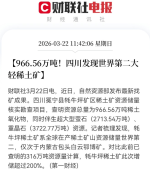
Recently, the Ministry of Natural Resources released its latest findings regarding mineral exploration. A verification and exploration project conducted at the Maoniuping mining area in Mianning County, Sichuan Province, has identified total rare earth oxide resources amounting to 9.6656 million tons; additionally, the site contains associated super-large deposits of fluorite (27.1354 million tons) and barite (37.2277 million tons). An analysis by reporters reveals that, in terms of resource reserves, the Yaoniuping rare earth mine now ranks as the second-largest currently producing rare earth mine globally—surpassed only by the Bayan Obo mine in Baotou, Inner Mongolia. When compared against the previously identified resource volume of 3.16 million tons, this latest assessment represents an increase in reserves of over 200% for the Maoniuping rare earth mine.
 

China tops US with most billionaires globally; India ranks third - how AI has fueled wealth boom​


Story by TOI Business Desk
06 Mar

Key takeaways
  • Billionaire Count: China tops the world with 1,110 billionaires, surpassing the US (1,000) and India (308), fueled by booming AI, semiconductors, healthcare, and energy sectors.
  • AI Wealth Impact: Artificial intelligence created 114 global billionaires, including 46 newcomers, with China producing notable figures like Yan Junjie ($3.6B) and Liu Debing ($1.2B).
  • Global Wealth Hubs: New York remains the billionaire capital (146), followed by Shenzhen (132), Shanghai, Beijing, and London; the average billionaire age is 65.
China now has more billionaires than any other country, according to the latest Hurun Global Rich List, released Thursday by the Shanghai-based Hurun Group.

The country is home to 1,110 billionaires out of 4,020 globally, overtaking the United States. China added 287 new billionaires since last year, more than recovering losses from the past three years.

“The concentration of economic power continues,” said Rupert Hoogewerf, chairman and chief researcher of Hurun Group, as quoted by South China Morning Post.

“Billionaires are at world-record numbers, largely on the back of surging global stock markets, with AI leading the charge, and China’s going global.”

Artificial intelligence played a key role in wealth creation in China, producing two new billionaires: Yan Junjie of MiniMax, with $3.6 billion, and Liu Debing of Knowledge Atlas Technology JSC, also known as Zhipu, with $1.2 billion.

Globally, AI produced 114 billionaires, including 46 newcomers, making it the single largest generator of new billionaires.

China’s new billionaires were largely driven by industrial products, semiconductors, healthcare, and energy. Chen Weiliang of MetaX Integrated Circuits and Zhang Jianzhong of Moore Threads Technology led the semiconductor sector, with $4.7 billion and $4.6 billion, respectively.

In healthcare, Au Yat-Gai of Regencell Bioscience topped the list with $13 billion. The electric vehicle battery sector fueled growth in the energy industry.

Three-quarters of China’s billionaires were not on the list a decade ago, reflecting rapid shifts in wealth creation. “Wealth was created faster last year than at any point in the Hurun Global Rich List’s history. We saw a record of over 700 new faces – that’s two a day for every day of the last year,” said Hoogewerf.

The global list grew by a net 578 billionaires over the past year. The United States ranked second with 1,000 billionaires, up by 130, while India came third with 308, followed by Germany with 171, overtaking the UK.

Top spots remained with US tech giants. Elon Musk at $792 billion, Jeff Bezos of Amazon at $300 billion, and Larry Page of Alphabet at $281 billion. Musk became the first person to surpass $700 billion.

Musk, 54, reclaimed his title as the world’s wealthiest individual for the fifth time in six years, with his net worth rising 89 per cent, largely due to Tesla stock doubling to US$411 and SpaceX preparing for a record-setting IPO.

By city, New York remained the world’s billionaire capital with 146 residents, followed by Shenzhen with 132, Shanghai, Beijing, and London. Hong Kong ranked seventh with 88 billionaires, including Li Ka-shing and his eldest son, Victor Li Tzar-kuoi, who are listed together at 54th.

The average age of billionaires globally is 65. The report also noted 42 billionaires born in China who now live in Southeast Asia, particularly Singapore, the Philippines, and Indonesia, as well as in the United States.
 

China’s Hospital Ships Risk Pacific Health Sovereignty

By Malika Knapp
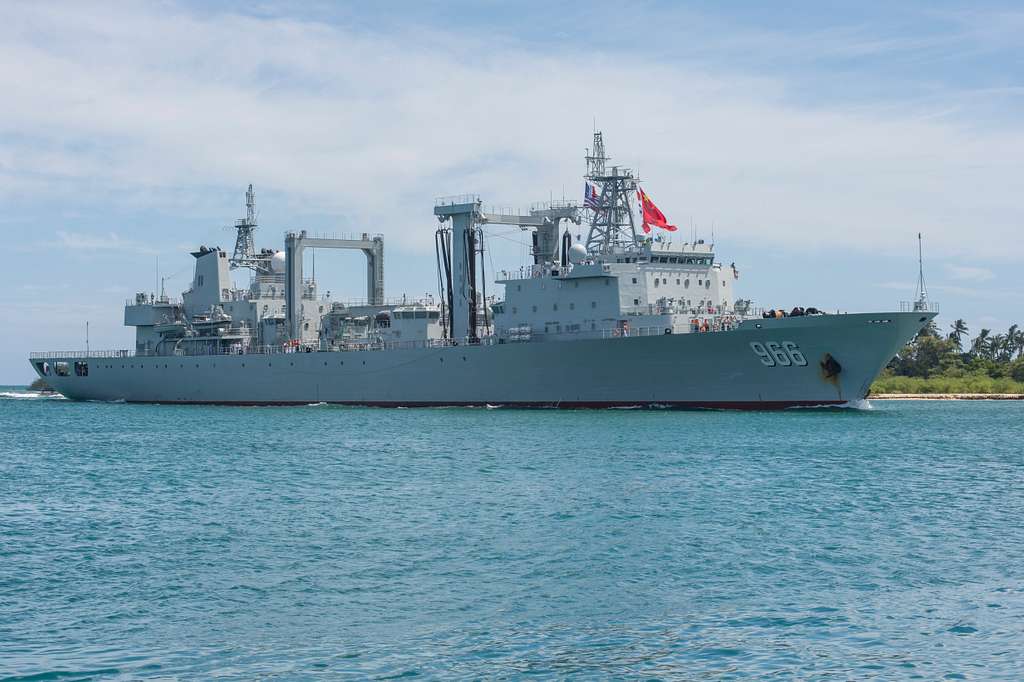
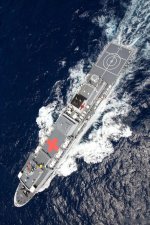
peoples-republic-of-china-peoples-liberation-army-navy-replenishment-ship-gaoyouhu-cb7a44-1024.jpg

Medical assistance and defence objectives are closely intertwined, with free treatment serving to normalise a foreign military presence while advancing China’s geopolitical aims. But from a health systems perspective, the benefits are immediate but fleeting.

When China’s newest naval hospital ship, the Silk Road Ark, set sail on its first overseas mission in September 2025, Beijing framed the voyage as a triumph of humanitarianism. Yet the deployment also illustrates a broader pattern: China’s use of medical assistance as an instrument of statecraft. Operating under China’s Health Silk Road initiative, the floating hospital embarked on a 220-day tour of the South Pacific and Latin America, demonstrating how health diplomacy is increasingly used to advance China’s broader geostrategic objectives.

China will soon boast three hospital ships within the world’s largest navy by hull count. Beyond their medical role, these vessels keep military medical personnel forward-deployed and highly visible, while projecting Chinese soft power into regions long viewed as Australia’s and the United States’ backyard.

The Sovereignty Trade-Off

For Pacific Island Countries (PICs) grappling with workforce shortages, non-communicable diseases and geographic isolation, the arrival of such ships understandably attracts praise—including from Pacific governments themselves. Leaders in Fiji and Tonga publicly welcomed the visits, emphasising the immediate benefits delivered to their citizens and framing the missions as examples of constructive international partnership. In Fiji and Tonga last October, thousands received free consultations and surgeries they might otherwise never have been able to access. For many individuals, especially those requiring complex surgical procedures, the impact may be life-changing: restored mobility, sight, or relief from chronic pain.

However, the very scale and spectacle of the Silk Road Ark obscures a deeper problem: rather than strengthening Pacific health infrastructure, China’s hospital ship missions risk undermining health sovereignty by reinforcing dependence on external providers.

When the Silk Road Ark docked in Suva last year, its arrival coincided with the 50th anniversary of diplomatic relations between Fiji and China. Fijian ministers highlighted that more than 3,000 medical treatments and 426 surgeries were delivered during the mission. China’s Ambassador to Fiji, Zhou Jian, went further, portraying the vessel not only as a boat of life but also a boat of peace that supports regional security. The visit featured a joint maritime search-and-rescue exercise between the Chinese and Fijian navies.

Taken together, these elements underscore China’s growing tendency to integrate medical aid, a tool of soft power, into its broader diplomatic strategy. The Silk Road Ark is not a civilian NGO ship but a commissioned People’s Liberation Army Navy vessel staffed by military medical personnel. Its stop in Fiji occurred the same week Australia opened an $83 million Vuvale Maritime Essential Services Centre in Lami, underscoring how healthcare is only one component of broader strategic competition.

The Limits of Medical Diplomacy

Medical assistance and defence objectives are closely intertwined, with free treatment serving to normalise a foreign military presence while advancing China’s geopolitical aims. But from a health systems perspective, the benefits are immediate but fleeting. The ship arrives with Chinese health professionals, performs surgeries on board, tallies impressive numbers, and then sails on. Local doctors and nurses may assist, but there is no evidence of sustained training of local medical staff that would expand Fiji’s own capacity once the white hull disappears over the horizon. Short-term collaboration does not substitute for long-term investment in primary care and local health infrastructure to build self-sufficiency, which underpins genuine health sovereignty.

To be clear, this critique is not unique to China. Many major donors use highly visible forms of medical diplomacy within their spheres of influence. The Australian Defence Force has deployed field hospitals during humanitarian disasters in the Indo-Pacific, and the United States Navy has sent hospital ships on outreach missions to the Caribbean, Central and South America. These efforts can be valuable for recipient countries, particularly in disaster response or in reducing specialist care backlogs.

The key issue, however, is whether short-term service substitution is paired with sustained capacity building. Even when generously provided, temporary replacement of local services does not, on its own, strengthen a country’s health institutions. Without parallel investments in local medical schools, specialist training pathways and health systems, hospital ship missions risk reinforcing dependency.

What Health Sovereignty Requires

Tonga’s experience is illustrative. When the Silk Road Ark visited Nukuʻalofa for a week-long mission, it offered free specialist services in orthopaedics, dermatology and gastroenterology, alongside a program of cultural performances designed to strengthen ties. For a country where overseas travel is often the only way to access such care, this was welcome relief. But temporary relief cannot be confused with long-term resilience. Tonga’s core challenges—a limited healthcare workforce, high burden of non-communicable diseases, uneven distribution of health workers across islands and chronic shortages of medicines—cannot be solved by episodic ship visits. If anything, repeated reliance on visiting foreign teams risks entrenching a two-tiered system in which external providers are seen as superior, while local services remain under-resourced and undervalued.

This is the crux of the sovereignty problem. Health sovereignty is not about rejecting external help; it is about retaining the ability to set priorities, build domestic capacity and deliver care independently over time. Hospital ship missions, whether Chinese or American, are ill-suited to that task when they focus primarily on visible service delivery.

A Health Silk Road aimed at strengthening Pacific health sovereignty would prioritise long-term local capacity building by shifting emphasis from floating hospitals to local institutions: co-funded medical schools, long-term specialist training, regional supply hubs, and sustained support for primary and preventative care. Instead, the Silk Road Ark is a geopolitical tool in China’s health-diplomacy toolkit that serves Beijing’s strategic interests first, while offering Pacific Islanders care that is generous and visible but ultimately temporary.
 

The Healing Ship: Inside China's Peace Ark​


To view this content we will need your consent to set third party cookies.
For more detailed information, see our cookies page.


The Peace Ark, the world's first 10,000-tonne level professional hospital ship, is China's premier medical vessel.

Equipped with advanced medical facilities and staffed by the nation's leading medical experts, this People's Liberation Army (PLA) Navy ship has completed 10 international missions, visiting 52 countries.

Inside China's Peace Ark, a feature documentary chronicling the Peace Ark's 310,000-nautical-mile voyages over the past 15 years. Over 300,000 people have benefited from its medical services. These missions are more than medical; they build bridges toward a shared future for humanity.
 
Chinese navy 3 sister 10,000 tonne hospital ships sailing around the world to provide free medical service to the locals

祖国“和平方舟”号抵达非洲加蓬🇬🇦_4_🐱喵呜🐱_来自小红书网页版.jpg
海军万吨级医院船,三姊妹_1_大象漫步 军事科技_来自小红书网页版.jpg
 

Users who are viewing this thread

Country Watch Latest

Back
Top