China just crossed a
historic energy
threshold:
solar has overtaken
coal as the country's largest source of
installed power capacity.
China’s installed solar power generating capacity surpasses coal power for the 1st time: National Energy Administration
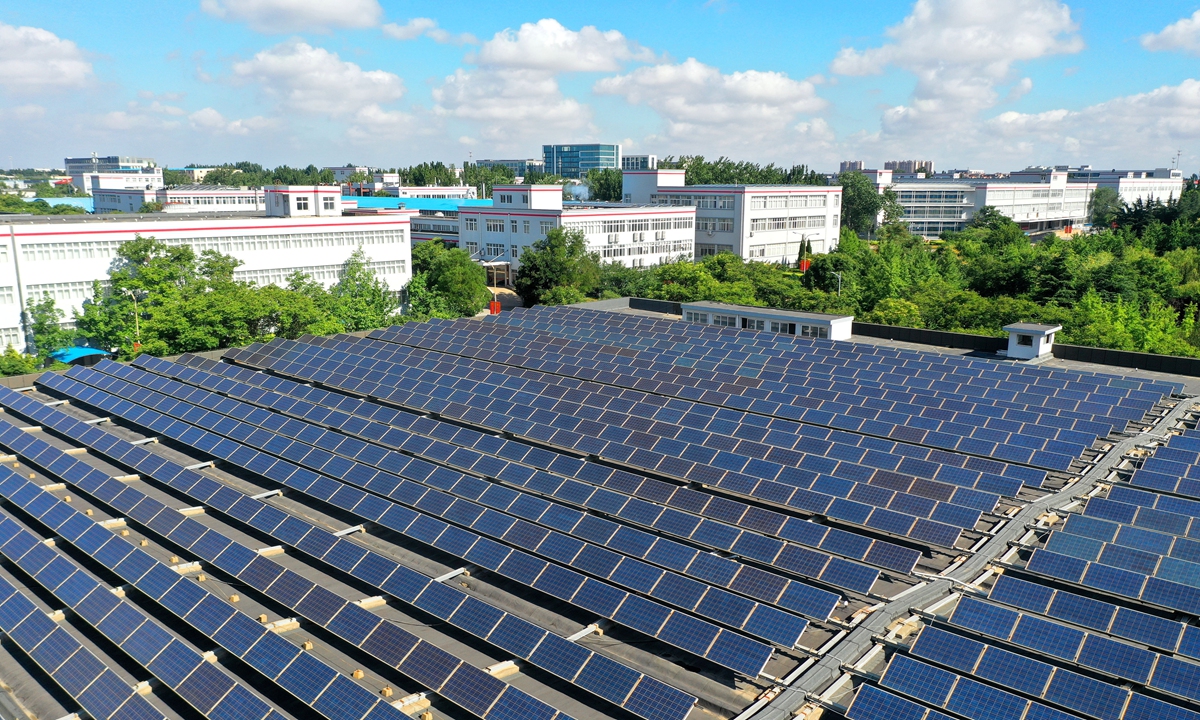
Solar rooftop photovoltaic power generation facilities are seen on a building in Qingdao, East China's Shandong Province, on June 23, 2026. Photo: VCG
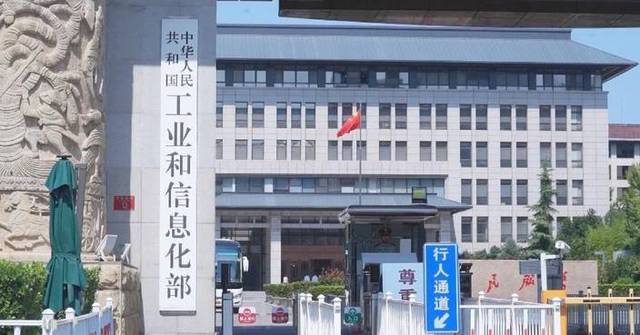
China's installed photovoltaic (PV) power generating capacity has surpassed that of coal power for the first time, becoming the country's largest power source by installed capacity, the National Energy Administration (NEA) announced on Tuesday.
As of the end of July, the installed capacity of solar panels reached 1.286 billion kilowatts, while that of coal power stood at 1.285 billion kilowatts, according to the administration.
Related to China's energy resource endowment, the pattern that persisted for more than a century since the birth of the electric power industry, with coal as the largest power source, has been broken. The historic drop of coal power's share in total electricity generation below 50 percent in the first half of 2026 was yet another milestone and landmark achievement in China's green and low-carbon energy transition, said the NEA.
With 1.286 billion kilowatts of installed PV capacity, comprising 704 million kilowatts of utility-scale solar and 582 million kilowatts of distributed solar, China ranks first among all countries worldwide, far surpassing the US, India, Germany, and other nations, and even exceeding the combined PV installations of all EU member states. This makes China the world's largest market for solar power applications, CCTV News reported on Tuesday.
The expansion of installed capacity means greater security for the country's overall electricity supply and a steady increase in the share of clean energy consumption, analysts said.
From January to July this year, the country's PV power generation reached 802.4 billion kilowatt-hours, up 15.5 percent year-on-year. Solar power now accounts for 13 percent of total electricity consumption nationwide, meaning that for every eight kilowatt-hours of electricity used in China, more than one comes from solar energy, the administration noted.
"This landmark achievement in China's green and low-carbon energy transition signals the accelerated development of a new-type power system with new energy as the mainstay," Lin Boqiang, director of the China Center for Energy Economics Research at Xiamen University, told the Global Times on Tuesday.
The role of coal power is undergoing a profound transformation, shifting from its traditional position as the primary power source to one that provides stable support and acts as a backup for renewable energy, Lin said.
China now possesses the world's most comprehensive and competitive PV industrial chain. Module manufacturing technologies are flourishing across a diverse range of approaches, with crystalline silicon cell conversion efficiency ranking top globally and research and development R&D on next-generation technologies including perovskite cells advancing at a faster pace, the NEA said.
With Chinese solar modules accounting for about 80 percent of global output, the country is offering "Chinese wisdom" and "Chinese solutions" to support the green and low-carbon transformation efforts of nations worldwide, the NEA said.
During the 15th Five-Year Plan (2026-30) period, solar power generation will further explore diverse development models, including integrated PV-storage systems, PV-thermal hybrid plants, and solar-powered hydrogen production. These initiatives aim to shift solar power from a "weather-dependent" resource to one that is "dispatchable and predictable," ensuring that solar energy is "generated reliably, transmitted steadily, and utilized effectively," the NEA noted.