Chinese Economy: General News, Updates and Discussions

1788010194554

August 8, 2026

This chart shows China's break from the model that built modern Asia.https://lnkd.in/gHRnrqiu Japan built Asia's first export base (first wave), then ceded ground as South Korea, Taiwan, and Hong Kong (second wave) industrialized.

Each economy graduated toward higher-value production as the next took over the labor-intensive work it left behind. Economists call this the "flying geese" pattern of industrial upgrading.

But notice what's happening in the China-led third wave. Its share of global exports has remained near its 2021 peak of 15%...levels none of its predecessors had reached.

In effect, as economists Shoumitro Chatterjee and Arvind Subramanian argue in Foreign Affairs Magazine, China is attempting what economic theory says no country should be able to do: retain comparative advantage in almost everything.

The numbers bear this out. Chinese apparel wages average $10,000 a year, five times Bangladesh's, yet China's value-added share of the developing world's low-skill exports has held near 64% for a decade.

Across the developing world, the worry is that China's rise leaves no room for anyone else to industrialize. The United States and Europe helped earlier risers up, China included, by buying their exports and investing in their factories. Beijing is positioned to do the reverse.Image credit: Visual Capitalist
 

China just crossed a historic energy threshold: solar has overtaken coal as the country's largest source of installed power capacity.

China’s installed solar power generating capacity surpasses coal power for the 1st time: National Energy Administration

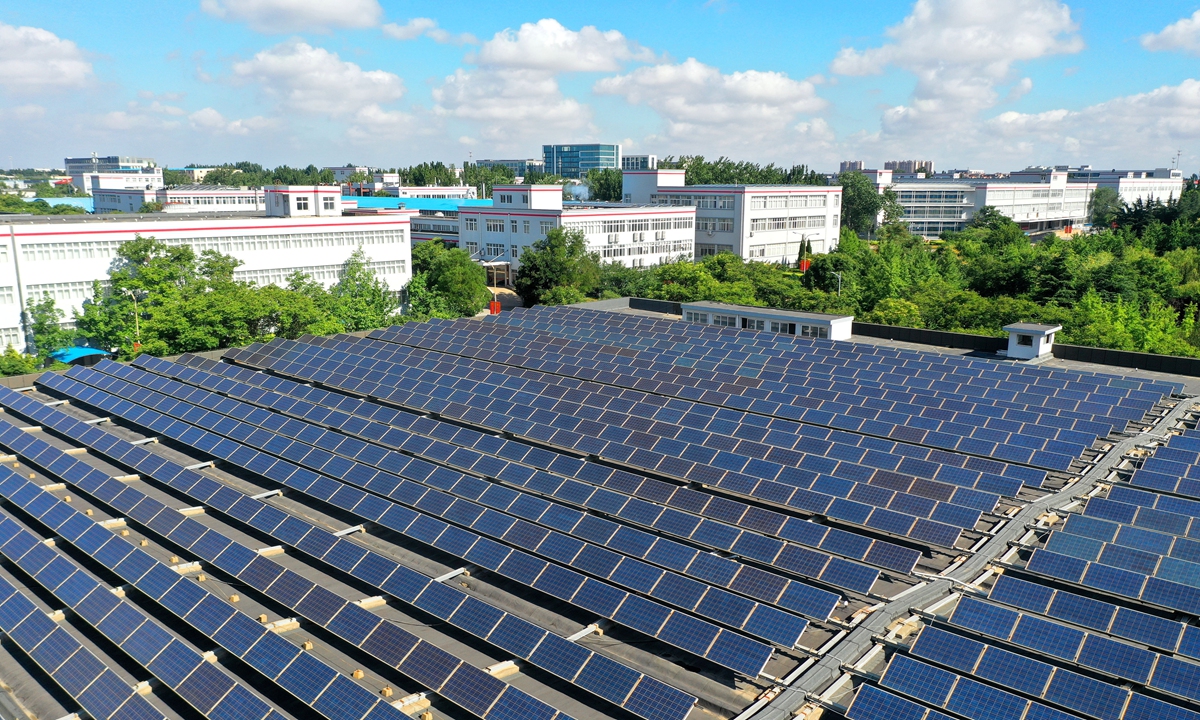
Solar rooftop photovoltaic power generation facilities are seen on a building in Qingdao, East China's Shandong Province, on June 23, 2026. Photo: VCG

Solar rooftop photovoltaic power generation facilities are seen on a building in Qingdao, East China's Shandong Province, on June 23, 2026. Photo: VCG

China's installed photovoltaic (PV) power generating capacity has surpassed that of coal power for the first time, becoming the country's largest power source by installed capacity, the National Energy Administration (NEA) announced on Tuesday.

As of the end of July, the installed capacity of solar panels reached 1.286 billion kilowatts, while that of coal power stood at 1.285 billion kilowatts, according to the administration.

Related to China's energy resource endowment, the pattern that persisted for more than a century since the birth of the electric power industry, with coal as the largest power source, has been broken. The historic drop of coal power's share in total electricity generation below 50 percent in the first half of 2026 was yet another milestone and landmark achievement in China's green and low-carbon energy transition, said the NEA.

With 1.286 billion kilowatts of installed PV capacity, comprising 704 million kilowatts of utility-scale solar and 582 million kilowatts of distributed solar, China ranks first among all countries worldwide, far surpassing the US, India, Germany, and other nations, and even exceeding the combined PV installations of all EU member states. This makes China the world's largest market for solar power applications, CCTV News reported on Tuesday.

The expansion of installed capacity means greater security for the country's overall electricity supply and a steady increase in the share of clean energy consumption, analysts said.

From January to July this year, the country's PV power generation reached 802.4 billion kilowatt-hours, up 15.5 percent year-on-year. Solar power now accounts for 13 percent of total electricity consumption nationwide, meaning that for every eight kilowatt-hours of electricity used in China, more than one comes from solar energy, the administration noted.

"This landmark achievement in China's green and low-carbon energy transition signals the accelerated development of a new-type power system with new energy as the mainstay," Lin Boqiang, director of the China Center for Energy Economics Research at Xiamen University, told the Global Times on Tuesday.

The role of coal power is undergoing a profound transformation, shifting from its traditional position as the primary power source to one that provides stable support and acts as a backup for renewable energy, Lin said.

China now possesses the world's most comprehensive and competitive PV industrial chain. Module manufacturing technologies are flourishing across a diverse range of approaches, with crystalline silicon cell conversion efficiency ranking top globally and research and development R&D on next-generation technologies including perovskite cells advancing at a faster pace, the NEA said.

With Chinese solar modules accounting for about 80 percent of global output, the country is offering "Chinese wisdom" and "Chinese solutions" to support the green and low-carbon transformation efforts of nations worldwide, the NEA said.

During the 15th Five-Year Plan (2026-30) period, solar power generation will further explore diverse development models, including integrated PV-storage systems, PV-thermal hybrid plants, and solar-powered hydrogen production. These initiatives aim to shift solar power from a "weather-dependent" resource to one that is "dispatchable and predictable," ensuring that solar energy is "generated reliably, transmitted steadily, and utilized effectively," the NEA noted.
 

China’s Wind Power Procurement Jumps in July as Mega Projects Drive Bidding​


China’s wind power sector saw a sharp jump in procurement in July, fueled by a new wave of state-backed mega-projects and the rollout of an ambitious new five-year renewable energy plan.

Public bidding records showed 55 new wind-turbine procurement tenders totaling 23,188.45 megawatts, up 219% from June and 50% from a year earlier. China’s Wind Power Capacity Index, developed by Caixin Data and Jiefeng Data with January 2018 set as a baseline of 100, rose to 140 in July.


China's software revenue up 9.2 percent in Jan-July

China's software and information technology service industry maintained sound operational momentum in the first seven months of 2026, according to data released by the Ministry of Industry and Information Technology (MIIT) on Monday.

The combined revenue of the software sector rose 9.2 percent year on year to 8.9785 trillion yuan (about 1.33 U.S. dollars) in the January-July period, while total profits across the industry grew 1.3 percent from a year earlier, topping the one trillion-yuan mark.

By sectors, software product revenue registered steady growth during the period, accounting for 21.6 percent of the industry's total revenue, while revenue from IT services continued to post double-digit growth, contributing 68.7 percent of the industry's total revenue, with its revenue expanding 10 percent year on year in the first seven months.
 

China's exports up 25% y/y in August, imports surge 28.2%

Sep 8, 2026, 10:41 GMT+8

Yangshan Port outside of Shanghai

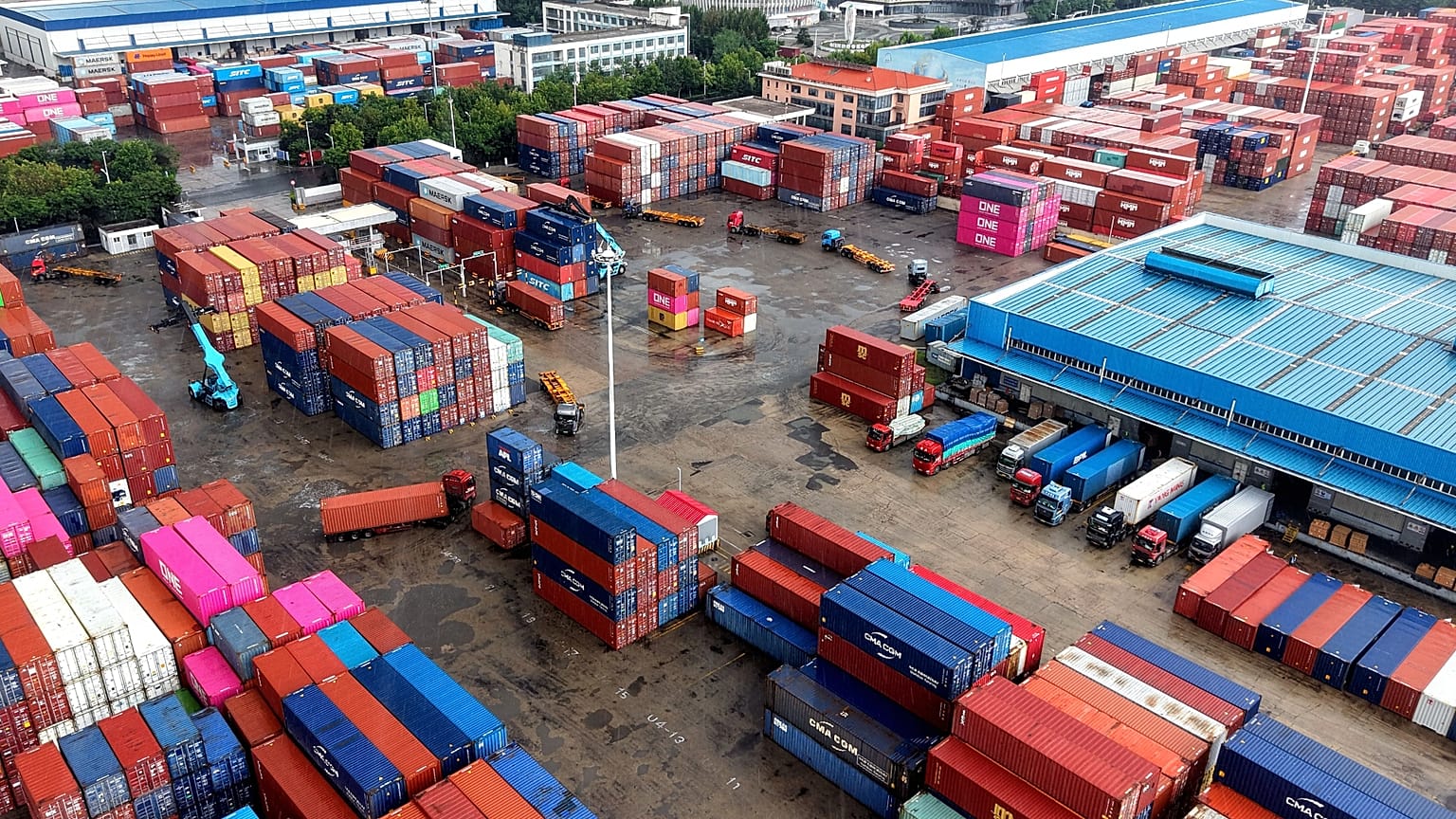
Gantry cranes stand near stacked shipping containers at Yangshan Port outside Shanghai, China, May 7, 2026. REUTERS/Go Nakamura

BEIJING, Sept 8 (Reuters) - China's ‌exports expanded 25% year-on-year in August in U.S. dollar terms, matching ⁠forecast and accelerating from the 23.9% growth in the previous month, while imports soared 28.2%, customs data showed ‌on ⁠Tuesday.
Growth in imports compares with an 27.5% year-on-year ⁠increase in July and a forecast for ⁠a 30% rise.


China’s Foreign Exchange Reserves Continue to Climb

It rose to $3.438 trillion in August

Sept. 7, 2026 5:18 am ET

Headquarters of the People's Bank of China (PBOC) in Beijing.
Monday’s data came as policymakers worldwide weighed actions against inexpensive Chinese exports they say benefit from unfair government subsidies. JASON LEE/REUTERS

China’s foreign-exchange reserves edged higher in August against the backdrop of a weaker dollar and a surging trade surplus, renewing concerns about the yuan’s appreciation.

According to data released Monday by the People’s Bank of China, the reserves rose by $19.55 billion to $3.438 trillion in August. The result was higher than the $3.425 trillion expected by economists surveyed by The Wall Street Journal.


China's trade surplus widens to $119B in August

Sept. 7, 2026
403552.jpg

China's trade surplus landed at $119.09 billion in August, expanding compared to last month's $112.5 billion, the country's General Administration of Customs said on Tuesday.


China records $119B trade surplus in August as streak above $100B continues

library-china-records-119b-trade-surplus-in-august-as-streak-abo-800x450.png


The third consecutive month of triple-digit trade surpluses puts China on pace to top $1 trillion for the year, raising stakes in an already tense global trade environment.

Sept. 7, 2026

China’s trade surplus hit $119 billion in August, extending a remarkable streak that’s reshaping the math on global commerce. The figure landed almost exactly where economists polled by Reuters expected it, at $119.05 billion.

The August number marks the third straight month the surplus has cleared $100 billion. In July, the gap between what China sold and what it bought came in at $112.5 billion.

The numbers behind the streak​

July’s trade data offers the most granular breakdown available. Exports totaled $397.85 billion that month, a 23.9% jump from the same period a year earlier. Imports reached $285.35 billion, up 27.5% year-over-year.

From January through July, China’s cumulative trade surplus stands at $687.4 billion. Add in August’s $119 billion, and the running total pushes past $806 billion with four months still to go.

What’s driving it​

The composition of China’s exports has shifted meaningfully over the past few years. High-tech goods, particularly semiconductors and electric vehicles, have become core growth engines. China’s dominance in green technology manufacturing, from solar panels to EV batteries, has turned what was once a cost-driven export model into one increasingly built on technological competitiveness.

Tariff uncertainty has incentivized front-loaded shipments, where exporters rush goods out the door before potential duties kick in. This dynamic inflates near-term export figures, though it can also create air pockets in subsequent months when the pull-forward effect fades.

China’s trade surplus with the US narrowed slightly to approximately $28 billion in July, down from $28.86 billion in June.


Users who are viewing this thread

Pakistan Defence Latest

Country Watch Latest

Back
Top