Navigation
Install the app
How to install the app on iOS
Follow along with the video below to see how to install our site as a web app on your home screen.
Note: This feature may not be available in some browsers.
More options
Style variation
You are using an out of date browser. It may not display this or other websites correctly.
You should upgrade or use an alternative browser.
You should upgrade or use an alternative browser.
Chinese Economy: General News, Updates and Discussions
- Thread starter Beijingwalker
- Start date
More options
Who Replied?


Beijingwalker
VIP Member
- Thread starter
- #887
Chinese Private firm launches world's mightiest solid-fueled rocket
Shandong | chinadaily.com.cn | Updated: 2025-10-11 11:40

[Photo by SpaceLens/provided to China Daily]
Orienspace, a private Chinese rocket maker, successfully launched a Gravity 1 carrier rocket on Saturday morning, marking the second flight of the world's biggest and mightiest solid-propellant rocket.
The 30-meter-tall rocket blasted off at 10:20 am from a launch service ship off the coast of Haiyang in Shandong province and soon placed its payloads — an optical remote-sensing satellite and two experimental satellites — into their preset orbital positions.
The mission marked the second flight of the Gravity 1, which made its debut launch from the same site in January 2024.
Xu Guoguang, chief designer and project manager of Gravity 1, said the second flight aimed to further verify the rocket's reliability and capability, its pre-launch preparations and the launch sequence, as well as demonstrate its ability to handle multiple flight trajectories.

[Photo by SpaceLens/provided to China Daily]
The Gravity 1 rocket model features three core stages and four boosters, all powered by solid-propellant engine and equipped with flexible swinging nozzles.
With a liftoff weight of 405 metric tons and a thrust of 600 tons, the rocket can carry a spacecraft weighing up to 6.5 tons to a low-Earth orbit, or 4.2 tons to a typical sun-synchronous orbit at an altitude of 500 kilometers, according to Orienspace, which was founded in 2020 by a group of veteran researchers from State-owned space enterprises.
Since its debut, Gravity 1 has become the world's mightiest solid-fueled launch vehicle and also the most powerful private rocket in China.
Its liftoff weight and thrust surpass those of the European Space Agency's Vega-C, previously the world's most powerful solid-propellant rocket.
In addition, Gravity 1 is the first and currently the only private rocket in China that has side boosters and the largest fairing, or nose cone — the top structure on a rocket that contains satellites or other payloads.
Shandong | chinadaily.com.cn | Updated: 2025-10-11 11:40
[Photo by SpaceLens/provided to China Daily]
Orienspace, a private Chinese rocket maker, successfully launched a Gravity 1 carrier rocket on Saturday morning, marking the second flight of the world's biggest and mightiest solid-propellant rocket.
The 30-meter-tall rocket blasted off at 10:20 am from a launch service ship off the coast of Haiyang in Shandong province and soon placed its payloads — an optical remote-sensing satellite and two experimental satellites — into their preset orbital positions.
The mission marked the second flight of the Gravity 1, which made its debut launch from the same site in January 2024.
Xu Guoguang, chief designer and project manager of Gravity 1, said the second flight aimed to further verify the rocket's reliability and capability, its pre-launch preparations and the launch sequence, as well as demonstrate its ability to handle multiple flight trajectories.
[Photo by SpaceLens/provided to China Daily]
The Gravity 1 rocket model features three core stages and four boosters, all powered by solid-propellant engine and equipped with flexible swinging nozzles.
With a liftoff weight of 405 metric tons and a thrust of 600 tons, the rocket can carry a spacecraft weighing up to 6.5 tons to a low-Earth orbit, or 4.2 tons to a typical sun-synchronous orbit at an altitude of 500 kilometers, according to Orienspace, which was founded in 2020 by a group of veteran researchers from State-owned space enterprises.
Since its debut, Gravity 1 has become the world's mightiest solid-fueled launch vehicle and also the most powerful private rocket in China.
Its liftoff weight and thrust surpass those of the European Space Agency's Vega-C, previously the world's most powerful solid-propellant rocket.
In addition, Gravity 1 is the first and currently the only private rocket in China that has side boosters and the largest fairing, or nose cone — the top structure on a rocket that contains satellites or other payloads.

Hamartia Antidote
Elite Member



Last edited:
Hamartia Antidote
Elite Member

Hamartia Antidote
Elite Member


Last edited:
Beijingwalker
VIP Member
- Thread starter
- #891
How China Outsmarted Everyone With High Speed Rail
Sep 27, 2025How China Outsmarted Everyone With High Speed Rail? China's rapid expansion of its high speed trains network has transformed global expansion, surpassing all other nations. This railway technology marvel showcases the country's commitment to modern transportation and railway system innovation. The train network highlights China's ambitious infrastructure projects.
Beijingwalker
VIP Member
- Thread starter
- #892
Which city beyond large cities? can you elaborate? I just came back from national day holiday from a "not so large" city Qingdao, the whole city is spotless.China's infrastructure is world class just like Japan, probably newer than Japan. Problem is in hygiene, they are stinky like Indians if you go beyond large cities. The peasantry becomes evident!
wangdefa
Registered Member
On all self-media platforms, the purpose of every Indian blogger traveling to China is to find rural areas in China, so they are particularly concerned about the development of rural areas in China. They will take a whole day of video of a trash can, talking to themselves incessantly.Which city beyond large cities? can you elaborate? I just came back from national day holiday from a "not so large" city Qingdao, the whole city is spotless.
Beijingwalker
VIP Member
- Thread starter
- #894
BRICS Demands Chinese Yuan For Oil Deals
Vinod DsouzaOctober 11, 2025
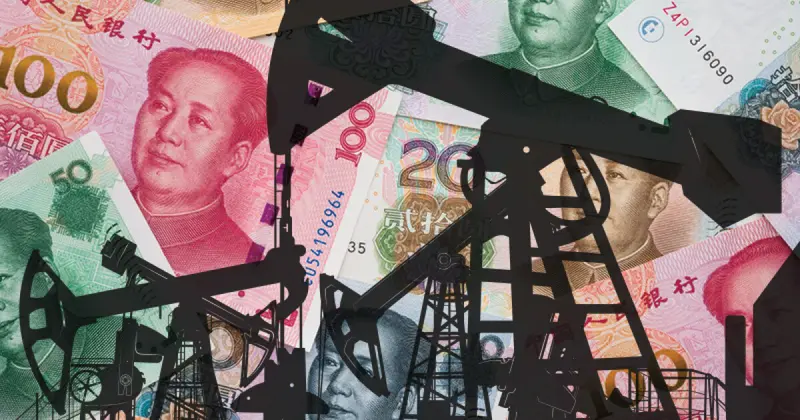
Source: Shutterstock
BRICS members Russia, China, and India are looking at the Chinese yuan for oil settlements and not the US dollar. Reuters reported that Russian refiners are seeking payments in the Chinese yuan from Indian oil and gas firms. China, the largest buyer of Russian oil, has convinced the Putin administration to push for local currency for settlements.
Indian oil refiners did not immediately respond to the demand from their BRICS counterpart, Russia, for oil payments in the Chinese yuan. However, Reuters quoted two sources who said that India already paid the Chinese yuan for three cargoes of Russian oil. This development has not been officially confirmed by the oil refiners.
Also, India rotated payments in the Chinese yuan, Russian ruble, rupee, and the dirham. After China supported Pakistan post the Kashmir attacks, India stopped paying the Chinese yuan. Trump’s tariffs and trade wars also dealt a blow to the yuan payments for energy deals. BRICS member Russia is now again demanding that India pay the Chinese yuan for oil to receive the shipments.
India procured Russian oil after the White House imposed sanctions for invading Ukraine in 2022. As the sanctions kicked in, BRICS member India started buying oil at discounted prices and paid the Chinese yuan for settlements. The country saved over $7 billion in foreign exchange rates by abandoning the US dollar for the crude oil deals.
冖_冖
Registered Member
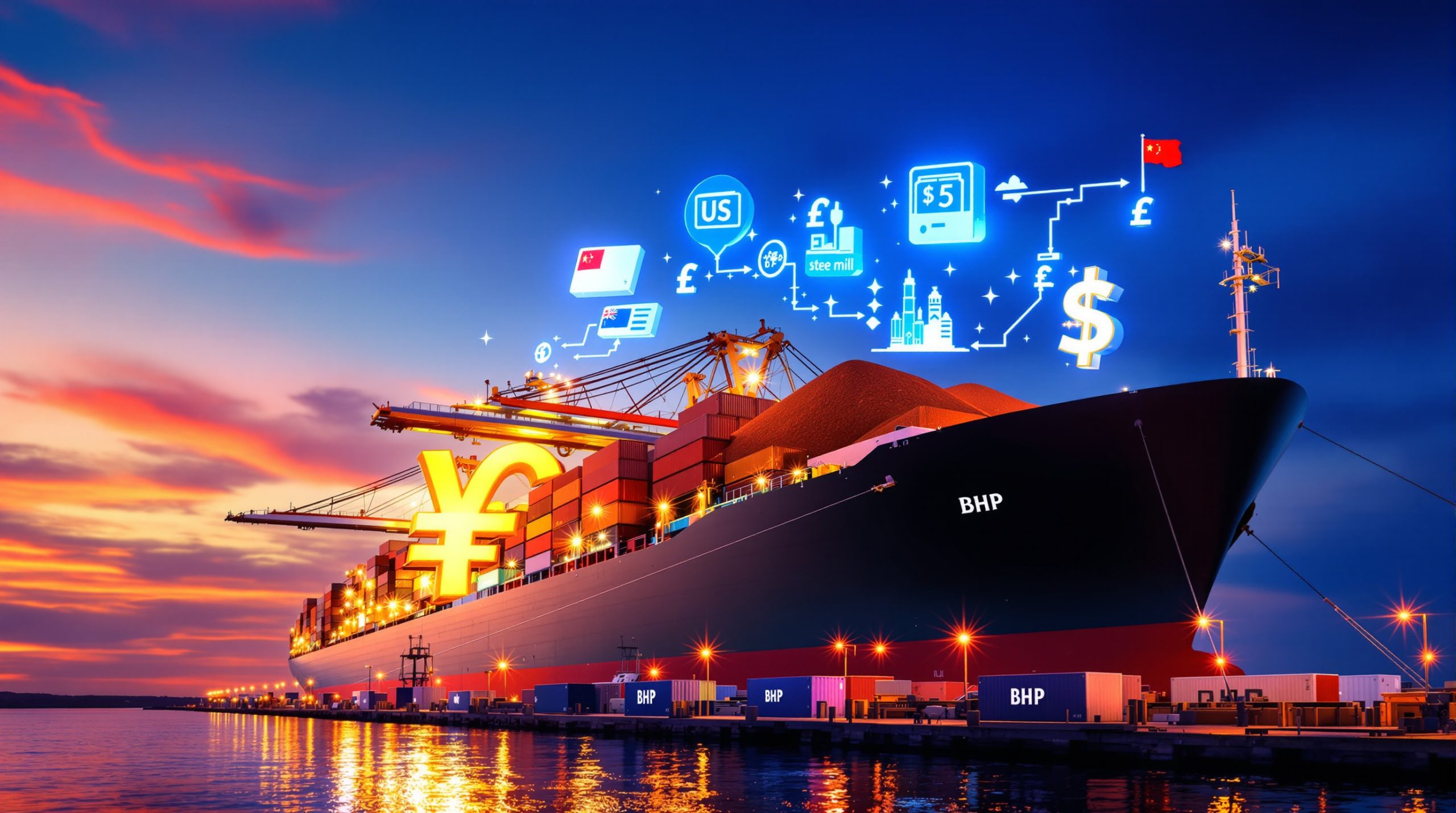
BHP Billiton Shifts to RMB Iron Ore Settlement with China
Discover how BHP Billiton's iron ore RMB settlement deal with China reshapes global commodity trading and signals market power shifts.
 discoveryalert.com.au
BHP Billiton Shifts to RMB Iron Ore Settlement with China
BHP Billiton Shifts to RMB Iron Ore Settlement with China
Discover how BHP Billiton's iron ore RMB settlement deal with China reshapes global commodity trading and signals market power shifts.
discoveryalert.com.au
October 11, 2025
The Landmark Currency Shift in Global Iron Ore Markets
BHP Billiton has struck a groundbreaking agreement with Chinese buyers to settle 30% of its iron ore spot trading in Chinese yuan (RMB) instead of US dollars. Set to begin in Q4 2025, this pivotal arrangement marks a significant departure from traditional commodity trading practices and signals a potential power shift in the global iron ore price trends.The deal represents more than just a simple currency change. According to industry sources, it requires "the integration of domestic bank loans, cross-border payment systems, and exchange rate hedging to form a closed loop for the whole process." This complex financial architecture underscores the strategic importance of the arrangement for both parties.
With BHP shipping approximately 295 million metric tons of iron ore to China in 2024 alone, the scale of this currency transition is substantial. The 30% RMB settlement represents roughly 88.5 million tonnes or approximately $8-10 billion USD equivalent in annual trade value.
Understanding BHP's Strategic Pivot to RMB Settlement
The agreement follows a period of tension when Chinese buyers suspended US dollar-based iron ore trading with BHP in late September 2025. This action was part of a broader strategy by Chinese stakeholders to increase their influence in a market traditionally dominated by major overseas miners like BHP, Rio Tinto, Vale, and Fortescue, who collectively account for 70% of China's iron ore imports.After negotiations, BHP agreed to the RMB settlement terms, effectively establishing a new chapter in Australia-China resource trade relations. The transition reflects pragmatic commercial adaptation despite broader US-China trade war insights that continue to shape global market dynamics.
BHP's Western Australia Iron Ore division, with an annual production capacity exceeding 290 million tonnes, has positioned the company as a critical supplier to China's massive steel industry. This relationship creates both interdependency and strategic leverage points for both parties.
What Triggered the Currency Settlement Change?
The immediate catalyst for this currency shift was the suspension of USD-based trading by Chinese buyers in September 2025. However, the underlying motivations reveal deeper strategic considerations.For Chinese buyers, RMB settlement offers several practical advantages:
- Reduced exchange rate risks when purchasing iron ore
- Lower financial costs for procurement operations
- Better alignment between raw material costs and finished steel prices (both denominated in RMB)
- Enhanced leverage in price negotiations
The timing also coincides with broader international currency diversification trends and China's ongoing efforts to internationalize the RMB, particularly in strategic commodity markets.
Key Components of the RMB Settlement Agreement
The agreement between BHP and Chinese buyers contains several critical elements that structure how this currency transition will function in practice and potentially expand in the future.What Terms Did BHP Accept in the New Agreement?
The core components of the settlement agreement include:- 30% of BHP's iron ore spot trading with China will shift to RMB settlement
- The agreement specifically covers CFR-based prices at Chinese ports
- Implementation begins in Q4 2025
- BHP's 2026 long-term contracts remain dollar-denominated for an observation period
- Future negotiations for RMB-based long-term pricing depend on market acceptance of China's RMB iron ore index
For the RMB-based pricing to succeed in long-term contracts, China's RMB iron ore index must demonstrate sufficient liquidity, transparent methodology, and resistance to manipulation—all standard requirements for commodity benchmarks under international financial standards.
How Will Settlement Mechanics Work?
The shift to RMB settlement involves considerably more complexity than simply changing the currency denomination. It necessitates integration of several financial systems and risk management mechanisms:- Domestic Chinese bank loan systems to facilitate buyer payments
- Cross-border payment infrastructure, likely utilizing China's Cross-Border Interbank Payment System (CIPS)
- Exchange rate hedging mechanisms to manage currency risk
- Development of a closed-loop process for the entire transaction cycle
The Dalian Commodity Exchange (DCE) iron ore futures contract, launched in 2013 and denominated in RMB, has already become the world's largest iron ore derivatives market by volume, providing a foundation for price discovery in the Chinese currency.
Market Implications and Power Dynamics
The currency settlement shift creates significant ripple effects throughout the iron ore market and beyond, reshaping power dynamics between suppliers and consumers while potentially influencing broader currency markets.How Does This Agreement Affect China's Position in Iron Ore Markets?
China Mineral Resources Group, alongside Chinese steelmakers and traders, stands to gain several strategic advantages from this arrangement:- Reduced exchange rate risks by eliminating USD/RMB conversion for a significant portion of iron ore purchases
- Lower financial costs through decreased currency conversion fees
- Enhanced procurement initiative for Chinese steel producers through better cost structure alignment
- Strengthened negotiating position with major miners
China's position as the world's largest iron ore importer and steel producer—producing approximately 1.02 billion tonnes of crude steel in 2024, representing about 54% of global production—gives it substantial market leverage when acting collectively.
What Are the Broader Currency Implications?
The settlement shift carries significant implications for currency markets and international trade patterns:- Increased proportion of RMB usage in global commodity trade
- Advancement of RMB internationalization efforts
- Potential weakening of US dollar monopoly in iron ore transactions
- Promotion of trade diversification in global commodity markets
This agreement represents another step in China's broader strategy to internationalize the RMB and reduce dependency on USD-based trade settlement, particularly for strategic commodities where China holds significant buying power as the dominant consumer.
Context of Global Iron Ore Supply Chain
Understanding the BHP-China agreement requires examining the broader iron ore supply landscape and China's position within it.How Significant Is BHP in China's Iron Ore Supply?
The agreement takes place within a highly concentrated supply landscape:- Four major miners (Rio Tinto, Vale, BHP Billiton, and Fortescue) account for 70% of China's iron ore imports
- BHP's annual shipments to China totaled 295 million metric tons in 2024
- Australia's total iron ore exports reached approximately 881 million tonnes in 2024, valued at $136 billion AUD
- China remains the world's largest iron ore importer and steel producer
Rio Tinto, BHP's major competitor, shipped approximately 320 million tonnes to China in 2024, demonstrating similar dependency on Chinese demand. Brazilian miner Vale ships approximately 200 million tonnes to China annually, but with significantly longer shipping times (30-45 days) compared to Australian suppliers (7-14 days).
What Market Reactions Have Followed the Agreement?
Initial market responses have been measured but suggest potential longer-term implications:- Industry sources anticipate increased negotiating power for Chinese mills
- Potential improvement in Chinese steel mill profitability, which had narrowed in September 2025
- Iron ore prices showed a slight increase on October 9, the first working day after China's holiday period
The industry primarily uses daily spot price assessments from independent price reporting agencies, with benchmark indices like Platts 62% Fe Iron Ore CFR China serving as reference prices for both spot and term contracts. The integration of RMB settlement will require careful alignment with these existing pricing mechanisms.
Hamartia Antidote
Elite Member
The USA has Nvidia
China has HSR.
Akash Bansal, the co-founder of Skyvik, revealed that he covered 1,600 km in a single day, and was still back in bed by night. He shared that the entire journey cost him just Rs 8,000, including Rs 4,000 for an 800-km leg completed in 4.5 hours on China's high-speed rail
4.5 hours to go 800km.
Let's see how far that 4.5 hours/800km will get you in the US from NYC

Most people (especially Chinese PDF members) are completely clueless as to the geographical distances of the US because most of their population is squeezed into one area. So to them 800km between cities is incredibly useful.
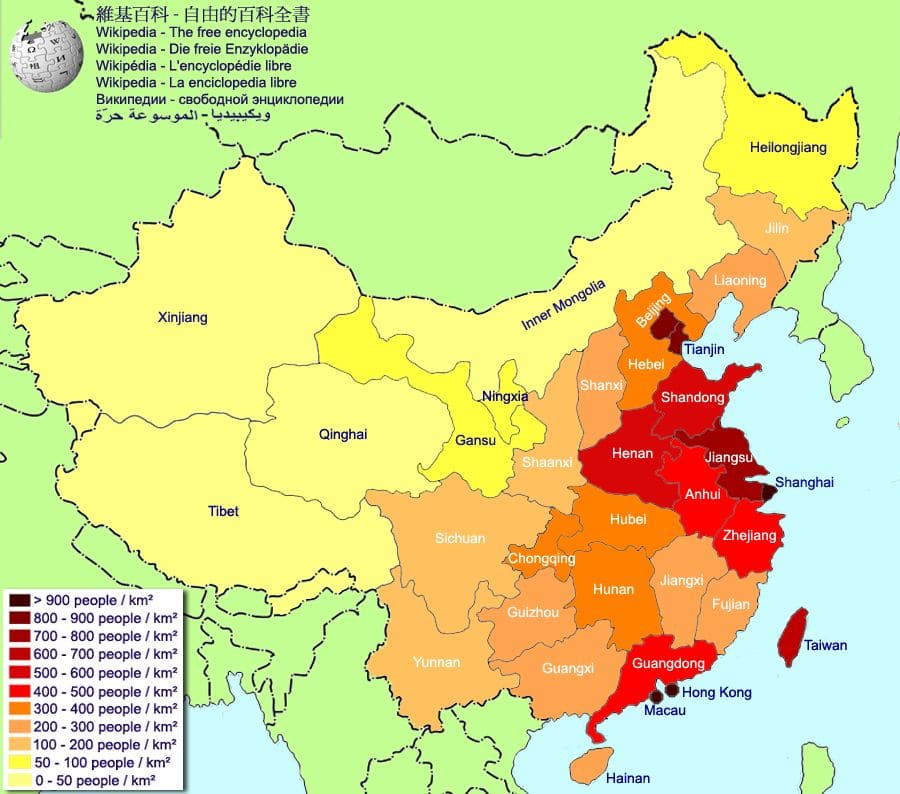
Note how much of the population is bunched together in one area.'
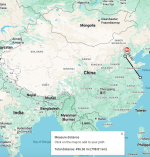
However 4.5 hours gets you nowhere in terms of the vast distances between major cities in the US.
The US invented the airplane for a reason.
Last edited:
Beijingwalker
VIP Member
- Thread starter
- #897
China also has airplanes, but people in China have the luxury of another choice, US is also trying to build its now HSR now, struggling to be more exact.
4.5 hours to go 800km.
Let's see how far that 4.5 hours/800km will get you in the US from NYC
View attachment 153360
Most people (especially Chinese PDF members) are completely clueless as to the geographical distances of the US.
4.5 hours gets you nowhere in terms of the vast distances between major cities in the US.
The US invented the airplane for a reason.

MH.Yang
Trusted Member
Have these Indians not used Google Maps Street View? They could have checked out the remotest corners of China on Google Maps and seen if they would have been. I'm pretty sure the harsh reality would have told them that even the remotest Chinese village is far better than India.On all self-media platforms, the purpose of every Indian blogger traveling to China is to find rural areas in China, so they are particularly concerned about the development of rural areas in China. They will take a whole day of video of a trash can, talking to themselves incessantly.
Hamartia Antidote
Elite Member
Google Maps Street View? They could have checked out the remotest corners of China on Google Maps and seen if they would have been. I'm pretty sure the harsh reality would have told them that even the remotest Chinese village is far better than India.
Google Street View in China?
I don't even think it even has 1% coverage due to restrictions under China's Surveying and Mapping Laws
Last edited:
Beijingwalker
VIP Member
- Thread starter
- #900
China’s High-Speed Rail: A Blueprint for Global Connectivity
Azat TV12/10/2025, 6:00

Quick Read
- China’s high-speed rail network spans over 50,000 km and is expected to reach 60,000 km by 2030.
- The system is powered by renewable energy transmitted through ultrahigh-voltage grids.
- Economic hubs connected by HSR often see up to 14.2% economic growth.
- China exports its HSR technology to countries like Indonesia and Thailand.
- Critics highlight financial and environmental challenges, including dependency on Chinese loans.
How China Built the World’s Largest High-Speed Rail Network
China’s journey into the realm of high-speed rail began in earnest in the early 2000s. Today, its HSR network exceeds 50,000 kilometers, a figure expected to grow to 60,000 kilometers by 2030. The secret to this rapid expansion lies in meticulous planning, strong government support, and significant financial investment.One of the key factors driving China’s success is its ability to construct HSR lines at an unprecedented pace. This is achieved through the use of standardized designs, which streamline the construction process and reduce costs. Additionally, China has invested heavily in domestic manufacturing capabilities, ensuring that much of the technology and materials used in HSR construction are produced locally.
Another critical element is the nation’s focus on connecting economic hubs. Cities that gain access to HSR lines often experience significant economic growth, with some estimates suggesting an increase of up to 14.2% in their local economies. This has created a virtuous cycle where the benefits of HSR spur further investment in the network.
Technological Innovations and Sustainability
China’s HSR system is powered by cutting-edge technology, including advanced train designs that allow for speeds exceeding 350 km/h. These trains run on electricity, which is increasingly sourced from renewable energy. To support this, China has developed an ultrahigh-voltage power grid capable of transmitting electricity over vast distances with minimal loss.This grid is a marvel of engineering, with some lines stretching over 2,000 miles to deliver solar and wind power from remote regions to densely populated areas. By integrating renewable energy into its HSR network, China is not only reducing its carbon footprint but also setting a global standard for sustainable transportation.
Challenges and Criticisms
Despite its successes, China’s HSR expansion has not been without challenges. The initial investment required for such projects is enormous, and there are ongoing concerns about the financial viability of some lines, particularly those serving less populated areas. Critics have also raised questions about the environmental impact of construction and the displacement of communities during the development of new routes.Additionally, China’s efforts to export its HSR technology have faced mixed results. While the country has successfully built rail systems in nations like Indonesia and Thailand, some deals have been criticized for creating financial dependencies on Chinese loans. This has led to accusations of “debt-trap diplomacy,” a claim that Beijing denies.
Global Implications and Lessons
The success of China’s HSR network has profound implications for other nations. In Europe, high-speed rail has long been a cornerstone of public transportation, but even there, China’s achievements are prompting calls for further investment. In the United States, where HSR development has lagged due to political and logistical challenges, China’s example serves as both an inspiration and a point of comparison.For countries looking to develop their own HSR networks, China’s experience offers valuable lessons. Chief among these is the importance of government support and the need for a clear, long-term vision. Additionally, the integration of renewable energy into transportation infrastructure is a model that can help other nations meet their sustainability goals.
China’s high-speed rail network stands as a testament to what can be achieved through visionary planning, technological innovation, and a commitment to sustainability. As the world looks to the future of transportation, China’s example will undoubtedly serve as a guiding light.
China’s High-Speed Rail: A Blueprint for Global Connectivity
China's high-speed rail network, the largest in the world, serves as a model for rapid transit and infrastructure development globally.
 azat.tv
Users who are viewing this thread
Total: 3 (members: 0, guests: 3)

Country Watch Latest
-
-
-

-
 China blocking sale of tunnel boring machines to India: Piyush Goyal to German minister (3 Viewers)
- Latest: retaxis
-

Latest Posts
-
Alberta rejects a move toward independence from Canada in a victory for Carney (11 Viewers)
- Latest: BigMela2onin
-
-

-
-