Navigation
Install the app
How to install the app on iOS
Follow along with the video below to see how to install our site as a web app on your home screen.
Note: This feature may not be available in some browsers.
More options
Style variation
You are using an out of date browser. It may not display this or other websites correctly.
You should upgrade or use an alternative browser.
You should upgrade or use an alternative browser.
Chinese Naval Platform & PLAN discussions
- Thread starter Beijingwalker
- Start date
More options
Who Replied?


johncliu88
Registered Member

Carriers are one type of targets, plus the military naval sea ports. It is more like the Soviet's nuke Poseidon torpedo with attacking range of 10,000+ KM.Surely it’s easy to detect ?
What is it for ?
A aircraft carrier ?

Pakistani Dragon
Elite Member


The United Kingdom displayed their own this week.
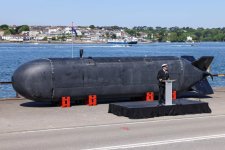

 newatlas.com
Royal Navy robotic sub controlled from 10,000 miles away
The prototype Royal Navy robotic submarine XV-Excalibur has provided a glimpse of the fleet of the future by patrolling the waters at HMNB Devonport in Plymouth, England while controlled from a command center in Australia 10,000 miles (16,000 km) away.
newatlas.com


iblini
Trusted Member

This is a unmanned submarine, not XLUUVs.The United Kingdom displayed their own this week.
View attachment 141748
Royal Navy robotic sub controlled from 10,000 miles away
The prototype Royal Navy robotic submarine XV-Excalibur has provided a glimpse of the fleet of the future by patrolling the waters at HMNB Devonport in Plymouth, England while controlled from a command center in Australia 10,000 miles (16,000 km) away.

Fatman17
THINK TANK: CONSULTANT
Source: Defense News
https://search.app/ryJGw
https://search.app/ryJGw

Beijingwalker
VIP Member
- Thread starter
- #414
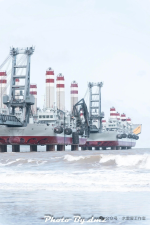
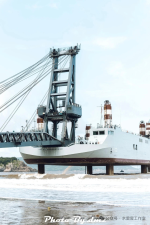
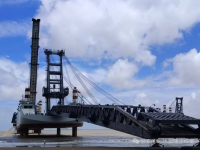
China’s shipyard dominance leads to geoeconomic risks
2025.07.02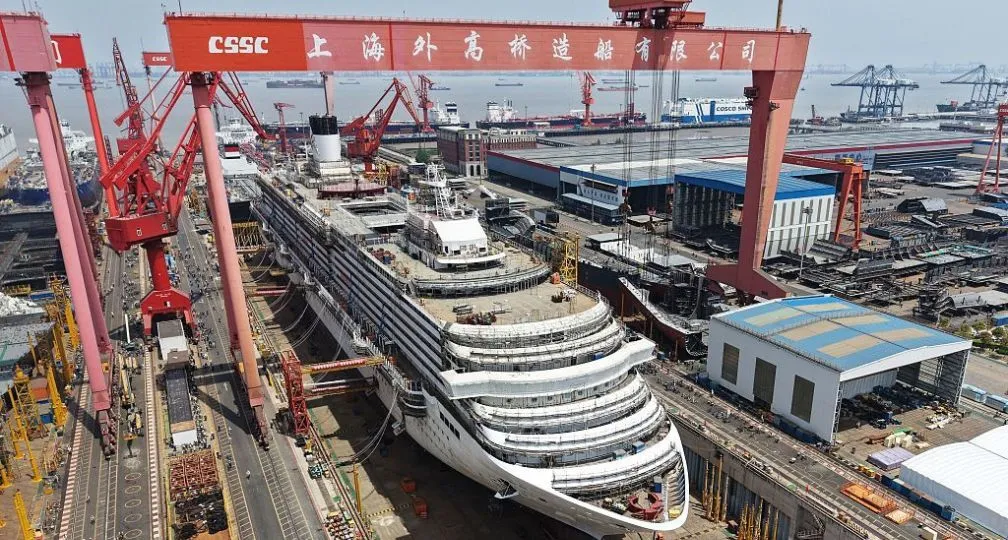
China’s unparalleled shipbuilding capacity has the U.S., Japan and its allies — both military and economic — rightly concerned about maritime threats to trade and security.
Without a concerted effort and international cooperation to challenge Beijing’s commanding lead in the global shipbuilding industry, those threats will materialize furthering China’s alarming dominance.
According to 2024 data from the Chinese government, the country ranks first worldwide in ship completions, new orders and order backlogs — claiming global shares of 55.7%, 74.1% and 63.1%, respectively. China is also expanding its capabilities in high value-added vessels, surpassing South Korea and Japan, while consolidating its role as a “shipbuilding superpower.”
Shipbuilding is not merely an economic activity — it underpins both global trade and national defense. Civilian shipbuilding provides the foundation for training engineers and skilled workers essential to naval production. As such, the growth of China’s shipbuilding sector carries profound implications, not only for maritime commerce but also for the international security architecture.
China’s manufacturing advantages are rooted in scale, driven by a vast domestic market and a wide talent base. Domestic competition often produces globally competitive, cost-effective firms. Combined with deep integration into global supply chains, these attributes have turned China into an indispensable industrial hub, benefits that extend fully to the shipbuilding sector.
In the early 2000s, then-Premier Zhu Rongji declared that China would become the world’s leading shipbuilder by 2015. In 2009, the “Shipbuilding Industry Adjustment and Revitalization Plan” marked a key policy milestone, guiding the sector’s shift toward green and smart shipbuilding. The cumulative effect has been significant: China overtook Japan in output by 2008 and South Korea by 2010 — achieving its target years ahead of schedule. It’s also catching up on quality, setting international standards for liquefied natural gas (LNG) carriers and threatening South Korea’s longstanding dominance in high-end vessels.
Another factor behind China’s ascent is the strategic consolidation of state-owned enterprises. In 2016, shipping giant COSCO merged with China Shipping Group to form one of the world’s largest maritime firms. In 2019, two previously separate state-owned shipbuilders were unified into China State Shipbuilding Corp. As of 2024, CSSC controls roughly one-third of the global market, making it the world’s largest listed shipbuilder. This reflects China’s broader emphasis on industrial scale, efficiency and market consolidation.
Moreover, the global energy shift toward carbon neutrality and the energy supply disruptions caused by Russia’s invasion of Ukraine in 2022 have intensified LNG demand. This, in turn, triggered a global boom in LNG tanker construction. While Japan and South Korea were constrained by limited production capacity, China was able to absorb surging demand with flexibility and speed. Private shipbuilders like New Times Shipbuilding and Yangzijiang Shipbuilding Group have ramped up investment, while even nontraditional players such as chemical giant Hengli Group have entered the sector.
Importantly, China’s shipbuilding growth reflects not only top-down state support but also significant entrepreneurial energy for profit seeking. While other sectors have seen overcapacity and price wars, Chinese shipbuilders have so far aligned their expansion with global demand. Yet this trajectory is not guaranteed. Rising economic security concerns may begin to affect international appetite for Chinese-built ships, introducing strategic uncertainty.
Surge in U.S. alarm
The United States — once the world’s top shipbuilder after World War II — has seen its commercial shipbuilding sector decline steadily since the 1970s. Although it retains superiority in advanced naval platforms such as nuclear-powered carriers and submarines, the shrinking of its commercial base has weakened the industry’s overall scale. This erosion has sharply reduced the pool of skilled labor, raising concerns about spillover effects on military shipbuilding.U.S. strategic experts have long warned that China’s vast commercial shipbuilding capacity could be rapidly converted to military use in a crisis. In recent years, however, the U.S. debate has shifted toward industrial policy, with growing calls to “revive America’s own shipbuilding base.” Threat perception has evolved accordingly.
Since 2020, the U.S. has taken steps to curb China’s shipbuilding clout, including blacklisting CSSC-affiliated firms and imposing financial restrictions. The second Trump administration has now unveiled a “Maritime Action Plan” focused on rebuilding domestic capacity in shipbuilding, port infrastructure and maritime workforce development. It is also considering tariffs on Chinese imports, port fee hikes for Chinese vessels and requirements that certain U.S.-bound cargo be carried on domestically built ships.
The Office of the U.S. Trade Representative has formally designated China’s maritime practices as unfair and is advancing proposals that would impose high port entry fees on Chinese-built or Chinese-flagged ships. Other measures under consideration include export controls and tariffs on Chinese-made cranes used in U.S. ports — part of a broader effort to reduce reliance on Chinese maritime equipment. These initiatives aim to weaken China’s market share while restoring American industrial strength. Allied coordination, regulatory reforms and targeted investment are also key elements of the evolving strategy.
Over the past decade, many global shipping companies — including Japanese firms — have shifted more orders to China due to its pricing advantage. However, the political risk for these firms is significant. In the event of policy shifts or geopolitical conflict, China could restrict exports or redirect industrial capacity, exposing the vulnerabilities of a supply chain overly dependent on a single country.
Meanwhile, as Washington responds to what it deems unfair Chinese practices, companies operating Chinese-built vessels may face new costs or access restrictions. Future U.S. sanctions could even extend to third-country firms that purchase or operate Chinese ships, creating compliance risks and operational uncertainty. Factoring these risks into long-term planning will be essential for both corporate and government stakeholders.
Benefits of ‘friendshoring’
Yet these risks also present strategic opportunities. Given the difficulty of rebuilding shipbuilding capacity from scratch, the U.S. will need trusted partners. Japan — with its technical expertise and production scale — can play a central role, alongside South Korea. Potential areas of collaboration include exporting high-spec vessels like icebreakers and LNG carriers, transferring simpler tanker production know-how and supplying critical components such as propulsion systems, sensors and marine engines.In this context, “friendshoring” — the restructuring of supply chains to trusted partners — offers a realistic path forward. The goal is not autarky but resilience. In the face of China’s consolidation as a shipbuilding superpower, the U.S. and its allies must seize both the opportunity to collaborate and the imperative to diversify.
China’s shipyard dominance leads to geoeconomic risks|News from the Institute of Geoeconomics(IOG)
China’s unparalleled shipbuilding capacity has the U.S., Japan and its allies — both military and economic — rightly concerned about maritime threats to trade and security.
 instituteofgeoeconomics.org

SecularNationalist
Elite Member
Well that's a big one .
RajaBaja
Trusted Member
What The World Is About To Learn About China’s Extra-Large Underwater Drones
Published on 16/08/2025
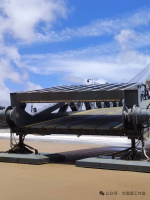
Click to enlarge. The two new underwater drones are so large that they almost cannot fit onto a tank transporter for the parade. The AJX002 model has been observed during rehearsals without a cover, while the second type has not yet been unwrapped.
China’s naval expansion continues to surprise onlookers. Less visible, until now, have been developments in underwater drones. That is about to change with an upcoming military parade in Beijing in September. Two new extra-large drone submarines (XLUUVs) will be showcased.
China seeks a strategic advantage in underwater drone technology. While the surface navy is playing catch-up by emulating the still more powerful U.S. Navy, in the underwater realm China is investing more. In particular it is developing extra-large uncrewed underwater vehicles (XLUUVs) more quickly than other navies. The world has largely been oblivious to this, but a major military parade in Beijing will change this. China’s XLUUVs have arrived.
China will mark the 80th anniversary of the end of Second Sino-Japanese War with a grand military parade in Beijing on September 3. A similarly large parade marked the 70th university in 2015. The Chinese Ministry of Defence has already claimed that the parade will “display improved weapons, equipment”. Now images of rehearsals, shared on Chinese social media, have revealed that at least two types of extra-large uncrewed underwater vehicles (XLUUVs) will be among the new systems.
Naval News has been following the progress of China’s ambitious XLUUV program since 2022, and several types have been reported first here. Yet these two new systems will be fresh and it will be the first time that they have been seen in public. It likely reflects the winners in China’s extensive trials program.
Big scale of developments
The new XLUUVs are approximately 18-20 meters long and are generally torpedo-like, with pump jet propulsion. This makes then similar in overall size and shape to the Russian Poseidon nuclear-armed nuclear-powered torpedo. It is however too much of a leap to connect the two types at this stage.
While there has been commentary on nuclear-propulsion for torpedo-like weapons in Chinese media and academic circles, these XLUUVs better match types already observed being tested in China. The country’s Navy (PLAN) has the largest XLUUV program of any nation with at least 5 types in the water for several years.
It is almost certain that the XLUUVs seen being tested in China are not nuclear powered. So while it remains to be seen whether either of these XLUUVs is connected to the rumours of nuclear propulsion, it seems less likely at this point. Instead they reflect progress in operationalising the wider XLUUV efforts.
We assess it likely that these XLUUVs will be models previously observed in satellite imagery.
AJX002 Underwater Drone
One of the underwater drones types has AJX002 painted on the side in large white letters. It is typical of weapon systems to have their designation painted on the side, in Roman letters, for parades. Numerous missiles and other weapon systems have been revealed this way and analysts have learnt to rely on these events. Therefore ‘AJX002’ is likely that this is a reliable designation. Exactly what “AJX” denotes however is unclear at the time of writing.
The tank transporter used to tow the new underwater vehicles allows us to estimate their size. The AJX002 is around 18-20 meters (59-65 feet) long and 1-1.5m (3-5 feet) in diameter. It has four lifting lugs along the hull which reveals that it is normally lowered into the water by crane. This is consistent with XLUUVs observed undergoing trials at Sanya and Yulin naval bases in the South Chinas Sea, and near Dalian in the Yellow Sea. Two lugs close together amidships also suggests that the vessel can be broken down into two parts for transport.
An even larger design will also be paraded
At least six XLUUVs have been seen in the parade rehearsal; four of the AJX002 model and two of another slightly larger design.
This second design was under a tarpaulin so its designation text and other details were hidden. However we can tell that it is about the same length as the AJX002 but around twice the diameter. It has at least two sets of masts near the stern, and a similar pump jet. It differs significantly from the AJX002 in that it has ‘X’ form rudders instead of the conventional cruciform (‘+’) arrangement.
The world will learn on September 3 what these XLUUVs look like up close. Possibly new insights will be gained, but the overall message already seems clear. China is investing in XLUUVs at a scale unrivalled among other navies, and is now finally ready to reveal this to the world.
What The World Is About To Learn About China's Extra-Large Underwater Drones - Naval News
China's naval expansion continues to surprise onlookers. Less visible, until now, have been developments in underwater drones. That is about to change with an upcoming military parade in Beijing in September. Two new extra-large drone submarines (XLUUVs) will be showcased.www.navalnews.com
I have named it myself differently. My name for this is "AAS-D" or "Autonomous Anti-Ship Drone".
iblini
Trusted Member
It's more of the eyes than a weapon system, ofc it can still kamakazi but we can see the trend of big power turning to Distributed Lethality concept, drones in the air, unmanned vehicle, XLUUVs and USV combined with space assets.I have named it myself differently. My name for this is "AAS-D" or "Autonomous Anti-Ship Drone".
RajaBaja
Trusted Member
It's more of the eyes than a weapon system, ofc it can still kamakazi but we can see the trend of big power turning to Distributed Lethality concept, drones in the air, unmanned vehicle, XLUUVs and USV combined with space assets.
That's what I was referring to. The future wars will be fought with Robots, from under ocean to the sky. Multi domain, distributed lethality.

muhammed45
Elite Member

Bro, it looks like WW2 stuff.The United Kingdom displayed their own this week.
View attachment 141748
Royal Navy robotic sub controlled from 10,000 miles away
The prototype Royal Navy robotic submarine XV-Excalibur has provided a glimpse of the fleet of the future by patrolling the waters at HMNB Devonport in Plymouth, England while controlled from a command center in Australia 10,000 miles (16,000 km) away.
Users who are viewing this thread
Total: 2 (members: 0, guests: 2)
Pakistan Defence Latest
-

-
Federal cabinet gives nod to imposition of emergency in KP; summary sent to president (61 Viewers)
- Latest: prothought
-
-

-
Country Watch Latest
-
 Iran - Israel/US War: Israel-US declare war on Iran, Iran responds (978 Viewers)
- Latest: Khorasan Black Flags
-
 Official B-21 Discussion Thread: Manufacturing ramping as operational capability expected in 2027 (5 Viewers)
- Latest: SolarWarden
-
-
-
Latest Posts
-
-
-
Why all countries especially small Muslim states flocking to Pakistan for defense. A debate (17 Viewers)
- Latest: Batman
-
Iran - Israel/US War: Israel-US declare war on Iran, Iran responds (978 Viewers)
- Latest: Khorasan Black Flags
-
Official B-21 Discussion Thread: Manufacturing ramping as operational capability expected in 2027 (5 Viewers)
- Latest: SolarWarden