Chinese Naval Platform & PLAN discussions

That's actually the exact reason why people were so surprised Taiwan held out back in the 1950s. Communist Troops were simply expected to overrun the island quickly..but they didn't. In fact they couldn't take 2 islands less than 1 mile off their shore and it is still ruled by Taiwan.

View attachment 146590

Modern precision weapons fix the problems of the 1950s, and China is resolved to try to resolve the Taiwan problem diplomatically, which is why they haven't used their kinetic capabilities for decades now.
 
Modern precision weapons fix the problems of the 1950s, and China is resolved to try to resolve the Taiwan problem diplomatically, which is why they haven't used their kinetic capabilities for decades now.

Yes but remember somehow they claim to have defeated the Japanese Imperial Army but yet had trouble with an island within view of their shores...:unsure:

The Battle of Guningtou (古寧頭之役), also known as the Battle of Kuningtou or the Battle of Kinmen (Chinese: 金門戰役), was fought in October 1949 on the island of Kinmen (Quemoy), located in the Taiwan Strait, during the final stages of the Chinese Civil War.[4]
The battle resulted in a decisive victory for the Republic of China (ROC) forces and marked a significant turning point in the civil war. The defeat of Chinese Communist Party (CCP) forces not only preserved Kinmen under ROC control but also effectively halted CCP plans for an immediate invasion of Taiwan.
The victory ensured the survival of the Republic of China government on Taiwan and reshaped the strategic landscape of the Taiwan Strait.
 
Last edited:
Another Indian man trying to act like a White American?

It amazes me to see Indians for their benefits acting all White but having no real loyalty to their host nations, whether in the West or the Middle East. All drama! If this was a comparison between India and something else, you would act so Indian it would be funny watching!

@Ali_Baba this makes two in just a few hours

..and he says he's amazed.

Another newbie though
newbie.png
 
Last edited:
@Ali_Baba this makes two in just a few hours

..and he says he's amazed.

Another newbie though
View attachment 146591

I am disappointed to hear this from Rajabaja. This forum is very DEI friendly and it looks to involve as many ethnic minorities into discussions in these forums as possible, especially the under represented white people here.

Maybe the MODs should put a DEI banner on the forum or as part of the login/signup process that people have to acknowledge their adherence the DEI framework, with the banner suggesting that we won't tolerate discrimination against our small population of white people on this forum ?
 
You don't need to explain to me whether our ships are leaving Alaska in accordance with the international law of the sea, because I'm not interested, I just want to express my opinion on this issue, and your solo muscle show around the world is gone. Now we can send warships to America's doorstep, and you have to find a reasonable explanation for the world and the United States. This kind of mental gap should be very uncomfortable for you!
We are also happy to be able to make the other person suddenly civilized and reasonable, which shows that we are doing the right thing.
 
That's actually the exact reason why people were so surprised Taiwan held out back in the 1950s. Communist Troops were simply expected to overrun the island quickly..but they didn't. In fact they couldn't take 2 islands just off their shore and they are still ruled by Taiwan.

View attachment 146590


To view this content we will need your consent to set third party cookies.
For more detailed information, see our cookies page.

The Taiwanese Island That's Less Than 6km From China | Welcome to Kinmen​


Amazing isn't it that China grabbed 2,000 sq km of Indian controlled territory in June 2020 without firing a single bullet.

Amazing how much the world has changed since 1950s to 2020s.
 
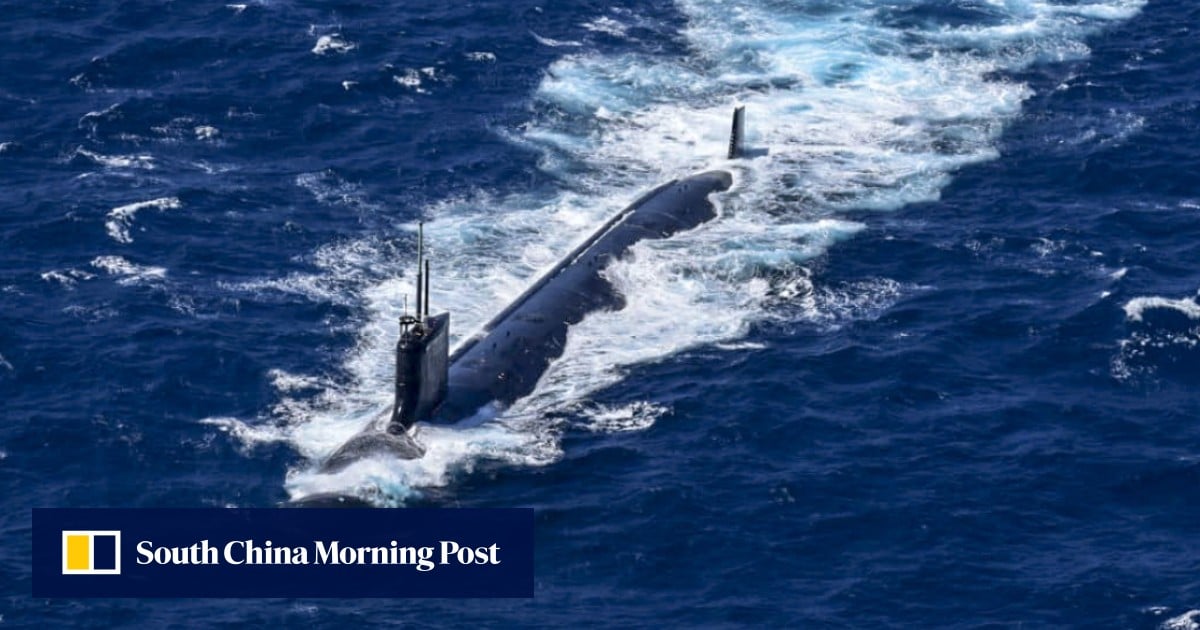
The era of US submarine dominance will soon come to an end from SCMP


AI could cut a submarine’s survival chance to 5%: Chinese defence scientists​

Era of ‘invisible’ submarines ending with next-gen tech that could prevent one in 20 from escaping attack​

A new defence industry study from China suggests that artificial intelligence (AI) could soon make it extremely hard – even nearly impossible – for submarines to survive in a future naval conflict.​

The research, published in the peer-reviewed journal Electronics Optics & Control and led by senior engineer Meng Hao with the China Helicopter Research and Development Institute in August, unveiled for the first time an advanced AI-driven anti-submarine warfare (ASW) system capable of hunting even the quietest submarines through intelligent, real-time decision-making.​


According to the research, the new ASW system could reduce a submarine’s chance of escape to just 5 per cent, meaning only one out of every 20 submarines would likely escape detection and attack.​


As global powers intensify their race to put AI into military use, the study suggests the era of the “invisible” submarine – long a cornerstone of naval deterrence – may be coming to an end.​

Instead of relying on old search patterns, the AI system acts like a smart commander in the ocean.​

It uses data from sonar buoys dropped by helicopters, underwater sensors, radar and even ocean temperature and salt levels to build a live picture of what is happening under the sea.​

Then, it quickly decides where to look, how to adjust its equipment and how to respond when a submarine tries to escape by zigzagging, going silent or releasing fake signals to throw off the hunters.​

In computer simulations, this AI system was able to find and track enemy submarines about 95 per cent of the time, no matter how hard they tried to hide.​

Even when submarines used hi-tech decoys or drones to distract the searchers, the AI kept up and stayed on their trail.​

Submarines have long been viewed as the ultimate asymmetric weapon: able to deliver nuclear strikes, gather intelligence or sink carrier groups while remaining nearly undetectable.​

The US Navy, for instance, maintains that large fleets of nuclear submarines could be a deterrent to the rapidly growing PLA Navy in a future conflict.​

The US nuclear submarine fleet consists of about 70 nuclear-powered submarines as of mid-2025, according to openly available information.​

These submarines could blend into the background noise of the ocean and they could carry cutting-edge drones to distract the hunters.​

In traditional anti-submarine warfare, a quiet submarine equipped with advanced decoys has a survival chance as high as 85 per cent, making them “one of the biggest threats” to China’s surface fleets, according to Meng’s team.​

China and Russia hold joint​

 
To view this content we will need your consent to set third party cookies.
For more detailed information, see our cookies page.
 

Preparing to fight China​

  1. Aviation Features
  2. Preparing to fight China


By DAVID AXE
10th September 2025
Feature


Taiwan’s Republic of China Air Force might survive just a few hours if China makes good on decades of threats to invade the island state. But that could be enough time for the US to intervene. David Axe reports
PLA J-10 taking off

A PLAAF J-10 climbs steeply during a live-fire training exercise on May 30, 2025 PLA/Shang Jieyan
Analysts anticipate that China’s People’s Liberation Army Rocket Force (PLARF) would initiate an invasion of Taiwan with a devastating barrage of ballistic and cruise missiles, after which the PLA Air Force would instigate a sustained period of precision bombardment.

Ian Easton, a professor at the US Naval War College in Rhode Island, explained: “Based on PLA studies that appear to be indicative of doctrine, the PLA will seek to gain rapid mastery of the air before conducting amphibious operations across the Taiwan Strait.”

The 11 major air bases of the Republic of China Air Force (ROCAF) and the service’s roughly 600 aircraft, including around 350 AIDC F-CK-1, Dassault Mirage 2000, and Lockheed Martin F-16 fighters, would be top targets, according to Easton: “A sudden, co-ordinated missile attack on all of Taiwan’s airports and air bases is possible and would play to the PLA’s strengths.”

Those strengths include an arsenal of several thousand ballistic and cruise missiles, as well as more than 2,000 tactical aircraft. Chinese missiles and bombs could crater runways, flatten hardened aircraft shelters, smash the entrances to underground hangars and, of course, destroy any Taiwanese aircraft that got caught on the ground and out in the open.

img_71-2.jpg

Ground crew arming an ROCAF F-16 in June 2025 ROC Defense Ministry
Taiwanese squadrons could disintegrate fast, according to Thomas Shugart, a retired US Navy captain who now heads Archer Strategic Consulting in Virginia: “If the ROCAF were present at its bases when the PLA launched a large-scale assault on the island, I would estimate that its combat effectiveness might be measured in minutes to hours.”

For the Taiwanese, going underground might be the most innovative strategy. Shugart said: “By increasing the number of fighters routinely kept inside tunnels, it seems likely that Taiwan could maintain a fleet-in-being until Zero Day [the day the amphibious fleet hits the beaches].” The only other survival strategy might involve whole squadrons retreating from Taiwan: “Were Taiwan to evacuate the ROCAF in the event of an impending attack – if it had sufficient warning – I could see it fighting on as a force in exile from more dispersed bases elsewhere, possibly in conjunction with US and partner air forces. In that case, it could live to fight another day.”


Spreading out​

By contrast, dispersing warplanes within Taiwan might not be effective. As Eric Heginbotham, a principal research scientist at the Massachusetts Institute of Technology’s Security Studies Program and a specialist in Asian security issues, affirmed: “Geography constrains dispersal.”

There are approximately 50 Taiwanese airports and airstrips that could support tactical aircraft, according to Spottingmode. com, an aviation data website. That limits the potential for the ROCAF’s hundreds of fighters, airborne early-warning planes, airlifters and maritime patrol planes to survive by spreading out. It wouldn’t be a stretch for planners in Beijing to add the 50 civilian airfields to the list of targets for bombardment. Heginbotham said: “China could maintain a large and near continuous missile bombardment that would effectively neutralize most if not all of Taiwan’s air force—at least during the opening two weeks or so.”

If there were a glimmer of hope, it was that the PLARF would be heavily tasked. While it has a stockpile of thousands of missiles, it had taken decades for the PLARF to accumulate that inventory. Once the missiles were spent, there would be no quick and easy way to replace them. Heginbotham explained: “Both sides have finite magazine depth, so both have to pick and choose targets.”

img_72-3.jpg

A newly upgraded ROCAF F-16V in February 2025 ROC Defense Ministry
img_72-1.jpg

An ROCAF Patriot air-defense battery in June 2025 ROC Defense Ministry
Once the initial Chinese bombardment had eased, there might be some intact warplanes among the wreckage at Taiwanese airfields, according to Heginbotham: “Some surviving aircraft might be able to operate. Even if Taiwan’s air force failed to deliver decisive blows of its own, it could still play a role as long as some of it survived.”

By going underground or retreating across the Pacific Ocean, any planes that survived could regroup after Zero Day and join Taiwan’s ground-based air defenses and anti-ship missile batteries in the country’s desperate campaign of national survival. The air defenses would protect the mobile batteries, which would fire anti-ship missiles at a PLA Navy invasion fleet numbering potentially hundreds of amphibious assault ships, landing craft and civilian transports inducted into naval service, as they steamed across the 100-mile-wide Taiwan Strait with hundreds of thousands of troops and thousands of vehicles in their holds.


Tiny drones to the rescue​

Taipei is spending billions of dollars to reinforce the military’s existing inventory of locally-made Hsiung Feng anti-ship missiles with US-made Harpoon missiles. Both rockets are subsonic, boast tiny radars for terminal guidance and hug the wave-tops to avoid interception as they range between 75-160 miles in search of enemy vessels. Both can be launched from the surface or the air.

As part of a $2bn deal signed with the US in 2020, Taiwan is acquiring 400 Harpoon Block II missiles, along with 100 truck-mounted launchers and 25 mobile radars. The first of the new missiles were delivered in late September 2020 and the last should arrive by 2028. Meanwhile, the Taiwanese army is spending millions of dollars building new bases to house them. However, in wartime, the batteries would disperse to fortified positions along the coast, some of which were built by the occupying Japanese forces during World War Two.

Traditional air power – warplanes and missiles – would play a significant role in the counter-landing effort. But a new kind of air power could bolster the main force. Two years ago, the Taiwanese defense ministry issued its first-ever tender for an aerial drone swarm. It asked local technology firms to produce an initial 3,000 small, single-use drones for $159 million. That’s a lot of money for just a few thousand drones, but it’s worth noting what Taipei was trying to do with the tender. The country wasn’t just trying to buy a batch of drones, it was also trying to encourage the expansion of the local drone industry, so that it would be ready to build a lot more drones quickly should a Chinese invasion force begins massing.

img_73-1.jpg

An ROCAF F-CK-1 takes off at Ching Chuan Kang Air Force Base in January 2025 ROC Defense Ministry
img_73-2.jpg
 
Pilots race to their ROCAF F-CK-1s during drills at Ching Chuan Kang Air Force Base in January 2025 ROC Defense Ministry
It should be noted that Ukraine is building a virtual wall of tiny explosive drones to defend against invading Russian forces. Hundreds of thousands of Ukrainian drones take flight every month and now account for the majority of Russian losses. Taiwan intends to copy that strategy, but for maritime defense. The drone swarm could buy time for heavier US firepower to come to bear.


Cruise missile deluge​

If the Center for Strategic and International Studies (CSIS) in Washington, DC, is to be believed, bombers working in conjunction with US and Japanese attack submarines and fighters would be able to blunt, if not outright defeat, any Chinese attempt to successfully land a decisive ground force on Taiwan.

img_73-3.jpg

A ROCAF Mirage 2000 in February 2025 ROC Defense Ministry
img_74-2.jpg

USAF airmen load a dummy LRASM on a B-1 at Ellsworth Air Force Base, South Dakota, on September 17, 2024 USAF/Airman 1st Class Brittany Kenney
When CSIS war-gamed a Chinese invasion of Taiwan in January 2023, its analyst concluded: “US submarines, bombers and fighter/attack aircraft, often reinforced by Japan Self-Defense Forces, [could] rapidly cripple the Chinese amphibious fleet.” Of these platforms, the bombers were the most decisive: “Bombers capable of launching stand-off, anti-ship ordnance offer the fastest way to defeat the invasion with the least amount of US losses.” In CSIS’s war games “the range, missile stand-off distance and high carrying capacity of bombers presented the People’s Liberation Army with daunting challenges.”

CSIS projected that, by 2026, the Pentagon would possess 450 AGM-158C long-range anti-ship missiles (LRASMs) as well as 3,650 examples of the AGM-158B extended-range joint air-to-surface stand-off missiles (JASSM-ER), which could have a basic anti-ship mode.

The LRASM range was 300 miles, while the JASSM-ERs could travel at least 575 miles, both packing a 1,000lb warhead. These missiles alone could tilt a war over Taiwan in favor of Washington and Taipei, even before US and Japanese submarines and fighters got involved.

CSIS’s analysts wrote: “In games where the JASSM-ER has maritime-strike capabilities, the abundance of US munitions made US strategy an almost uncomplicated exercise. With each squadron of 12 bombers carrying around 200 stealthy, stand-off anti-ship cruise missiles, the US could rapidly cripple the Chinese fleet and leave the invasion force stranded.”

img_74-1.jpg

A USAF B-21 conducts flight testing at Edwards AFB in California on September 18, 2024 USAF/Juan Femath
At present, the USAF’s Boeing B-52Hs and Rockwell B-1Bs are its leading cruise missile carriers, but they lack stealth qualities and might struggle to survive Chinese air defenses. However, the CSIS war game found that stealthy Northrop Grumman B-21s, set to enter service in the next few years, should be able to get close enough to Chinese targets to deploy shorter-range precision munitions, such as the 60-mile joint stand-off glide bomb. The USAF is also developing the 40-mile Quicksink glide bomb specifically for maritime targets.

The B-21’s first flight from Northrop’s facility in Palmdale, California, in November 2023 seemed to confirm the type’s purportedly capacious payload. The prototype bomber that winged over Palmdale revealed its belly to photographers on the ground, revealing at least one large internal weapons bay — and potentially a second pair of smaller bays, as well.

A B-21 with its approximately 130ft wingspan should be able to pack in a dozen or so missiles in the class of the LRASM or JASSM. As the USAF gradually replaces its 19 Northrop Grumman B-2s and 45 B-1s with at least 100 B-21s, building up a long-term bomber fleet that’s expected to also include 76 upgraded B-52s, the air force’s penetrating strike capacity – including its penetrating maritime strike capacity – will only increase. One analyst even proposed that the USAF lean into the B-21’s maritime potential and stand up a dedicated anti-ship squadron equipped with the flying wings, the first such squadron in many generations for the air arm.

img_75-1.jpg

PLA amphibious infantry fighting vehicles during assault training on June 7, 2025 PLA/Wu Xinlei
Ben Ho, an editor in the Singapore office of the International Institute of Strategic Studies think-tank, said: “Ideally, elements from this unit would deploy regularly with the Indo-Pacific Bomber Task Force [a rotational USAF bomber detachment that flies from Asian bases] while signalling its raison d’être. Such a measure should contribute profoundly to America deterring, and, if necessary, help defeat Chinese aggression in its maritime environs.”

This would be a welcome development in Taipei. It’s clear the Taiwanese air force and its sister services probably couldn’t defeat a Chinese invasion force on their own. Without help, the ROCAF might not last more than a few hours after the first Chinese missile impacts.

img_75-2.jpg

US and allied forces sink the decommissioned frigate USS Ingraham off Hawaii during an exercise on August 15, 2021 US Navy/Mass Communication Specialist 1st Class David Mora Jr

 
The blockade element is seriously under discussed in these type of articles.
 

Nobody Lost Taiwan​

The Island Remains Secure and Stable—for Now​


People holding Taiwanese flags at an event in Taipei, Taiwan, August 2025
2025-08-24T020015Z_1850682684_RC288GAAJ3F5_RTRMADP_3_WW2-ANNIVERSARY-TAIWAN.JPG.webp

People holding Taiwanese flags at an event in Taipei, Taiwan, August 2025


Over the past several years, few topics in international relations have gotten more attention than a possible Chinese invasion of Taiwan. And for good reason: China has never given up its claim to the island; it is in the middle of one of the largest military buildups in history; it conducts regular incursions into Taiwan’s airspace and maritime zones; and its president, Xi Jinping, has directed his military leadership to develop the capacity to conquer Taiwan by 2027 should he give the order to do so, according to senior U.S. government officials. For anyone skeptical that such an attack could take place in the twenty-first century, Russia’s invasion of Ukraine in February 2022 was a sharp reminder that major war over territory is not a thing of the past. Russian President Vladimir Putin seized what he thought was an opportunity to take back what he considered a wayward territory that was slipping away. Sooner or later, Xi could very well try to do the same.

Other factors have also contributed to growing anxiety about Taiwan’s future. Few doubt that China would try to use force to seize Taiwan militarily if it felt all other options to prevent permanent separation had been exhausted, but Beijing’s strong preference would be to take it over peacefully—with the island’s economy, technology, and human capital still intact. To achieve that goal, China is using a combination of relentless propaganda, infiltration, and military pressure to undercut U.S. support for Taiwan and to persuade Taiwan’s residents that they have little choice but to accept a political accommodation that recognizes Taiwan as part of China’s sovereign territory.

The past two months have produced growing concerns that Beijing is making progress on this front. Taiwan’s politicians have inflamed partisan divisions with rhetoric accusing one another of undermining Taiwan’s security, Taiwan’s ruling party pushed a failed “recall” of opposition members that deeply divided the population, and President Lai Ching-te’s popularity is collapsing. Taiwan’s dealings with the United States, meanwhile, have become trickier. The Trump administration has refused Lai’s routine transit through the United States, postponed efforts to reach a trade deal with Taiwan, halted some planned arms deliveries, and expressed harsh criticism about Taiwan’s defense spending. Washington has also loosened high-tech export controls on China, which suggests that President Donald Trump puts a higher priority on reaching a trade deal and improving relations with Beijing than on steadfast support for Taiwan. The pessimism about Taiwan’s future was best exemplified in August, when an article by a former Trump administration official went viral in Taiwan. It was called “How Taiwan Lost Trump.”

Concerns about Taiwan’s future are understandable—but they are also overblown. Unlike many other U.S. partners that are worried about their futures, Taiwan has valuable cards to play. It is far less divided internally than its rough-and-tumble politics might suggest, and its democracy and civil society are robust. It is also home to the world’s most advanced technologies, and its economy remains strong and resilient. Precisely because of those strengths, the island is finally making progress on the defense reforms and increased expenditures that will reduce its vulnerabilities to China even if U.S. support diminishes. If Taiwan plays those cards right, it can continue to prosper—and thwart Chinese military or political designs.

Prickly Situation​

No one should underestimate the military threat Beijing poses to Taiwan, and few in Taiwan do. Especially since the summer of 2022, when then Speaker of the U.S. House of Representatives Nancy Pelosi visited Taiwan, China has been establishing what experts call a “new normal” in the Taiwan Strait. This has included more frequent air and naval crossings over the centerline of the strait, multiple live-fire encirclement exercises to simulate a blockade scenario, unprecedented missile tests over the island, and regular intrusions of Taiwan’s air defense identification zone. Meanwhile, and in large part to deter the United States from getting directly involved in a conflict over Taiwan, Beijing has acquired more hypersonic and antiship missiles as well as ballistic missiles, doubled its nuclear weapons inventory over the past five years, and dramatically increased the size and capability of its navy.


But Taiwan has not been standing still. Over the past several years, Taiwan’s political and military leadership has agreed to an asymmetric defensive strategy and aligned the Taiwanese military’s doctrine, force structure, and spending decisions around it. Largely gone are the days of overinvesting in expensive, high-end military capabilities to confront Chinese forces at the centerline of the Taiwan Strait. Now, Taiwan is concentrating resources on making the island the equivalent of a porcupine—prickly to touch and impossible to swallow. Taiwan’s defense innovations are also being turbocharged by lessons drawn from Ukraine’s resistance to Russia. This includes launching a whole-of-society resilience campaign, simulating realistic scenarios of Chinese military attacks in defense training, expanding public participation in civil defense, and simulating responses to cyberattacks and gray-zone threats. In 2022, Taiwan formed the All-Out Defense Mobilization Agency to better integrate reserve forces for defense. Taiwan’s defense leaders also are training and empowering field commanders to take initiative rather than wait for centralized directives.

Taiwan is retiring legacy systems, such as Cold War–era fighter jets and tanks, and instead deploying a variety of modern capabilities, such as HIMARS multiple-launch rocket systems and NASAMS 3 air defense systems, which have been effective in Ukraine. American companies and Taiwanese entities also are pursuing novel new partnerships to marry American defense innovation with Taiwan’s world-class advanced manufacturing. Joint arms production is rapidly expanding. Advanced defense technology firms are working with Taiwan to expand the island’s access to cutting-edge capabilities, such as loitering munitions, sea mines, unmanned aerial systems, unmanned surface vehicles, unmanned underwater vehicles, and electronic warfare and communications equipment. There also is consensus across Taiwan’s political spectrum to increase defense spending: Lai has pledged to lift defense spending to more than three percent of GDP next year and more than five percent by 2030.

Taiwan must follow up on these pledges, and further reforms are needed, with more urgency, to consolidate its defense preparedness. But it is moving in the right direction.

The United States and its partners also have taken steps to thwart China’s military designs on Taiwan. In recent years, Washington has, for the first time, provided military aid to Taiwan by drawing directly from existing U.S. weapons stockpiles—a method previously reserved for urgent support to allies in active conflict. And it has authorized Taiwan for foreign military financing, which provides grants and loans so Taiwan can purchase American-made defense equipment. The United States and its partners—including Australia, Japan, the Philippines, Singapore, and Vietnam—are also advancing a “dispersal strategy” across the Pacific to support power projection from multiple sites, and the United States is pre-positioning munitions and other asymmetric capabilities at bases across the region to augment deterrence. Many of these regional partners are also building up their own advanced force projection capabilities and working more closely with Taipei on upholding freedom of navigation and maritime security.

Finally, for all Beijing’s formidable and growing military strength, it still confronts important internal challenges. Many of China’s top military officials have been purged during Xi’s third term on charges of corruption or disloyalty. As Jonathan Czin and John Culver have written in Foreign Affairs, Xi does not have the military he wants and does not seem to trust that the military he has would deliver on his directives.

A New Equilibrium​

Taiwan is also better prepared for a Chinese infiltration campaign than many realize—including those in Beijing. China is devoting considerable resources to influence public opinion in Taiwan, including through cyberattacks, propaganda, acquisitions of Taiwanese media companies, and the use of social media platforms such as TikTok—all of which are designed to co-opt Taiwan residents with sympathies toward Beijing to promote eventual unification. China’s goal is to induce the people of Taiwan to conclude that resistance is futile and thus consent to unification. But there is little evidence that these efforts are working.


The reason is simple. Very few people in Taiwan are susceptible to Chinese propaganda. Even as they are divided along partisan lines, Taiwan’s public is unified and consistent in its strong opposition to communism and its desire to protect Taiwan’s sovereignty and democratic norms. In fact, the more aggressive Beijing has become toward Taiwan, the more Beijing has repelled rather than attracted the people of Taiwan. As Lev Nachman and Wei-Ting Yen wrote in Foreign Affairs, “Many of Beijing’s efforts to scare Taiwanese citizens invoke more cringe than panic.”

According to recent public opinion polls, over 90 percent of people in Taiwan feel either “Taiwanese” (63 percent) or “both Taiwanese and Chinese” (30 percent) as opposed to less than five percent who feel “Chinese.” The vast majority support upholding the cross-strait status quo, compared with less than eight percent who want unification with China “as soon as possible” (two percent) or even eventually (six percent), leaving Beijing little to work with. There is no doubt that Chinese efforts at infiltration combined with military pressure—such as cyberattacks or a naval blockade under the guise of customs enforcement—would be a major challenge to Taiwan, but such measures could just as easily foment hostility toward Beijing as weaken Taiwanese resolve.

The degree of polarization in Taiwanese politics can also be exaggerated. There are examples of troubling rhetoric, including Lai’s recent reference to hammering “impurities” out of Taiwan’s political system and an opposition politician’s comparison of some of Lai’s actions to “those of Nazi Germany.” But take a step back and Taiwan’s politics appear rather consensual on the big issues. None of Taiwan’s three main political parties—Lai’s Democratic Progressive Party, the opposition Kuomintang, and Taiwan People’s Party—support unification with Beijing. All are pro-democracy and anticommunist, all want to maintain ties with the United States, and none support immediate independence. The main distinction among the parties is over how best to preserve the cross-strait status quo, not whether to do so. The three parties agree on virtually all domestic issues, with the exceptions of nuclear energy and the death penalty. On most issues, their differences are more about personalities than ideology.

Compared with Taiwan’s past and other advanced democracies today, Taiwan’s politics are rather tame. Far from descending into deepening partisan divisions, Taiwan may be moving toward a new political equilibrium. Leaders of all three major parties acknowledge that they will need to compromise to move forward a special defense budget, which they all view as critical for Taiwan’s security. There also appears to be a cross-partisan consensus that now is not a time to test global tolerance for Taiwan’s independence but rather a moment to show Taiwan as a contributor to regional stability.

A Winning Hand​

Given the stakes for Taiwan, which are nothing short of existential, complacency is not an option. To sustain its way of life in the face of China’s rapidly expanding national power, Taiwan’s leaders will need to act with urgency and shared purpose to shore up vulnerabilities. A path remains open for them to do so.

First and most important, Taiwan’s leaders will need to adequately resource their national defense and resilience. This will require compromise among leaders who prioritize raising compensation for career soldiers and extending the service of conscripts and those who favor fielding new military capabilities. Taiwan also will need to make additional investments in mobile strike weapons, such as mobile rocket launchers, man-portable air defense missiles, and air defense systems. Small, expendable unmanned systems and mines could add a critical layer of defense while redundant communication networks and hardened cybersecurity infrastructure will bolster resilience. Pre-positioning munitions, as well as stockpiles of energy, medical, and food supplies, also could help disabuse Chinese leaders of the notion that Taiwan can be taken quickly and cheaply. All these steps are not only critical to Taiwan’s ability to defend itself but also will help shield Taiwan from U.S. criticism that it is not pulling its own weight.

Taiwan also has an advantage that virtually every other American partner could only wish for: its economic strength, which can serve as the foundation for national security. By producing roughly 95 percent of the world’s most advanced semiconductor chips, Taiwan’s companies enjoy a monopoly position in the world economy. With the AI revolution taking off, Taiwan’s centrality to global markets will only grow. This gives Taiwan the fiscal space to steadily increase defense spending and present it as a win for Trump.

It also means leading companies such as Taiwan Semiconductor Manufacturing Company can make investments in the United States that the Trump administration wants without compromising its competitive position. Even with major investments in plants in Germany, Japan, and the United States, TSMC’s facilities in Taiwan still produce between 80 and 90 percent of the company’s total chip output. There simply is no alternative anywhere in the world to the leading-edge chips that Taiwan’s top companies produce. This means the United States will have an abiding interest in Taiwan’s security for many years to come, even if the traditional democratic underpinnings of the U.S.-Taiwanese relationship continue to weaken under Trump’s transactional presidency.


TSMC’s dominance of the global chip market creates a position of strength for Taiwan that other countries can only envy. When word got out that the Trump administration was thinking of demanding part ownership of technology companies that take U.S. subsidies (as it did for Intel), TSMC made clear it would rather forgo the subsidies than dilute its ownership—and Trump backed down. When the time comes to finalize a U.S.-Taiwanese trade and tariff deal, TSMC’s investments in the United States will provide leverage to Taiwan.

In short, by increasing defense spending, investing in the United States, and making a case that Taiwan is a steady partner in sustaining peace and stability in a key global hotspot, Taiwan has strong cards to play in managing relations with Trump. None of this, of course, provides a foolproof hedge against the risk of Trump making concessions on Taiwan in exchange for a trade deal or a better relationship with Xi. Successive Chinese leaders have sought and failed to get American leaders to take such a deal. Xi almost certainly will try to do so with Trump when they meet as planned this fall. He could ask Trump for commitments to reduce arms sales to Taiwan or to make clear officially that the United States opposes Taiwan’s independence and supports eventual unification—and Trump might be tempted to do so to get the deal he covets.

But even in this scenario, Taiwan still retains significant agency and ample resources to shape its own future. Taiwan faces serious threats from China, growing uncertainty from Washington, and internal divisions. But there is every reason to believe that its leaders and people are well placed, if they make the right choices, to ensure it continues to not just survive but thrive.
 
95 miles from Chinas coast tells you how quickly Taiwan will lose a war with China, and how quickly anyone trying to intervene in that war will lose everything they have. Just think about the number of systems that China has, that can target 95 miles from its coast. The MLRS systems alone would devastate every single AD system Taiwan has.
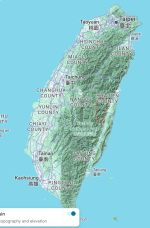
The hard part of Taiwan is not the side that face China, it's always Eastern Taiwan

1758633168467.png

People don't know, but more than half of Taiwan is mountain range and forest (The green bit in this topological map), and those are the areas you won't be able to recon from above, which means you can't target them with an airstrike or missile, but they can shoot at any aircraft passing over. And the area is laden with bunkers and tunnels; it's going to be a hassle for the Chinese to fight the Taiwanese in those areas if the Taiwanese decided to fight for it.

In many of the war games, including the one that I was a part of, it takes months for China to move off the Coastal city, but it will take years to even go over half that mountain and jungle.
 
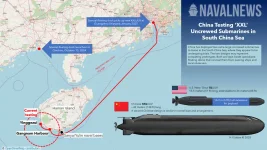
New information reveals that the Chinese Navy (PLAN) is testing its uncrewed submarines on Hainan in the South China Sea. The two underwater drones, by far the world’s largest, have not been publicly revealed by Beijing.

China-New-XXLUUVs-1536x863.jpg.webp

In the West, defence firms are rushing to build extra-large underwater vehicles. Navies are testing them and starting to explore how they bring new capabilities, and operate alongside other naval vessels. Meanwhile, China is years ahead in terms of both investment and ambition.

China is testing new underwater drones which literally and figuratively dwarf even the largest Western designs. At over 40 meters long they make the U.S. Navy’s Orca XLUUV (extra-large uncrewed underwater vehicle) look like a bath toy.

Naval News first revealed the existence of one of these drones, then cautiously described as a submarine, in January. Now we have significant new information. We can now be confident that the craft, the size of some country’s regular submarines, is uncrewed. What is more, it is not alone. China has built two similar sized drone submarines and is testing them together in the South China Sea.

Secret Testing In South China Sea

The two new uncrewed submarines are being tested in the waters around Hainan in the South China Sea. They are temporarily based in Gangmen Harbour west of the main naval base at Sanya. That is where Chinese nuclear submarines, aircraft carriers, and other Chinese extra large uncrewed underwater vehicles have been observed. The XLUUVs, such as the AJX002 minelayer, can be kept on the quay and lifted in and out of the water by crane. However these latest underwater drones, being much larger, are being accommodated differently.

Instead they are being kept in two floating docks. This alleviates the challenges of putting them in and out of the water. It also removes the complication of controlling them in busy ports where they pose a potential hazard to ships. The floating dock can sail to sea and release or retrieve them out of the way of other traffic. Two main areas of activity have been identified, one in Gangmen Harbour and the other further along the coast at Yinggezui.

Additionally the docks have provided effective cover from ship spotters who might otherwise have revealed their existence. This is reminiscent of the way in which the United States hid the Sea Shadow stealth boat in a floating dock. The arrangement adds to the secrecy of the trials.

One of the docks, Zhuan Yong Fu Chuan Wu 001 (专用浮船坞001 which means Special Floating Dock) was only built in 2024. It was launched by CSSC Guangxi Shipyard in October last year and was picking up the new uncrewed submarine in January. Since then it has sailed to Hainan where the trials have been observed.

XXLUUV – New Category Of Uncrewed Submarine?

From the manner in which they are being housed and deployed it is now clear that they are indeed uncrewed platforms. The current term used for larger underwater drones, XLUUV, doesn’t do these new vessels justice however. It was never future-proof to use ‘XL’ (Extra Large) in a designation since it was inevitable that people would soon build much larger ones. These latest types are about 10-20 times larger than what passes for an XLUUV in Europe. So possibly XXLUUV or Ultra-Large-UUV?

Their immense size isn’t just for range. It implies different capabilities and roles to existing XLUUVs. This is underscored by the fact that China is building a range of XLUUVs more akin to their Western cousins (except quicker to be weaponized). Instead these new types appear more like proper submarines. Their roles are likely to be more complex.

We can infer that they carry considerably more weapons or other payloads than other XLUUVs. A crewed submarine of that size can typically accommodate 8 heavyweight torpedoes. And without the crew to accommodate these might carry more. Thus the number of weapons will likely be dictated by cost and requirements rather than space.

More Capable Vessels

The new vessels themselves remain enigmatic. From satellite images we can determine that they are around 40-42 meters (131 -138 ft) long, do not appear to have traditional submarine sails, and have X-form rudders at the stern. Strong circumstantial evidence links one of the two vessels has been developed by 705 Research Institute, part of China Shipbuilding Industry Corporation (CSSC) which is known for weapons development.

While we can only speculate around propulsion, the way that they are housed in dry docks suggests that they do not require complex or sensitive fuel supplies such as liquid oxygen. Given their size they may have onboard diesel generators, and/or huge quantities of lithium-based batteries. There will naturally be speculation that they may have a form of nuclear propulsion, like the Type-041 Zhou class, but there is currently no evidence of this.

A larger vessel like these can also have a much more capable sensor suite. This is likely to include larger and more powerful sonar, more comparable to those on regular submarines. Without the crew they will need the latest advances in artificial intelligence to process the data.
 

China’s Colossal Submarine Drones Emerge in the South China Sea

These mysterious Chinese submarines are uncrewed and bigger than most navies’ attack boats

byTibi Puiu
September 24, 2025

Illustration showing the submarine drones of the US vs China's along with a map of where these drones are being tested in China.
China has deployed two ‘XXL’ uncrewed submarines to Haian in the South China Sea, where they appear to be undergoing trials. The two designs may represent competing prototypes. Both are kept inside specialized floating docks that conceal their presence. Credit: Naval News/ H I Sutton.

Satellite images and open-source intelligence reveal that the People’s Liberation Army Navy (PLAN) is testing two massive uncrewed submarines off Hainan Island in the South China Sea. At over 40 meters long, these machines are about the size of a crewed attack submarine—and ten to twenty times larger than the uncrewed submarines the United States and Europe are experimenting with.

The Naval Warfare of the Future is Unmanned​

Naval News reported that the two submarines are based at floating docks near Gangmen Harbour, close to Sanya — the PLAN’s major nuclear submarine base. Unlike smaller drones that can be craned into the water, these giants need their own floating docks to conceal and deploy them. One dock, called Zhuan Yong Fu Chuan Wu 001, was only launched in late 2024.

The reason for all this secrecy is easy to guess: these vessels are unlike anything else in the world.

“These extra-large UUVs could also carry payloads capable of overcoming coastal defences, a critical feature given the tensions in China’s immediate waters, from the Taiwan Strait to the South China Sea,” said Thomas Lim, an associate research fellow at Singapore’s S. Rajaratnam School of International Studies, in Asian Military Review.

Western militaries call their biggest drones “XLUUVs” — extra-large uncrewed underwater vehicles. But China’s newest models blow that definition apart. They may need a new category altogether: XXLUUVs, or ultra-large drones.

From the outside, the new drones already look the part. Satellite images show vessels about 40–42 meters long, with sleek hulls, no sail or tower, and X-shaped rudders at the stern. Their form echoes true submarines more than drones.

Their size suggests they can carry torpedoes, mines, or even vertical-launch missiles. A conventional submarine of similar size can host eight heavyweight torpedoes. Without humans to feed, clothe, and oxygenate, that same volume could be crammed with more weapons — or other payloads limited only by budget.

The drones’ power sources are still a mystery. Their dock arrangement suggests they don’t rely on exotic fuels like liquid oxygen. So, analysts suspect they run on huge banks of lithium batteries, diesel-electric engines, or both. There’s no evidence of nuclear propulsion (yet) but the speculation is inevitable.

Inside, these machines could hide sensor suites closer to those of crewed submarines than to drones. Larger hulls mean room for advanced sonar, towed arrays, and high-power electronics. Without crew to analyze the data, they must lean heavily on AI to sift through ocean noise, spot threats, and maybe even make combat decisions in real time.

Innovation at Speed​

What’s striking is how fast China has moved. In 2019, the PLAN rolled out its first public uncrewed sub, the HSU-001. That model focused on intelligence gathering, with propellers designed for slow cruising and external mounts for sensors.

Since then, Beijing has churned out at least five different designs, including the AJX002, a sleek drone with pump-jet propulsion for stealth that looks like an oversized torpedo, and the UUV-300 family, which can be armed with torpedoes or mines. Some models, like the HSU100, are built for surveillance. Others are clearly designed to take down ships.

This diversity shows China is pursuing a prototyping approach, building multiple designs in parallel to speed up innovation. The U.S., by contrast, has invested heavily in just one major project: the Orca XLUUV, a single design with a 6,500 nautical-mile range.

China’s method has a Silicon Valley feel to it: try many options, fail fast, and scale up what works. That means they can test specialized designs for seabed warfare, undersea infrastructure sabotage, or rapid deployment from shipping containers. Western analysts worry this pace could leave the Pentagon flat-footed.

The potential missions could involve seabed warfare: attacks on undersea fiber-optic cables, oil pipelines, or other critical underwater infrastructure. Attacks on underwater fiber-optic cables — the arteries of the global internet — are a particularly growing concern. An uncrewed submarine the size of a traditional attack boat, packed with sensors and robotic arms, could slip down to the seabed and cut or tamper with these networks. Previously, ZME Science reported how China, in a rare moment of admission, unveiled a high-tech cutting tool capable of operating at unprecedented depths of up to 4,000 meters — twice as deep as existing cable infrastructure typically extends.

As Naval News‘s H I Sutton put it: “It seems inevitable that uncrewed submarines will increasingly encroach on the domain of traditional submarines. … This is a new world which China seems much more willing to embrace.”

For decades, the assumption was that China’s subs were decades behind Western ones. That idea is sinking fast.
 

Users who are viewing this thread

Pakistan Defence Latest

Country Watch Latest

Latest Posts

Back
Top