Chinese Naval Platform & PLAN discussions

Another threat is sea drones. There are news that taiwan is planning to get sea drones similar to Ukraines seababy drones. These are starlink controlled hard to jam sea based kamikaze drones that inflicted a high cost on Russian navy in the Black Sea. They are like what fpv drones against tanks towards naval assets. Unless some option is developed against them it is a very high risk move to start a naval operation. Jamming is partially successful and cannot be trusted as a single solution since oppenent later on develops eccms to counteract these measures making this type of solution temporary.

To view this content we will need your consent to set third party cookies.
For more detailed information, see our cookies page.

Those UUVs are short-range range and Russia has no trouble shooting them down with attack helicopter
ck Sea.
 
Those UUVs are short-range range and Russia has no trouble shooting them down with attack helicopter
ck Sea.
Magura drone is claimed to have 800km range.If deployed itcovers a large radius around taiwan. It uses starlink satcom and is hard to jam. They also attached manpads and claim to have hit several helicopters and aircraft as these magura drones can only be detected and attacked at low altitudes by airborne platforms.

I dont know maybe a low cost survaillance attack drone that checks for these magura type drones or similar low cost option can be deployed other than using manned helicopters or planes risking them to manpads installed on these drones. But it is still a high risk against ships when deployed by the enemy in high numbers.
 
Magura drone is claimed to have 800km range.If deployed itcovers a large radius around taiwan. It uses starlink satcom and is hard to jam. They also attached manpads and claim to have hit several helicopters and aircraft as these magura drones can only be detected and attacked at low altitudes by airborne platforms.

I dont know maybe a low cost survaillance attack drone that checks for these magura type drones or similar low cost option can be deployed other than using manned helicopters or planes risking them to manpads installed on these drones. But it is still a high risk against ships when deployed by the enemy in high numbers.
There is a YouTube video showing Russia regularly blasting those UUVs

On June 21, 2025, Russian Ka-52 "Alligator" attack helicopters sank at least four Ukrainian uncrewed surface vehicles (USVs), or drone boats, near the Crimean Peninsula in the Black Sea. Video footage of the incident was posted to social media. A prior encounter in May 2024 also featured a Russian helicopter successfully neutralizing a Ukrainian naval drone.

June 2025 engagement
  • Video footage emerged showing a Russian Ka-52 attack helicopter firing S-8 rockets at multiple Ukrainian drone boats.
  • The incident highlights Russia's use of helicopters to counter Ukraine's naval drones, which have been used effectively to strike Russian naval assets.
  • The use of USVs by Ukraine has forced the Russian Black Sea Fleet to increase its defenses, including patrolling with helicopters and patrol boats.

May 2024 engagement
  • During a Ukrainian drone attack near Crimea, a Russian Ka-29 helicopter was filmed engaging a Ukrainian naval drone armed with what appeared to be anti-air missiles.
  • Footage showed the helicopter successfully destroying the USV after it appeared to be disabled or stalled.
  • This engagement occurred after Ukraine began equipping its USVs with anti-air capabilities, forcing Russia to adapt its tactics to counter the new threat.

Counter-innovation and evolving tactics
The dynamic between Russian helicopters and Ukrainian USVs is part of a larger trend of evolving drone warfare in the Black Sea.
  • Ukrainian naval drones have been used to sink or damage numerous Russian warships, prompting Moscow to beef up its countermeasures.
  • In response to the Russian helicopter threat, Ukraine has adapted by arming its naval drones with anti-air missiles, as seen in the December 2024 destruction of a Russian Mi-8 helicopter by a Magura V5 naval drone.
  • Russia, in turn, has deployed its helicopters to actively hunt and destroy Ukrainian USVs, as evidenced by the June 2025 incident involving Ka-52 helicopters.

AI responses may include mistakes. Learn more
 
Last edited:
There is a YouTube video showing Russia regularly blasting those UUVs

On June 21, 2025, Russian Ka-52 "Alligator" attack helicopters sank at least four Ukrainian uncrewed surface vehicles (USVs), or drone boats, near the Crimean Peninsula in the Black Sea. Video footage of the incident was posted to social media. A prior encounter in May 2024 also featured a Russian helicopter successfully neutralizing a Ukrainian naval drone.

June 2025 engagement
  • Video footage emerged showing a Russian Ka-52 attack helicopter firing S-8 rockets at multiple Ukrainian drone boats.
  • The incident highlights Russia's use of helicopters to counter Ukraine's naval drones, which have been used effectively to strike Russian naval assets.
  • The use of USVs by Ukraine has forced the Russian Black Sea Fleet to increase its defenses, including patrolling with helicopters and patrol boats.

May 2024 engagement
  • During a Ukrainian drone attack near Crimea, a Russian Ka-29 helicopter was filmed engaging a Ukrainian naval drone armed with what appeared to be anti-air missiles.
  • Footage showed the helicopter successfully destroying the USV after it appeared to be disabled or stalled.
  • This engagement occurred after Ukraine began equipping its USVs with anti-air capabilities, forcing Russia to adapt its tactics to counter the new threat.

Counter-innovation and evolving tactics
The dynamic between Russian helicopters and Ukrainian USVs is part of a larger trend of evolving drone warfare in the Black Sea.
  • Ukrainian naval drones have been used to sink or damage numerous Russian warships, prompting Moscow to beef up its countermeasures.
  • In response to the Russian helicopter threat, Ukraine has adapted by arming its naval drones with anti-air missiles, as seen in the December 2024 destruction of a Russian Mi-8 helicopter by a Magura V5 naval drone.
  • Russia, in turn, has deployed its helicopters to actively hunt and destroy Ukrainian USVs, as evidenced by the June 2025 incident involving Ka-52 helicopters.

AI responses may include mistakes. Learn more
These drones can be hit by helicopter guns-missiles just like fpv drones can be hit by shotguns but it is not a solution in and of itself. Once an fpv strikes it takes out a million dollar tank. Once magura hits a ship the costs are much higher. Helicopters cannot detect all sea drones.

maybe a low cost drone awacs solution can be developed that can scan the sea to track magura type of drones. But they are small in size and it is still difficult to detect all of them. Ports can be protected by fish net type of water blockages but active ships can still be targeted with a relatively low cost.

It is also vice versa. China can develop magura type drones and deploy them from motherships far away from taiwan. This way for example supply ships supporting taiwan from Philiphines can be taken out and supply is blocked for example in case of conflict.
 
@Yommie
@Beijingwalker
@Fatman17

we find the China was second to India by 1820, by the early 19th Century :coffee:

=> When graphed, one can see that South Asia was the world's largest economy from year 1 to year 1500, when it lost the position to China. South Asia again regained the pole position in the year 1700 before losing it to China in year 1820.


here, i find its the "racial" background since last over 1000s years of history of world, why the India - China recovering their historic economic volume 👍

View attachment 150159

.
=>
View attachment 150160


.
=>

View attachment 150161

👍

few things I saw online as below :coffee:


1759683571802.png

1759683616616.png

1759683693685.png

1759683805751.png

1759683854823.png
 
What CNN targettted English speaking audiences have to day about it, an utterly revolt against established western narrative.

Uneditted continuous top 3 screenshots from the comment section
搜狗截图20251006090512.png搜狗截图20251006090605.png搜狗截图20251006090650.png
 
To view this content we will need your consent to set third party cookies.
For more detailed information, see our cookies page.
 
Interesting article

China’s New Aircraft Carriers Have 1 Big Advantage over the U.S. Navy​


Harry Kazianis
Published

USS Gerald R. Ford (CVN 78) conducts high-speed turns in the Atlantic Ocean. Ford is at sea conducting sea trials following the in port portion of its 15 month post-shakedown availability. (U.S. Navy photo by Mass Communication Specialist 3rd Class Connor Loessin).

USS Gerald R. Ford (CVN 78) conducts high-speed turns in the Atlantic Ocean. Ford is at sea conducting sea trials following the in port portion of its 15 month post-shakedown availability. (U.S. Navy photo by Mass Communication Specialist 3rd Class Connor Loessin).
Key Points and Summary – China’s biggest edge over U.S. aircraft carriers isn’t its own flight decks; it’s salvo mass.

-The PLA Rocket Force can launch dense waves of ballistic, cruise, and hypersonic missiles—DF-21D, DF-26, DF-17 among them—guided by a maturing kill chain of satellites, radars, aircraft, and drones.

DF-17 Missile from China .

DF-17 Missile from China. Image Credit: PLA.

-Geography multiplies the effect: close to home, China can overwhelm limited shipboard magazines and push carrier groups back.

-This missile “bubble” grants Chinese carriers a sheltered lane to matter earlier in a fight. U.S. defenses help but don’t erase the arithmetic—so the answer is range, deception, distribution, and undersea pressure that breaks the kill chain and buys carriers space to operate.


China’s Real Aircraft Carrier Edge: A Sea Of Missiles

If you’re comparing flight decks, catapults, and the choreography of launch-and-recovery cycles, the United States still wears the crown. But suppose you compare what happens before a carrier ever gets within its preferred striking range. In that case, China enjoys a blunt, asymmetric edge the U.S. Navy cannot wish away: massive salvos of land-based ballistic, cruise, and now hypersonic missiles that can flood the air around a carrier strike group, force it to maneuver at the enemy’s tempo, and—above all—push it back. In the Indo-Pacific, where geography favors the defender and airfields ring the battlespace, that sheer volume of fire can matter more than the marquee ship you send to sea.

This isn’t a funeral dirge for American carriers. It’s an honest accounting of salvo math, geography, and time—and how those three variables combine to give the People’s Liberation Army (PLA) the initiative in a war that starts near its shores. The punch line is simple: the advantage isn’t China’s carriers. It’s the missile ecosystem that would shape the sea and sky before their carriers join the fight.

The Advantage Isn’t The Carrier—It’s The Missiles

Beijing has spent two decades building the world’s densest arsenal of theater-range missiles. That magazine includes the DF-21D and DF-26 anti-ship ballistic missiles designed to threaten moving naval targets over hundreds to thousands of kilometers; the DF-17 with a maneuvering hypersonic glide vehicle; a broad stable of air-launched weapons like the YJ-12 and YJ-91; ship- and sub-launched cruise missiles like the YJ-18; and the radars, satellites, UAVs, and over-the-horizon sensors to help stitch together an ocean-sized targeting picture. The product of that investment is not a single “carrier killer,” but a stack of overlapping fires that can be called in sequence or all at once.

The uncomfortable truth for any surface force is that defense is a magazine game. A carrier strike group (CSG) can layer Aegis interceptors—SM-6, SM-2, ESSM—plus electronic warfare, decoys, and close-in guns. It can maneuver, use deception, and leverage long-range air patrols to thin inbound raids. But every hard-kill shot consumes a missile; every soft-kill trick loses some edge as the attacker adapts. Attackers reload ashore. Defenders must husband finite cells at sea. In a protracted exchange, numbers and proximity bias the side that can fire the most, from the most directions, at the least cost.

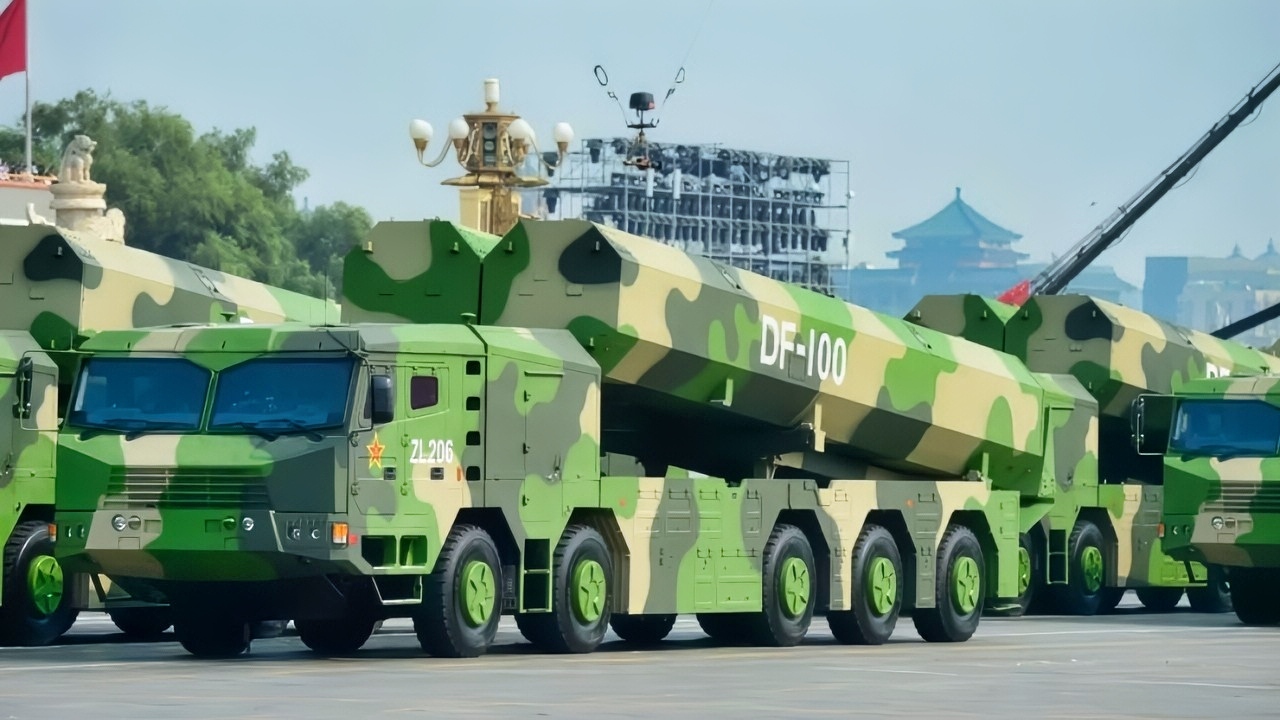
DF-100 Missiles X Screengrab

DF-100 Missiles: X Screengrab.
That doesn’t make carriers helpless. It does mean that getting them into the fight—within useful range and with magazines intact—has become the central operational problem of a Western Pacific war.

Geography Is A Weapon, And China Owns The First Move

The maps tell the story. The first island chain bends like a scythe from Japan to the Philippines, bristling with airfields and ports the PLA can saturate in the opening hours. From the Chinese mainland, road-mobile launchers can fire deep into the Philippine Sea. Bombers can push missile range rings still further. Surface combatants and diesel-electric submarines operating under land-based air cover can spread cruise missiles across multiple axes. Every mile a carrier must close to put its air wing in range is a mile deeper into overlapping threat envelopes.

And because time and distance favor the home team, the PLA can sequence its fires: reconnaissance drones probe; cruise missiles herd; ballistic or hypersonic shots exploit distraction; and follow-on waves aim at the leakers. The United States, by contrast, must flow forces across oceans, stage from bases under missile threat, and fight through the opening moves with what’s already afloat. None of that is impossible. All of it is harder than it was a generation ago.

The Kill Chain That Makes Mass Matter

Missiles don’t matter if you can’t find, fix, track, and update a moving carrier’s location. That is the PLA’s true “weapon system”: a kill chain that ties together space-based ISR (electro-optical, radar, signals), over-the-horizon radars, maritime patrol aircraft, UAVs, surface pickets, and submarines—plus data fusion on shore that can cue shooters fast enough to matter. Perfection isn’t required; volume and persistence can overcome gaps. As long as enough track quality makes it through to enough shooters, some salvos will arrive from enough angles to challenge even a well-handled CSG.

U.S. Navy

(Left to right) Australian ANZAC Class frigate HMAS Stuart (FFH 153) and USS Jack H. Lucas (DDG 125) wait off the coast of the Pacific Missile Range Facility in Kauai, Hawaii, as they prepare for Flight Test Aegis Weapon System-32 (FTM-32), held March 28, 2024.
The U.S. and allies can—and do—attack that chain: jamming, deception, cyber, and kinetic strikes against sensors, relays, and decision nodes. But on Day 0 to Day 3, before attrition takes its toll, the PLA gets first say. That early initiative is what creates the impression of inevitability around those missile salvos.

Magazine Math: Why Saturation Works (And Why It’s Not Automatic)

Think of a carrier group’s defense as a nested set of sieves. The outer layers—fighters, E-2D Hawkeyes, and long-range missiles—try to thin the raid. Middle layers—Aegis warships, multistatic sensors, and electronic warfare—strip more arrows from the quiver. Inner layers—point defense and close-in weapons—deal with what leaks through.

If a raid arrives coherent and concentrated, and if enough of it maneuvers unpredictably or arrives from multiple vectors, some leakers will survive. If the attacker can repeat that cycle, a defender will start to worry about missile depletion before the attacker does—especially if the defender is hundreds of miles from a reload port or underway rearm is still experimental. That’s the essence of saturation.

But saturation is not automatic. It depends on the attacker generating the right geometry and synchronizing different missile types under electronic attack, while the defender denies cueing, spoofs tracks, and hunts archers (bombers, ships, and launchers) as aggressively as it intercepts arrows. The side that better manages complexity wins the exchange. China’s advantage is that it can mass more arrows at the start—close to home, under its own air defense umbrella.

Hypersonics: Hype, Headaches, And Hard Problems

Hypersonic glide vehicles (like those mounted on the DF-17) complicate defenses because they maneuver and fly lower than ballistic arcs, compressing timelines and stressing radar coverage. They are not unstoppable bolts of Zeus—sensor fusion, updated interceptors, and layered soft-kill/hard-kill tactics are catching up—but they thicken an already thick raid. In the early stages of a fight, even a modest number of hypersonic shots, mixed with cruise and ballistic volleys, forces defensive tradeoffs and consumes high-end interceptors that are slow to replace.

For the attacker, that’s value: expensive defensive shots burned against relatively cheaper offensive ones. For the defender, it’s a reminder that range and deception are as important as raw intercept power. The war isn’t only about better arrows; it’s about making the other archer shoot first and often.

How China’s Carriers Profit From The Missile Bubble

Here’s the irony: the headline says “China’s carriers have an advantage,” but the reason they do is that they can fight under a missile umbrella their opponent lacks. Inside the A2/AD bubble created by land-based fires, a Chinese carrier—particularly Fujian with catapults that can launch heavier fighters, electronic jammers, and fixed-wing airborne early warning—can project airpower with shorter logistics tails, under the cover of home-based SAMs and coastal aviation. That creates interior lines: the ability to refuel and rearm aircraft quickly ashore, cycle air wings faster, and keep pressure on a distant carrier that must guard every missile it shoots.
 
shoots.

China Aircraft Carrier

China Aircraft Carrier. Image Credit: Creative Commons.
In other words, the big advantage isn’t that China’s carriers are “better” than America’s. It’s that their carriers don’t have to carry the opening rounds alone. Their job is to exploit what the Rocket Force buys them: space, time, and a battered enemy air defense picture. In a fight over Taiwan or the South China Sea, that division of labor matters.

Why U.S. Defenses Don’t Erase The Problem

Could a well-handled U.S. carrier group survive and fight under that kind of pressure? Yes—especially with E-2D networks, F-35C sensors feeding the air defense web, and Aegis BMD ships layering SM-6 and other interceptors. But “can” is not the same as “can without cost.” Two specific frictions are stubborn:

Depth Of Magazine. A cruiser or destroyer only carries so many interceptors. The Navy is proving out at-sea VLS reloads, but in combat conditions, with sea state and threat overhead, it’s not a magic wand. Every cell you fill with air defense is one you don’t fill with long-range strike, and vice versa. Salvo warfare is as much about logistics as it is about guidance chips.

The Cost Curve. The United States can build more interceptors—but the unit cost and production tempo of high-end SAMs and hypersonic interceptors make it hard to match an attacker’s ability to produce and fire large numbers of offense-dominant missiles. That doesn’t mean “we can’t win.” It means we must change the engagement—disperse, deceive, and make the attacker waste shots on ghosts.

What Changes If The Fight Moves Past The First Island Chain

The further you push away from mainland China, the more the advantage tilts back. Space-based cueing must cover more ocean. Over-the-horizon radars lose resolution. Land-based launchers face replenishment and survivability problems, while U.S. submarines—which remain America’s best asymmetric tool—gain freedom to hunt PLA surface groups, submarines, and the logistics ships that feed them. The U.S. Navy’s push toward Distributed Maritime Operations (DMO) and long-range carrier air wings is about moving this boundary—denying the PLA the comfortable geometry that lets missile mass dominate.


That shift isn’t a “someday” wish list. It’s happening now: MQ-25 tankers to extend carrier reach; Maritime Strike Tomahawk and LRASM to hold ships at risk from far away; SM-6 evolving into a long-reach multi-mission weapon; and a carrier airwing pivoting to lower-observable platforms and longer-range weapons. None of this flips the table on Day 1. All of it narrows the window in which missile salvos rule the fight.

The Aircraft Carrier Still Matters—But As Part Of A Web, Not A Soloist

One way to read the missile revolution is to declare the carrier obsolete. A better reading is that the carrier is now a node—a powerful, flexible one, but a node nonetheless—in a kill web that must be resilient under fire. The web includes submarines (to kill shooters and scouts), land-based air and missiles (to complicate Chinese planning), uncrewed surface and subsurface systems (to extend sensing and carry decoys or weapons), and space/cyber tools (to blind the kill chain that makes missiles lethal). The carrier brings volume airpower, command-and-control, and the ability to surge effects where and when needed. It just can’t be the only thing you count on.

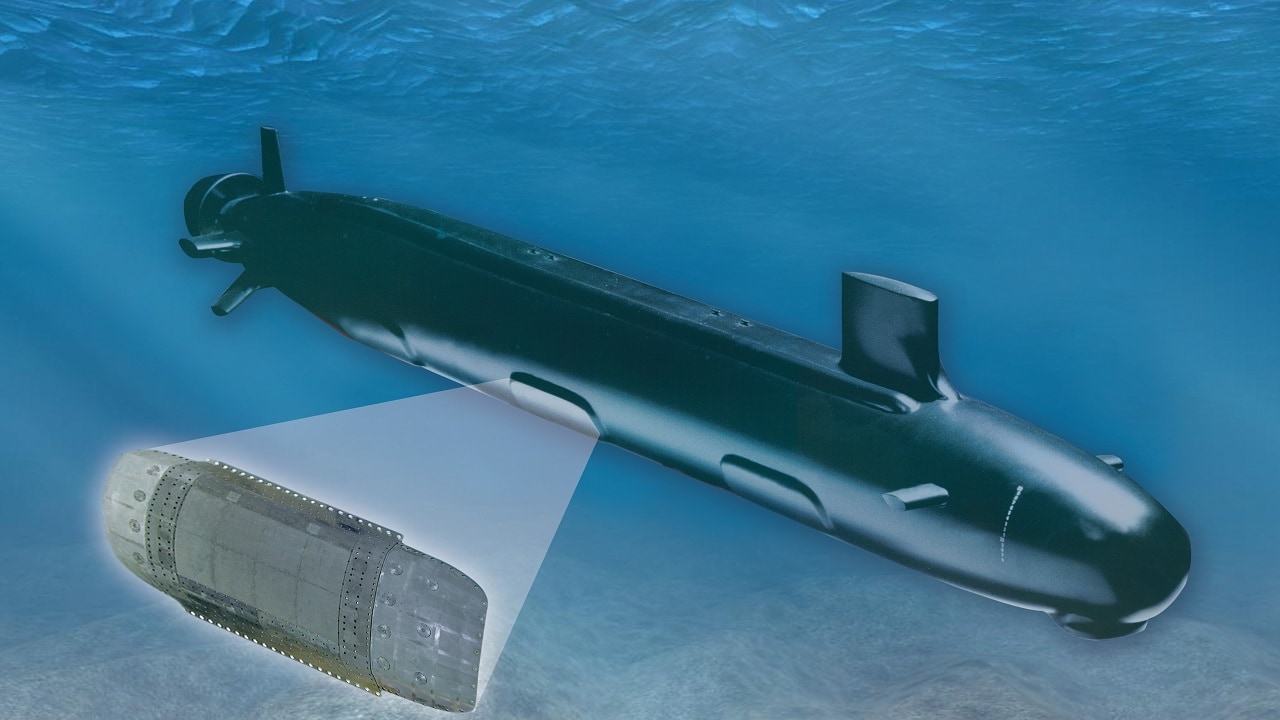
SSN(X)

Image of Virginia-Class Submarine. Image Credit: Creative Commons.
Viewed that way, China’s “advantage” looks less like an automatic checkmate and more like a powerful opening—one the United States must plan to survive, confuse, and then counterattack through.

China and the Missiles vs. the Aircraft Carriers: A Simple, Honest Bottom Line

In a fight that starts near China, missiles move the need. The PLA has a home-court salvo advantage, built on proximity, magazine depth ashore, and a maturing kill chain. That reality grants China’s carriers a sheltered lane to matter sooner than they otherwise would. The U.S. Navy’s carriers, by contrast, must earn their way into the fight—preserving magazines under pressure, extending the air wing’s reach, and relying on undersea forces and distributed shooters to pry open a door.

Call it unfair if you want. Better to call it a design brief. Build the fleet—and the munitions stockpiles, the rearm concepts, the deception playbooks—that assume you start under a rain of arrows. If you can ride out the first storm and keep fighting, the carrier is still the most versatile, sustainable airfield in the Pacific. If you can’t, it doesn’t matter how good your catapults are.
 

China’s most powerful warship Type 055 destroyer gets deadly 20-fold strike boost with new radar​

Oct.11 2025
China’s most powerful warship Type 055 destroyer gets deadly 20-fold strike boost with new airborne radar, China’s People’s Liberation Army Navy has significantly expanded the operational reach of its most advanced surface combatant, the Type 055 destroyer Lhasa, by integrating it with airborne early warning aircraft.

To view this content we will need your consent to set third party cookies.
For more detailed information, see our cookies page.


微信图片_2025-10-12_011843_736.png
 

Chinese military force tricked a foreign spy plane in South China Sea: report​

No operational details given, but the vehicle-mounted jamming system is said to have generated a false radar signature​

Published: 8:00pm, 11 Oct 2025

China’s electronic warfare (EW) force successfully tricked a foreign spy plane during a South China Sea operation, a Chinese military magazine recently revealed.
In the incident, a false radar signature generated by a Chinese military vehicle-mounted jamming system deceived a surveillance aircraft from an unspecified country over the South China Sea, Ordnance Industry Science Technology reported in its September issue.

It was a rare public mention of a combat operation situation and outcome involving China’s EW force. Ordnance Industry Science Technology is regarded as an influential magazine focused on military technology.

The report did not elaborate on the time, location or circumstances. But it cited official data saying the EW system was capable of simulating radar signals such as those of a super-large vessel from up to 300km (186 miles) away.

The report hinted that the foreign spy plane might have been misled to travel towards a wrong location or tracked a non-existent aircraft carrier or amphibious landing ship.

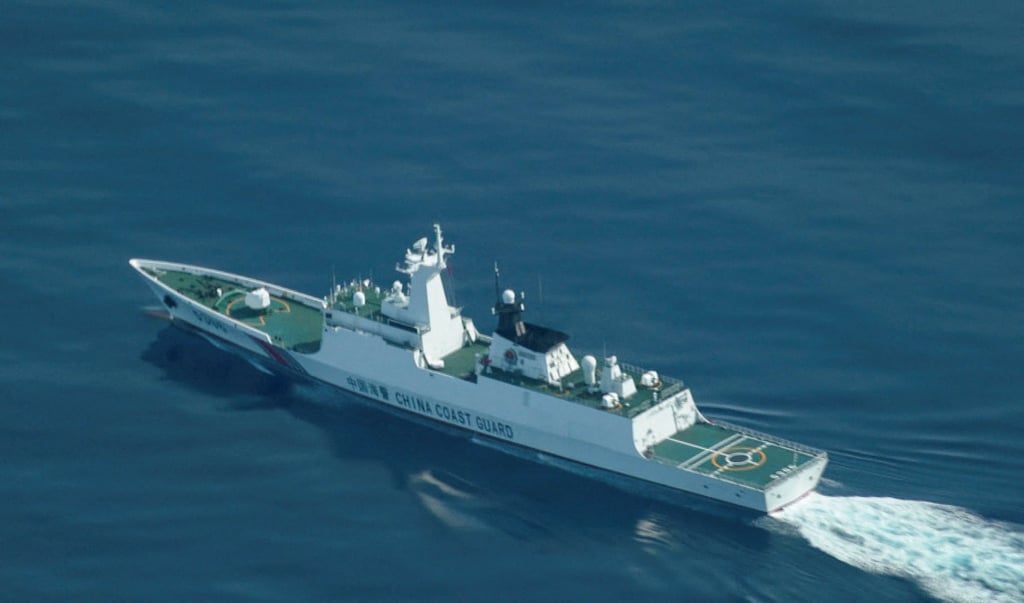
A Chinese coastguard ship sails near the disputed Scarborough Shoal in the South China Sea. Photo: Reuters

A Chinese coastguard ship sails near the disputed Scarborough Shoal in the South China Sea. Photo: Reuters

Loaded on small jeep-sized vehicles, the Chinese system was showcased in the electronic countermeasures formation during the large-scale military parade held in Beijing on September 3, the report stated. The name of the platform remains classified.
 
The Americans traveled all the way to the South China Sea to test China. It doesn't matter. This means that in the future, we will also come to the doorstep of the United States. I am not surprised to imagine that the US media will report on the Chinese navy at the doorstep of the United States in the future. As I said, what the Americans do now, we will do to the United States in the future
 
The Americans traveled all the way to the South China Sea to test China. It doesn't matter. This means that in the future, we will also come to the doorstep of the United States. I am not surprised to imagine that the US media will report on the Chinese navy at the doorstep of the United States in the future. As I said, what the Americans do now, we will do to the United States in the future
Just don't follow west, or you will end up like west.
Tariffs for tariffs will defeat everyone and no one will be winner. West can't make cheap things, and China can't sell for high price. Finding middle ground will solve problem. If they apply tariffs , reply with incentives. They will ultimately buy Chinese to defeat Chinese.
Follow the soul of your ancestors, not the western tinkers.
 
Just don't follow west, or you will end up like west.
Tariffs for tariffs will defeat everyone and no one will be winner. West can't make cheap things, and China can't sell for high price. Finding middle ground will solve problem. If they apply tariffs , reply with incentives. They will ultimately buy Chinese to defeat Chinese.
Follow the soul of your ancestors, not the western tinkers.
In Chinese history classes, there is a saying, "A gentleman takes revenge, ten years is not too late." Chinese people are very grudges.Lol

You don't know Chinese culture.
 
In Chinese history classes, there is a saying, "A gentleman takes revenge, ten years is not too late." Chinese people are very grudges.Lol

You don't know Chinese culture.
China is the only country in the world for whome defeating enemies is self destruction.
Be careful.
 

Users who are viewing this thread

Pakistan Defence Latest

Back
Top