Official PLA Y-20 promo video debuts rare footage of H-6N aerial refueling, surface-to-air missile loading
Source
Global TimesEditorCheng SihaoTime2026-06-29 10:57:54
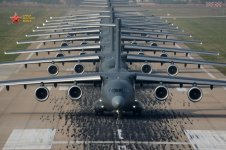
Y-20B large transport aircraft are parked on the tarmac.
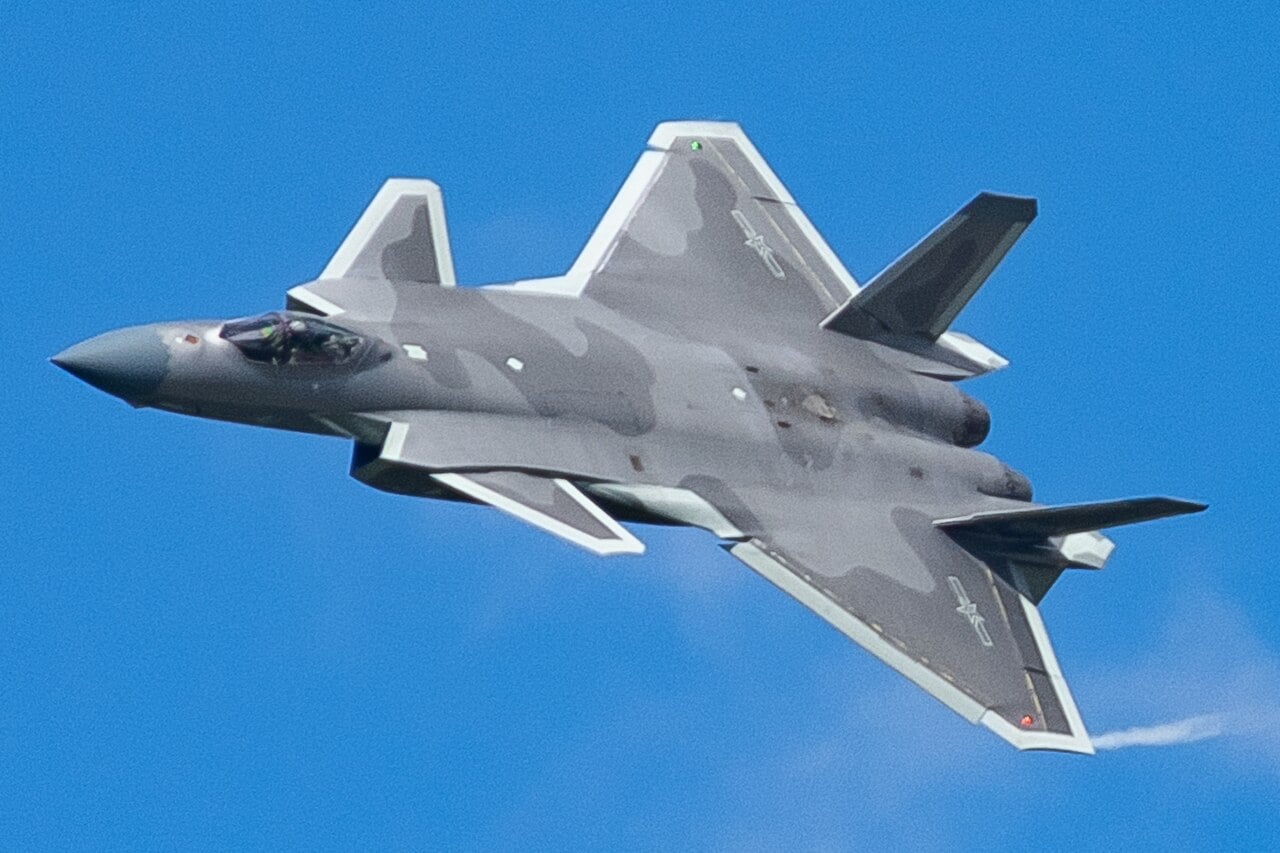
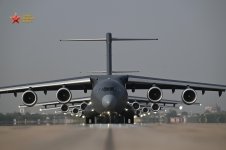
As the camera slowly pans across the tarmac, three members in China's Y-20 large domestic transport aircraft family - the Y-20A, Y-20B and YU-20 - stand side by side. This rare scene appeared in an exclusive new Y-20 promotional video released on Sunday by China Bugle, an official media account affiliated with the Chinese People's Liberation Army (PLA) news media center.
The video came ahead of the 10th anniversary of the Y-20's official induction into the PLA Air Force. In addition to close-up shots of the domestically developed WS-20 turbofan engine, the footage also showed, for the first time, aerial refueling of an H-6N bomber through a YU-20 and the loading of surface-to-air missiles onto a Y-20.
On July 6, 2016, China's domestically developed next-generation large military transport aircraft, the Y-20, was officially commissioned into PLA Air Force aviation units. A decade later, the Y-20 has evolved from a single transport platform into a family of models including the Y-20A, Y-20B and YU-20 aerial refueling tanker, with its flight paths covering more than 40 countries across four continents, said the Aviation Industry Corporation of China, the maker of the aircraft, on its Wechat account on Sunday.
Experts told the Global Times that with the Y-20B now equipped with the domestically produced WS-20 engines, its production capacity is rapidly ramping up, steadily advancing toward greater combat readiness, scale and system integration. This holds significant importance for the PLA Air Force in fulfilling humanitarian assistance missions, international security obligations and safeguarding regional stability.
Hard power, stronger reach
The China Bugle video first highlighted the Y-20's loading capacity. It can carry a Type 99A main battle tank, or three light infantry fighting vehicles, as well as missile launch vehicles and even the Chang'e-6 lunar sample return spacecraft - essentially anything on land, in the air or underwater. As the video puts it, if the DF-series ballistic missiles were to give permission, they could also be transported.
Zhang Junshe, a Chinese military affairs expert, told the Global Times on Sunday that the footage offers rare official images of the Y-20 loading surface-to-air missiles.
Zhang said that the Y-20B is China's most advanced domestically developed heavy transport aircraft. Compared with the Y-20A, its power system has been fully upgraded, with significant improvements in both speed and range. The Y-20B's ability to rapidly deploy heavy air defense systems such as the HQ-9B will enhance the PLA Air Force's all-domain operational capabilities.
Beyond showcasing transport capabilities, the video also demonstrated the powerful aerial refueling capacity of the YU-20, which is based on the Y-20 platform. The footage shows the YU-20 refueling not only fighter jets such as the J-35, J-20, J-16 and J-15, but also, as Zhang said, in rare clear detail, the H-6N bomber.
By being able to refuel such a wide range of platforms, the YU-20 can double - or even multiply - operational radius, enabling missions around the island of Taiwan, across far seas and over high plateaus, according to the video clip.
Zhang noted that the H-6N is the latest model in the H-6 bomber series. Equipped with an aerial refueling probe, the H-6N can coordinate with the YU-20 tanker to significantly extend its range and operational radius.
With close-up shots of the WS-20 engine, the video showed that in 2025, the Y-20B was fitted with the WS-20, making it more powerful, more fuel-efficient, longer-ranged and part of a growing family of aircraft.
"The Y-20B is the most advanced domestically developed heavy transport aircraft in China to date. Compared with the Y-20A, its power system and other systems including hydraulics have been upgraded. For pilots, the most intuitive experience is that the aircraft performs with greater quality and agility," Jin Jian, a pilot from a PLA Air Force aviation unit, was quoted by CCTV News on Sunday as saying.
The most significant upgrade of the Y-20B over the Y-20A is the replacement of engines with the high-bypass-ratio turbofan WS-20. With the WS-20 engines, the Y-20B's cargo capacity and range have been greatly increased. The WS-20 technology is now mature and ready for mass production, Zhang said.
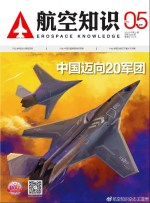
The large-scale development and production capacity growth of the Y-20 is built on the foundation of full domestic production and self-reliance in all key technologies, especially the WS-20 engine. Before domestically developed engines entered service, relying on imported engines made mass production or capacity expansion challenging, Wang Ya'nan, editor-in-chief of Beijing-based Aerospace Knowledge magazine, told the Global Times on Sunday.
Zhang also mentioned that the Y-20B also possesses strong multi-mission expansion potential and modular conversion capability, allowing it to be quickly converted into a tanker, early warning aircraft or electronic warfare aircraft.
Furthermore, with its intercontinental delivery capability, the Y-20B can play a greater role in global humanitarian and disaster relief operations, better fulfilling the responsibilities of a major country and making greater contributions to regional and global security, Zhang added.
Global duties, future edge
As Zhang put it, the China Bugle video showed that the Y-20 can not only carry hardware and equipment, but also fly to more than 40 countries with compassion and longing over the past decade.
Most recently, China dispatched a Y-20B large transport aircraft to the Republic of Korea on April 20 to carry back the 13th batch of remains of Chinese soldiers who died during the War to Resist US Aggression and Aid Korea (1950-53). This was the first time the PLA Air Force dispatched a Y-20B for the repatriation, according to the Xinhua News Agency.
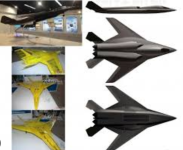
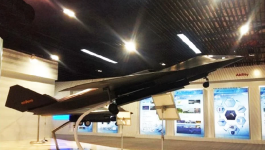
Beyond demonstrating existing capabilities, the video concluded with a dialogue-based plot, featuring a fleeting glimpse of what appears to be a sixth-generation fighter, which has sparked discussion online. Some netizens speculated that the clip suggests the YU-20 could be capable of refueling sixth-generation fighters.
On the occasion of the 10th anniversary of the Y-20's induction into the PLA Air Force, the official release further showcases the Y-20's mass production capabilities and its wide range of capabilities and potential, Wang said. This is significant in demonstrating the PLA Air Force's commitment to fulfilling international security obligations and safeguarding regional stability.
Over the past decades, what the Chinese air force has lacked is strategic mobility - the ability to rapidly deploy large numbers of troops and equipment across theater-level distances. The Y-20 solves this problem, with its large single-load capacity and ability to achieve rapid theater-level mobility, giving China strategic airlift capability for the first time. For the PLA, this enhances capabilities for both combat and non-combat missions. From a national security perspective, it safeguards the country's security. Without large transport aircraft, it would be impossible to fully fulfill humanitarian assistance and international obligations, Wang explained.
Today, as CCTV reported, post-2000-born pilots have also joined the ranks of China's large transport aircraft fleet.
"I aim to fly more advanced and larger strategic transport aircraft in the future, to explore new routes and places we've never been before," Gao Rui, a pilot from a PLA Air Force aviation unit, was quoted by CCTV as saying.

eng.chinamil.com.cn