Navigation
Install the app
How to install the app on iOS
Follow along with the video below to see how to install our site as a web app on your home screen.
Note: This feature may not be available in some browsers.
More options
Style variation
You are using an out of date browser. It may not display this or other websites correctly.
You should upgrade or use an alternative browser.
You should upgrade or use an alternative browser.
Chinese SAC - FC-31/J-35 5th Gen Stealth Aircraft
- Thread starter SiliconBit (silicon0000)
- Start date
More options
Who Replied?


BonitoBoy
Registered Member

JF-17 Thunder (FC-1) is only Co-Developed and Co-Produced Chinese Fighter for Pakistan-Specific and for Export only. This is not consistent with PLAAF doctrine, which is why China does not use it.JF-17 is not a PLAAF fighter.

Yasser76
Elite Member

I know this, what is your point?JF-17 Thunder (FC-1) is only Co-Developed and Co-Produced Chinese Fighter for Pakistan-Specific and for Export only. This is not consistent with PLAAF doctrine, which is why China does not use it.

Leviathan
Registered Member

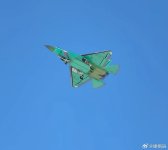
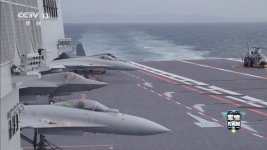
man! it looks gorgeous!

FHN
Trusted Member
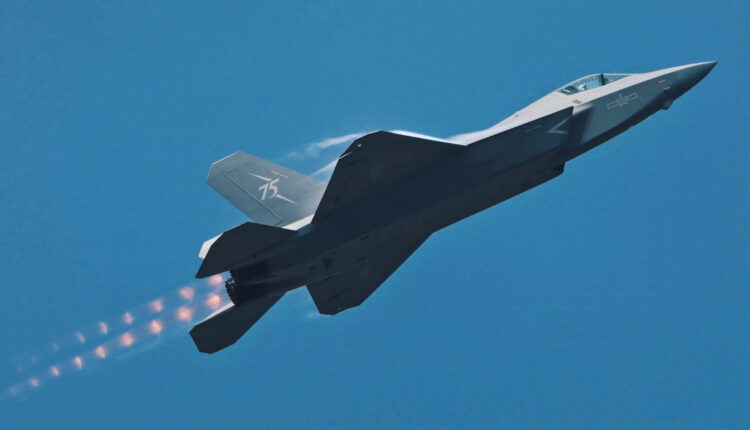
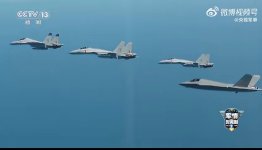
China is mass-producing J-20 and J-35 stealth fighters at an unprecedented scale and speed - satellite images show a surge in production, with an estimated 1,000 fifth-generation fighter jets to be delivered by 2030
 defencesecurityasia.com
1200-1300 units would be more appropriate
defencesecurityasia.com
1200-1300 units would be more appropriate
China Mass-Produces J-20 & J-35 Stealth Fighters at Unprecedented Rate — Satellite Images Show Production Surge That Could Deliver 1,000 Fifth-Gen Jets by 2030 - Defence Security Asia
China is rapidly increasing J-20 and J-35 stealth fighter production, with satellite imagery revealing massive factory expansion that could allow the PLAAF to field up to 1,000 fifth-generation jets by 2030, raising major concerns over global airpower balance and Indo-Pacific security.
defencesecurityasia.com

Beijingwalker
VIP Member
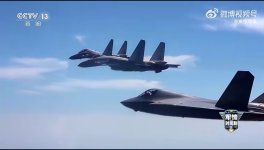
China officially nicknames its J-35 naval stealth fighter as Blue Shark ahead of mass deployment
24 Apr, 2026 - 11:53China has formally branded its carrier-based J-35 stealth fighter as “Blue Shark,” signaling that the aircraft is moving from development into early operational integration within its naval air arm. The move underscores Beijing’s push to field a stealth-capable carrier fighter that can extend air superiority and strike reach from its expanding fleet of aircraft carriers.
The J-35 combines low observable design, internal weapons carriage, and carrier compatibility to support contested airspace operations and long-range interception missions. Its development alongside a land-based variant reflects a broader strategy to accelerate fifth-generation capability, improve survivability at sea, and strengthen China’s ability to project power across maritime theaters.
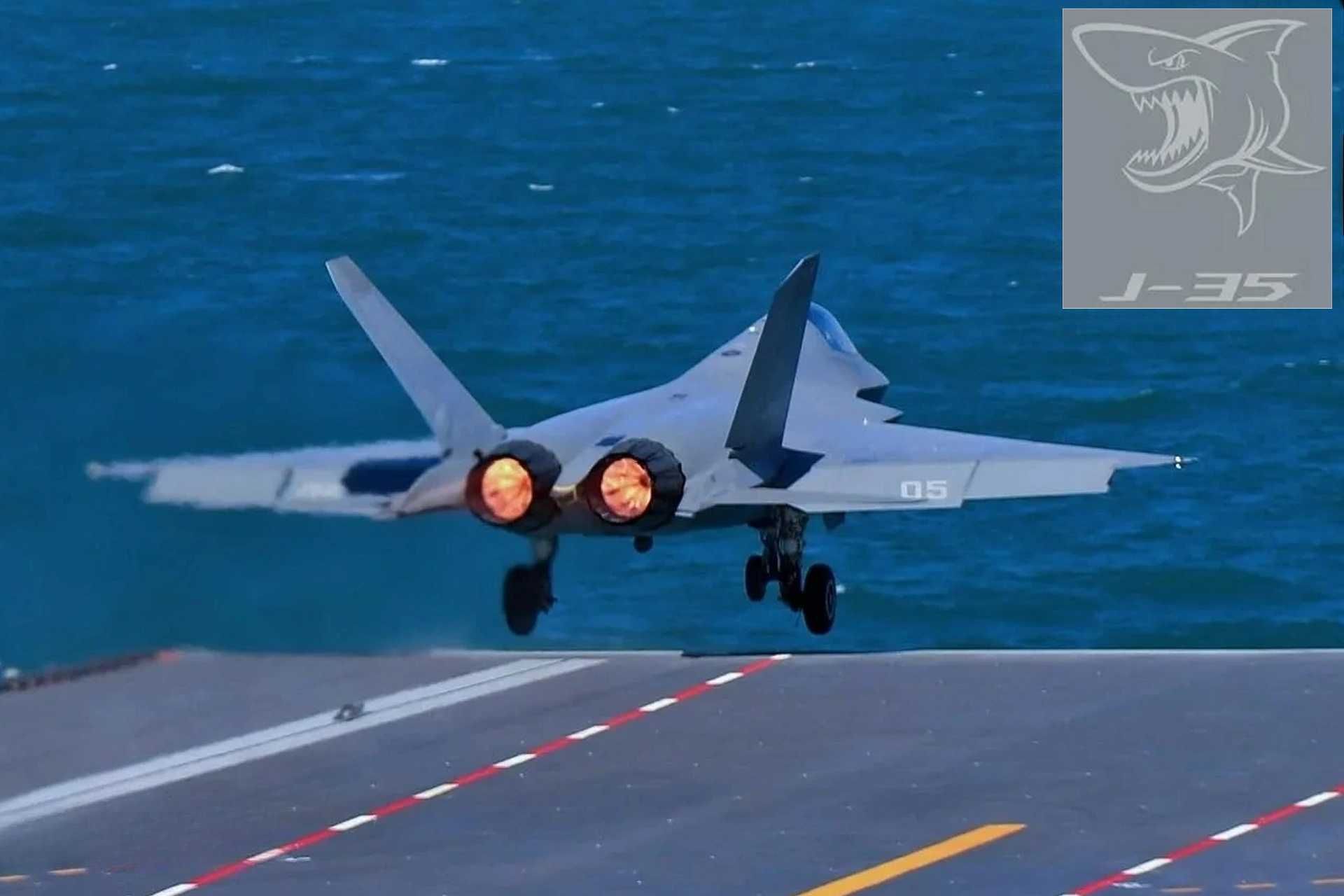
The navalized J-35 prototype conducted its first flight on October 29, 2021, featuring a catapult launch bar, folding wings, and a reinforced landing gear optimized for carrier use. (Picture source: Chinese MoD and Reddit/Devil_R22)
On April 23, 2026, lyman2003 revealed that Shenyang Aircraft Corporation confirmed that the Chinese Navy’s carrier-based variant of its J-35 stealth fighter carries the official nickname “Blue Shark” (蓝鲨), formalizing a designation that had already appeared at the Zhuhai Airshow in November 2024 on a Shenyang design institute patch. References to this name had circulated since at least 2022, indicating that the designation was internally established well before public confirmation. Fighters linked to the naval variant of the J-35 have been photographed with PLA Navy insignia and fuselage marking, but without the numerical side codes typical of operational squadrons.
This absence of tactical numbering is consistent with aircraft not yet assigned to combat units. By mid-2025, multiple airframes were visible on assembly lines and in flight testing configurations, indicating a transition from prototype to early production. The confirmation of the nickname coincides with the broader public exposure phase observed between 2024 and 2026, where visual identification, flight demonstrations, and carrier trials were progressively disclosed by Chinese authorities. The naming structure follows an established pattern within China's PLA Naval Aviation, where carrier aircraft are assigned shark-related identifiers.
The J-15 operates under the name Flying Shark, while the electronic warfare J-15D is designated Electric Shark, placing the J-35 within a consistent naming lineage tied to carrier aviation units. The land-based variant J-35A is designated Yunlong (Cloud Dragon), indicating a separation in identity between naval and air force configurations despite shared design origins. The first visible reference to “Blue Shark” occurred through a unit patch at Zhuhai 2024 rather than through formal announcement channels, indicating a phased disclosure approach. The persistence of the name in informal circulation since 2022 suggests that the designation was stable throughout late development stages.
The alignment of naming conventions across carrier aircraft supports continuity in fleet aviation identity and corresponds with the navalized J-35’s transition into early operational integration. The development of the J-35 begins with the FC-31 prototype 31001, which conducted its first flight on October 31, 2012, establishing the baseline configuration for the program. A second prototype introduced on December 23, 2016, incorporated structural redesigns, a single-piece canopy, and WS-13E engines producing about 87 kN of thrust, replacing earlier RD-93 engines. The navalized J-35 prototype conducted its first flight on October 29, 2021, featuring a catapult launch bar, folding wings, and a reinforced landing gear configuration.
A land-based variant, later designated J-35A, conducted its first flight on September 26, 2023, with a single-wheel nose landing gear and reduced wing area. The J-35A was publicly displayed and flown at Zhuhai in November 2024, marking its first official demonstration. On September 3, 2025, both variants were included in the PLA inventory during the V-Day parade in Beijing. On September 22, 2025, the PLA Navy confirmed successful catapult launch and recovery trials aboard the Type 003 aircraft carrier Fujian. By mid-2025, aircraft with serial numbers linked to test units were observed, indicating entry into a low-rate production phase. The J-35 is a medium-weight stealth fighter with a twin-engine layout, single-seat cockpit, and internal weapons carriage designed to reduce radar cross-section.
The airframe incorporates diverterless supersonic intakes, serpentine inlet ducts to obscure engine faces, and canted twin vertical stabilizers. Naval-specific modifications include folding wings to reduce deck footprint, a twin-wheel nose landing gear to absorb catapult launch stress, and an arrestor hook for carrier recovery. The integration of a catapult launch bar enables compatibility with electromagnetic launch systems installed on Fujian. The aircraft has also been evaluated for operation on STOBAR carriers such as Liaoning and Shandong, indicating dual compatibility across all three Chinese aircraft carriers. Maximum takeoff weight is reported at 30,000 kg, with a combat radius of about 1,200 km on internal fuel.
These features place the aircraft within the same general class as the F-35C in terms of size and mission profile. The internal weapons bay is configured with six hardpoints, allowing the carriage of air-to-air missiles such as PL-10 for short-range engagements and PL-15 for beyond-visual-range interception. The developing PL-21 long-range missile is also associated with the J-35, indicating an intended role in extended-range air combat. Internal strike configurations include small-diameter precision-guided bombs and up to four 500 kg-class penetration munitions. Anti-ship and anti-radiation missiles can be carried internally in limited configurations, constrained by bay dimensions.
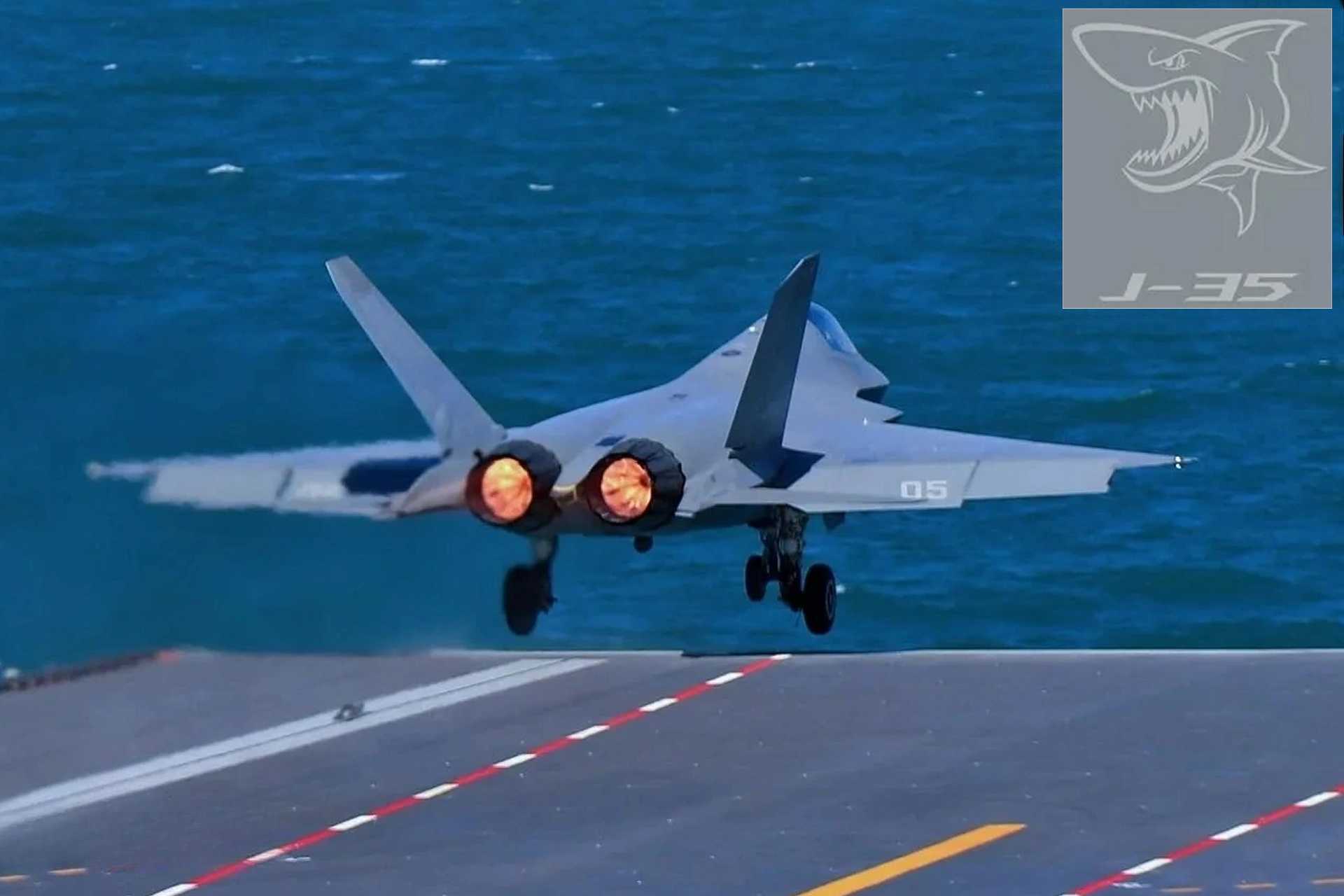
China officially nicknames its J-35 naval stealth fighter as Blue Shark ahead of mass deployment
China confirms Blue Shark as the name of its J-35 carrier stealth fighter as testing production and carrier integration continue
 www.armyrecognition.com
Beijingwalker
VIP Member
China unveils progress on first nuclear-powered carrier
April 24 2026China has hinted at and advanced construction of its first nuclear-powered aircraft carrier, the Type 004, with the hull reportedly complete and overall progress at about 25 percent. The vessel is expected to surpass the U.S. Ford-class in size and air wing capacity, enabling longer, more sustained operations. Its debut comes amid heightened tensions over Taiwan and Chinese island-building efforts, signaling a strategic shift in Beijing’s maritime ambitions.
China completes hull of first nuclear-powered aircraft carrier
Open-source intelligence and satellite imagery indicate that China’s Type 004 nuclear-powered supercarrier is under construction at Dalian, with the hull reportedly complete and progress at roughly 25 percent as of early 2026. The ship is projected to displace 110,000 to 120,000 tons, exceeding the U.S. Ford-class, and could carry up to 105 aircraft, including J-35 stealth fighters, J-15T multirole jets, and KJ-600 AEW&C platforms. Sea trials are anticipated between mid-2028 and early 2029, with entry into service around 2030, a decisive step toward sustained global operations.A strategic shift in naval power
The move to nuclear propulsion eliminates the refueling constraints of conventional carriers, allowing extended deployments and freeing space for more fuel and munitions for aircraft. This capability would bring China’s carrier operations closer to U.S. standards, enhancing sortie generation and persistence in contested environments. Analysts see the development as part of Beijing’s goal to field a world-class navy by 2049, with projections of up to nine carriers by 2035.Symbolic signals and military messaging
A PLA Navy anniversary video featured a fictional recruit named 'He Jian,' a homophone for 'nuclear vessel,' and the number 19, hinting at a fourth carrier’s hull number. The film also included a scene with a character 'Xiao Wan,' interpreted as a metaphor for Taiwan, alongside imagery of drills in the Pacific. These symbolic cues coincided with an official call to strengthen protection of over 11,000 claimed islands, reinforcing Beijing’s territorial and maritime ambitions.What comes next for the Type 004
If completed as envisioned, the Type 004 could surpass the Ford-class in air wing size and endurance, directly challenging U.S. maritime dominance in the Indo-Pacific. Two plausible future scenarios emerge: one in which China accelerates carrier production and integrates advanced systems for global power projection, and another where technical, economic, or geopolitical pressures slow progress, delaying operational readiness. In either case, the carrier’s development will be closely watched as a barometer of China’s naval trajectory and strategic intent.HH-9A
Registered Member

Why bother this unnoticeable radome size difference? J35’s GaN based AESA radar is one generation ahead of APG81 GaAs based Aesa featured in F35IMO it is not larger.
Aziqbal
Elite Member
004 will be 120,000 tons ?
what a absolute monster!
I wonder how many parking spots the will have on deck
Nimitz can manage 35-40 with 50 tightly packed for photo opps
Ford could do around 55+
004 should be 60 fighter jets on top deck alone ?
but in reality will be using maybe less than 40 for combat operations
J15T is a very large aircraft
004 should use J35 + J50
what a absolute monster!
I wonder how many parking spots the will have on deck
Nimitz can manage 35-40 with 50 tightly packed for photo opps
Ford could do around 55+
004 should be 60 fighter jets on top deck alone ?
but in reality will be using maybe less than 40 for combat operations
J15T is a very large aircraft
004 should use J35 + J50
RealNapster
Elite Member
What comes next for the Type 004
If completed as envisioned, the Type 004 could surpass the Ford-class in air wing size and endurance, directly challenging U.S. maritime dominance in the Indo-Pacific. Two plausible future scenarios emerge: one in which China accelerates carrier production and integrates advanced systems for global power projection, and another where technical, economic, or geopolitical pressures slow progress, delaying operational readiness. In either case, the carrier’s development will be closely watched as a barometer of China’s naval trajectory and strategic intent.
I believe (in my opinion) that chima will not start building another aircraft carrier till it completes and tests Type 004. It will learn from its mistakes, bring improvements upon this design and then directly go for 2 simultaneous type 005 (or call it Type 004A). Basically the same strategy it's being using in aircraft development and Navy ships, where Type 052A is completely different than Type 052D in capabilities.
Users who are viewing this thread
Total: 2 (members: 0, guests: 2)
Pakistan Defence Latest


Country Watch Latest


Latest Posts
-

-
FlyDubai Incident: Pilot was stabbed on flight to Israel - diverted to Saudi Arabia (26 Viewers)
- Latest: Mujahid
-
Makkah Defence Alliance: Turkey, Saudi Arabia, and Pakistan, news & updates (33 Viewers)
- Latest: Shags202
-

-