Covid-19 News and Discussions

Status
Not open for further replies.

Is COVID endemic yet? Yep, says the CDC. Here's what that means​

August 9, 20241:57 PM ET
Rob Stein, photographed for NPR, 22 January 2020, in Washington DC.
Rob Stein
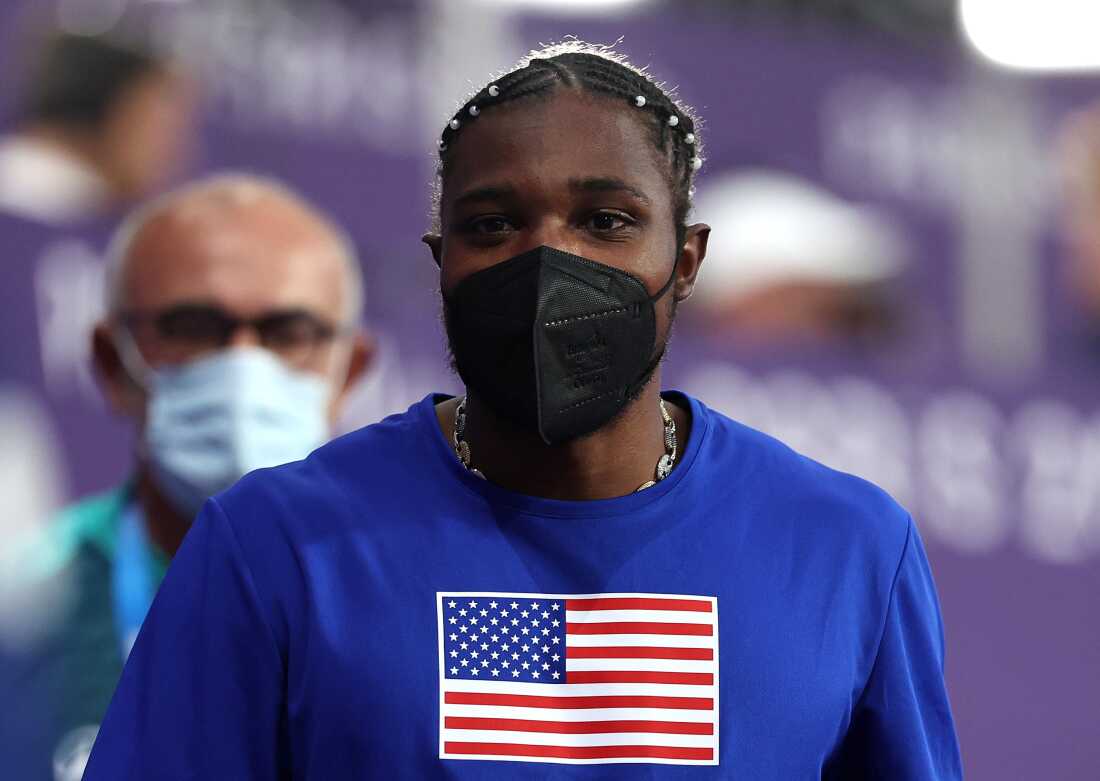
Olympic sprinter Noah Lyles wears a black KN95 mask and a blue t-shirt with an American flag on it.

Olympic sprinter Noah Lyles is the latest famous American to get COVID in this summer's surge. Lyles won a bronze medal in the 200-meter race despite an active COVID infection. Masks continue to be a good idea in risky situations.
Hannah Peters/Getty Images
Four years after SARS-CoV2 sparked a devastating global pandemic, U.S. health officials now consider COVID-19 an endemic disease.

"At this point, COVID-19 can be described as endemic throughout the world," says Aron Hall, the deputy director for science at the CDC's coronavirus and other respiratory viruses division, told NPR in an interview.

That means, essentially, that COVID is here to stay in predictable ways.

The classification doesn't change any official recommendations or guidelines for how people should respond to the virus. But the categorization does acknowledge that the SARS-CoV2 virus that causes COVID will continue to circulate and cause illness indefinitely, underscoring the importance of people getting vaccinated and taking other steps to reduce their risk for the foreseeable future.

"It is still a very significant problem, but one that can now be managed against the backdrop of many public health threats and not as sort of a singular pandemic threat,” Hall says. “And so how we approach COVID-19 is very similar to how we approach other endemic diseases."

Ever since the coronavirus exploded around the globe, officials have been referring to COVID as a “pandemic,” which occurs when a dangerous new disease is spreading widely in different countries.

The definition of “endemic” is fuzzier, but generally refers to a disease that’s become entrenched in places, like malaria is in many parts of Central and South America and sub-Saharan Africa, forcing people to learn how to live with it.

And even though COVID is still spreading widely, daily life has returned to normal for most people, even during this summer's wave of infections. On Wednesday, Noah Lyles competed in his Olympic race despite a symptomatic COVID infection and won a bronze medal. President Biden worked from home during his recent COVID infection.

COVID seems to be becoming a normal part of life. So NPR reached out to the CDC and other experts to find out if they think the time had come to start referring to COVID as endemic.

“Yeah, I think in the way that most people think about the notion of endemic — something that’s just around that we have to manage on an ongoing basis -- yeah, absolutely, COVID is endemic in that way,” says Dr. Ashish Jha. Jha is the dean of the Brown University School of Public Health, who served as the White House COVID-19 response coordinator for President Biden.

But not everyone agrees. Some epidemiologists say COVID may be on the way to becoming endemic, but the virus is still too unpredictable to reach that conclusion yet. This summer’s surge, for example, started surprisingly early and is turning out to be significantly bigger than expected.

The latest data from the CDC shows high or very high levels of the virus in wastewater in almost every state.

“There’s still a lot of unpredictability with this virus,” says Katelyn Jetelina, an epidemiologist who writes the popular newsletter: Your Local Epidemiologist. “And a lot of scientists including myself think it’s going to take at least a decade for SARS-CoV2 to really find this really predictable pattern. I hope that over time that it will fade into the background. But we’re just not there yet.”

Hall and Jha agree that COVID remains somewhat unpredictable, but argue it’s become predictable enough to be considered endemic.

“The best way to describe COVID right now is as endemic but with these periodic epidemics,” Hall says. “And those epidemics can vary in terms of their timing and magnitude. And that’s exactly why ongoing vigilance and surveillance is critical.”

And even if COVID is endemic, that doesn’t mean it’s no longer a problem.

“Endemic doesn’t necessarily mean good,” William Hanage, an epidemiologist at the Harvard T.H. Chan School of Public Health. “Tuberculosis is endemic in some parts of the world. And malaria is endemic in some parts of the world. And neither of those are good things.”

COVID is still killing hundreds of people every week, primarily older people and those with other health problems. According to a new CDC report, COVID’s no longer the third-leading cause of death, but the disease still ranks as the 10th top cause of death. COVID is projected to kill close to 50,000 people every year, according to the new report.

“I think we have to be very careful in just writing this off and saying, ‘Well, it’s just a mild infection.' It’s not,” says Michael Osterholm, who runs the Center for Infectious Disease Research and Policy at the University of Minnesota. “It is particularly a significant risk for those who are older and those who have underlying conditions. The good news is for most younger, otherwise healthier people this will be like having a flu-like infection.”

But even if someone doesn’t get deathly ill, COVID can still make people pretty miserable, knock them out of work or school. And then there’s long COVID.

“I certainly hope that this is not our new normal for COVID,” says Samuel Scarpino, who studies infectious diseases at Northeastern University in Boston. “I had it a few weeks ago, and just about everybody that I know has had it. It would be a real bummer if we’re in this situation where we’ve got COVID [in summer], and then we get into the fall with RSV, and then we have influenza and then it’s basically year-round respiratory infection risk.”

So whether COVID can officially be considered endemic, people are still going to need to think about protecting themselves by getting vaccinated once or twice a year and considering masking up in risky situations and around high-risk people.

Better treatments and new vaccines that could prevent the spread of the virus would also help, as would better ventilation, many infectious disease experts say.

“We still need to do more I think to get this virus under control,” Jha says. “This is a virus that we have to deal with. We can’t just ignore it. We can do better and we should do better.”

It remains critical to continue monitoring the spread of the virus and its evolution, especially to try to spot the emergence of any new, more dangerous variants, Jha and other experts say.

“We’re going to have to continue to live with COVID,” says Caitlin Rivers, an epidemiologist at the Johns Hopkins Center for Health Security. “It’s one more thing people have to deal with. It’s another reason your kids might miss school or you might miss work or another thing to think about when planning gatherings. We’re stuck with it.”
 
Last edited:

COVID hits Olympic athletes in Paris​


Noah Lyles Faces Heat After Running With Covid | First Sports With Rupha Ramani​


Multiple states see COVID summer surge​


How Nigerian Govt Handled Covid 19 Pandemic -Chikwe & Vivianne Ihekwazu +More | Hardcopy​


Bay Area faces COVID vaccine shortage amid summer surge in virus​


Spike in COVID-19 cases​


Nasal Spray That Kills COVID, Influenza and Numerous Other Infections | MOONSHOTS​


In-patient cases of COVID-19 in S. Korea have risen 6-fold in a month​


COVID concerns rise after Lollapalooza​


Port Arthur public health director weighs in on rise of summer COVID cases​


Friday's Pandemic Update: US Covid Wastewater Has Reached Very High​


Weekly case numbers from around Australia: 5,637 new cases (🔻1%)​

Australia: Case Update

Reposted due to incomplete case data from CovidLive yesterday.

  • NSW 2,446 new cases (🔺3%)
  • VIC 790 new cases (🔻2%)
  • QLD 1,859 new cases (🔺3%)
  • WA 275 new cases
  • SA 120 new cases (🔻57%)
  • TAS 47 new cases (🔺18%)
  • ACT 50 new cases (🔻22%)
  • NT 50 new cases (🔻11%)
These numbers suggest a national estimate of 110K to 170K new cases this week or 0.4 to 0.7% of the population (1 in 184 people).

This gives a 50% chance that at least 1 person in a group of 128 being infected with covid this week.

Note, the above figures contain an adjustment for a WA data dump of ~8,300 additional cases that were added today. The unadjusted the figures are:

Weekly case numbers from around Australia: 13,877 new cases (🔺144%)

  • WA 8,515 new cases
r/CoronavirusDownunder - Weekly case numbers from around Australia: 5,637 new cases (🔻1%)
Flu tracker tracks cold and flu symptoms (fever plus cough) and is another useful tool for tracking the level of respiratory viruses in the community. This increased slightly to 2% (🔺0.1%) for the week to Sunday and suggests 520K infections (1 in 50 people). This is on par with the seasonal average.

  • NSW: 1.5% (🔻0.2%)
  • VIC: 1.9% (🔻0.1%)
  • QLD: 3.1% (🔺0.6%)
  • WA: 2.4% (🔺0.8%)
  • SA: 2.4% (🔺0.1%)
  • TAS: 1.5% (🔺0.7%)
  • ACT: 1.5% (🔻0.2%)
  • NT: 3.1% (🔺1.3%)
Based on the testing data provided, this suggests around 133K new symptomatic covid cases this week (0.5% or 1 in 195 people).

This gives a 50% chance that at least 1 person in a group of 135 being infected with covid and 1 person in a group of 34 being sick with something (covid, flu, etc) this week.
 

Covid variant JN.1 may have become dominant due to just one mutation​

The covid-19 variant JN.1 may have been able to evade antibodies and spread globally due to one critical mutation to its spike protein

By Carissa Wong

9 August 2024

SEI_216521398.jpg


JN.1 spread widely despite many people being vaccinated and having previous covid-19 infections

One mutation may have been crucial to the covid-19 variant JN.1 spreading rapidly around the world last year, demonstrating how quickly the virus can adapt.

“A single mutation in JN.1 was key for it to evade the antibody response, and that’s why it was able to spread globally,” says Emanuele Andreano at the Toscana Life Sciences Foundation in Italy.

JN.1, a subvariant of the omicron variant, was first identified in Luxembourg in August 2023. At the end of January, it accounted for 88 per cent, 85 per cent and 77 per cent of the recorded infections in the US, UK and Australia, respectively. Its predecessor, BA.2.86, never accounted for more than 5 per cent of known global infections.

With JN.1 and its descendants remaining the most reported covid-19 variants globally, Andreano and his colleagues wanted to investigate how it spread so widely. Genetic sequencing previously pointed to an additional mutation compared with BA.2.86 in its spike protein, which the virus uses to infect host cells.

To learn more, Andreano and his colleagues analysed 899 types of antibodies from blood samples previously collected from 14 people, all of whom had received two or three doses of an mRNA covid-19 vaccine and had confirmed infections with prior variants.

The researchers added each of these antibodies, along with BA.2.86 SARS-CoV-2 viruses, to a dish containing monkey cells. This revealed 66 of the 899 antibodies were able to prevent BA.2.86 from infecting the cells. When they repeated the experiment with JN.1, just 23 of the antibodies prevented infection.

Next, the researchers used a computer simulation to test how JN.1’s spike protein mutation might have helped it evade neutralising antibodies, which stop viruses from entering cells. They found the mutation caused a longer amino acid called leucine to be swapped for a shorter one called serine, which then either weakened or entirely blocked the antibodies from interacting with the spike protein.

The antibodies that prevented JN.1 infections in the monkey cells came from five of the 14 blood sample donors. These individuals had “super hybrid” immunity, says Andreano, brought about from receiving three mRNA vaccine doses, being infected once by the original SARS-CoV-2 variant identified in Wuhan, China and infected again by an omicron variant. Those antibodies may bind to other parts of the spike protein, away from the site of the mutation, thereby preventing a JN.1 infection, says Andreano.

The study shows how a single mutation may have been key to JN.1 evading neutralising antibodies. However, it still doesn’t cause more severe illness than prior variants, says Andreano.

That is probably because there are many other prongs of the immune system, such as T-cells, that work to stop the virus from causing severe illness even if they can’t prevent infection, says Jonathan Ball at the Liverpool School of Tropical Medicine in the UK. “Collectively, people’s immunity is holding strong,” he says.

The antibodies the researchers collected are similar to those previously found in populations worldwide. But the study is still small and should be replicated in larger groups, says Dalan Bailey at The Pirbright Institute in the UK.
 

Alberta shuts down long-COVID program​

AHS says the program was always intended to be temporary and had run its course

Author of the article:
Matthew Black
Published Aug 09, 2024 • Last updated 20 hours ago • 2 minute read
15 Comments

ahs
Alberta Health Services has closed its long-COVID clinics. Postmedia file

Article content​

Alberta Health Services (AHS) is closing down its long-COVID outpatient program that had been operating since 2021.


In a letter to patients dated Aug. 8, AHS says the program has concluded.


“Your health and well-being remain a priority, and we are committed to ensuring you receive support during the transition,” it reads.


“We understand that this change might be challenging for some and thank you for your understanding and co-operation during this transition period.”

Advertisement 2

Story continues below


It goes on to suggest patients contact their primary care provider to determine if they require additional resources.


There were as many as three long-COVID clinics in Edmonton, including a post-COVID followup study by the University of Alberta and AHS.


There were also two facilities in Calgary and one in Sherwood Park.


In a statement, AHS said the program has run its course and was only intended to be temporary.


“All patients of these clinics are being directly notified and will also receive information on managing their health concerns through other providers,” it reads.


Long COVID, also know as post COVID-19 condition, is when the symptoms of COVID-19 persist for more than 12 weeks after the infection, according to Health Canada’s definition.


It notes long COVID can occur even in those people who weren’t formally tested and diagnosed with COVID-19, as well as those who had mild to moderate symptoms after contracting the virus.


Symptoms of the condition vary widely but the most common include fatigue, trouble sleeping, shortness of breath, memory loss, and difficulty concentrating, as well as mental symptoms including anxiety and depression.

Advertisement 3

Story continues below


Article content


Children are susceptible as well with fatigue, headaches, abdominal pain and difficulty focusing as among the most common symptoms.


Around 15 per cent of adults who had COVID-19 experienced, or continue to experience, symptoms of long COVID three or more months following their initial infection, according to a Health Canada study from October of 2022.


The same study showed that of those adults with long-COVID symptoms, 47 per cent had symptoms for one year or longer and three-quarters missed work or school due to the illness, with an average of 20 missed days.


The condition is relatively new and research remains ongoing but initial results from Health Canada show women, those who had severe COVID-19 illness, and those with underlying health conditions were most at risk.


There is no diagnostic test or cure for long COVID.


As of the most recent update to Aug. 3, there were 131 patients in hospital due to COVID-19, including four in intensive care units.


To date, 695 Albertans have died due to COVID-19 between the current season that runs between Aug. 27, 2023 and Aug. 24, 2024, according to the province’s data.
 
Status
Not open for further replies.

Users who are viewing this thread

Pakistan Defence Latest

Latest Posts

Back
Top