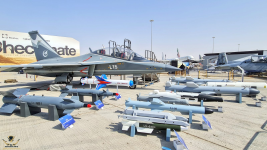
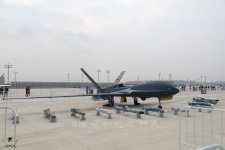
Developments in armament and military industry in the Kingdom of Morocco

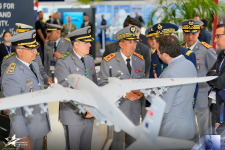
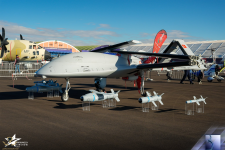
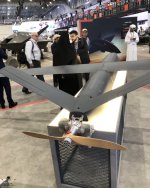
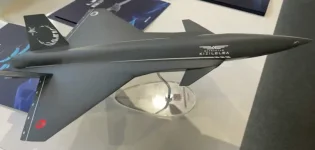
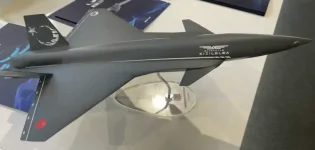
Is the deal done? Turkish “Baykar” displays the fifth generation Kizilelma stealth drone at the Marrakesh International Air Show 2024 with the logo of the Moroccan Air Forces
1730620133126.webp

“Kizilelma” is an advanced stealth drone designed to carry out multiple missions including attack and reconnaissance, making it a strong competitor in the advanced drone market.

The display of “Kizilelma” in Morocco comes as part of Baykar’s efforts to expand its presence in the markets of North Africa and the Middle East, in conjunction with Morocco’s interest in strengthening its military capabilities by importing modern and advanced technologies.

The aircraft's display at the Marrakesh Expo indicates interest, or at least a desire, to explore this advanced technology. Morocco has previously shown interest in increasing its defense capabilities and modernizing its armed forces, and is likely to be interested in learning about the capabilities of the new stealth aircraft.

Morocco shows interest in the Turkish “Kizilelma” stealth jet:

A Moroccan delegation inspected the Turkish stealth drone of the fifth generation Kizilelma model at the ADEX 2024 exhibition, which was held in the country of Adrebajan from September 24 to 26, 2024.

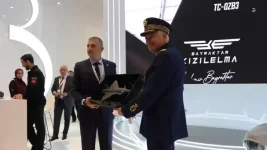
General Fouad Moumen, head of the fourth office for concluding military deals, met with Khaluk Bayrakdar, CEO of Baykar Defense and Aviation Company.

This meeting may be of great importance in enhancing military cooperation between Morocco and Turkey, especially in the field of drones and advanced defense technology.

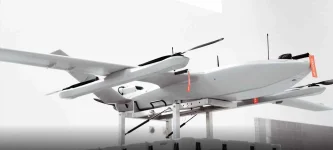
The two parties exchanged memorabilia, in which General Fouad Moumen received a model of the modern Turkish stealth aircraft “Bayraktar Kizilelma,” which indicates interest in the advanced drone, which is characterized by a jet engine, unlike other Turkish drones, such as the “Bayraktar TB2” aircraft owned by the Moroccan army.
1730620210122.webp

Airplane features:

  • Maneuverability: It is characterized by its ability to perform lightning maneuvers and carry out air-to-air combat missions like conventional fighters.
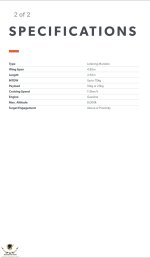
  • Speed: It can fly at speeds of up to 900 km/h for 5 hours straight, at an altitude of 12 km.
  • Stealth: It has the ability to hide from radars.
  • Payload: It can take off with a payload weighing 1.5 tons of ammunition inside its body and on its wings.

Some details about its armament:

  1. Air-to-air missiles: The aircraft can carry air-to-air guided missiles for air combat missions.
  2. Air-to-surface missiles: These include laser-guided or satellite-guided missiles to strike ground targets with high accuracy.
  3. Guided bombs: The plane can carry precisely guided bombs to hit strategic targets.
  4. Electronic warfare systems: equipped with systems to jam enemy radars and communications.

These capabilities make the Kizilelma a powerful and effective aircraft in modern military operations.
 

Attachments

  • 1730619784479.webp
    1730619784479.webp
    17 KB · Views: 0
Morocco surprises with remotely piloted submarines, which will make penetrating the Moroccan maritime borders almost impossible

To view this content we will need your consent to set third party cookies.
For more detailed information, see our cookies page.
 
How can the Moroccan Navy regain its glory and is South Korea the best option for localizing military industries?

To view this content we will need your consent to set third party cookies.
For more detailed information, see our cookies page.
 
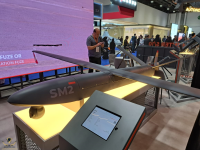
BAYKAR's pavilion at the Marrakesh International Air and Space Exhibition 2024 is large and includes an outdoor showroom and an indoor pavilion

Perhaps the first presentation of TB-3 outside Türkiye

1730788043541.png

1730788077087.png
 
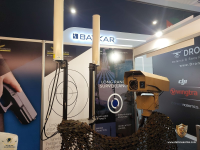
Moroccan company Falcoz is showcasing its home-made surveillance, tracking and monitoring devices at the Marrakesh Air Show 2024.

1730788197436.png

These devices are capable of detecting suspicious targets from long distances, by land, sea and air, and have various applications.
 
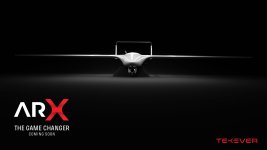
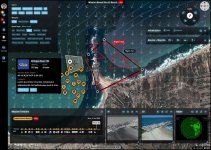
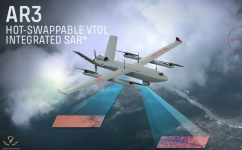
We are delighted to announce a new strategic partnership between TEKEVER and DRONEWAY, Morocco's leading drone provider. Unveiled on the opening day of the Marrakech Air Show, this collaboration marks a significant step in TEKEVER’s expansion into the African market.

Together, we plan on advancing Morocco’s drone industry with TEKEVER’s state-of-the-art systems—including the AR3, AR4, AR5, ARX, and ATLAS—aimed at making Morocco a key player in the global drone sector

1730788565599.webp

1730788712068.webp

1730788801080.jpeg

1730788959230.jpeg

1730789256449.jpeg

1730789305710.jpeg
 
The Moroccan Royal Gendarmerie becomes the first user of the AR3 drone produced by the Portuguese TEKEVER..Which will be manufactured locally in Morocco through the Moroccan company DRONWAY, along with several other models

https://shorturl.at/1imsQ


1732772100555.png
 
Lockheed Martin strengthens its strategic partnership with Morocco and explores new investment opportunities

1733998028028.webp

A high-level delegation from Lockheed Martin, the American military giant, visited Morocco. The visit aimed to strengthen existing partnerships and explore new horizons for cooperation in the defense and industrial field.

A company statement confirmed that the delegation, which included senior executives, made an inspection tour of Moroccan industrial and military facilities, expressing its admiration for the progress achieved in the defense industries sector in the Kingdom.

Focus on industrial cooperation

The visit highlighted Lockheed Martin's interest in enhancing industrial cooperation with Morocco. The delegation praised Eaton-Soriot Tangier, a long-standing Moroccan partner, stressing the importance of this cooperation in supporting Lockheed Martin's global supply chain.

New investments and job opportunities


Lockheed Martin expressed its intention to increase its investments in Morocco, stressing that these investments will contribute to creating new job opportunities and strengthening the national economy. The company also affirmed its commitment to supporting Morocco's defense and security priorities.

1733998104054.jpeg

A long history of partnership

The partnership between Morocco and Lockheed Martin dates back more than half a century, with the company supplying the Royal Moroccan Air Force with the latest military systems, including the F-16 and C-130H aircraft.

A joint project for aircraft maintenance and repair

Within the framework of strengthening this partnership, the two companies established a joint project for the maintenance, repair and overhaul of Moroccan aircraft, which contributes to reducing costs and raising the efficiency of the Moroccan air fleet.

1733998184912.jpeg

The HEMARS system is in the spotlight

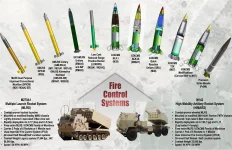
The statement noted that Morocco is the first country in North Africa to acquire the HiMars missile launcher system, which greatly enhances its military capabilities.

1733998421146.webp
 
A Moroccan-Indian strategic partnership for technology transfer in defense industries
1734001991297.webp

The Indo-Morocco Defense Industry Symposium was announced, which comes in cooperation between the Indian Ministry of Defense and the Moroccan Ministry of Defense, and in partnership with the Society of Indian Defense Manufacturers (SIDM). This prestigious event, led by the Indian Department of Defense Production (DDP), aims to highlight Moroccan defense requirements and promote strategic industrial partnerships. The symposium is scheduled to be held on December 9-10 at the Royal Armed Forces headquarters in Rabat, Morocco.

The Indian delegation will be led by Amit Satija, Joint Secretary, Ministry of Defense Production, Ministry of Defence, India.

The association invited Indian defense industry companies interested in exploring joint production and cooperation opportunities in Morocco to attend this distinguished event, which represents a unique opportunity to strengthen industrial and defense relations.

Main areas of cooperation

The symposium will focus on several vital defense areas, including:

Ordnance
Modernization of armored vehicles
Logistics vehicles
Protective shields
Night vision devices
Drones
Other strategic defensive assets

This initiative comes in light of Morocco's increasing interest in modernizing its defense capabilities, including the purchase and development of armored personnel carriers (APCs).

Symposium objectives

The symposium aims to:

  • To showcase the advanced technological capabilities of Indian defense industries
  • Strengthening joint production partnerships between the two parties.
  • Deepening bilateral cooperation in the defense and industrial fields.

Moroccan presence

The event will include high-level delegations from the Moroccan side, including representatives of:

The Royal Armed Forces (with its three branches).
Ministry of Defense.
Ministry of Investment.
Ministry of Foreign Affairs.
military police.
Ministry of Industry.

The most prominent weapons manufactured locally by India

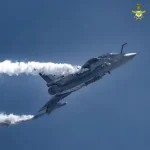
India has a well-developed domestic defense industry that includes the manufacturing of a wide range of weapons and military equipment. India produces tanks such as the “Arjun”, which is an indigenously developed main battle tank, in addition to advanced artillery systems such as the “Dahnoush” guns. It also manufactures combat aircraft such as the multi-role Tejas and training aircraft such as the HTT-40.

In the field of missiles, India produces ballistic missiles such as “Agni” and cruise missiles such as “BrahMos” developed in cooperation with Russia. It also develops air defense systems such as “Akash” and drones such as “Rostom”.

India also manufactures light weapons including assault rifles such as the AQB and sniper rifles. In addition to naval equipment such as the local “Vikrant” aircraft carriers and the “Arihant” class attack submarines.
 
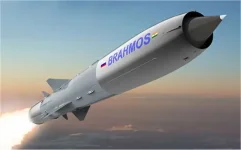
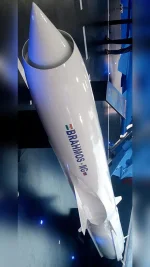
India offers advanced BrahMos cruise missiles to Morocco
1734234070117.webp


During the recent visit of a delegation from the Indian Ministry of Defense to Morocco, accompanied by a delegation from the Indian Defense Manufacturers Association, a variety of Indian weapons were displayed on the Moroccan side. The offers were not limited to purchase deals only, but also included proposals for joint industrial cooperation, in a clear indication of India's desire to strengthen a long-term strategic partnership with Morocco.

India has shown complete openness in offering its military industry to Morocco, which makes this step a strategic choice that reflects the mutual trust between the two countries. Among the prominent weapons displayed was the BrahMos supersonic cruise missile, known for its advanced attack capabilities.

To view this content we will need your consent to set third party cookies.
For more detailed information, see our cookies page.


1734234590187.webp

The BrahMos missile, jointly designed by India and Russia, is an anti-ship cruise missile that has a speed exceeding three times the speed of sound, about 3,000 km/h, giving the target very little time to maneuver or intercept the attack. The missile also has high capabilities in resisting jamming and executing precise maneuvers to avoid hostile air defenses, making it an effective and dangerous weapon against naval vessels.

The BrahMos missile is used on multiple platforms, including:

  • Mobile land platforms for coastal defense.
  • Warships such as frigates and destroyers.
  • Modern submarines. The South Korean submarine KSS-III that Morocco is interested in can launch the BrahMos missile.
  • Fighter jets thanks to the miniature version of the missile.

In the Moroccan context, with the absence of platforms currently compatible with launching the missile from ships or aircraft, Morocco will likely focus on the land-based version of coastal defense, which will be able to secure the country's territorial and economic waters.

Each BrahMos system consists of four trucks, each carrying three missiles with a range of up to 290 kilometers and a speed of 3,000 km/hour, which means that one system includes 12 missiles ready to be launched.

In terms of cost, BrahMos is considered affordable. For example, the Philippines acquired three systems at a total cost of $375 million, raising the possibility that this deal will be an attractive option for Morocco to enhance its defense capabilities.

To view this content we will need your consent to set third party cookies.
For more detailed information, see our cookies page.
 
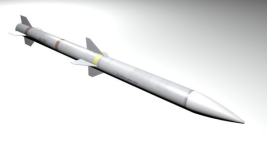
Morocco acquires Aim-120c8 air to air missiles

1734955344082.jpeg

Notably, the launch range of the AIM-120C-8 has increased by approximately 50% over the AIM-120C-7, reaching up to 180 km

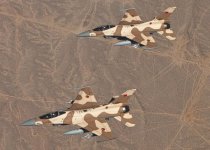
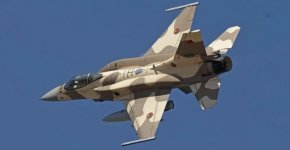
*The Moroccan F-16 bloc -70 has become a monster with AESA radar and AMRAAM C8 missiles
 

US to sell AIM-120C-8 missiles and GBU-39B guided bombs to Morocco​


1735117217097.jpeg

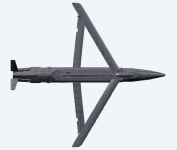
With the goal of strengthening a key partner in North Africa, the US government has authorized the possible sale of new AIM-120C-8 AMRAAM air-to-air missiles to equip the Moroccan Air Force’s F-16 Block 72 fighters and GBU-39B Small Diameter Bombs. The prime contractor will be RTX Corporation located in Tucson, AZ.

1735117808382.png

The Kingdom of Morocco has requested to buy up to 30 AIM-120C-8 Advanced Medium Range Air-to-Air Missiles (AMRAAM), one AIM-120C-8 AMRAAM guidance section and 500 GBU-39B Small Diameter Bombs I (SDBI); and two (2) GBU-39 (T-1)/B inert practice bombs with fuse.

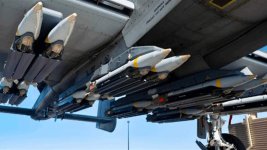
The GBU-39/B Small Diameter Bomb (SDB) that was also request by Morocco is a 110 kilo (250 lb) precision-guided glide bomb that is intended to allow aircraft to carry a greater number of smaller, more accurate bombs. Using the BRU-61/A rack they can be carried in sets of four. The SDB I has a circular error probable (CEP) precision of 1 meter (3ft.).

1735117808628.png

Included in the Air-to-Air Missile package are AMRAAM telemetry kits, control section spares, and containers; Common Munitions Built-in-Test Reprogramming Equipment (CMBRE); ADU-891 Computer Test Set Adapter Groups; munitions support and support equipment; classified software delivery and support; spare parts, consumables, accessories, and repair and return support; transportation support; classified publications and technical documentation; studies and surveys; U.S. Government and contractor engineering, technical, and logistics support services; and other related elements of logistics and program support. The estimated total cost is $88.37 million.

In the Small Diameter bomb package the following will be included: GBU-39 tactical training rounds; containers, weapons system support, and support and test equipment; spare parts, consumables and accessories, and repair and return support; publications and technical data; personnel training and training equipment; warranties; transportation support; site surveys; U.S. Government and contractor engineering, logistics, and technical support services; and other related elements of logistics and program support. The estimated total cost of that package is $86 million.

Faced with ongoing tensions with neighboring Algeria and the challenges of an aging combat aircraft fleet, Morocco initiated negotiations with the United States in the late 1990s and early 2000s to acquire modern fighter jets. After evaluating several options, including the Dassault Rafale, Morocco ultimately selected the F-16 Fighting Falcon.

The proposed sale will improve the Kingdom of Morocco’s capability to meet current and future threats by ensuring it has modern, capable air-to-air munitions to meet its mission in securing its borders and territorial waters, countering terrorism and illicit trafficking, and using its newly acquired F-16 Block 72 fleet.

In 2008, Morocco formalized its status as an F-16 operator through a $2.4 billion deal for 24 F-16C/D Block 52+ aircraft. The first jets were delivered in August 2011, and the entire fleet was in place by August 2012.

By the end of the 2010s, Morocco sought to further enhance its F-16 capabilities. The government approved plans to purchase 25 advanced F-16 Block 72 Viper jets and to upgrade its existing fleet of 23 Block 52+ aircraft to the Block 72 standard (one aircraft had been lost during operations in Yemen in 2015). In March 2019, the U.S. Department of State approved Morocco’s requests, greenlighting the $3.787 billion purchase of the new Viper jets and a $985.2 million upgrade program for the existing fleet.

The first F-16 Block 72s are expected to be delivered by 2025, while the modernization of the block 52+ fleet is proceeding simultaneously.

As of today, the Royal Moroccan Air Force (RMAF) has 23 F-16C/D Block 50/52 aircraft which it received between 2011 and 2012, having lost one over Yemen during combat operations

Meanwhile, in late 2019, the Moroccan government has earmarked nearly a billion dollars for the sale of various ammunition and weapons from the United States. The requests included F-16’s armament, TOW missiles, Paveway II, JDAM.

Furthermore, to enhance the firepower of its F-16s, Morocco received BRU-57/A weapon release units to double the amount of smart bombs their F-16 fighter jets can carry.

1735117939657.jpeg

L3Harris Technologies has announced a $29 million contract to provide smart weapon release systems to air forces in the Middle East and North Africa.

The Bomb Release Unit BRU-57/A will allow F-16 fighter aircraft in the air forces of Bahrain, Jordan and Morocco to carry two smart weapons on each hardpoint instead of one, doubling munitions capacity. The unit is compatible with 500 and 1,000lb guided weapons.

To increase the capabilities of its Lockheed Martin F-16 Fighting Falcon combat aircraft in naval warfare, the Royal Moroccan Air Forces is acquiring Boeing AGM-84L Harpoon Block 2 anti-shipping missiles from the United States in a deal worth $62 million.

Morocco intends to use the missiles on its F-16 multirole fighter aircraft to enhance its capabilities in effective defense of critical sea-lanes,” according to the DSCA notice read.

Although, the Boeing AGM-84L Harpoon Block II missiles which Morocco requested to procure from the United States for its F-16s fighter jets will have reduced coastal targeting capabilities says the US.

1735117808408.jpeg
 
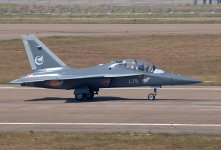
Exclusive: The Royal Air Forces are considering the Chinese L-15 aircraft to replace the Alphajet

To view this content we will need your consent to set third party cookies.
For more detailed information, see our cookies page.


The article indicates that the Royal Air Force is considering the acquisition of the L-15 Falcon jet training aircraft from the Chinese company Hongdu Aviation Industry Corporation (HAIC) to replace its aging fleet of Franco-German Alphajet aircraft. This choice was attributed to the superior performance of the aircraft as well as its connection to geopolitical interests.

1735121051019.jpeg

Information about the L-15 Falcon aircraft:

• Manufacturer: Hongdu Aviation Industry Corporation (HAIC) of China.

• Category: Advanced jet trainer aircraft.

• Design: Partly inspired by the Russian Yak-130 training aircraft.


Features:

• Equipped with dual motors.

• Can be used for advanced training and light combat missions.

• Equipped with modern electronic systems that simulate fourth and fifth generation aircraft.


Armament:

• It can carry air-to-air missiles and guided bombs.

• Suitable for air combat and ground support missions.

1735121091172.png

Performance:

• High speed and excellent maneuverability.

• Low operating cost compared to other training aircraft.

This aircraft is considered a strategic choice for forces seeking to modernize their training fleet, while maintaining operational flexibility and reasonable cost.

It is noteworthy that the United Arab Emirates previously received these aircraft in 2023

The emergence of this news can be linked to the visit that a Chinese delegation is currently making to Morocco
 
According to the Le Desk website, which previously published several deals for the Royal Armed Forces, the latter is interested in the Chinese Wing Loong 10 drone.

1735287038367.jpeg
 

Users who are viewing this thread

Pakistan Defence Latest

Back
Top