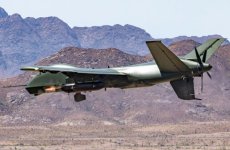
Drones Section

Spanish Tactical UAV SIRTAP

1711446778663.jpeg

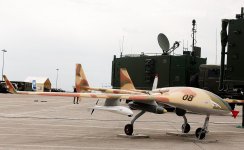
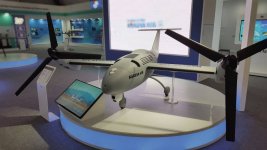
Developed as an advanced tactical UAS, the SIRTAP drone project has achieved unparalleled performance superiority, thanks to more than 10 years of development work.


The SIRTAP Tactical Drone is designed to operate under any weather conditions, thanks to its ice protection system and high temperature capacity system, it can operate between -40°C to +50°C. With more than 20 hours of endurance and flight altitudes of 21,000 feet, the tactical UAS is suitable for day and night and maritime intelligence, surveillance and reconnaissance (ISR) missions, providing rapid response to precise target inspection.

The wings and rotor of the SIRTAP can be easily detached to allow transportation by standard containers by road and by air in a transport aircraft such as the C295, which can carry two SIRTAPs in one flight.

SIRTAP drone offers a variety of versions to enhance the concept of diversity for its operations:

*Armed ISR version: convoy guarding, area surveillance, force protection
Marine surveillance


*Electronic warfare version: SIGINT, ELINT, COMINT

*Border Control Edition: Migration Flows and Border Security Monitoring

*Search and Rescue Edition: Location of missing persons in remote areas

*Illegal activity monitoring issue: anti-piracy, anti-drug trafficking, detection of illegal fisheries

*Fire fighting support.

According to the first technical information released by CIAC and Airbus, the drone has a weight of 750 kg MTOW (maximum take-off weight) and a payload of 120 kg.. It is 5.47 m long and can fly at a maximum speed of 200 km/h.
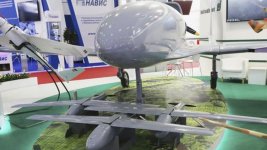
 
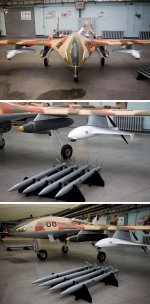
Yastreb drone

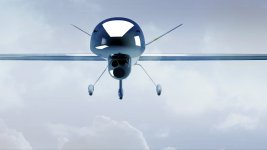
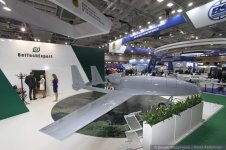
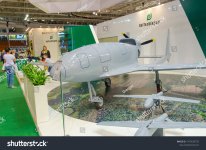
Belarus-made Yastreb Unmanned Aerial Vehicle
1711447456718.jpeg

The Yastreb is armed with two or three small kamikaze drone with a weight of 25 kg each, which are attached to the vehicle’s external hardpoints. The kamikaze drones feature a 10 kg high-explosive fragmentation or high-explosive anti-tank warhead and an automated guidance system. They have a range of up to 50 km, being able to hit a target with a circular error probable of no more than 1-2 m..

Its gyro-stabilised sensor suite comprises a daylight camera, thermal imager, and laser rangefinder..

1711448478240.jpeg

Yastreb (Hawk) UAV has a maximum take-off weight [MTOW] of 700 kg..

The Yastreb adopts a twin-boom airframe that takes off and lands conventionally and can be supplied in three configurations – reconnaissance, combat, and target. It can carry a payload of up to 120 kg.

The air vehicle is powered by a Rotax-912S2/100 combustion engine, producing cruise and maximum speeds of 120 km/h and 220 km/h respectively. It has a stated endurance of six hours, although this can be extended to 10 hours with an external fuel tank.

1711448540918.jpeg
 
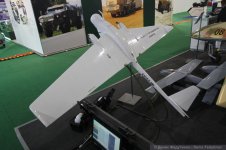
Belarus Burevestnik-MB

1711448704899.jpeg

This UAV features twin-boom design and has a range of flight of up to 290 km, a maximum take-off weight (MTOW) of 400 kg, and an endurance of up to 10 hours.

The Burevestnik-MB is powered by a piston engine, which produces a cruise speed of 120-150 km/h and a maximum speed of 220 km/h. The Burevestnik-MB can fly at a maximum altitude of 3,200 m and has a ceiling of 5,000 m. It can carry a payload of 60 kg.

The Burevestnik-MB is fitted with two loitering munitions, each of which is powered by a piston engine. The smaller munition carries a payload of 10 kg, including a guidance system and a warhead, and has a range of flight of 30-40 km and a maximum speed of 200 km/h. It can be replaced by S-8-family 80 mm unguided rockets.

1711449144443.jpeg


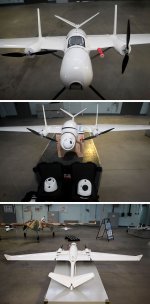
The Busel-MB is another new UAV

1711449449620.jpeg

The Busel-MB is powered by two electric engines, which produce a speed of 60-120 km/h and a range of 50 km. The Busel-MB flies at a height of up to 5,000 m. It is fitted with a combined GPS/GLONASS navigation system coupled to an autopilot. The UAV is launched by a catapult.

The Busel-MB has a MTOW (Maximum Take-Off Weight) of 10 kg and an endurance of up to two hours and is fitted with a TV/infrared camera.

The sytem can operate within a range of 20-70 km (depending on the installed payload). When targets are detected, they can be destroyed by the onboard drop-off or embedded munition set..

1711450965206.jpeg

These drones are shoulder-launched and are designed to land using a parachute. These drones can carry equipment for taking photos and filming videos, including in infrared spectrum
 
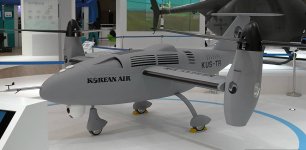
South Korean KUS-TR drone​

1711451366421.jpeg

is designed to perform both military and civilian tasks. Military applications will mainly consist of intelligence and target search..the drone will be able to perform an independent take-off and landing from the ship.

1711451389297.jpeg

The complex consists of two to four apparatuses, as the main load bearing optical-electronic stations of general intelligence, and a ground control station, which is capable of controlling several UAVs simultaneously. According to KAL-ASD, the characteristics of KUS-TR are similar to those of the TR-60 model, with the exception of a slight increase in length and width to 3,5 and 5 meters, respectively, a decrease in the maximum take-off weight to 200 kg (effective payload remained the same 30 kg) and increased duration flight xnumx hours.
 
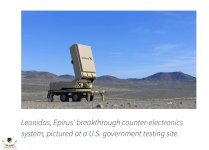
The US Army has awarded a $66.1 million contract for the Leonidas™ directed energy system

1711683405508.jpeg

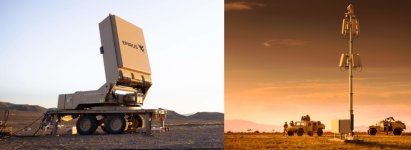
Leonidas was designed, tested and validated in unprecedented time frames for an air defense system, to keep pace with the strategic priorities of the Department of Defense's rapid prototyping efforts.

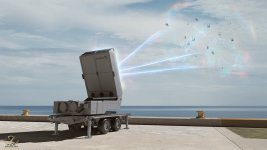
Leonidas' software weaponization capabilities enable continued maturation of the technology to achieve lethality against a wide range of drones and other threats.

Epirus, a high-growth technology company, today announced the award of a $66.1 million contract from the U.S. Army Rapid Capabilities and Critical Technologies Office (RCCTO) to support the High Power Indirect Microwave Program.

“Time and time again, we have seen that current air defense systems are neither equipped nor capable of dealing with the threat of autonomous drone swarms.” “This contract with RCCTO brings new counter-swarm capability to the drone battle through Leonidas’ cost-effective, modular and upgradable systems,” said Ken Bedingfield, CEO of Epirus. “As the threat environment continues to evolve, so will our capabilities, ensuring U.S. “The Army is equipped with effective countermeasures to cyber threats in the near term and over the horizon for decades to come.”

1711683690606.jpeg

The Leonidas Epirus Electronics Countermeasures System demonstrated lethality against a wide range of drones and electronic systems and achieved swarm defeats in several U.S. government-sponsored tests, outperforming six selected systems. The latest version of Leonidas was introduced by the company in April 2022.

1711683814707.jpeg
 
Last edited:

MQ-9 REAPER: The Gigantic US Attack Drone | Most Dangerous Military Drone on Earth​


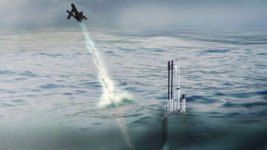
The US Navy is preparing to test an advanced unmanned aircraft system launched from submarines under the surface of the seas, with the aim of significantly expanding its reconnaissance and targeting capabilities, according to what was published by the Warrior Maven website.

1713243701632.jpeg

The Naval Undersea Warfare Center describes the Submarine Launched Unmanned Aerial System as a four-pound, 19-inch drone sensor launched from undersea in a canister.

1713244036931.jpeg

The US Navy will be testing a cutting edge-submarine launched drone system engineered to release from beneath the surface of the ocean to perform forward, wide-area reconnaissance and targeting.


https://warriormaven.com/sea/navy-t...ed-drones-to-enable-undersea-to-air-targeting
 
Northrop Grumman unveils a revolutionary prototype of the Manta Ray vehicle

1713244973162.jpeg

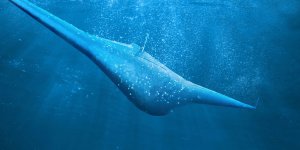
Northrop Grumman has completed the construction of its first full-scale Manta Ray uncrewed underwater vehicle, or UUV, prototype. The company is developing the drone under the Defense Advanced Research Projects Agency (DARPA) Manta Ray program, which seeks to demonstrate critical technologies for a new class of very long-endurance payload-capable UUVs.

This vehicle represents a new class of UUV vehicles, characterized by its huge size and ability to carry out long-range underwater missions with the ability to carry heavy payloads without the need for human logistical support.


The Manta Ray is a significant achievement resulting from a Defense Advanced Research Projects Agency (DARPA) program that aims to develop key technologies that will inform future UUV designs. These technologies include:

  1. Energy management technologies: to ensure the vehicle runs efficiently and effectively for a long time.
  2. Increased payload capacity: to enable the vehicle to transport more complex and diverse equipment.
  3. Low-energy propulsion: to reduce energy consumption and increase the vehicle's operating life.
 

NEW Type of Drone is GAME-CHANGING!​


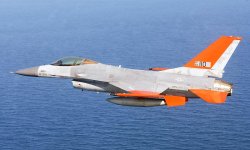
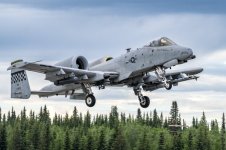
Replacing the A-10!?

1714217734210.jpeg


1714216502473.jpeg
 
Last edited:
Drone to intercept and destroy drones - Paladin.


Users who are viewing this thread

Pakistan Defence Latest

Back
Top