Federal Constitutional Court/ Supreme Court / High Courts of Pakistan, News

'Adjudicatory, not collaborative'

Khokhar further pointed out that the phrase "institutional collaboration" was incompatible with judicial independence. "The judiciary is an independent and a co-equal branch. Its constitutional role is adjudicatory, not collaborative. Courts exist not to collaborate with governments or other institutions but to constrain them and review their powers."

"Any form of collaboration with the executive or legislature, especially unrepresentative ones, risks undermining judicial independence. Collaboration converts guardians into partners," he cautioned.

He further argued that "our drift towards a praetorian judiciary evokes no notice from the CJP. A two-tiered judiciary also remains unnoticed. It appears that the CJP has an issue with noticing the existential threats to the institution he heads".

According to SC data, pendency of cases has been reduced over the past year. A total of 22,848 cases were instituted, 161,733 cases were fixed before various benches, and 27,228 were decided, reducing the total backlog from 60,410 to 55,951 cases.

Priority was accorded to critical categories such as death penalty, life imprisonment, family, tax, and service matters, yielding tangible results. As of November 2024, the SC had pending before it the oldest death sentence case from 2016, a life imprisonment case from 2015, a family case from 2019, a tax case from 2002, and a service case from 2014.

Currently, the SC is hearing death sentence cases from 2025, life imprisonment cases from 2023, family cases from 2025, tax cases from 2025, and service cases from 2024.

However, the court's statement did not mention that the number of judges increased from 17 in October last year to 24. The tenure of two ad hoc judges ended in late July. Nor did it provide any data regarding the performance of constitutional benches.

The press release stated that "to strengthen judicial governance, the Secretariat of the Supreme Judicial Council was established alongside the notification of its Secretariat Service Rules, 2025".

 
The press release stated that "to strengthen judicial governance, the Secretariat of the Supreme Judicial Council was established alongside the notification of its Secretariat Service Rules, 2025".

"While the Council had decided 71 complaints between 2021 and 2024, it disposed of 130 complaints in the past year alone — a testament to the judiciary's renewed commitment to efficiency, transparency, and institutional excellence."

"Similarly, the Secretariat of the Judicial Commission of Pakistan was established, and the Judicial Commission of Pakistan (Appointment of Judges) Rules, 2024 were notified. Given that the last appointments to the Lahore High Court were made in July 2021, the High Court of Sindh in April 2023, the Peshawar High Court in July 2022, the High Court of Balochistan in July 2022, and the Islamabad High Court in December 2021, the Judicial Commission held 31 meetings during the past year and recommended 53 judges for appointment — marking a significant revitalisation of the judicial appointments process."

The statement also noted that under the Access to Justice Development Fund (AJDF), record disbursements amounting to Rs1.64 billion — more than the total distributed in the past two decades — were made.

A federal grant of Rs2 billion was secured to support solarization, e-libraries, women-centric facilities, and water filtration plants across all districts by August 2026. Additionally, Rs125 million were allocated for capacity-building initiatives and Rs13.8 million were earmarked to extend free legal aid coverage to the SC and high courts.
 
'Undefined meanings'

Advocate Abdul Moiz Jaferii remarked that although, following former CJP Qazi Faez Isa's tenure, there was a general consensus that the apex court's trajectory could only move upward, the executive, teaming up with like-minded judges, has proven that assumption wrong.

"The last year has seen justice delivered selectively, through benches made by the government, comprised of judges appointed by the government, who have dutifully given decisions for the government. We are at a pass where the idea of access to justice and the rule of law have tenuous and undefined meanings. Ask the government, and it will tell you that things never have been better. Ask the people, and whatever they say doesn't really matter," he said.

"Because that's what this is really all about. As Akram Sheikh said to Justice Mazhar when asked what the case against the 26th amendment was really about, his answer summed up the performance of the executive and the judiciary over the past year. There was an election. A party alleged rigging. Every attempt to investigate and undo that rigging thereafter has seen the executive team up with the Supreme Court to thwart it."

Advocate Rida Hosain also criticised the CJP's self-assessment, saying, "The chief justice's self-congratulatory press release overlooks the reality that public confidence in the judiciary's credibility and legitimacy is at one of its lowest points".

"The chief justice speaks of transparency and judicial independence. Yet, under the new Code of Conduct, judges are now prohibited from publicly discussing administrative or judicial matters. This is not transparency – judges are being censored under the guise of maintaining institutional order.

In the face of threats to judicial independence, the message the Chief Justice has conveyed to his fellow judges is that speech will be controlled, and public engagement will be restricted," she said.

Rida further stated that "in the past year, the CJP consented to the transfer of judges to the Islamabad High Court facilitating the sidelining of independent judges".
 
the CJP failed to list the 26th Amendment petitions before a full court despite the committee's clear decision under the Practice and Procedure law.

"New methods for intimidation were created by issuing a general standing order requiring judges to disclose their address and contact details while on leave or vacation. Far from strengthening judicial independence, the chief justice's actions have gravely diminished the institution's independence."

Advocate Hafiz Ehsaan Ahmad noted that "during the past one year, the Supreme Court has taken several constructive steps to improve its functioning, including amendments in its rules, digital transformation, and enhanced focus on criminal and tax jurisdictions".

He said these were "positive developments that reflect a gradual movement toward modernisation and accessibility," but added that "much more still needs to be done to strengthen public confidence in the apex judiciary".

He emphasised that as the ultimate constitutional forum and custodian of fundamental rights. the court must ensure that every petition receives its first hearing within 15 days of institution as envisaged under the Supreme Court (Practice and Procedure) Act, 2023.

He said that "equal, patient, and fair hearing to both parties and the delivery of well-reasoned and timely judgments are vital to ensure justice and maintain the court's institutional credibility".

Hafiz Ehsaan also noted that the reversal of recently increased filing fees by the SC on the request of the Supreme Court Bar Association (SCBA) was "a welcome and just step". The earlier increase, he argued, had "imposed an excessive financial burden on litigants and risked restricting access to justice for ordinary citizens".

He stressed that bench composition should be guided by judicial specialisation, saying, "Cases relating to tax, criminal, and civil matters should be assigned to benches comprising judges with proven expertise in those areas, ensuring efficiency, technical soundness, and quality of judgments".
 

SHC hears case over Chingchi, motor-cab rickshaw ban in Karachi​


Karachi bans motor-cab rickshaws on 11 major roads to ease traffic congestion

Nasir Butt
October 25, 2025


tribune


The Sindh High Court is hearing a series of petitions challenging the ban on Chingchi rickshaws and motor-cab rickshaws on Karachi’s major thoroughfares, highlighting the ongoing tensions between traffic management and the livelihoods of informal transport operators.

The Sindh High Court (SHC) on Saturday heard a petition by Imran Zaidi challenging the ban on Chingchi and motor-cab rickshaws on Karachi’s major roads.

Earlier, Karachi Commissioner Syed Hasan Naqvi had issued a formal notification banning motor-cab rickshaws, including "One Plus Two and One Plus Four models", on 11 major city roads to ease traffic congestion.

The restrictions cover major arteries including Shahrah-e-Faisal, II Chundrigar Road, Shahrah-e-Quaideen, Sher Shah Suri Road, Shaheed-e-Millat Road, Abdullah Haroon Road, Stadium Road, Sir Shah Suleman Road, Rashid Minhas Road, and Mauripur Road.
 

NCSW hails Justice Ayesha Malik’s landmark marriage dissolution ruling, terms it a ‘progressive step’


Dawn.com | APP
October 30, 2025

1761825436071.png

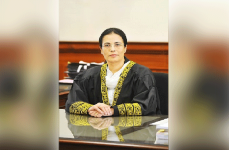
Justice Ayesha A. Malik. — Picture via SC website

The National Commission on the Status of Women (NCSW) on Thursday welcomed a marriage dissolution judgment authored by Supreme Court Justice Ayesha A. Malik, terming it a “progressive step“ to an “equitable and gender-sensitive” interpretation of family law, the Associated Press of Pakistan (APP) reported.

On October 25, in a 17-page ruling, Justice Malik set aside a Peshawar High Court (PHC) ruling over a divorce case, terming psychological abuse as cruelty, based on which a marriage can legally be dissolved, along with highlighting the “deeply patriarchal” approach of the court in such cases.

NCSW chairperson, Ume Laila Azhar, in a statement, called the verdict “a progressive step towards a more equitable and gender-sensitive interpretation of family law.“

According to APP, she noted that the “court’s acknowledgement of emotional and psychological cruelty as equally serious as physical abuse marks a significant milestone in safeguarding women’s dignity and well-being within marital relationships.”


“This ruling upholds the constitutional and Islamic principles of justice, equality, and human dignity by reaffirming that Khula is an independent and inalienable right of a woman — not contingent upon the husband’s consent,” Azhar was quoted as saying.

“It strengthens the jurisprudence of women’s right to self-determination and ensures that their mental and emotional health receives due consideration in family courts,“ she added.

The commission, in its statement, also commended the “SC emphasis on adopting gender-sensitive language and eliminating patriarchal reasoning from judicial discourse,” as per the report.

The judgment — a copy of which is available with Dawn.com — pertains to a case involving a woman seeking the dissolution of her marriage on the following grounds: “cruelty, non-payment of maintenance during the subsistence of marriage, and on (her spouse) taking an additional wife.”

Justice Malik’s judgment came in response to a 2024 PHC ruling, which had dismissed the petitioner’s application for dissolution of her marriage and granted her a Khula instead, without her consent.

In the judgment, Justice Malik noted, citing the Dissolution of Muslim Marriages Act, 1939 (DMMA), that dissolution of a marriage means that the “marriage can be brought to an end at the instance of the woman if she is able to successfully establish one or more of the statutory grounds provided within the DMMA.”

These include: husband’s disappearance, failure to provide maintenance, imprisonment, impotence, insanity, cruelty and the taking of an additional wife.

On the matter of cruelty, Justice Malik ruled that, as per the DMMA, “cruelty can range from physical assault, to mental or emotional abuse, to interference with property or religion, to inequitable treatment in the context of a second marriage.”

She went on to say: “As per our jurisprudence, courts have defined cruelty as being behaviour which is not limited to physical abuse but involves behaviour which can result in mental and emotional abuse.”

In a marriage, cruelty can also be any act that makes “it impossible for the wife to live with dignity and security within the marital home and relationship,” she said.

Referring to the case, Justice Malik highlighted that the family court “failed to examine the mental and emotional abuse and the impact of the cruelty on the petitioner,” and rather “fell into error by insisting upon documentary or medical proof.”

Further, on the matter of the petitioner enduring physical abuse at the hands of her husband, Justice Malik noted that, “The Family Court also proceeded on an incorrect premise by discarding the statements of the witnesses of the petitioner on the ground that she was never beaten in front of them.”

She continued: “It is important to note that abuse within the marital home is often a bedroom crime, which is committed in private and for which there are no witnesses.

This crime remains largely unreported due to socio-cultural barriers, economic dependency and the lack of information on the issue.“

“As a consequence, victims remain silent and endure for the sake of the family or the children,” she added.

Regarding the family court’s decision to grant the petitioner Khula without her consent, Justice Ayesha remarked that the reasoning “such reasoning conflates two separate legal remedies” and “undermines the purpose of the DMMA.”

On that note, she also highlighted that “the law demands that women’s choices, words, and rights be respected as a matter of principle, not presumption.”

Justice Malik called for “a gender lens” in deciding such matters, stating that “it helps the court understand the social realities in which women experience cruelty.”

“Seeing the case through a gender lens also means understanding the different ways women experience harm,” she added.
 
If you collect 40 theives from Ali Baba's story , and appoint them as Supreme court judge does not means you will get justice

Chor (Theif) will always work for corrupt

The biggest crime on Pakistani People is , telling them we have a System
There is no system

There is only Caste system in place which keeps power in hand of ones in Uniform

All these Judges , have no capacity to Judge they are there to give an impression of Justice


Since 1950's army has used the Judges as tool to disrupt power from transferring in hand of People

Most of these Judges claimed the Perks and then died , denying Pakistani people their right to hold power

Faiz Eissa chapter was just another chapter in story of Pakistani System of Army & Judges collaboration to keep Citizen of Pakistan from controlling Pakistan


Top 5%

Army - Protected by Soldiers and Guards

Political Families - They have their own mini armies , guard VIP Proticol


Lawaris

Working class , get beaten up by guards of top 5%
No Jobs for you
Go migrate if you can't find work and send remittance


Judge means you provide Justice not becoming Army Tout
 
Last edited:

In emphatic letter to CJP, Justice Minallah laments use of SC by ‘unelected elite’ to suppress people’s will


News Desk
November 11, 2025

1762865727158.png

This combination photo shows Justice Athar Minallah (L) and Chief Justice of Pakistan Yahya Afridi (R). — Photo courtesy SC website

Supreme Court (SC) Justice Athar Minallah has written an emphatic letter to Chief Justice of Pakistan (CJP) Yahya Afridi, calling for the convening of a conference to consider threats to the judiciary while also lamenting the use of the apex court as an instrument to suppress the people’s will by “unelected elite”, it emerged on Tuesday.

The development comes as the government is making moves for the passage of the 27th Constitutional Amendment. The bill, which has been passed by the Senate, seeks crucial changes to a number of articles, mostly dealing with the judiciary and the military leadership.

In the seven-page letter, which Dawn has seen, Justice Minallah said that the missive was being recorded as a “solemn duty to the Constitution and to place on record for future generations how their destiny was being shaped behind the marble walls of the last resort of justice”.

He said that it was being written in the wake of recent events, which had greatly eroded public confidence in the judiciary.

“Institutions are not built overnight, but they can be destroyed in no time through fear, surrender or submission to the powers. The history of our judiciary is not unblemished nor flattering. However, its past failings, no matter how grave, cannot justify its continued capture to serve the interests of the unelected elites,” he said.

Justice Minallah said that as a sitting SC judge, he felt it was his duty to raise his concerns regarding the erosion of the people’s trust.

“I had taken an oath to defend, protect, and preserve the Constitution, but find myself helpless because the fundamental rights covenanted to the people have too often been reduced to mere cliché or rhetoric. We may pretend otherwise, but the stark reality is unpleasant and embarrassing for me as a judge of the highest Court and as a guardian of the Constitution,” he said.
 

SC justices Mansoor Ali Shah, Athar Minallah tender resignations following passage of 27th Amendment


Nasir Iqbal
November 13, 2025

1763043074416.png


A photo combination of Justice Mansoor Ali Shah (L) and Justice Athar Minallah (R). — SC and IHC websites/File

Supreme Court Justices Mansoor Ali Shah and Athar Minallah handed in their resignations, hours after the contentious 27th Constitutional Amendment was signed into law by President Asif Ali Zardari on Thursday.

In his letter, Justice Minallah stated that when he took the oath of office 11 years ago, he swore to uphold not “a constitution” but “the Constitution”. He wrote: “Prior to the passage of the 27th Amendment, I wrote to the Chief Justice of Pakistan, expressing concern over what its proposed features meant for our constitutional order.

“I need not reproduce the detailed contents of that letter, but suffice it to say that, against a canvas of selective silence and inaction, those fears have now come to be,” he added.

Justice Minallah regretted that the Constitution he swore to uphold was “no more”, adding that he “can think of no greater assault on its memory than to pretend that, as new foundations are now laid, they rest upon anything other than its grave”.

“What is left of it is a mere shadow; one that breathes neither its spirit, nor speaks the words of the people to whom it belongs,” the judge wrote.

“These robes we wear are more than mere ornaments. They are to serve as a reminder of that most noble trust bestowed upon those fortunate enough to don them,” the letter read. “Instead, throughout our history, they have too often stood as symbols of betrayal through silence and complicity alike.”
 

Federal Constitutional Court gets first CJ, Justice Aminuddin Khan​


As per law ministry, appointment will take effect from the date Justice Khan takes oath of office

Web Desk
November 13, 2025


justice aminuddin khan


Justice Aminuddin Khan

President Asif Ali Zardari has appointed Justice Aminuddin Khan as the first chief justice of the Federal Constitutional Court of Pakistan.

According to a notification issued by the Ministry of Law and Justice, the appointment was made “in exercise of the powers conferred under clause (3) of Article 175-A read with Article 175-C of the Constitution of the Islamic Republic of Pakistan.”

The notification further stated that Justice Khan’s appointment will take effect from the date he takes oath of office. The development follows the recent passage of the 27th Constitution Amendment Bill, which was approved by a two-thirds majority in both houses of Parliament.

Under the new provisions, a Federal Constitutional Court (FCC) will be established with equal provincial representation. The president and prime minister will play pivotal roles in judicial appointments, while certain powers of the Supreme Court will now be transferred to the FCC.

The Judicial Commission of Pakistan (JCP) will oversee the transfer of high court judges. Any objections to such transfers will be reviewed by the Supreme Judicial Council (SJC).

The eligibility requirement for high court judges to be appointed to the FCC has been reduced from seven to five years. The seniority of sitting Supreme Court judges joining the new court will remain intact, while seniority among appointees from the bar or high courts will be determined by age.

Additionally, the JCP has been expanded to include, besides a woman or non-Muslim member, a technocrat nominated by the speaker of the National Assembly who is qualified to become a member of Parliament — a step aimed at ensuring broader, merit-based representation.

Under the new system, suo motu powers will be exercised by the FCC only upon a written application, and after the court’s satisfaction that constitutional grounds exist for intervention — a move intended to promote transparency and judicial restraint.

Regarding the transfer of judges, the bill authorises the JCP to process inter-court transfers. If a judge declines a transfer without valid reason, the matter will be referred to the Supreme Judicial Council for hearing before any decision is made.
 
The cabinet also approved the draft of the Federal Constitutional Court (Procedure and Practice) Act, 2025, establishing a Constitutional Court under the 27th Amendment, and ratified the decisions of the Economic Coordination Committee (ECC) meeting held on November 7.

Planning Minister Ahsan Iqbal said the amendments were part of the legislative process following the constitutional change. “A new position has been created under the amendment, and corresponding ranks have been established for the Navy and Air Force as well,” he said.

Asif noted that the constitutional amendment had already become part of the law and that the new measures were necessary to give it full legal effect. Information Minister Attaullah Tarar said it was essential to make corresponding changes to the relevant laws after the constitutional amendment.

Following the approvals, the National Assembly session was adjourned until 11am on Friday.
 

CJP Afridi convenes full court to discuss 27th Amendment​


Session scheduled for Friday after multiple letters from SC Justices, Bar Associations, senior lawyers

JEHANZEB ABBASI
November 13, 2025


cjp afridi convenes full court to discuss 27th amendment


CJP Afridi convenes full court to discuss 27th Amendment

Chief Justice of Pakistan Yahya Afridi has convened a full court session on Friday to deliberate on the 27th Constitutional Amendment, after it was passed in the Senate today by a two-thirds majority of 64 votes.

The session is scheduled for tomorrow, before Friday prayers, sources told The Express Tribune. The decision follows multiple letters from Supreme Court justices, bar associations, and senior lawyers requesting deliberation on the amendment.

The major constitutional tweak proposes making the Supreme Court subordinate to the newly established Federal Constitutional Court (FCC), with the FCC’s decisions having a binding effect on the Supreme Court. The FCC will hear all constitutional cases, ending the Supreme Court’s suo motu powers.

The Senate approved the 27th Constitutional Amendment bill after a second round of voting on Thursday, following its passage in the National Assembly on Wednesday. After Senate approval, the bill was signed by President Asif Ali Zardari today. The Ministry of Parliamentary Affairs forwarded the bill and got the President’s assent. The Ministry of Law will now issue a gazette notification, as the 27th Amendment has officially become law.

The new amendment has sparked widespread concern among the judiciary and legal community, with critics arguing that it undermines the independence of the Supreme Court.

The controversy has prompted letters from sitting judges, petitions from senior lawyers, and coordinated protests by bar associations, highlighting the deep apprehension over the potential shift in the balance of power between the judiciary and the executive.

Justice Syed Mansoor had urged Chief Justice Yahya Afridi to engage the executive regarding the proposed amendment. Similarly, Justice Athar Minallah suggested convening a judicial convention. Retired judges and senior lawyers had also requested the Chief Justice to take the same step.
 
A day after former chief justice of Pakistan Jawwad S Khawaja challenged the 27th Constitutional Amendment before the Supreme Court, another judge, Justice Salahuddin Panwar, wrote a letter opposing the amendment, citing concerns over the curtailment of the court’s jurisdiction.

The letter is addressed to the Chief Justice of Pakistan, Yahya Afridi, concerning the proposed amendment. In it, Justice Panwar urges the convening of a Full Court meeting to deliberate on the amendment, warning that it poses a potential threat to the independence and autonomy of the judiciary.

He emphasizes that there comes a time when silence is not caution but abdication, underscoring the urgency of collective judicial action to safeguard the constitution.
 
To view this content we will need your consent to set third party cookies.
For more detailed information, see our cookies page.
 

Users who are viewing this thread

Latest Posts

Back
Top