Navigation
Install the app
How to install the app on iOS
Follow along with the video below to see how to install our site as a web app on your home screen.
Note: This feature may not be available in some browsers.
More options
Style variation
You are using an out of date browser. It may not display this or other websites correctly.
You should upgrade or use an alternative browser.
You should upgrade or use an alternative browser.
Federal Constitutional Court/ Supreme Court / High Courts of Pakistan, News
- Thread starter ghazi52
- Start date
More options
Who Replied?


ghazi52
THINK TANK: CONSULTANT
- Thread starter
- #153
Ex-IHC judge set to appeal against his dismissal
Malik AsadDecember 27, 2025
ISLAMABAD: Former Islamabad High Court (IHC) judge Tariq Mehmood Jahangiri is set to challenge his removal from office before the Federal Constitutional Court (FCC) next week, sources close to the development told Dawn on Friday.
His legal team has finalised a constitutional petition to contest the IHC’s December 18 verdict that declared his appointment unlawful on the basis of an allegedly invalid LL.B. degree, the sources said.
A division bench comprising IHC Chief Justice Sardar Muhammad Sarfraz Dogar and Justice Muhammad Azam Khan had issued a short order directing the law ministry to de-notify Justice Jahangiri. President Asif Ali Zardari subsequently approved the de-notification on the advice of the prime minister, and Justice Jahangiri’s name was removed from the IHC website.
ghazi52
THINK TANK: CONSULTANT
- Thread starter
- #154
Sources indicate the upcoming petition will argue that the IHC verdict was premature and violated principles of judicial propriety. A key contention will be that the Sindh High Court (SHC) had already suspended the Karachi University (KU) notification cancelling Justice Jahangiri’s degree. The petition will assert that the IHC could not have delivered a final judgement on the validity of his appointment while the foundational issue regarding his degree remained sub judice before another high court.
The challenge is also expected to reiterate grave allegations of bias against Chief Justice Dogar. A day before his removal, Justice Jahangiri had filed a formal complaint with the Supreme Judicial Council (SJC) against the chief justice. He accused CJ Dogar of violating the judicial code of conduct by discussing the pending case with him and suggesting that a post-dated resignation could help “prorogue” the proceedings. His application seeking the recusal of CJ Dogar and two other judges, citing a history of litigation between them, was rejected by the bench hours before the final verdict.
The IHC proceedings were marked by sharp controversy. During arguments in the degree case, Justice Jahangiri’s counsel, Advocate Muhammad Akram Sheikh, had strongly objected to the bench’s composition. He pointed out that Justice Jahangiri had earlier challenged CJ Dogar’s transfer to the IHC before the Supreme Court, creating an adversarial relationship that, he argued, disqualified the chief justice from hearing the case.
Justice Jahangiri’s legal team further contended that a superior court judge could only be removed through a reference to the SJC under Article 209 of the Constitution.
The IHC bench, in its order, distinguished proceedings relating to misconduct from those concerning eligibility. It stated that “ample opportunity” had been provided for a response, which was not furnished. The bench concluded that without a valid LL.B. degree — a prerequisite for enrolment as an advocate — Justice Jahangiri was never eligible for elevation under Article 175-A of the Constitution, rendering his appointment “without lawful authority.”
Islamabad High Court Bar Association former president Riasat Ali Azad said that Justice Jahangiri had a strong case. He criticised the order as “tainted with malice” and questioned the bench’s composition. “It is unprecedented in judicial history that an unconfirmed judge was included on a bench examining the appointment of a judge who was third in seniority,” he said, referring to Justice Azam Khan, who is an additional judge.
The challenge is also expected to reiterate grave allegations of bias against Chief Justice Dogar. A day before his removal, Justice Jahangiri had filed a formal complaint with the Supreme Judicial Council (SJC) against the chief justice. He accused CJ Dogar of violating the judicial code of conduct by discussing the pending case with him and suggesting that a post-dated resignation could help “prorogue” the proceedings. His application seeking the recusal of CJ Dogar and two other judges, citing a history of litigation between them, was rejected by the bench hours before the final verdict.
The IHC proceedings were marked by sharp controversy. During arguments in the degree case, Justice Jahangiri’s counsel, Advocate Muhammad Akram Sheikh, had strongly objected to the bench’s composition. He pointed out that Justice Jahangiri had earlier challenged CJ Dogar’s transfer to the IHC before the Supreme Court, creating an adversarial relationship that, he argued, disqualified the chief justice from hearing the case.
Justice Jahangiri’s legal team further contended that a superior court judge could only be removed through a reference to the SJC under Article 209 of the Constitution.
The IHC bench, in its order, distinguished proceedings relating to misconduct from those concerning eligibility. It stated that “ample opportunity” had been provided for a response, which was not furnished. The bench concluded that without a valid LL.B. degree — a prerequisite for enrolment as an advocate — Justice Jahangiri was never eligible for elevation under Article 175-A of the Constitution, rendering his appointment “without lawful authority.”
Islamabad High Court Bar Association former president Riasat Ali Azad said that Justice Jahangiri had a strong case. He criticised the order as “tainted with malice” and questioned the bench’s composition. “It is unprecedented in judicial history that an unconfirmed judge was included on a bench examining the appointment of a judge who was third in seniority,” he said, referring to Justice Azam Khan, who is an additional judge.
ghazi52
THINK TANK: CONSULTANT
- Thread starter
- #155
LHC CJ launches digital systems to modernise judiciary
The Newspaper's Staff Reporter
December 31, 2025
https://whatsapp.com/channel/0029VaMc238IiRov8okfYy3n
LAHORE: Lahore High Court Chief Justice Aalia Neelum on Tuesday inaugurated three digital systems aimed at modernising judicial and financial management of the judicial system in Punjab.
Speaking at the inauguration ceremony, the chief justice noted that for the first time in the 150-year-history of the judiciary, the traditional financial system would be replaced by modern technology. She said the primary goal of these systems was to minimise human intervention, eliminate the risk of fraud and restore public confidence in the judicial process.
The systems would prevent forgery and use of fake receipts, directly linking with the Case Management System of the courts and the National Bank of Pakistan.
The CJ said the judiciary, by digitising financial and administrative tasks, aimed to create an efficient and secured system. She lauded the efforts of the LHC IT wing for its dedication to developing these sophisticated tools.
ghazi52
THINK TANK: CONSULTANT
- Thread starter
- #156
Mazari's plea to call DG ISPR hits judicial wall
Judge Majoka says prosecution can't be forced to produce any witness
Hasnat Malik
January 07, 2026
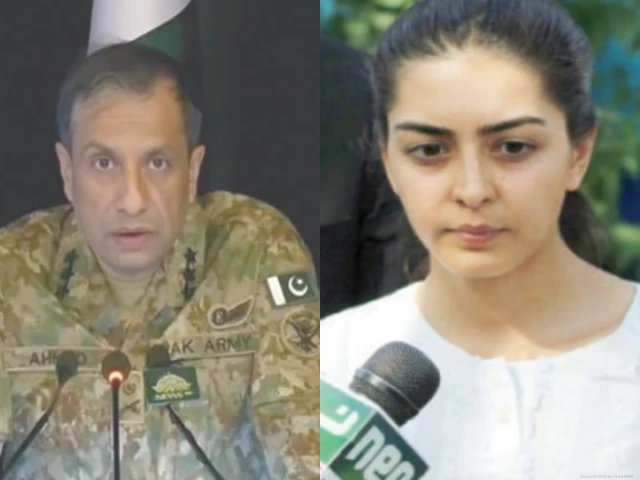
District and Sessions Judge Muhammad Afzal Majoka on Wednesday ruled that "the prosecution cannot be forced to produce any witness" while hearing lawyer Imaan Mazari's application seeking to summon DG ISPR Lt Gen Ahmed Sharif Chaudhry as a witness in the controversial tweets case against her and her husband Hadi Ali Chattha.
The court issued a notice to the prosecution regarding Mazari's application in the Federal Investigation Agency's (FIA's) case against her and Chattha. The application alleges that remarks made by the military spokesperson during a press conference amounted to an attempt to influence judicial proceedings and prejudiced the ongoing controversial tweets case.
Mazari filed the application alleging that Lt Gen Chaudhry labelled her a "lawyer for traitors" and a "foreign agent" during a press briefing. She contends that the statements, made while her case is sub judice, violate her constitutional right to a fair trial under Article 10-A and interfere with judicial proceedings.
ghazi52
THINK TANK: CONSULTANT
- Thread starter
- #157
Courts should not convert divorce cases into ‘khula’: SC
Nasir Iqbal
January 25, 2026
ISLAMABAD: The Supreme Court has ruled that the family courts must not, on their own motion, convert a wife’s demand for divorce into ‘khula’ proceedings, as doing so would deprive her of her right to dower.
Consequently, the apex court overturned the decisions of the lower forum and dissolved a marriage on the grounds of “talaq” (divorce) instead of khula, since the husband had contracted a second marriage. The Supreme Court also ordered awarding the wife her full unpaid dower of Rs1.2 million through the executing family court.
“We have noted that where a wife expresses aversion, the family court dissolves the marriage on the grounds of khula and the wife is deprived of her dower,” observed Justice Musarrat Hilali in a five-page judgment on Friday.
Headed by Chief Justice of Pakistan (CJP) Yahya Afridi, the two-judge Supreme Court bench had taken up an appeal by Naila Javed against the June 30, 2025 Peshawar High Court (PHC) Abbottabad Bench’s maintaining of the dissolution of her marriage by the family court on the basis of khula, with a decree to forego her remaining dower as a condition of khula.
Apex court says granting khula without petitioner seeking it legally unsustainable
ghazi52
THINK TANK: CONSULTANT
- Thread starter
- #158
The Supreme Court emphasised that if the aversion was the outcome of some reasons, then dissolution should be based on those particular reasons. The courts should not, on their own motion and without the statement of the wife, convert the demand for divorce into khula.
Through her petition, Ms Javed contended that she never sought khula and that her case was rather based on the grounds pleaded under the Dissolution of Muslim Marriages Act, 1939 (DMMA). And, more importantly, her husband had contracted a second marriage without complying with the mandatory procedure under Section 6 of the Muslim Family Laws Ordinance, 1961 (MFLO). Thus, she was entitled to dissolution of marriage under Section 2(iiia) of the DMMA with full retention of her dower.
The judgement noted that the marital union was solemnised between the parties on Dec 16, 2013, but irreconcilable differences arose between them. Upon the irretrievable breakdown of the marriage, the petitioner instituted a suit before the family court seeking a decree of dissolution of marriage on the grounds of cruelty, non-payment of the remaining dower, non-payment of maintenance, and that the respondent had contracted a second marriage during the pendency of the case without her permission.
The family court, however, did not rule on the merits of these pleaded grounds; instead, it concluded that the petitioner had failed to substantiate the allegations of cruelty and had expressed an unequivocal unwillingness to live with the respondent, the judgement observed.
Subsequently, the family court granted a decree of dissolution of marriage by way of khula, with a direction to the wife to relinquish her claim of outstanding dower.
During the hearing, the Supreme Court formulated a number of questions for consideration, namely whether the petitioner had discharged the burden of proof to establish her claim of cruelty, whether the court could exercise suo motu powers to convert the plaintiff’s claim for divorce into khula, and whether a wife’s averment of irreconcilable aversion towards her husband constituted a legally sufficient ground to initiate khula proceedings and relinquish dower.
The judgement said the petitioner did not plead for dissolution of marriage in her original suit. However, during the pendency of the suit, when the respondent contracted a second marriage without her permission, she sought dissolution of marriage.
Through her petition, Ms Javed contended that she never sought khula and that her case was rather based on the grounds pleaded under the Dissolution of Muslim Marriages Act, 1939 (DMMA). And, more importantly, her husband had contracted a second marriage without complying with the mandatory procedure under Section 6 of the Muslim Family Laws Ordinance, 1961 (MFLO). Thus, she was entitled to dissolution of marriage under Section 2(iiia) of the DMMA with full retention of her dower.
The judgement noted that the marital union was solemnised between the parties on Dec 16, 2013, but irreconcilable differences arose between them. Upon the irretrievable breakdown of the marriage, the petitioner instituted a suit before the family court seeking a decree of dissolution of marriage on the grounds of cruelty, non-payment of the remaining dower, non-payment of maintenance, and that the respondent had contracted a second marriage during the pendency of the case without her permission.
The family court, however, did not rule on the merits of these pleaded grounds; instead, it concluded that the petitioner had failed to substantiate the allegations of cruelty and had expressed an unequivocal unwillingness to live with the respondent, the judgement observed.
Subsequently, the family court granted a decree of dissolution of marriage by way of khula, with a direction to the wife to relinquish her claim of outstanding dower.
During the hearing, the Supreme Court formulated a number of questions for consideration, namely whether the petitioner had discharged the burden of proof to establish her claim of cruelty, whether the court could exercise suo motu powers to convert the plaintiff’s claim for divorce into khula, and whether a wife’s averment of irreconcilable aversion towards her husband constituted a legally sufficient ground to initiate khula proceedings and relinquish dower.
The judgement said the petitioner did not plead for dissolution of marriage in her original suit. However, during the pendency of the suit, when the respondent contracted a second marriage without her permission, she sought dissolution of marriage.
ghazi52
THINK TANK: CONSULTANT
- Thread starter
- #161
The Lahore High Court has ruled that a husband who contracts another marriage without the permission of his first wife is immediately liable to pay her full dower (haq mehr), along with maintenance and dowry-related payments, in a landmark decision aimed at protecting women’s financial rights and curbing arbitrary marriages.
Justice Abid Hussain Chatha issued an eight-page verdict on a petition filed by Mehnaaz Saleem, modifying lower court rulings. The court ordered the husband to pay Rs1 million as dower, Rs15,000 monthly maintenance until the effective date of divorce, with a 10% annual increase from 2021, and the value of dowry items as assessed by the court.
The petitioner had approached the family court seeking recovery of dowry, maintenance (nafaqah) and haq mehr. In 2024, the family court had ordered the husband to pay Rs15,000 per month during the iddat period and to clear Rs1 million dower in monthly instalments of Rs45,000. It also directed him to pay Rs1.005 million for the value of dowry items. Both parties then filed appeals before the sessions court.
The trial court partially accepted the husband’s appeal, setting aside his obligation to pay haq mehr and maintenance and reducing the dowry value from Rs1,005,000 to Rs400,000. The petitioner challenged this decision in the high court.
Justice Abid Hussain Chatha issued an eight-page verdict on a petition filed by Mehnaaz Saleem, modifying lower court rulings. The court ordered the husband to pay Rs1 million as dower, Rs15,000 monthly maintenance until the effective date of divorce, with a 10% annual increase from 2021, and the value of dowry items as assessed by the court.
The petitioner had approached the family court seeking recovery of dowry, maintenance (nafaqah) and haq mehr. In 2024, the family court had ordered the husband to pay Rs15,000 per month during the iddat period and to clear Rs1 million dower in monthly instalments of Rs45,000. It also directed him to pay Rs1.005 million for the value of dowry items. Both parties then filed appeals before the sessions court.
The trial court partially accepted the husband’s appeal, setting aside his obligation to pay haq mehr and maintenance and reducing the dowry value from Rs1,005,000 to Rs400,000. The petitioner challenged this decision in the high court.
ghazi52
THINK TANK: CONSULTANT
- Thread starter
- #162
IHC bans substandard sacks for food items
Court observed that flour being packed in old cement bags was contributing to serious illnesses
Fiaz Mahmood
February 14, 2026

Flour bags are being unloaded in Karachi’s Jodia Bazaar. PHOTO: PPI
ISLAMABAD: The Islamabad High Court on Saturday imposed a ban on the use of substandard sacks for packing food items, warning that the practice poses serious health risks.
In a written judgement issued by Justice Azam Khan, the court observed that flour being packed in old cement bags was contributing to serious illnesses, including cancer.
The court directed the federal Ministry of National Food Security and Research and the four provinces to coordinate enforcement of the ban. Chief secretaries and provincial food authorities have been instructed to ensure strict implementation of the order within their respective jurisdictions.
ghazi52
THINK TANK: CONSULTANT
- Thread starter
- #163
CJP Yahya Afridi visits Judicial Complex in Fort Abbas
LAHORE:Chief Justice Pakistan (CJP) Yahya Afridi, on Saturday visit to the Judicial Complex in Fort Abbas, District Bahawalnagar.
The CJP visit the Fort Abbas in his capacity as Chairman of the Law and Justice Commission of Pakistan (LJCP), reaffirming the constitutional commitment to equal access to justice across all regions of the country.
The Lahore High Court Chief Justice Aalia Neelum and other judicial officials also accompanied him.
......................................................
Right to Khula is subject to proper procedure of law: LHC
LAHORE: The Lahore High Court (LHC) held that the right of a woman to remain in a marital tie cannot be lightly taken away which is subject to adopting the proper procedure.The court said the practice of converting a suit for dissolution of marriage into one of Khula without the consent of the woman is totally in contravention to the law.
The court said that the family court is empowered to decree the suit for dissolution of marriage on the basis of Khula but such a decree could not be passed unless the wife expressly asks for the same, the court added.
.
ghazi52
THINK TANK: CONSULTANT
- Thread starter
- #164
Profit-making subsidiaries of charitable trusts liable to pay Zakat, rules LHC
Malik AsadFebruary 21, 2026
RAWALPINDI: In a landmark judgment, the Lahore High Court (LHC) has ruled that profit-making subsidiaries of charitable trusts are not exempt from Zakat deduction.
The LHC’s Rawalpindi Bench gave this ruling while dismissing a petition filed by Fauji Foundation’s educational entity Foundation University. The plea challenged the deduction of Zakat from its investments in National Saving Certificates.
The bench, led by Justice Jawad Hassan, held that the university does not qualify for exemption as a charitable institution under the Zakat and Ushr Ordinance 1980.
Justice Hassan ruled that the university, despite being established under the Foundation University Ordinance 2002 and sponsored by the Fauji Foundation, functions as an independent body corporate with financial autonomy, making it liable to compulsory Zakat deduction.
The university had approached the court through counsel Sayyid Murtaza Ali Pirzada, seeking to set aside a letter issued by the Ministry of Religious Affairs on April 24, 2018, which held the institution liable to pay Zakat on its investments.
The petitioner argued that as the university was sponsored by Fauji Foundation — a trust established under the Charitable Endowment Act 1890 — and reinvested its surplus funds to provide quality education, it should be exempt from Zakat.
Assistant Attorney General (AAG) Barrister Zain Mansoor, who appeared on the state’s behalf, opposed the petition, contending that the Zakat and Ushr Ordinance contains a comprehensive mechanism defining assets and institutions liable to Zakat.
ghazi52
THINK TANK: CONSULTANT
- Thread starter
- #165
Tariq Jahangiri’s appointment annulled
Malik Asad
February 24, 2026
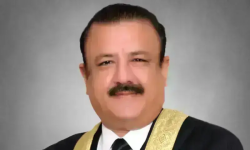
A file photo of Justice Tariq Mehmood Jahangiri of the Islamabad High Court. — Picture via IHC website
• 116-page judgement declares his law degree invalid
• IHC rules appointment was ‘without lawful authority’ and a ‘legal nullity’
• Calls ex-judge’s plea to recuse CJ Dogar ‘dilatory tactics’ and ‘bench-hunting’
ISLAMABAD: The Islamabad High Court on Monday issued a detailed 116-page judgement on the removal of one of its judges, Tariq Mehmood Jahangiri, declaring that his appointment to the bench was “without lawful authority” as he did not possess a valid law degree.
An IHC division bench comprising Chief Justice Sardar Muhammad Sarfraz Dogar and Justice Muhammad Azam Khan held that ex-Justice Jahangiri’s foundational law degree was void ab initio, rendering his elevation to the high court a “legal nullity”.
The judgement relied heavily on original academic records produced by the University of Karachi (KU) registrar, concluding that the respondent’s academic credentials were tainted by fraud, impersonation and a deliberate attempt to circumvent a disciplinary ban.
According to the verdict, Mr Jahangiri first appeared in his LL.B. Part-I examination in 1988 under a fake enrolment number. He was later caught using unfair means and was debarred for three years through a university disqualification circular issued in 1989.
Instead of complying with the ban, the court held, he “chose a course of deliberate misrepresentation” and reappeared in the 1990 examinations under a different identity — “Tariq Jahangiri” — using an enrolment number originally issued to another student, Imtiaz Ahmad. He later appeared in the LL.B. Part-II examinations under his actual name but with yet another enrolment number.
Quoting the KU Controller of Examinations, the bench observed that a university issues only one enrolment number per programme and that it was “impossible” for a student to be allotted two numbers for the same degree. Consequently, the mark sheets and degree were declared invalid.
The principal of Government Islamia Law College also informed the court that Mr Jahangiri “was never admitted” to the institution — a claim the bench described as particularly damaging. Invoking the settled principle that what is void from the outset cannot be validated by subsequent administrative acts, the court declared the judge’s LL.B. degree a nullity in the eyes of law.
A key aspect of the judgement was the court’s criticism of Mr Jahangiri’s conduct during proceedings. Despite being granted repeated opportunities to submit a written reply and produce original documents, he failed to do so.
Instead, he filed applications seeking the constitution of a full court, recusal of the chief justice and adjournment sine die on the ground that related proceedings were pending before the Sindh High Court.
Users who are viewing this thread
Total: 1 (members: 0, guests: 1)
Pakistan Defence Latest
-
 Bangladesh’s Youth-led NCP Struggles for an Independent Identity in Jamaat’s Shadow (7 Viewers)
- Latest: MNZGamerX
-

-

-
-


