
Navigation
Install the app
How to install the app on iOS
Follow along with the video below to see how to install our site as a web app on your home screen.
Note: This feature may not be available in some browsers.
More options
Style variation
You are using an out of date browser. It may not display this or other websites correctly.
You should upgrade or use an alternative browser.
You should upgrade or use an alternative browser.
General Economic Updates
- Thread starter Sainthood 2.0
- Start date
More options
Who Replied?
hydrabadi_arab
Trusted Member
ISLAMABAD: Pakistan is facing a trade deficit of $1.7 billion with Iran under the ongoing barter trade arrangement, officials revealed during a meeting of the National Assembly Standing Committee on Commerce held here on Monday.
The committee, chaired by MNA Javed Hanif, was informed that despite efforts to expand trade with Iran through non-cash exchange mechanisms, the imbalance between imports and exports continues to widen.
According to trade data presented to the committee, Pakistan’s exports to Iran during FY2025 stood at $650 million, while imports surged to $2.42 billion, mainly comprising petroleum products, steel, fruits and dry fruits, plastics, chemicals, and dairy items. Pakistan’s major exports to Iran included rice, meat, and mangoes.
Officials said that to facilitate cross-border trade, Iranian trucks are allowed to enter up to Quetta, whereas Pakistani trucks can only travel as far as Zahedan on the Iranian side. However, the Iranian government has assured Pakistan of steps to enhance imports from Pakistan in the coming months.
Audit of Trade Data Discrepancy:
The committee was also briefed on a $30 billion discrepancy identified in Pakistan’s trade statistics over the past five fiscal years.
Officials from the Pakistan Bureau of Statistics (PBS) explained that the difference emerged because Pakistan Single Window (PSW) includes raw material imported for export processing zones in its data, while the Pakistan Revenue Automation Limited (PRAL) system does not.
PBS Chief Dr. Naeem Zafar said that this data gap had been under review by a committee constituted by the Prime Minister, and a revised, reconciled dataset would soon be finalized.
The committee decided to defer further discussion on the matter until the PM committee submits its report.
The meeting also reviewed the subcommittee report on the recent sugar crisis, which blamed the Pakistan Sugar Mills Association (PSMA) for manipulating market prices.
However, Chairman Javed Hanif noted that the subcommittee had not clearly identified the individuals responsible and directed that the inquiry continue until accountability was ensured.
The committee further recommended “at-source deductions” from provincial and departmental funds to recover outstanding dues owed to the Trading Corporation of Pakistan (TCP).
Timber Import Dispute:
The Pakistan Timber Association also raised concerns over import restrictions imposed by the Department of Plant Protection (DPP), which has refused to clear consignments of timber with bark, citing phytosanitary and bio-risk issues.
The association argued that timber with bark was previously allowed after fumigation and could be safely treated again to eliminate risks. “Importing debarked timber is far more expensive,” the association maintained, adding that the ban caused Rs 900 million in additional costs to the industry last year.
Officials from the Ministry of Commerce and Ministry of Food Security said the DPP’s stance was based on international sanitary and phytosanitary regulations, warning that bark-carrying logs could carry pests or biohazards.
The committee urged the DPP and the Timber Association to jointly evolve a workable solution that balances safety with commercial feasibility.
The committee, chaired by MNA Javed Hanif, was informed that despite efforts to expand trade with Iran through non-cash exchange mechanisms, the imbalance between imports and exports continues to widen.
According to trade data presented to the committee, Pakistan’s exports to Iran during FY2025 stood at $650 million, while imports surged to $2.42 billion, mainly comprising petroleum products, steel, fruits and dry fruits, plastics, chemicals, and dairy items. Pakistan’s major exports to Iran included rice, meat, and mangoes.
Officials said that to facilitate cross-border trade, Iranian trucks are allowed to enter up to Quetta, whereas Pakistani trucks can only travel as far as Zahedan on the Iranian side. However, the Iranian government has assured Pakistan of steps to enhance imports from Pakistan in the coming months.
Audit of Trade Data Discrepancy:
The committee was also briefed on a $30 billion discrepancy identified in Pakistan’s trade statistics over the past five fiscal years.
Officials from the Pakistan Bureau of Statistics (PBS) explained that the difference emerged because Pakistan Single Window (PSW) includes raw material imported for export processing zones in its data, while the Pakistan Revenue Automation Limited (PRAL) system does not.
PBS Chief Dr. Naeem Zafar said that this data gap had been under review by a committee constituted by the Prime Minister, and a revised, reconciled dataset would soon be finalized.
The committee decided to defer further discussion on the matter until the PM committee submits its report.
The meeting also reviewed the subcommittee report on the recent sugar crisis, which blamed the Pakistan Sugar Mills Association (PSMA) for manipulating market prices.
However, Chairman Javed Hanif noted that the subcommittee had not clearly identified the individuals responsible and directed that the inquiry continue until accountability was ensured.
The committee further recommended “at-source deductions” from provincial and departmental funds to recover outstanding dues owed to the Trading Corporation of Pakistan (TCP).
Timber Import Dispute:
The Pakistan Timber Association also raised concerns over import restrictions imposed by the Department of Plant Protection (DPP), which has refused to clear consignments of timber with bark, citing phytosanitary and bio-risk issues.
The association argued that timber with bark was previously allowed after fumigation and could be safely treated again to eliminate risks. “Importing debarked timber is far more expensive,” the association maintained, adding that the ban caused Rs 900 million in additional costs to the industry last year.
Officials from the Ministry of Commerce and Ministry of Food Security said the DPP’s stance was based on international sanitary and phytosanitary regulations, warning that bark-carrying logs could carry pests or biohazards.
The committee urged the DPP and the Timber Association to jointly evolve a workable solution that balances safety with commercial feasibility.

Anonymous25
Registered Member
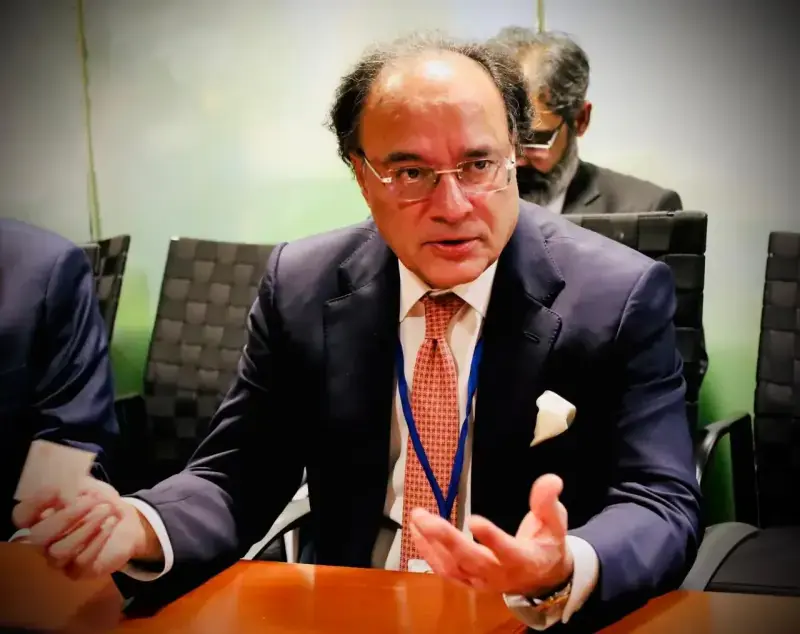
Pakistan’s economy showing major signs of recovery, Aurangzeb tells CGTN
Finance Minister Muhammad Aurangzeb has said that the country’s economy is showing signs of sustained recovery,...
www.brecorder.com
Anonymous25
Registered Member
He said 24 joint venture (JV) agreements were signed during the visit, signalling a shift from memoranda of understanding (MoUs) to JV agreements.Finance Minister Muhammad Aurangzeb has said that the country’s economy is showing signs of sustained recovery, backed by macroeconomic stability, progress on structural reforms, and renewed international confidence reflected in multiple credit rating upgrades.Pakistan’s economy showing major signs of recovery, Aurangzeb tells CGTN
Finance Minister Muhammad Aurangzeb has said that the country’s economy is showing signs of sustained recovery,...www.brecorder.com
On trade developments, Aurangzeb said Pakistan recently concluded discussions with US officials on tariff adjustments, which he believes will provide “real upside” to Pakistan’s textile exporters, especially in home textiles.
“We’re still working on the joint statement, which should be coming out soon, then the framework agreement, which is also in the works.”
Anonymous25
Registered Member
The National Accountability Bureau (NAB) has recovered Rs1,102.04 billion (~ USD 3.9 billion) during the third quarter of 2025 (July-September)— a 242% increase over the previous quarter.
According to a statement released on Thursday, this represents an increase of Rs645.74 billion from Rs456.3 billion recovered in the second quarter.
The bureau has recovered Rs1,649.36 billion (~ USD 5.83 billion) for the first three quarters of 2025.
“Out of this recovery, movable and immovable assets worth Rs1,637.15 billion have been disbursed and handed over to various federal and provincial ministries, departments, and financial institutions.
“Moreover, 17,194 affectees of different ‘cheating public-at-large’ cases have also been compensated through NAB’s recovery efforts,” read the statement.
The bureau noted that over the past two years, it has recovered a total of Rs6,956.8 billion — representing a 829% increase compared to Rs839.08 billion recovered since NAB’s inception.
Key recoveries and achievements in the third quarter of 2025:
• NAB Karachi successfully recovered 2 valuable plots of worth Rs2.8 billion in Karachi Port Trust (KPT) case, and the same have been handed over to KPT.
• NAB Sukkur successfully recovered an additional land (361 acres) worth Rs 2.5 billion belonging to the National Highway Authority.
• During the third quarter, additional forest land (1.39 million acres of mangrove land) worth Rs1,104.97 billion has been recovered by the Bureau, contributing to a total forest land recovery portfolio of Rs2,592.74 billion.
• NAB Balochistan recovered 414,036 acres of forest land worth Rs44.8 billion.
• NAB KPK recovered state land valued at Rs3.2 billion in a case of illegal allotments of state land. The same has been handed over to the Ministry of Industries, Government of Pakistan.
• NAB has attempted to further ease the agony of affected of cheating public at large cases, and the first-ever online payment/disbursement to 5008x affectees of the B4U case has been made.
NAB has taken cognisance under the Anti–Money Laundering (AML) regime in line with its mandate to curb corruption, financial crimes, and the illegal accumulation of wealth inland and abroad. Acting upon credible information and evidence, NAB has initiated a series of investigations targeting multiple high-profile individuals and entities allegedly involved in money laundering, siphoning of crime proceeds to foreign jurisdictions and other financial irregularities.
Preliminary assessments indicate that substantial recoveries are expected from these cases, which will contribute significantly to the national exchequer. NAB remains committed to pursuing all such cases vigorously and without discrimination, reaffirming its resolve to uphold accountability and strengthen the financial integrity of Pakistan, added the statement.
According to a statement released on Thursday, this represents an increase of Rs645.74 billion from Rs456.3 billion recovered in the second quarter.
The bureau has recovered Rs1,649.36 billion (~ USD 5.83 billion) for the first three quarters of 2025.
“Out of this recovery, movable and immovable assets worth Rs1,637.15 billion have been disbursed and handed over to various federal and provincial ministries, departments, and financial institutions.
“Moreover, 17,194 affectees of different ‘cheating public-at-large’ cases have also been compensated through NAB’s recovery efforts,” read the statement.
The bureau noted that over the past two years, it has recovered a total of Rs6,956.8 billion — representing a 829% increase compared to Rs839.08 billion recovered since NAB’s inception.
Key recoveries and achievements in the third quarter of 2025:
• NAB Karachi successfully recovered 2 valuable plots of worth Rs2.8 billion in Karachi Port Trust (KPT) case, and the same have been handed over to KPT.
• NAB Sukkur successfully recovered an additional land (361 acres) worth Rs 2.5 billion belonging to the National Highway Authority.
• During the third quarter, additional forest land (1.39 million acres of mangrove land) worth Rs1,104.97 billion has been recovered by the Bureau, contributing to a total forest land recovery portfolio of Rs2,592.74 billion.
• NAB Balochistan recovered 414,036 acres of forest land worth Rs44.8 billion.
• NAB KPK recovered state land valued at Rs3.2 billion in a case of illegal allotments of state land. The same has been handed over to the Ministry of Industries, Government of Pakistan.
• NAB has attempted to further ease the agony of affected of cheating public at large cases, and the first-ever online payment/disbursement to 5008x affectees of the B4U case has been made.
NAB has taken cognisance under the Anti–Money Laundering (AML) regime in line with its mandate to curb corruption, financial crimes, and the illegal accumulation of wealth inland and abroad. Acting upon credible information and evidence, NAB has initiated a series of investigations targeting multiple high-profile individuals and entities allegedly involved in money laundering, siphoning of crime proceeds to foreign jurisdictions and other financial irregularities.
Preliminary assessments indicate that substantial recoveries are expected from these cases, which will contribute significantly to the national exchequer. NAB remains committed to pursuing all such cases vigorously and without discrimination, reaffirming its resolve to uphold accountability and strengthen the financial integrity of Pakistan, added the statement.

Fatman17
THINK TANK: CONSULTANT
All are problems are over. No more IMF loans. LolThe National Accountability Bureau (NAB) has recovered Rs1,102.04 billion (~ USD 3.9 billion) during the third quarter of 2025 (July-September)— a 242% increase over the previous quarter.
According to a statement released on Thursday, this represents an increase of Rs645.74 billion from Rs456.3 billion recovered in the second quarter.
The bureau has recovered Rs1,649.36 billion (~ USD 5.83 billion) for the first three quarters of 2025.
“Out of this recovery, movable and immovable assets worth Rs1,637.15 billion have been disbursed and handed over to various federal and provincial ministries, departments, and financial institutions.
“Moreover, 17,194 affectees of different ‘cheating public-at-large’ cases have also been compensated through NAB’s recovery efforts,” read the statement.
The bureau noted that over the past two years, it has recovered a total of Rs6,956.8 billion — representing a 829% increase compared to Rs839.08 billion recovered since NAB’s inception.
Key recoveries and achievements in the third quarter of 2025:
• NAB Karachi successfully recovered 2 valuable plots of worth Rs2.8 billion in Karachi Port Trust (KPT) case, and the same have been handed over to KPT.
• NAB Sukkur successfully recovered an additional land (361 acres) worth Rs 2.5 billion belonging to the National Highway Authority.
• During the third quarter, additional forest land (1.39 million acres of mangrove land) worth Rs1,104.97 billion has been recovered by the Bureau, contributing to a total forest land recovery portfolio of Rs2,592.74 billion.
• NAB Balochistan recovered 414,036 acres of forest land worth Rs44.8 billion.
• NAB KPK recovered state land valued at Rs3.2 billion in a case of illegal allotments of state land. The same has been handed over to the Ministry of Industries, Government of Pakistan.
• NAB has attempted to further ease the agony of affected of cheating public at large cases, and the first-ever online payment/disbursement to 5008x affectees of the B4U case has been made.
NAB has taken cognisance under the Anti–Money Laundering (AML) regime in line with its mandate to curb corruption, financial crimes, and the illegal accumulation of wealth inland and abroad. Acting upon credible information and evidence, NAB has initiated a series of investigations targeting multiple high-profile individuals and entities allegedly involved in money laundering, siphoning of crime proceeds to foreign jurisdictions and other financial irregularities.
Preliminary assessments indicate that substantial recoveries are expected from these cases, which will contribute significantly to the national exchequer. NAB remains committed to pursuing all such cases vigorously and without discrimination, reaffirming its resolve to uphold accountability and strengthen the financial integrity of Pakistan, added the statement.
Fatman17
THINK TANK: CONSULTANT
Source: Profit by Pakistan Today
https://search.app/pVzuj
Saudi and Kuwaiti investors serve 2B$ notice to federal government over KE.
https://search.app/pVzuj
Saudi and Kuwaiti investors serve 2B$ notice to federal government over KE.
Fatman17
THINK TANK: CONSULTANT

ISLAMABAD: Pakistan’s cotton production has fallen sharply to 6.8 million bales in the 2025-26 season—34 percent below the target of 10.18 million bales.
According to an official document submitted to the Federal Committee of Agriculture (FCA) for the Rabi season, presided over by State Minister for National Food Security and Research Malik Rasheed Ahmed Khan, the estimated cotton production is 6.85 million bales from 2.0 million hectares.
The shortfall is attributed to multiple challenges, including climate change, unexpected rains and floods, pest infestations like White Fly and Pink Bollworm, Chilli Leaf Curl Virus Disease (CLCVD), limited seed technology, and competition with other crops
Samlee
Trusted Member
Saudi, Kuwaiti investors serve $2bn legal notice in K-Electric dispute
By Khalid MustafaOctober 25, 2025
ISLAMABAD: In a significant development with potential to escalate into an international arbitration case, a consortium of Saudi and Kuwaiti investors in K-Electric has served a formal notice of dispute to the Government of Pakistan, seeking $2 billion in compensation for alleged violations of their investment rights. The principal foreign investors, Saudi Arabia’s Al Jomaih Group and Kuwait’s Denham Investments Limited, are being represented by the London-based law firm Steptoe International (UK) LLP. The notice, dated October 20, was delivered to the Attorney General for Pakistan, the Prime Minister’s Office, and the Special Investment Facilitation Council (SIFC). This legal action marks the first time Pakistan is facing a claim under the multilateral Agreement on Promotion, Protection and Guarantee of Investments Among Member States of the Organisation of Islamic Cooperation, commonly known as the OIC Investment Agreement.
The notice emerged just a day before the prime minister was scheduled to depart for an official visit to Saudi Arabia, adding sensitivity to the timing. The investors allege that Pakistan has repeatedly breached its international obligations by obstructing legitimate business transactions, interfering in regulatory matters, and failing to protect their investment from unlawful third-party actions. They contend that these actions have caused severe financial harm and eroded the value of their holdings in K-Electric, the country’s largest integrated power utility serving Karachi and adjoining areas.
As a result of what they describe as “years of obstruction, inconsistency, and unfair conduct,” the investors have estimated their cumulative losses at no less than $2 billion. This figure incorporates the lost value from the stalled sale to Shanghai Electric, deterioration in market value, increased debt servicing costs, and reputational damage.
They have urged the government to enter into good-faith negotiations or conciliation to resolve the matter amicably but have clarified that they reserve the right to commence arbitration under the OIC Investment Agreement if no settlement is reached. “Our clients are concerned that Pakistan is no longer dealing with them in good faith,” the notice states, while also confirming the investors’ openness to an amicable resolution.
The 67-page notice outlines three principal disputes. The first and most significant concerns the government’s failure to approve the $1.77 billion sale of K-Electric’s shares to Shanghai Electric Power, a subsidiary of China’s State Power Investment Corporation, agreed in October 2016. The transaction remains incomplete due to Pakistan’s failure to issue key approvals, including tariff notifications, foreign exchange clearance, and national security consent. The notice argues that by indefinitely withholding these approvals, the government effectively deprived the investors of the ability to realise the value of their stake—an act it characterises as “indirect expropriation” and a breach of guarantees on free capital transfer.
The second dispute revolves around delayed government payments and tariff uncertainty. The investors claim government entities have failed to release Tariff Differential Subsidies and other dues owed to K-Electric, while simultaneously demanding payments from the company with penalties. They further allege that the Ministry of Energy’s Power Division exerted pressure on the National Electric Power Regulatory Authority (NEPRA) to revise K-Electric’s multi-year tariff, forcing it to adopt unrealistic targets and a Pakistan Rupee-based return on equity instead of the approved US Dollar-based rate. According to the investors, these imposed changes would cost K-Electric nearly Rs100 billion annually, pushing the utility toward “economic destruction.”
The third dispute centres on what the investors describe as an “orchestrated takeover attempt” of K-Electric’s parent company by Pakistani businessman Shaheryar Chishty through his offshore firms. The notice alleges that Chishty gained control of the holding structure without making mandatory disclosures or public offers, and it accuses him of misappropriating approximately PKR 10.35 billion.
The investors also blame the Securities and Exchange Commission of Pakistan, the State Bank of Pakistan, and the Federal Investigation Agency for failing to take enforcement action despite detailed evidence, arguing this represents discriminatory treatment compared to the strict scrutiny they themselves have faced.
Samlee
Trusted Member
At This Point I'm Not Even Sad Anymore.That's How Despondent I've Become.
From Al Tuwairqi To Al Jomiah The Great Pakistani Tradition Of Screwing Up Foreign Investors Continues.
So Much For SIFC.My ***
From Al Tuwairqi To Al Jomiah The Great Pakistani Tradition Of Screwing Up Foreign Investors Continues.
So Much For SIFC.My ***

K2RULEZ
Elite Member

Unfortunately, I tend to believe the Saudi Kuwaiti grievances. In Pakistan, the business landscape is filled with nepotism and corruption. Hence the multinationals also exiting in record numbers.
hydrabadi_arab
Trusted Member
The number 1 thing foreign investor look before investing is freedom of movement of capital. Pakistan has gone to IMF 10 times in last 20 years.
You made your country economy such a joke that you need to sign one sided defence pacts (Saudi) or some strategic alignment (China) to get big foreign investment in. Reko Diq $10bn doesn't count as world is desperate for copper/gold and that is only big remaining mines in the world now.
CPEC failed and Saudi investment is just on papers for now. Saudis are thinking what if they invest $20bn in 5 years and then Pakistan goes in to another BOP crisis and begging to IMF? Saudi investors will want to take out their $$ whenever it pleases them.
You made your country economy such a joke that you need to sign one sided defence pacts (Saudi) or some strategic alignment (China) to get big foreign investment in. Reko Diq $10bn doesn't count as world is desperate for copper/gold and that is only big remaining mines in the world now.
CPEC failed and Saudi investment is just on papers for now. Saudis are thinking what if they invest $20bn in 5 years and then Pakistan goes in to another BOP crisis and begging to IMF? Saudi investors will want to take out their $$ whenever it pleases them.
Last edited:

Goenitz
Elite Member

So Much For SIFC.My ***
2000 houses demolished, which could be reused (of AFG refugees). SIFC says 750 mil $ left the country, and lastly, SS as usual wasting public money.
Users who are viewing this thread
Total: 1 (members: 0, guests: 1)
Pakistan Defence Latest
-

-
 Federal cabinet gives nod to imposition of emergency in KP; summary sent to president (35 Viewers)
- Latest: Forsvaret
-

-
-

Country Watch Latest


Latest Posts
-
Makkah Defence Alliance: Turkey, Saudi Arabia, and Pakistan, news & updates (18 Viewers)
- Latest: Hakikat ve Hikmet
-
-
-

-
Federal cabinet gives nod to imposition of emergency in KP; summary sent to president (35 Viewers)
- Latest: Forsvaret