General Economic Updates

To view this content we will need your consent to set third party cookies.
For more detailed information, see our cookies page.
 
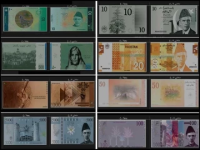
Federal cabinet approves printing of currency notes with new designs

New designs will be introduced for banknotes of Rs100, Rs500, Rs1,000 and Rs5,000 denomination

Khalid Mehmood
January 14, 2026

1768417247129.png

The federal government has decided to introduce newly-designed currency notes after the formal approval from the federal cabinet. The decision was taken during a cabinet meeting chaired by Prime Minister Shehbaz Sharif at the Prime Minister’s House in the federal capital on Wednesday.

The cabinet was briefed by the Ministry of Finance on the proposed design of banknotes, issued by the State Bank of Pakistan. Officials told the meeting that the new currency notes are being designed in line with the modern international standards, with the services of global experts engaged for the process. New designs will be introduced for the banknotes of Rs100, Rs500, Rs1,000 and Rs5,000 denomination.

According to the briefing, the redesigned notes will feature improved security threads to enhance protection against counterfeiting. The designs will also reflect Pakistan’s regional and geographical diversity, as well as its historical landmarks.
 

Aurangzeb says new investors entering Pakistan despite some firms exiting​


Finance minister cites 20 foreign investors in 18 months, remittances expected to top $41bn

Irshad Ansari
January 14, 2026

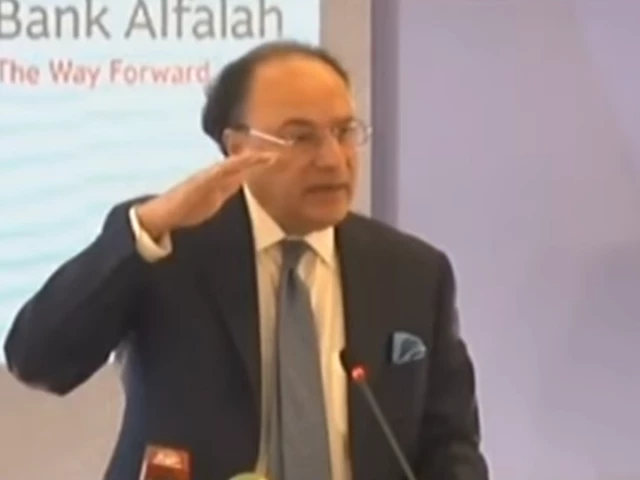
finance minister muhammad aurangzeb speaking at the pakistan policy dialogue in islamabad photo screengrab


Finance Minister Muhammad Aurangzeb speaking at the Pakistan Policy Dialogue in Islamabad Photo: Screengrab

ISLAMABAD: Pakistan’s Finance Minister Muhammad Aurangzeb on Wednesday said that while some companies had exited Pakistan due to high taxes and energy costs, new local and foreign investors were also entering the market, showing continued confidence in the economy.

“There are firms which are also leaving that is true… if the taxation is high or the energy cost is high or its financing cost is always moving in the right direction those have been real issues,” Aurangzeb said while addressing the Pakistan Policy Dialogue in Islamabad.

He said Pakistan had attracted 20 new foreign investors over the past 18 months, including Google, Aramco, Wafi Energy and Turkish Petroleum. He described high taxes and energy prices as a “real problem for businesses” but said the government had launched reforms to ease the burden and restore economic stability.
 
Aurangzeb said the government and private sector both needed to adapt their approaches. Referring to companies leaving the country, he said some business models were no longer viable. “But those firms which have been able to look at business models… because it takes two to tango, what the government has to do, and what the private sector has to do, and if you have wedged into their business models for the last 50 years it's not going to work in the New World Order,” he said.

He said structural reforms were underway across the country, including the ongoing transformation of the Federal Board of Revenue. “Compliance and enforcement are essential to ensure implementation of tax laws,” he added.
 
Remittances to cross $41bn

The finance minister said Pakistan’s remittances were expected to cross $41 billion this year, up from $38 billion in the previous fiscal year, providing crucial support to foreign exchange inflows. He said reforms in tax administration and the energy sector were key parts of the government’s stabilisation agenda.

Aurangzeb said local investors had participated in the privatisation process of Pakistan International Airlines, while 24 state-owned enterprises had been transferred to the Privatisation Commission. Inefficiencies in public sector entities were costing the country nearly Rs1 trillion annually, he said.

He said Utility Stores, the Public Works Department and the Pakistan Agricultural Storage and Services Corporation had been shut down due to corruption linked to subsidy schemes.

Warning against a continued rise in import duties, Aurangzeb said such measures were harmful to the economy and needed to be rationalised to lower the cost of doing business.

Debt servicing remained the government’s largest expenditure, he said, but savings of Rs850 billion had been made last year on interest payments, with further savings expected in the current fiscal year.
 
Aurangzeb said the government planned to launch Panda Bonds within the next two weeks to diversify external financing sources. He also cited a survey showing that 73% of investors were willing to invest in Pakistan.

On the external sector, he said the trade deficit had widened, but the current account remained within government targets. He added that large-scale manufacturing showed positive performance in the first quarter of the current fiscal year.

The finance minister said private sector credit had risen to Rs1.1 trillion, while 135,000 new investors had entered the Pakistan Stock Exchange, with market investment up 41% over the past 18 months.

Aurangzeb said Pakistan now had the world’s third-largest freelance workforce, adding that it was the government’s responsibility to provide systems and platforms to support young people.

Looking ahead, he said controlling population growth was essential if Pakistan was to achieve its goal of becoming a $3 trillion economy by 2047, warning that annual population growth of 2.55% was incompatible with sustainable development.
 
Aurangzeb said Pakistan now had the world’s third-largest freelance workforce, adding that it was the government’s responsibility to provide systems and platforms to support young people.
That is another way of saying that neither the government nor industry has any jobs for young people and they are forced to rely on the gig economy to make a living.
 

Pakistan’s economy in 2025: Strong remittances fueled imports but exports suffered

  • There continues to be a reliance on imports for consumption rather than investment in export-oriented industries
Salman Siddiqui
January 14, 2026

KARACHI: Pakistan’s economy has remained stuck in a recovery and stabilisation phase for the third consecutive year, failing to transition into a growth trajectory in 2025 as imports surged while exports declined, leading to persistent imbalances in external trade.

The robust growth in workers’ remittance inflows partially offset weak export performance, providing additional foreign exchange that facilitated higher imports.

However, a significant portion of these remittances was channelled into the import of automobiles and fuel, highlighting a structural fault line in the economy, i.e. reliance on imports for consumption rather than investment in export-oriented industries.

Pakistan’s GDP grew by 3.04% in FY25, while surging by 3.71% in the first quarter of FY26 (July - September 2025). However, this growth rate remains well below the 5–6% required to generate sufficient employment opportunities for the country’s expanding workforce.

“The question is how long we can afford the stabilisation phase,” Ismail Iqbal Securities Head of Research Saad Hanif told Business Recorder.

He said that a growth rate of around 3%-3.5% would keep a significant number of people out of the job market, contributing to a rising poverty level in the country.

“We have spent precious foreign exchange reserves notably on imports for local consumption, like expensive cars, importing some 35-40 new models of cars alone in 2025. Instead, the available funds should have been utilised to set up, support and grow new export industries.”
https://www.facebook.com/sharer/sha...er.com/news/40402171&display=popup&ref=plugin
 
The country’s import of goods increased by 9% to $64.93 billion in CY25 compared to $59.54 billion in CY24, according to the Pakistan Bureau of Statistics’ (PBS) data.

The data suggests the import in the transport group (predominantly by cars) soared 76% in the first 11 months (Jan-Nov) of CY25 to $3.14 billion compared to $1.78 billion in the same period of the last year. In contrast, growth in imports of other commodities remained far lower compared to the vehicle segment in percentage terms.

Meanwhile, export of goods dropped over 5% to $30.65 billion in CY25, compared to $32.32 billion in CY24, according to PBS.

Accordingly, the overall trade deficit widened by 26% to $34.75 billion in CY25 compared to $27.22 billion in CY24.

Finance Minister Muhammad Aurangzeb had been highly optimistic about the country’s agriculture sector; however, the floods during the monsoon season disrupted those plans.

On the other hand, the stagnant economic conditions mixed with political tensions have convinced thousands of Pakistanis, including highly skilled professionals, to emigrate to foreign countries seeking better prospects.

“The exports have remained sluggish for the past decade. We have to chalk out policies and give incentives to boost exports to reach a higher growth phase,” Hanif said.
 
That is another way of saying that neither the government nor industry has any jobs for young people and they are forced to rely on the gig economy to make a living.

This. Thank you. For many, the work and hours come to less than their hourly rate in a traditional setting, and you're essentially underemployed.
 
This. Thank you. For many, the work and hours come to less than their hourly rate in a traditional setting, and you're essentially underemployed.
The saddest and funniest part is that these GHQ duffers try to spin these failures as some great achievement with a straight face and actually think that people will be stupid enough to believe them.
 

Users who are viewing this thread

Pakistan Defence Latest

Country Watch Latest

Back
Top