General Economic Updates

Pakistan’s fiscal envelope is too weak to carry the burden of fuel price subsidies for very long

Country after country is struggling with a fuel crisis that is only going to intensify in the days ahead.


Rising stakes

Khurram Husain
March 26, 2026

WE all need this war to end. And we need it to end immediately. Already the impact is being felt around the world, but in Asia in particular. In Pakistan, its real impact will hit if it lingers for a few days more, but the fuel price hike already passed, and those in store, are enough to do more damage than you want to count.

Here is a simple exercise. Take the various indices for international fuel prices: Brent, WTI, Dubai crude, and Murban (or Oman crude). Look at their prices over the month of March and you will notice two of them — Dubai and Murban (or Oman) — leaping ahead while the other two — Brent and WTI — climbing less sharply.

This is significant because the former two are fuels used across Asia (including Pakistan) while the latter two are used primarily in Western markets. Asia is the hardest-hit region in the world by the oil price and supply disruptions that the war is producing. And across Asia, countries are taking extraordinary steps to manage the fallout.

Visuals are now emerging of chaos at pumps in some parts of India and Bangladesh. Japan has authorised a release from its strategic reserves described as their “largest ever”, enough to cover 15 days of consumption. The release is larger than what it authorised after the Fukushima nuclear power plant disaster in 2011, probably the single largest energy shock Japan has ever experienced.

Country after country is struggling with a fuel crisis that is only going to intensify in the days ahead.
 
All around Asia, examples are piling up. Country after country is struggling with a fuel crisis that is only going to intensify in the days ahead. And they’re all reaching for extraordinary steps, each pulling up whatever arsenal of measures they have in their toolkit, to try to manage shortages that are crippling their economies.

No country is unaffected. Those who have passed on even a part of the burden to their citizenry are feeling the heat.

Those who have not, like India, are facing skyrocketing subsidy bills and panic buying regardless of the assurances their government is issuing. From China to Japan, Australia to India, the Philippines to Indonesia, and all in between, everybody is reeling from the price and supply disruptions emanating from the blockage of the Strait of Hormuz.

One by one, they are throwing out the old textbook. This is a crisis no market mechanism can manage. The state has to step in. Some of the countries have far larger stocks than Pakistan — from 45 to 75 days of cover versus Pakistan’s 28 days — and yet they are struggling to control the situation.

None of them can afford to carry the full cost of the price hike on their fiscal accounts. India is trying, but it has a bit of an unwritten rule there that governments don’t adjust fuel prices in the run-up to an election. It just so happens that this is no ordinary fuel price shock; how long it can hold on is anyone’s guess.
 
Pakistan has no choice but to navigate these waters. Our fiscal envelope is too weak to carry the burden of fuel price subsidies for very long.

Having held them steady for two weeks now, the government is in the unenviable position of having to pass on another major jolt to the people to avoid derailing its fiscal framework altogether. It is developing rationing systems, which is fine, and hopefully the systems will work.

It might consider freezing OMC margins too, and tell the oil companies to carry their share of the burden. But a price hike will become unavoidable within days now.
 
The petrol dealers’ association thinks it can make some hay while the sun shines. Sensing desperation from the government, they are asking for an increase in their margins as well, otherwise they are threatening to shut their pumps.

Their point is that their capital cost has gone up sharply with the price hike, and they need more liquidity to be able to manage their ability to buy petrol and diesel stocks for onward sale. This demand should be resisted.

The message needs to go out that this is not the time to be making profits. It is the time to share the burden. The situation is going to intensify, and greed must not be allowed to call the shots.
 

Weekly inflation surges 8.24pc on costly petroleum

The Newspaper's Staff Reporter
March 28, 2026

1774694784531.png

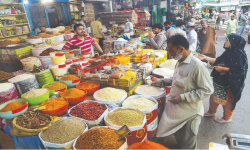
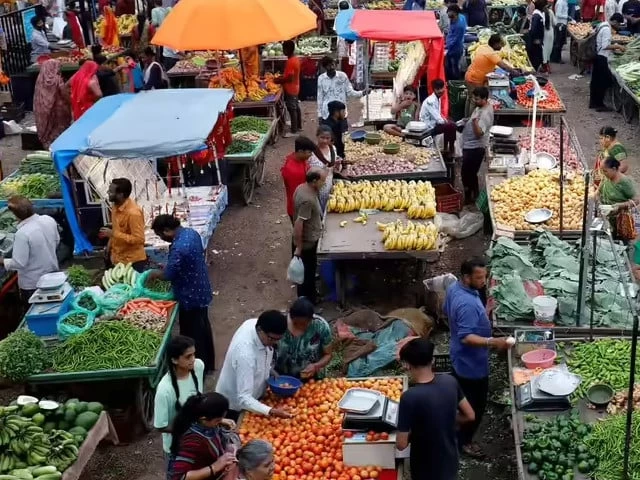
A file photo showing a food market. — AFP

ISLAMABAD: Short-term inflation, measured through the Sensitive Price Index (SPI), increased by 8.24 per cent year-on-year in the week ending March 26, mainly driven by higher retail prices of petroleum products in the domestic market.

Short-term inflation has persistently risen for the 33rd straight week, indicating ongoing pressure on household budgets. The increase was also mainly driven by a sharp rise in the prices of vegetables and other perishable food items.

On a week-on-week basis, the SPI recorded a marginal increase of 0.97pc compared with the previous week, according to official data released on Friday.

Short-term inflation is expected to rise further due to the ongoing conflict in the Middle East, which is disrupting the supply of essential commodities, particularly petroleum products.

The uncertainty in global energy markets has raised concerns about higher import costs and supply constraints, factors that could put additional pressure on domestic prices.

Household budgets face severe pressures as essentials get pricier
 
Weekly inflation previously peaked at a historic 48.35pc year-on-year in early May 2023. It then declined in the following years. The recent fluctuations in sugar, edible oil, pulses, and meat prices indicate that volatility in essential food commodities continues to influence short-term inflation trends, with consumers experiencing recurring cycles of price increases.

The items, whose prices increased the most over the previous week included onions (18.10pc), tomatoes (11.38pc), LPG (10.05pc), chicken (8.70pc), potatoes (8.11pc), electricity charges for Q1 (6.11pc), eggs (3.54pc), garlic (3.23pc), mutton (2.55pc), beef (1.52pc), georgette (0.38pc) and firewood (0.34pc).

The items whose prices saw a decline week-on-week included bananas (4.50pc), wheat flour (1pc), sugar (0.29pc), gur (0.20pc) and pulse moong and rice Irri-6/9 (0.17pc) each.
 
on an annual basis, the items whose prices increased the most LPG (34.73pc), diesel (29.94pc), gas charges for Q1 (29.85pc), wheat flour (25.76pc), petrol (25.75pc), onions (25.07pc), chilies powder (15.20pc), beef (13.08pc), mutton (12.41pc), powdered milk (10.10pc), rice basmati broken (6.51pc) and gur (6.31pc).

In contrast, the prices of potatoes dropped 45.71pc, followed by pulse gram (17.54pc), eggs (13.63pc), garlic (12.92pc), salt powder (12.55pc), chicken (11.94pc), pulse masoor (11.62pc) and sugar (11.34pc).

The index, consisting of 51 items gathered from 50 markets across 17 cities, is calculated weekly to monitor the prices of essential goods and services. Data indicated that the prices of 23 items rose, six fell, and 22 remained steady compared to the previous week.,
 

Pakistan temporarily eases banking rules for exports to Iran, Central Asia​


Three-month waiver on bank guarantees, credit letters covers rice, seafood, pharmaceuticals among other commodities

Usama Iqbal
March 28, 2026

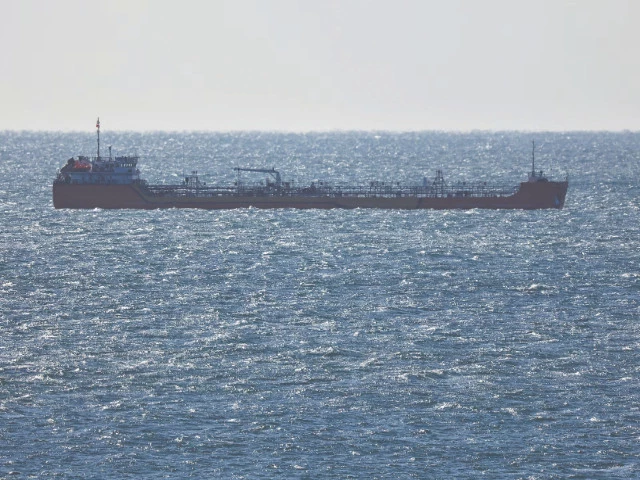
increased sourcing from the us reduces reliance on the strait of hormuz a narrow maritime corridor through which a substantial proportion of global oil trade passes and which remains vulnerable to geopolitical tensions photo reuters

Increased sourcing from the US reduces reliance on the Strait of Hormuz — a narrow maritime corridor through which a substantial proportion of global oil trade passes and which remains vulnerable to geopolitical tensions. Photo: Reuters


ISLAMABAD: The Ministry of Commerce has approved a temporary exemption from financial instruments, including bank guarantees and letters of credit, for exports to Iran, the Central Asian Republics and Azerbaijan via Iran's land route, it emerged on Saturday.

The development arose from a March 24 notification by the Ministry of Commerce received by The Express Tribune.
1774725368060.png
 

Outlook for the economy!!!
 

Users who are viewing this thread

Latest Posts

Back
Top