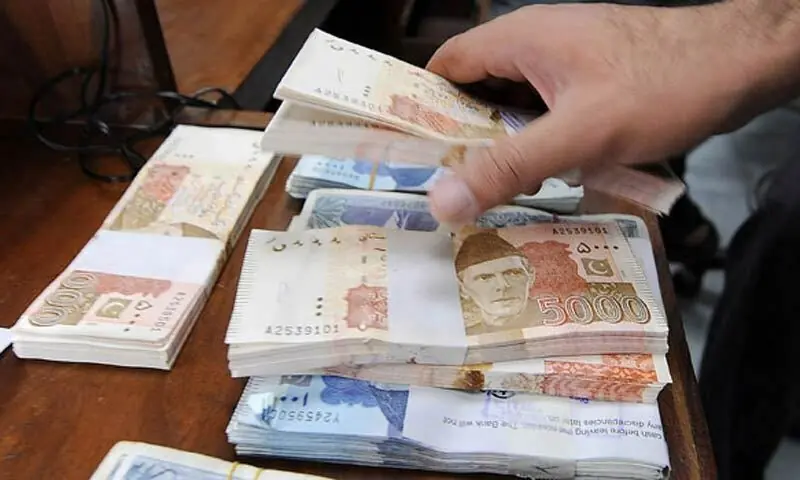
General Economic Updates

To view this content we will need your consent to set third party cookies.
For more detailed information, see our cookies page.
 

April fuel sales fall on higher prices

The Newspaper's Staff Reporter
May 5, 2026

• Cement despatches rise 11pc to 3.89m tonnes
• Urea offtake may jump 85pc to 463,000 tonnes


KARACHI: Oil sales declined by seven per cent year-on-year and 6pc month-on-month to 1.36 million tonnes in April, mainly due to higher fuel prices amid the US-Israel war on Iran affecting the Middle East.

Oil-marketing companies (OMCs) recorded sales of 1.36m tonnes in April. This brought total sales for 10MFY26 to 13.8m tonnes, reflecting a 4pc year-on-year increase compared to 13.2m tonnes in 10MFY25, according to Myesha Sohail of Topline Securities.

In April, motor spirit (petrol) prices increased by 21pc to an average of Rs374.73 per litre from Rs310.53 in March. High-speed diesel (HSD) prices rose 26pc month-on-month to an average of Rs409.61 per litre from Rs325.21 in March.

Petrol sales declined by 7pc year-on-year and 8pc month-on-month to 615,000 tonnes in April. Total petrol sales in 10MFY26 stood at 6.4m tonnes, up 4pc year-on-year. HSD sales also fell by 12pc year-on-year and 7pc month-on-month to 550,000 tonnes, while cumulative sales in 10MFY26 increased 5pc year-on-year to 5.9m tonnes.

Furnace oil (FO) sales surged 63pc year-on-year and 56pc month-on-month to 137,000 tonnes, possibly due to a shift towards FO as a readily available alternative amid rising prices and constrained fuel supply. However, total FO sales in 10MFY26 declined by 11pc year-on-year to 529,000 tonnes.

Cement despatches

Total cement despatches, including local and export, increased 11.14 per cent year-on-year to 3.890 million tonnes in April. According to data released by the All Pakistan Cement Manufacturers Association (APCMA), local cement despatches during April this year stood at 3.217m tonnes, compared to 2.677m tonnes in April 2025, showing an increase of 20.17pc. However, exports declined by 18.22pc from 823,032 tonnes in April 2025 to 673,058 tonnes in April this year.

During 10MFY26, total cement despatches (domestic and exports) reached 42.396m tonnes, up 9.83pc from 38.600m tonnes a year earlier. Domestic sales increased by 11.33pc to 34.785m tonnes, compared to 31.244m tonnes in 10MFY25. Exports were 3.47pc higher, rising to 7.611m tonnes in the first 10 months of the current fiscal year, compared to 7.355m tonnes during the same period last year.
 
Urea offtake

Musab Ahmed of Sherman Securities said provisional data suggests urea offtake for April is expected to reach 463,000 tonnes, reflecting an 85pc year-on-year increase compared to 251,000 tonnes in April 2025.

The rise is attributed to improved farm economics, supported by an increase in the minimum support price for wheat to Rs3,200-3,600 per maund from Rs2,200-2,600 earlier, along with procurement drives by federal and provincial governments, which enhanced farmers’ purchasing power and fertiliser affordability
 
What if UAE send back 1.6 million Pakistanis working in UAE ? How will it impact Pakistani economy?
The same way it has impacted Afghanistan after we sent 2 million Afghans back.

I read a report that said Afghanistan has lost $1 billion in remittances that they were receiving from Pakistan annually resulting in millions of Afghans going into debt.

The price for biting the hand that was feeding them.
 
Guys, PTI Shaikh Chillis are under attack once again 😱:

Pakistan’s exports clocked in at $2.48 billion in April 2026, registering an increase of 14% as compared to $2.17 billion in April 2025.

Business Recorder

Why can't PTI Shaikh Chillis just enjoy just one full month of bad news coming from Pakistan. 😭
 
Guys, PTI Shaikh Chillis are under attack once again 😱:

Pakistan’s exports clocked in at $2.48 billion in April 2026, registering an increase of 14% as compared to $2.17 billion in April 2025.

Business Recorder

Why can't PTI Shaikh Chillis just enjoy just one full month of bad news coming from Pakistan. 😭

Most people not just missing the bigger picture, they refusing to look at the facts. Pointing to a 14% export bump while the country is drowning in a $4 billion monthly deficit isn’t analysis; it’s denial dressed up as optimism. It’s like bragging about a small raise while the bank quietly prepares to take your house.

1. The Math That Doesn’t Care About Narratives

The Scalability Gap:
A 14% rise on a $2.17 billion base gives you roughly $310 million. Meanwhile, a 28% import surge on a much larger base adds over $1.1 billion in new obligations. The system is expanding its losses faster than its gains — and the numbers don’t bend for anyone.

The Deficit Reality:
A $4 billion monthly deficit isn’t a “rough patch.” It’s a structural bleed. No amount of export cheerleading can plug a hole that size. You can celebrate the trend, but the foundation is still cracking underneath it.

And here’s the human truth people avoid saying, Pakistan’s economy isn’t “struggling.” It’s on ventilator support. The government and establishment can paint whatever picture they want, but the financial physics of the situation remain unchanged.

“Celebrate the Trend, Fear the Structure”

Yes, 14% export growth is good. But it doesn’t change the architecture of failure. A $4 billion monthly deficit is a siren, loud, constant, and impossible to drown out with social‑media positivity.

“Moving the Goalposts”

We’re not chasing a good month. We’re trying to build a stable century. That’s why the 34‑Zone Model exists to break the internal trade barriers that keep Pakistan stuck at a $30 billion export ceiling and push it toward a $100 billion export floor. Without structural redesign, we’re just rearranging furniture in a burning house.

I know majority of people here don’t care about structural reforms in Pakistan, they are only care about their political affiliations.
 
Last edited:
Most people not just missing the bigger picture, they refusing to look at the facts. Pointing to a 14% export bump while the country is drowning in a $4 billion monthly deficit isn’t analysis; ..
Are you looking at the trade deficit or the current account because current account was in surplus by over $1 billion in March 2026? So yeah, please look at the bigger picture.
 
Are you looking at the trade deficit or the current account because current account was in surplus by over $1 billion in March 2026? So yeah, please look at the bigger picture.

Ah yes, the famous March 2026 current account surplus, the economic equivalent of finding a single raindrop during a drought and declaring the monsoon has arrived.

If that’s your “bigger picture,” then we’re clearly looking at different walls.

1. A One‑Month Surplus Is Not a Trend, It’s a Statistical Accident

Let’s be brutally honest, That surplus didn’t come from economic performance. It came from economic suffocation.

The drivers were:

• import compression (a fancy term for “we stopped the economy from buying things”)
• deferred oil payments
• blocked LCs
• temporary remittance bulges
• suppressed domestic demand

None of these are indicators of strength.
They’re indicators of an economy on life support.

But sure, let’s celebrate the patient’s heartbeat while ignoring the ventilator.

2. The Trade Deficit Is Still a Full‑Blown Structural Failure

You can wave the surplus flag all you want, but the math is still committing war crimes:

• Exports: ~$2.17B
• Imports: ~$6B+
• Monthly trade deficit: ~$4B

This is the number that destroys reserves, pressures the currency, and forces external borrowing.
A one‑month surplus doesn’t erase a decade‑long structural imbalance.

It’s like saying, “I saved $50 this month,” while owing $400,000 in debt.

3. The “Bigger Picture” Is Actually the Problem

If you insist on looking at the bigger picture, then let’s zoom out properly:

• exports stuck at $30B annually for 10+ years
• no value‑added manufacturing
• no industrial diversification
• 70% of imports are unavoidable (fuel, machinery, chemicals, food)
• stagnant productivity
• zero export‑oriented industrial policy

But yes, let’s pretend a single surplus month is the macroeconomic equivalent of discovering lithium reserves.

4. Surplus ≠ Strength When It Comes From Economic Contraction

A current account surplus is meaningful when it comes from:

• rising exports
• competitive industries
• productivity gains
• foreign investment inflows

Pakistan’s surplus came from:

• killing demand
• freezing imports
• delaying payments
• shrinking the economy

This isn’t “stability.” This is economic anorexia, the numbers look smaller, but the body is dying.

5. Technical Reality: This Surplus Is Non‑Sustainable

Let’s get clinical, A current account surplus created by import suppression is:

• non‑structural
• non‑repeatable
• non‑scalable
• non‑indicative of macroeconomic health

It’s a forced surplus, not an earned one.

Economists call this a compression driven surplus, which is a polite way of saying: “You didn’t grow, you just stopped breathing.”

6. The Currency, Reserves, and Debt Trajectory All Disagree With You

If the surplus were real:

• the rupee would strengthen
• reserves would rise sustainably
• external debt pressure would ease
• import capacity would expand

None of that happened.

Because the surplus wasn’t a sign of recovery. It was a sign of economic paralysis.

If your entire argument rests on a one‑month surplus created by choking the economy, then you’re not looking at the bigger picture, you’re looking at a screensaver.
 
Ah yes, the famous March 2026 current account surplus, the economic equivalent of finding a single raindrop during a drought and declaring the monsoon has arrived.

If that’s your “bigger picture,” then we’re clearly looking at different walls.

1. A One‑Month Surplus Is Not a Trend, It’s a Statistical Accident

Let’s be brutally honest, That surplus didn’t come from economic performance. It came from economic suffocation.

The drivers were:

• import compression (a fancy term for “we stopped the economy from buying things”)
• deferred oil payments
• blocked LCs
• temporary remittance bulges
• suppressed domestic demand

None of these are indicators of strength.
They’re indicators of an economy on life support.

But sure, let’s celebrate the patient’s heartbeat while ignoring the ventilator.

2. The Trade Deficit Is Still a Full‑Blown Structural Failure

You can wave the surplus flag all you want, but the math is still committing war crimes:

• Exports: ~$2.17B
• Imports: ~$6B+
• Monthly trade deficit: ~$4B

This is the number that destroys reserves, pressures the currency, and forces external borrowing.
A one‑month surplus doesn’t erase a decade‑long structural imbalance.

It’s like saying, “I saved $50 this month,” while owing $400,000 in debt.

3. The “Bigger Picture” Is Actually the Problem

If you insist on looking at the bigger picture, then let’s zoom out properly:

• exports stuck at $30B annually for 10+ years
• no value‑added manufacturing
• no industrial diversification
• 70% of imports are unavoidable (fuel, machinery, chemicals, food)
• stagnant productivity
• zero export‑oriented industrial policy

But yes, let’s pretend a single surplus month is the macroeconomic equivalent of discovering lithium reserves.

4. Surplus ≠ Strength When It Comes From Economic Contraction

A current account surplus is meaningful when it comes from:

• rising exports
• competitive industries
• productivity gains
• foreign investment inflows

Pakistan’s surplus came from:

• killing demand
• freezing imports
• delaying payments
• shrinking the economy

This isn’t “stability.” This is economic anorexia, the numbers look smaller, but the body is dying.

5. Technical Reality: This Surplus Is Non‑Sustainable

Let’s get clinical, A current account surplus created by import suppression is:

• non‑structural
• non‑repeatable
• non‑scalable
• non‑indicative of macroeconomic health

It’s a forced surplus, not an earned one.

Economists call this a compression driven surplus, which is a polite way of saying: “You didn’t grow, you just stopped breathing.”

6. The Currency, Reserves, and Debt Trajectory All Disagree With You

If the surplus were real:

• the rupee would strengthen
• reserves would rise sustainably
• external debt pressure would ease
• import capacity would expand

None of that happened.

Because the surplus wasn’t a sign of recovery. It was a sign of economic paralysis.

If your entire argument rests on a one‑month surplus created by choking the economy, then you’re not looking at the bigger picture, you’re looking at a screensaver.
I think you don't realise the difference between trade balance and current account.

Current Account was in surplus for the full last year, and it's also in surplus for the first 9 months of the current financial year.

Fiscal Year 2023-2025: $2.07 billion - Deficit
Fiscal Year 2024-2025: $2.113 billion - Surplus
Fiscal Year: 2025-2026: $174 million - Surplus

It's best to first learn the difference between trade balance and current account before engaging in this debate.
 

SBP bought $27 billion from market since 2023 to build reserves, NA panel told​


SBP governor says around $4.5 billion bought from the market during the current fiscal year alone; reserves nearing $17 billion as the government prepares to launch $250 million Panda bonds within 10 days
By
Monitoring Desk


The State Bank of Pakistan (SBP) Governor Jameel Ahmad told the National Assembly Standing Committee on Finance that the central bank had purchased $27 billion from the local market over the past three and a half years to strengthen foreign exchange reserves, according to a news report.


Briefing lawmakers on the economy and progress under the International Monetary Fund (IMF) programme, the governor said the SBP had bought around $4.5 billion from the market during the current fiscal year alone.

He said Pakistan’s foreign exchange reserves were continuing to rise despite external debt repayments of around $5 billion made in April.

“Our reserves are increasing every week despite making $5 billion debt repayments in April and will soon cross $17 billion,” Ahmad told the committee.

The SBP governor said the economy was projected to grow by more than 4% during the third quarter of the current fiscal year, adding that annual growth would remain higher than last year’s 3.1% despite the impact of tensions in the Middle East.


The committee meeting, chaired by Syed Naveed Qamar, reviewed implementation of IMF-related economic targets and Pakistan’s external financing position.

According to the briefing, the SBP currently holds around $16 billion in reserves, including approximately $12 billion in deposits from Saudi Arabia and China.

During the meeting, MNA Jawed Hanif questioned the rationale behind increasing interest rates in response to inflation driven by higher oil prices and supply shocks.

Responding to the question, SBP governor said inflationary pressures were being driven by energy prices while core inflation was also rising. “Keeping in mind the 6-8% inflation path, the monetary policy committee took a prudent decision,” the he added.

According to the briefing, annual inflation rose to 10.9% in April due to global supply disruptions and the government’s decision to pass on taxes and international price increases to domestic consumers.
 
Ah yes, the famous March 2026 current account surplus, the economic equivalent of finding a single raindrop during a drought and declaring the monsoon has arrived.

If that’s your “bigger picture,” then we’re clearly looking at different walls.

1. A One‑Month Surplus Is Not a Trend, It’s a Statistical Accident

Let’s be brutally honest, That surplus didn’t come from economic performance. It came from economic suffocation.

The drivers were:

• import compression (a fancy term for “we stopped the economy from buying things”)
• deferred oil payments
• blocked LCs
• temporary remittance bulges
• suppressed domestic demand

None of these are indicators of strength.
They’re indicators of an economy on life support.

But sure, let’s celebrate the patient’s heartbeat while ignoring the ventilator.

2. The Trade Deficit Is Still a Full‑Blown Structural Failure

You can wave the surplus flag all you want, but the math is still committing war crimes:

• Exports: ~$2.17B
• Imports: ~$6B+
• Monthly trade deficit: ~$4B

This is the number that destroys reserves, pressures the currency, and forces external borrowing.
A one‑month surplus doesn’t erase a decade‑long structural imbalance.

It’s like saying, “I saved $50 this month,” while owing $400,000 in debt.

3. The “Bigger Picture” Is Actually the Problem

If you insist on looking at the bigger picture, then let’s zoom out properly:

• exports stuck at $30B annually for 10+ years
• no value‑added manufacturing
• no industrial diversification
• 70% of imports are unavoidable (fuel, machinery, chemicals, food)
• stagnant productivity
• zero export‑oriented industrial policy

But yes, let’s pretend a single surplus month is the macroeconomic equivalent of discovering lithium reserves.

4. Surplus ≠ Strength When It Comes From Economic Contraction

A current account surplus is meaningful when it comes from:

• rising exports
• competitive industries
• productivity gains
• foreign investment inflows

Pakistan’s surplus came from:

• killing demand
• freezing imports
• delaying payments
• shrinking the economy

This isn’t “stability.” This is economic anorexia, the numbers look smaller, but the body is dying.

5. Technical Reality: This Surplus Is Non‑Sustainable

Let’s get clinical, A current account surplus created by import suppression is:

• non‑structural
• non‑repeatable
• non‑scalable
• non‑indicative of macroeconomic health

It’s a forced surplus, not an earned one.

Economists call this a compression driven surplus, which is a polite way of saying: “You didn’t grow, you just stopped breathing.”

6. The Currency, Reserves, and Debt Trajectory All Disagree With You

If the surplus were real:

• the rupee would strengthen
• reserves would rise sustainably
• external debt pressure would ease
• import capacity would expand

None of that happened.

Because the surplus wasn’t a sign of recovery. It was a sign of economic paralysis.

If your entire argument rests on a one‑month surplus created by choking the economy, then you’re not looking at the bigger picture, you’re looking at a screensaver.

You are not keeping up with time. SBP brought $27bn dollars from market to pay off foreign debt servicing which have doubled since 2022. Its also increasing net FX of Pakistan to reduce dependence on so called deposits from friendly countries. Obviously this wouldn't be possible without huge increase in remmitance and services/IT. But exports of goods are still stagnant.

GDP growth was set for 4.5% before Iran war. It means Pakistan import substitution and less realince on imports for GDP growth is working.
 
To view this content we will need your consent to set third party cookies.
For more detailed information, see our cookies page.
 
A STATE ON VENTILATOR, NOT A “RISING POWER”

When a country has:

• 22% real unemployment (once you include underemployment and discouraged workers)
• High inflation that destroys purchasing power faster than wages can rise
• Pakistan’s average industrial (LSM) growth over the last 5 years is roughly:
–1% to –2% per year.
• A tax system where the poor and middle class pay, while the rich receive subsidies, exemptions, and “packages”
• A government and establishment that rely on remittances instead of reforms

…then the question isn’t whether the economy is weak.
The question is whether the state model itself has collapsed.

Pakistan calls itself:

• a nuclear power,
• a strategic state,
• a regional player,

…but cannot provide:

• affordable electricity
• stable jobs
• functioning schools
• clean water
• safe cities
• predictable economic policy

A nuclear weapon cannot fix inflation.
A missile cannot create jobs.
A parade cannot reduce poverty.

The establishment expects:

• Overseas Pakistanis to keep sending money
• Local Pakistanis to keep paying high taxes
• The rich to keep receiving subsidies
• The IMF to keep bailing them out

This is not an economic model.
This is economic dependency disguised as patriotism.

Remittances are not a strength.
They are a lifeline for a drowning system.

And if countries like the UAE ever tighten their labor policies, the impact on Pakistan would be immediate and devastating because the economy is built on exporting labor, not producing value.

SO IS THIS SUCCESS OR FAILURE?

Let’s be brutally honest:

• A country with no industrial growth is not succeeding.
• A country with double‑digit unemployment is not succeeding.
• A country where the poor pay taxes and the rich receive benefits is not succeeding.
• A country that survives on remittances and IMF loans is not succeeding.
• A country that cannot provide basic rights, healthcare, education, safety, justice, is not succeeding.

This is not a story of success.
This is a story of systemic failure, repeated for decades, normalized through slogans, and justified through “strategic depth” narratives.

The real question is not:

“Is Pakistan failing?”

The real question is:

“How long can a state survive when its people are treated as revenue, not citizens?”

And that’s the question the establishment has avoided for 40 years.
 

Users who are viewing this thread

Pakistan Defence Latest

Latest Posts

Back
Top