HAL LCA Tejas: Updates, News & Discussions

Su-57 is very likely according to what this guy said and hint, lol.
Su 57 is the best available option for IAF as today.

If I were the decision-maker, since Russia is ready to provide the required ToT, I would consider a fast-track deal: 12 standard Su-57s initially, with direct deliveries starting within 24 months, while a customised Indian variant begins in 2029. That would allow another 2–3 years for upgrades, integration and testing before full-scale production. Overall, I would look at around 70–80 aircraft.

so production will end before 2035, and production of AMCA can start afterwoards, if still a 1- 2-year delay for AMCA, then we might add 12-24 additional orders
 
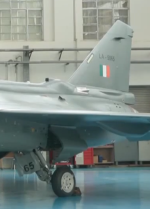
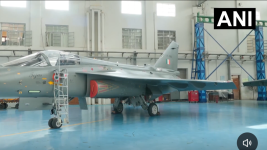
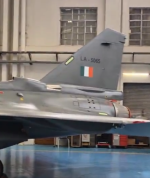
Nearly Fully Assembled LA 5051
View attachment 177373


HAL was supposed to deliver a total of 28 aircraft in 2 years (12 in FY 24-25 and 16 in FY 25-26)
Fully Assembled LA 5065
Screenshot_20260918-124505.Moto App Launcher.png
Screenshot_20260918-124142.Moto App Launcher.png
Screenshot_20260918-131150.Moto App Launcher.png
This makes it the 32nd Mk1A aircraft

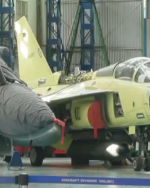
Half assembled LA 5067 (Atleast that's what I think it is if I squint my eyes real hard)
Screenshot_20260918-125747.Moto App Launcher.png

 
Last edited:
Su 57 is the best available option for IAF as today.

If I were the decision-maker, since Russia is ready to provide the required ToT, I would consider a fast-track deal: 12 standard Su-57s initially, with direct deliveries starting within 24 months, while a customised Indian variant begins in 2029. That would allow another 2–3 years for upgrades, integration and testing before full-scale production. Overall, I would look at around 70–80 aircraft.

so production will end before 2035, and production of AMCA can start afterwoards, if still a 1- 2-year delay for AMCA, then we might add 12-24 additional orders
Russian at her current status can't deliver anything before 2031 even you sign the contract today.
 
Russian at her current status can't deliver anything before 2031 even you sign the contract today.
if they can already start delivering to other countries – why not India?

If you say about the S500 missile defence deal if sign today and will start delievry from 2030-31, still I can unsertsand.
 
Just a completely straightforward question… what role does the IDRW actually play? Are the people involved completely daft and tasked with making stupid people even more stupid, is it purely PR propaganda, or is it a distraction from the things that really matter – just as Trump distracts attention from the Epstein files? At the very least, nobody can take such nonsense seriously!

View attachment 213642
Where does the landing gear go?? Up its a$$ I reckon......😁😂😁😂
 
180 Tejas built now!!!!!

These posts and updates mean very little to anyone anymore.

Not one single actual delivery for last 4 years. So essentially they are building planes that either are not ready yet, so not fully built up to spec or IAF refuses to accept them,.

This is now turning a bad joke into an epic waste of resources.
 
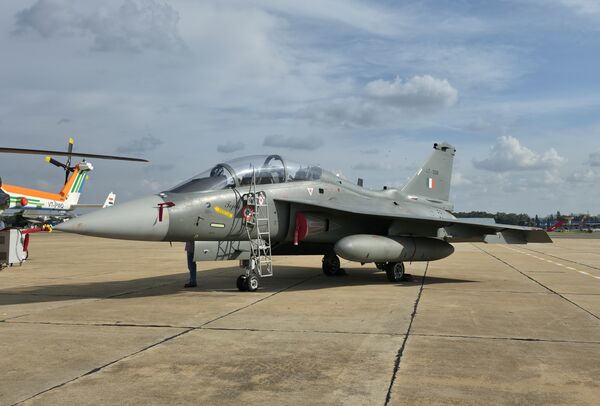
According to the source, SPT7 and SPT8 have also been integrated with the Elta EL/M-2052 active electronically scanned array (AESA) radar and an air-to-air refuelling probe. Both systems will also equip the follow-on Tejas Mk 1A aircraft for the IAF.

“These features were integrated into SPT7 and SPT8 because the IAF wanted to use these last two FOC two-seaters as lead-in trainers for the Tejas Mk 1A,” the source said.
 
Su 57 is the best available option for IAF as today.

If I were the decision-maker, since Russia is ready to provide the required ToT, I would consider a fast-track deal: 12 standard Su-57s initially, with direct deliveries starting within 24 months, while a customised Indian variant begins in 2029. That would allow another 2–3 years for upgrades, integration and testing before full-scale production. Overall, I would look at around 70–80 aircraft.

so production will end before 2035, and production of AMCA can start afterwoards, if still a 1- 2-year delay for AMCA, then we might add 12-24 additional orders
The best options available to India for countering Chinese stealth fighters are loyal-wingman systems like CATS Warrior and stealth UCAVs such as Ghatak. These platforms are also stealth and can carry both air-to-air and air-to-surface weapons.

Until AMCA enters service, these unmanned platforms can provide an additional layer of deterrence against China’s 5th-generation fighters. And who knows—if these systems become advanced enough, they could eventually outperform manned stealth fighters.

These stealth drones could also operate alongside Tejas and Super Sukhoi in manned-unmanned teaming configurations, giving the IAF a much larger and more distributed combat capability.

Another important capability against stealth fighters that is often overlooked is electro-optical detection. India needs to continue developing and integrating passive sensors, IRST/EOTS-type systems, NETRA AWACS, data links and networked sensors to improve the detection and tracking of low-observable aircraft. India should focus heavily on these capabilities while AMCA is being developed.

Tejas is particularly important because it uses Indian-developed avionics and is designed around integration with Indian systems, including drones, AWACS and indigenous weapons such as Astra and Brahmos. Astra is a key part of India’s air-to-air arsenal, while BrahMos provides a major long-range air-to-ground capability.

This is also why Tejas and Super Sukhoi are important parts of the ecosystem—not simply because of the aircraft themselves, but because of how well they can integrate with India’s indigenous weapons, sensors, drones and networked warfare architecture. The long-term goal should be an integrated system where Tejas, Super Sukhoi, CATS Warrior, Ghatak, AWACS, satellites and eventually AMCA operate together as a single networked combat force.
 
The best options available to India for countering Chinese stealth fighters are loyal-wingman systems like CATS Warrior and stealth UCAVs such as Ghatak. These platforms are also stealth and can carry both air-to-air and air-to-surface weapons.

Until AMCA enters service, these unmanned platforms can provide an additional layer of deterrence against China’s 5th-generation fighters. And who knows—if these systems become advanced enough, they could eventually outperform manned stealth fighters.

These stealth drones could also operate alongside Tejas and Super Sukhoi in manned-unmanned teaming configurations, giving the IAF a much larger and more distributed combat capability.

Another important capability against stealth fighters that is often overlooked is electro-optical detection. India needs to continue developing and integrating passive sensors, IRST/EOTS-type systems, NETRA AWACS, data links and networked sensors to improve the detection and tracking of low-observable aircraft. India should focus heavily on these capabilities while AMCA is being developed.

Tejas is particularly important because it uses Indian-developed avionics and is designed around integration with Indian systems, including drones, AWACS and indigenous weapons such as Astra and Brahmos. Astra is a key part of India’s air-to-air arsenal, while BrahMos provides a major long-range air-to-ground capability.

This is also why Tejas and Super Sukhoi are important parts of the ecosystem—not simply because of the aircraft themselves, but because of how well they can integrate with India’s indigenous weapons, sensors, drones and networked warfare architecture. The long-term goal should be an integrated system where Tejas, Super Sukhoi, CATS Warrior, Ghatak, AWACS, satellites and eventually AMCA operate together as a single networked combat force.

I don’t trust any promises until actual production gets started.

The recent wars between Iran and Israel, and Russia and Ukraine, have highlighted one major lesson: air warfare has changed significantly.

Tejas Mk1A is at least 10 years delayed. By now, production should have been well completed as today, and Tejas Mk2 should ideally already be flying and in production.

Personally, I’m very disappointed with the Modi government on this issues. After 12 years, despite all the talk about “Make in India,” and he took everything on his ego. He sacrificed the army, snd indian Airforce capabilities

I don’t see enough progress much progress in technology as they deserves

You cannot realistically prepare for a major air-defence challenge against China by relying mainly on Tejas Mk1A and other 4th-generation fighters. Technology is moving rapidly, and the gap between what is needed and what is actually being delivered is becoming increasingly frustrating.

CATS Warrior is not designed to provide air superiority either. India’s AWACS and electronic-warfare capabilities also need to be expanded substantially—probably three times their current strength. Present one, very little and can't protect the indian sky.

And that is what frustrates me most: too much of the discussion is still about what “will be,” “could be,” or “might be,” rather than what is actually operational and being produced today.
 

Users who are viewing this thread

Country Watch Latest

Back
Top