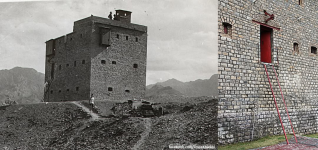
Blockhouses - Hallmarks of Frontier Warfare:
On the North West Frontier, blockhouses (mini fortresses) or hilltop pickets in the 19th century and early 20th century were a practical response to rugged terrain and a form of warfare based on ambush, sniping, and defence against sudden raids rather than set battles. Built by the British, the blockhouses formed visual chains. From them, reflecting mirrors or heliographs, flags, lamps, or later telegraph lines could pass messages rapidly across vast and inaccessible terrain.
This network allowed small garrisons to summon help quickly and kept higher command informed. These small strongly built posts were placed on commanding ridges, passes and along key routes to control movement of convoys, protect supply lines and provide observation over wide areas. Rather than occupying tribal territory in depth, the British used blockhouses to dominate critical ground and maintain lines of communication with a relatively small number of troops.
They appear in countless accounts and literature about operations in Khyber, Tirah, Waziristan, Malakand and the Mohmand country, where terrain and tribal resistance made conventional occupation impossible.
The ladder and pulley system was a key defensive feature. Entrances were raised above ground so that ladders could be hauled up during the night or in times of danger, denying attackers easy access.
The pulley also allowed rations, ammunition, water and even wounded men to be raised or lowered without opening a vulnerable ground level door. This design reflected the constant risk of surprise attacks and the need for a handful of soldiers to hold out until relief arrived.
Blockhouses became a hallmark of Frontier warfare because they embodied the British approach to control on the Frontier: economy of force, defensive dominance rather than permanent occupation and psychological presence. A small fortress on a hilltop could watch routes, signal to neighbouring pickets and project authority far beyond its size, making these structures as much instruments of policy as of military defence.
Today, many of these blockhouses lie abandoned and in varying states of ruin and their purpose largely forgotten. Preserving and conserving these structures is important not only to safeguard their historical value but also to recognise their considerable tourist appeal.
Such sites if properly preserved can help interpret the story of the North West Frontier while also contributing to heritage tourism in regions where such authentic historical assets are increasingly rare. - QK











 India Eyes Retired French Mirage 2000 Jets as Two-Front Fighter Crisis Deepens (13 Viewers)
