Navigation
Install the app
How to install the app on iOS
Follow along with the video below to see how to install our site as a web app on your home screen.
Note: This feature may not be available in some browsers.
More options
Style variation
You are using an out of date browser. It may not display this or other websites correctly.
You should upgrade or use an alternative browser.
You should upgrade or use an alternative browser.
History of Pakistan Army
- Thread starter ghazi52
- Start date
More options
Who Replied?


ghazi52
THINK TANK: CONSULTANT
- Thread starter
- #275
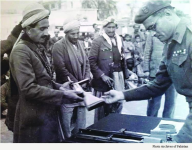
Brig Sher Khan as Director of Military Operations, Pakistan Army, distributing arms to tribal fighters during the Kashmir conflict.
Date: 1948
On December 12, 1949, Brigadier Sher Khan and the designated Commander-in-Chief, Major General Iftikhar Khan, were flying from Lahore to Karachi when their aircraft crashed near Jungshahi, tragically killing all on board. General Iftikhar was en route to the United Kingdom to attend the Imperial Defence College.
Photo Source: The Friday Times
ghazi52
THINK TANK: CONSULTANT
- Thread starter
- #276
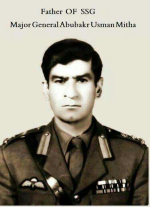
Major General Aboobaker Osman Mitha, SQA, T(PK) (1923-1999)
Major General Aboobakar Osman Mitha was a pioneering officer in the Pakistan Army, best known as the founder of the Special Services Group (SSG), Pakistan’s elite special operations force.
Born in 1923 in Bombay (now Mumbai), he came from a distinguished Memon Muslim family. After joining the British Indian Army during World War II, he later opted for Pakistan after independence in 1947.
A bold and visionary leader, Mitha was instrumental in conceptualising and establishing the SSG in 1956, drawing inspiration from British and Commando units. He underwent intense training himself and ensured that the unit would be based on merit, discipline, and physical endurance.
His leadership set the foundation for what would become one of the most formidable special forces in the region. Known for his integrity and austere lifestyle, Gen. Mitha refused to indulge in the privileges many senior officers enjoyed. Despite his contributions, his later years in service were marred by political tensions, leading to an early retirement. Nevertheless, his legacy as the father of Pakistan’s special forces remains deeply respected in military circles.
ghazi52
THINK TANK: CONSULTANT
- Thread starter
- #277
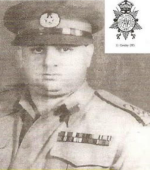
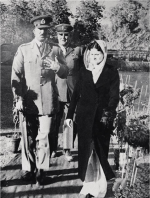
Brigadier Masud Khan Satti
Hero of Kashmir war (1947- 48) was the first Muslim commanding officer of 11 Cavalry in 1947.
He spearheaded move towards Srinagar in 1948 with his Stuart armoured cars without clearance from the General Headquarters (GHQ).
Through his daring and bold actions, Bhimber, Baghsar, and Mirpur were captured and the threat to Mangla headworks and Jehlum was eliminated. He was a graduate of The Royal Military Academy, Sandhurst, UK.
ghazi52
THINK TANK: CONSULTANT
- Thread starter
- #280
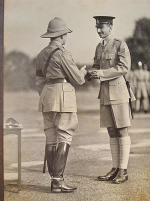
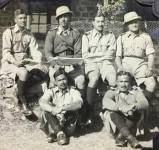
Major General Raja Muhammad Anwar Khan
(23 February 1915 – 5 February 2005) was the first Pakistan Army Engineer Officer and the first Muslim Engineer In Chief of the Pakistan Army.
He was the first Muslim to be a Sapper officer in the British Indian Army and its pre-partition Indian Corps of Engineers. His Pakistan Army number was 48 (PA-48).
Maj. General Muhammad Anwar Khan belonged to a family of 9 brothers and 4 sisters, of which 6 brothers were selected as officers in the British Army (Akbar, Iftikhar, Zafar, Yousaf, Afzal and Anwar). Three brothers rose to the rank of Major General and the other three to the rank of Brigadier. Three brothers chose civilian careers (Bakir, Tahir and Masud).
Anwar Khan was selected for the 4th batch at Indian Military Academy (IMA) Dehra Dun in February 1934, and passed out on 3 June 1936. However, his seniority in the army was considered from 1 November 1935.
In 1957, he was promoted to Maj Gen as Engineer-in-Chief which he served as for eight years. Upon retirement from the Army on 1 May 1965, he served as Chairman OGDC till 1969. Maj Gen Anwar Khan spent the remainder of his retirement years in Rawalpindi, where he died on 5 February 2005.
His eldest brother, Major General Muhammed Akbar Khan (PA-1) held the honor of being the first Muslim to become a Major General in the British Indian Army. Akbar Khan enlisted in the army in May 1914 and served with his father's regiment 12th Cavalry.
He was a veteran of both World Wars I and II and the first Muslim officer to join the British Indian Cavalry and served in the 5th King Edward's Own (KEO) Probyn's Horse.
He was the senior most officer of the Pakistan Army and retired honorably in 1949. Major General Muhammad Iftikhar Khan, who was educated at RIMC and Sandhurst, was commissioned in August 1929 and joined 7th Light Cavalry.
He was transferred to 3rd Cavalry when it was Indianized. During Second World War, he served with the newly raised 45th Cavalry.
He was the first British Indian officer to be appointed Instructor at the Command and Staff College Quetta, and was tipped as the first Pakistani Commander-in-Chief after General Douglas David Gracey's retirement, but died in an air crash with his wife, son and some other senior officers in 1949 at Jang Shahi.
Iftikhar was a multi-handicap polo player also. Brigadier Muhammed Zafar Khan was commissioned in 1934 and was the first non-British Indian Commander of British Indian Cavalry. He retired as Director Remount, Veterinary & Farm Corps (RV&FC).
Brigadier Muhammad Yousef Khan was commissioned in 1935 and retired as Director RV&FC. Brigadier Muhammad Afzal Khan was commissioned in 1935 and joined 16th Light Cavalry. He later transferred to Royal Indian Army Service Corps (RIASC).
General Anwar's father Khan Bahadur Raja Fazal Dad Khan was a Zamindar (landowner) and served as a Viceroy's Commissioned Officer with the 12th Cavalry unit of the British Indian Army. He was also granted the title of Khan Bahadur.
Out of General Anwar's nine brothers, three brothers chose civilian careers (Baqir, Tahir and Masud). Raja Muhammad Baqir Khan, died very young as a law student at Cambridge University UK, when he met with a motorcycle accident. Raja Tahir Raza Khan became an international lawyer, and Raja Masud Raza Khan was a psycho-analyst of international repute, and many of his books are still being used as text-books at leading universities in the UK, US and France. Tahir and Masud were settled in London.
His maternal first cousins include Air Chief Marshal Agha Zulfiqar Ali Khan, Lt Gen Agha Saadat Ali Khan, Lt Gen Agha Nek Muhammad and Senator Dr Nighat Agha. General Anwar's only son, Engr Raja Idrees M. Anwar was Chief Research Officer and Director General of the National Institute of Electronics. His eldest sister's granddaughter is Dr Maleeha Lodhi.
Apologies if any information is incorrect.
ghazi52
THINK TANK: CONSULTANT
- Thread starter
- #281
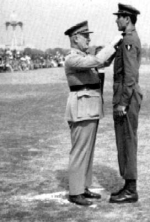
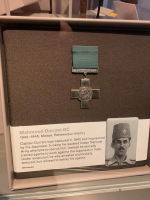
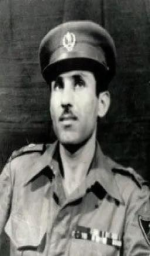
Lieutenant Colonel Mahmood Khan Durrani, GC (1 July 1914 – 20 August 1995) was a Pakistani soldier and a recipient of the George Cross, awarded for heroism in circumstances of extreme danger. He was a 26-year-old captain serving in the 1st Bahawalpur Infantry, British Indian Army (now 8th Battalion The Baloch Regiment of Pakistan Army) in Malaya during the Second World War, when he was awarded the medal for heroism while a prisoner of war of the Japanese Army.
Mahmood Khan Durrani belonged to the Saddozai Tribe, Old Royal Durrani Family of Afghanistan. He was born on 1 July 1914 in Multan in the Western Punjab. After completing his schooling, he joined the army of Bahawalpur State. When the Second World War broke out, he accompanied his battalion, which was dispatched to North Malaya in March 1941, in anticipation of the looming war with Japan.
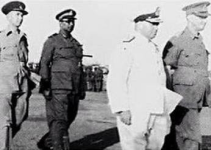
Captain Durrani was presented with his George Cross by Field Marshal Lord Wavell in 1946 at a special investiture ceremony held at the Red Fort, Delhi.
After his repatriation, Durrani resumed his military career and on partition of India in 1947, he opted for Pakistan. He continued to serve in the Pakistan Army, retiring in 1971 as a lieutenant colonel.
A poet and noted writer, he died on 20 August 1995, aged 81 years old. His autobiography, The Sixth Column, was published in the UK in 1955.
The only George Cross recipient to have survived Japanese captivity, Durrani was one of the first George Cross Committee members of the Victoria Cross and George Cross Association.
His George Cross is on display in the Imperial War Museum's Victoria & George Cross Gallery.
ghazi52
THINK TANK: CONSULTANT
- Thread starter
- #283
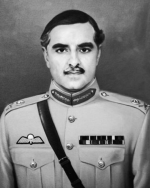
Lt. Gen. Gul Hasan Khan (1921- October 10, 1999) was a soldier whose life embodied integrity , restraint, and an unwavering commitment to the ideals of military professionalism. Serving as the last Commander-in-Chief of the Pakistan Army before the post was renamed Chief of Army Staff, General Gul Hassan’s career turbulent chapter in Pakistan’s history.
Born in 1921 into a respected family from Quetta, Gul Hasan was educated at the Prince of Wales Royal Indian Military College (RIMC) and later commissioned into the British Indian Army during World War II.
He served with distinction and transitioned into the Pakistan Army following independence in 1947. Renowned for his intellect and precision, he rapidly rose through the ranks.
His command was the 1st Armoured Division and later staff roles in the General Headquarters earned him the reputation of being one of the most competent officers of his generation. A soldier of truth unbent by power, he stood with honor in the nation’s testing hour. No riches he sought, no empire he claimed, in silence and service, his legacy named.
A patriot who chose integrity over gain. May his memory endure, unsullied by fame. At his passing on October 10, 1999, he reportedly left only a modest sum in his account, set aside solely for the purchase of his own burial cloth (kafan).
May Allah (SWT) bless General Gul Hasan Khan with the highest rank in Janat al Firdaus, and reward him for his honesty, humility, and service to the nation. May his legacy inspire future generations to value integrity over power, and principle over privilege. Ameen!
Users who are viewing this thread
Total: 2 (members: 0, guests: 2)
Pakistan Defence Latest

Country Watch Latest
-

-
-
 India Eyes Retired French Mirage 2000 Jets as Two-Front Fighter Crisis Deepens (7 Viewers)
- Latest: El Sidd
-

-

