History of Pakistan Army

1768154777151.png

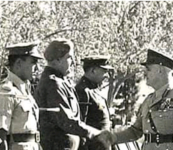
Colonel Mohammed Sharif Khan MBE,(PA 69) third from the right as The Commandant of the Khyber Rifles sometime in 1946,in line to receive The Commander in Chief Lord Wavell..
 
View attachment 171652

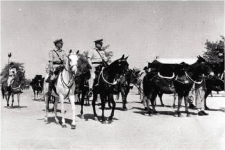
Commandant of The Khyber Rifles conducting the Viceroy's visit to The Khyber Rifles at Landikotal, in early 1947. Lord Mountbatten remarked .....

The turnout, parade and drill is of a standard that would put the Blues and Royals at Horse Guard parade in London, to shame.
I've often said when it comes to parades, the only ones who can out Brit the Brits is the Paks.
 
1768861172596.png


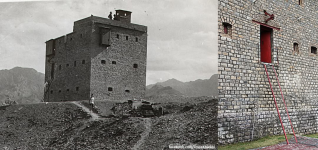
Blockhouses - Hallmarks of Frontier Warfare:

On the North West Frontier, blockhouses (mini fortresses) or hilltop pickets in the 19th century and early 20th century were a practical response to rugged terrain and a form of warfare based on ambush, sniping, and defence against sudden raids rather than set battles. Built by the British, the blockhouses formed visual chains. From them, reflecting mirrors or heliographs, flags, lamps, or later telegraph lines could pass messages rapidly across vast and inaccessible terrain.

This network allowed small garrisons to summon help quickly and kept higher command informed. These small strongly built posts were placed on commanding ridges, passes and along key routes to control movement of convoys, protect supply lines and provide observation over wide areas. Rather than occupying tribal territory in depth, the British used blockhouses to dominate critical ground and maintain lines of communication with a relatively small number of troops.

They appear in countless accounts and literature about operations in Khyber, Tirah, Waziristan, Malakand and the Mohmand country, where terrain and tribal resistance made conventional occupation impossible.

The ladder and pulley system was a key defensive feature. Entrances were raised above ground so that ladders could be hauled up during the night or in times of danger, denying attackers easy access.

The pulley also allowed rations, ammunition, water and even wounded men to be raised or lowered without opening a vulnerable ground level door. This design reflected the constant risk of surprise attacks and the need for a handful of soldiers to hold out until relief arrived.

Blockhouses became a hallmark of Frontier warfare because they embodied the British approach to control on the Frontier: economy of force, defensive dominance rather than permanent occupation and psychological presence. A small fortress on a hilltop could watch routes, signal to neighbouring pickets and project authority far beyond its size, making these structures as much instruments of policy as of military defence.

Today, many of these blockhouses lie abandoned and in varying states of ruin and their purpose largely forgotten. Preserving and conserving these structures is important not only to safeguard their historical value but also to recognise their considerable tourist appeal.

Such sites if properly preserved can help interpret the story of the North West Frontier while also contributing to heritage tourism in regions where such authentic historical assets are increasingly rare. - QK
 
1769107336677.png

Another rare pic from our past,
General Ayub Khan,
later FM, C-in-C Pakistan army,
reviewing the 3rd (Peshawar) Mountain Battery during its centenary celebration at Campbellpur in 1953..

some history on 3 mountain battery n its its present status,
“”The 23rd Peshawar Mountain Battery (Frontier Force) was an artillery unit of the British Indian Army. It was raised in 1853 as the Peshawar Mountain Train. It became the 23rd Peshawar Mountain Battery (Frontier Force) in 1903.

In 1947, it was transferred to the Pakistan Army,
where it exists as the 3rd Peshawar Battery (Frontier Force) of The First (SP) Medium Regiment Artillery (Frontier Force).””
 
1769107601066.png


Frontier Force
old FF regiments
were called as,
garbar unath گڑبڑ اناٹھ
susti satwinja سستی ستوِنجہ
dastori دستوری

these r just a few old Nicknames of our oldest FF regiments,
once d old PIFFERS.. as d history goes,

in 1903 Lord Kitchener abolished the three Presidency armies,
namely Bengal, Madras and Bombay armies and in this process older PIFFER units were re-numbered..

The new numbers, each with Frontier Force in brackets afterwards, were called as follows,
51st to 54th Sikhs,
55th to 59th Rifles,
5th Gurkhas,
the Corps of Guides,
21st to 24th Mountain Batteries,
the Garrison Artillery,
21st to 23rd and 25th Punjab Cavalry. .
It was based on these new numbers that the oldest PIFFER units earned their affectionate nicknames that live to this day ❤️
if I remember correctly,
following r the old names of present giants,
Garbarr unath present 1 FF,
guides infantry present 2 FF,
Ekwanja 3 FF,
Tunpur Bawanja 4 FF,
Royal Tirwanja present 5FF,
Churwanja present 6 FF,
Chattak Pachwanja present 7 FF,
Bhaiband Chhewanja present 8 FF,
Susti Satwanja present 9 FF,
Dasturi Athwanja present 10 FF..
 
1993, Multan.

1769108921548.png
 
ASC school and center were established at Chaklala, Pindi, at present JS headquarters building.. ex-CJCSC office was ASC center commandant’s office, he used to be a brigadier in those days..

in late 1950s ASC school and center, both were shifted to Jhelum, and later in early 60s they were yet moved to their present location in Nowshera.. KP.

Pre 1947, present premises of PMA at Kakul was ASC riding school, many courses at Kakul, as part of Indian army..
Present transport wing PAF mess in Chaklala was ASC mess,

1947

1769109933678.png

At ASC school, Chaklala..
left to right, at that time and rank,
Capt Saeed,
Capt Mumtaz,
Capt A. R .Pirzada,
Capt M. R. Hassan..
All ASC, all pre partition commissioned,
 
Three living veterans from 1st PMA,
Brig Mian Muhammad Mehmud,
Col Zafar Khan and Col Saeed Malik..

Theirs's was the first course that was selected and trained in Pakistan after partition, they were commissioned on 25 Dec 1948,.

All of them are coursemates of Maj Raja Aziz Bhatti Shaheed, NISHAN e HAIDER,1965..

May Allah grant them a happy, healthy and long life ..

1769110412981.png
 
1769110617316.png


1769110640575.png

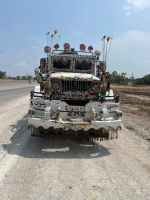
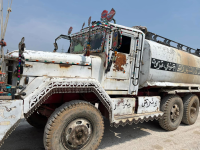
T his M34,water bowser was built around 1953 by REO motor car company at their plant in Lansing, Michigan USA..
this truck,70 plus minus yrs old, has seen active military service in Korea during d 50s n later fought both 65 and 71 indo-pak wars along with our valiant soldiers..
An authentic and proven war veteran that has still not retired..

This truck is now owned by a construction contractor from mithi/ Umarkot , Sindh..

Now deployed on WATER DISPENSING duty at DHA ,working nearly a 16 hour daily shift..
 
1769111299015.png

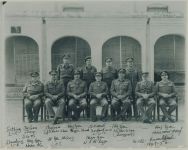
One of the earliest photographs of d 2nd Pakistani army chief, Gen Douglas Gracy, with most of the general officers from our nascent army of the time..

This pic was taken at the GHQ in Rawalpindi, somewhere between 1949/50..

Gen Ayub khan who was in east Pakistan ,in those days, is obviously missing from this great photograph here..
 
View attachment 173974


View attachment 173975

T his M34,water bowser was built around 1953 by REO motor car company at their plant in Lansing, Michigan USA..
this truck,70 plus minus yrs old, has seen active military service in Korea during d 50s n later fought both 65 and 71 indo-pak wars along with our valiant soldiers..
An authentic and proven war veteran that has still not retired..

This truck is now owned by a construction contractor from mithi/ Umarkot , Sindh..

Now deployed on WATER DISPENSING duty at DHA ,working nearly a 16 hour daily shift..
damn thats a tough truck
 
1769111607450.png

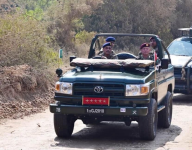
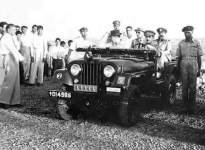
Two photos that were taken 58 years apart..

First one, taken where FM Asim Munir is driving king Abdullah of jordan,16 Nov 2025..

The other one, a black n white photo where Gen Yahya khan is driving FM Ayub khan around upcoming city of Islamabad on 14 Aug 1967..

Commonality is a jeep with a 5 star plate..

1769111815010.png
 
1769112015860.png

1769112040064.png

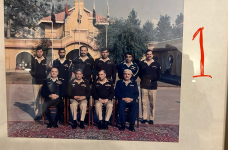
pic 1 was clicked in late 92 or early 1993,

on this day, gen Asif Nawaz had under 2 full years to spare as sitting army chief,
sadly days after this pic was taken, he died of a sudden heart attack on 8/9th Jan 93..

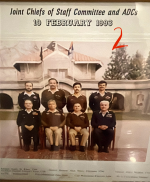
Second pic was taken on 10th Feb 93,say 30 plus days after he died, and gen Waheed kakar can be seen as sitting army chief on this day..
gen Waheed had no desire, nor was in the seniority n was about to retire as a 3 star in few months..
but out of the blues, Gen Asif died n gen Kakar was elevated as chief..
 

Users who are viewing this thread

Country Watch Latest

Latest Posts

Back
Top