ghazi52
THINK TANK: CONSULTANT


- Thread starter
- #46
On 12th February 1842, a further demand that the town be given up arrived from Kabul, but by this time the senior officers had recovered their composure. The demand was rejected and the officers resolved to hold Jellalabad to the end. They were reinforced in their resolve by the arrival of a message from General Pollock, the new commander of the relieving army in India, announcing that he would advance at the first opportunity.
During the period of correspondence with Shah Shujah, Broadfoot and his sappers worked untiringly to strengthen the fortifications.
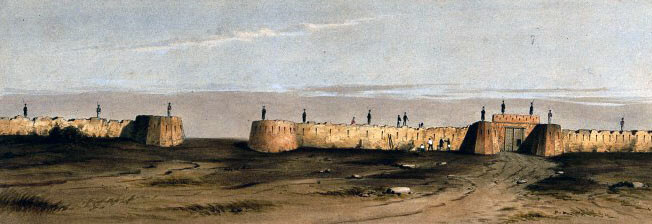
Jellalabad gate and defences after the earthquake: Siege of Jellalabad from 12th November 1841 to 13th April 1842 during the First Afghan War
On 19th February 1842, an earthquake destroyed much of their efforts, but Broadfoot’s leadership was inspirational, and the garrison quickly restored the broken works.
The Afghans, now commanded by Akbar Khan, invested the town closely.
On 11th March 1842, Colonel Dennie led out a further sortie and captured some 500 Afghan sheep left to graze under the town walls, a welcome addition to the commissariat stores.
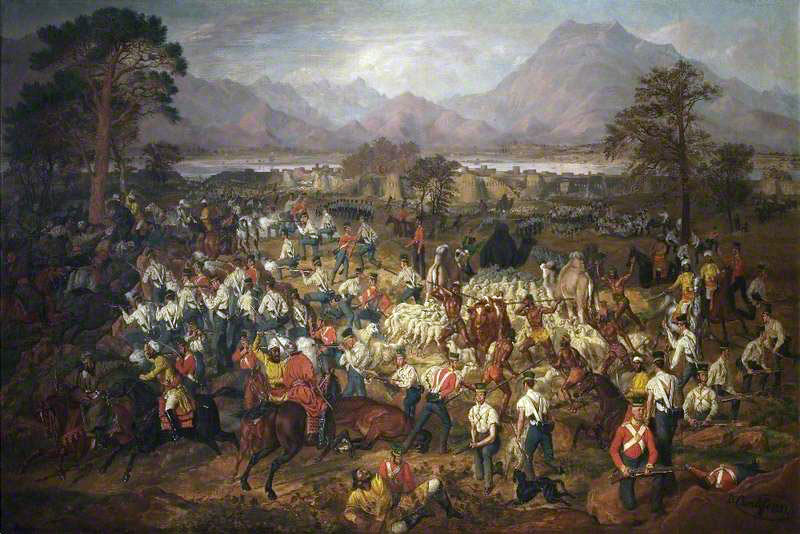
HM 13th Regiment and Skinner’s Horse capturing the flock of sheep: Siege of Jellalabad from 12th November 1841 to 13th April 1842 during the First Afghan War: picture by Daniel Cunliffe
On 9th April 1842, the Afghans fired a series of salutes. Coupled with disturbing messages from the east, the salutes led the commanders of the garrison to believe that General Pollock had been driven back.
Brigadier Sale resolved on a major sortie by the entire garrison, in an attempt to drive the Afghan besiegers away. The odds were not in the garrison’s favour. Akbar had some 5,000 to 6,000 men. The garrison numbered around 1,500 men.
At dawn on 7th April 1842 three columns issued from the Kabul Gate into the open country outside Jellalabad. The columns advanced in line towards Akbar’s camp, some 3 miles away, its right flank resting on the river.
Half way to the camp lay a ruined fort, held by Afghans. Colonel Dennie allowed his column to be diverted into the fort, where a vicious hand to hand fight accounted for several British and Indian casualties including Dennie himself.
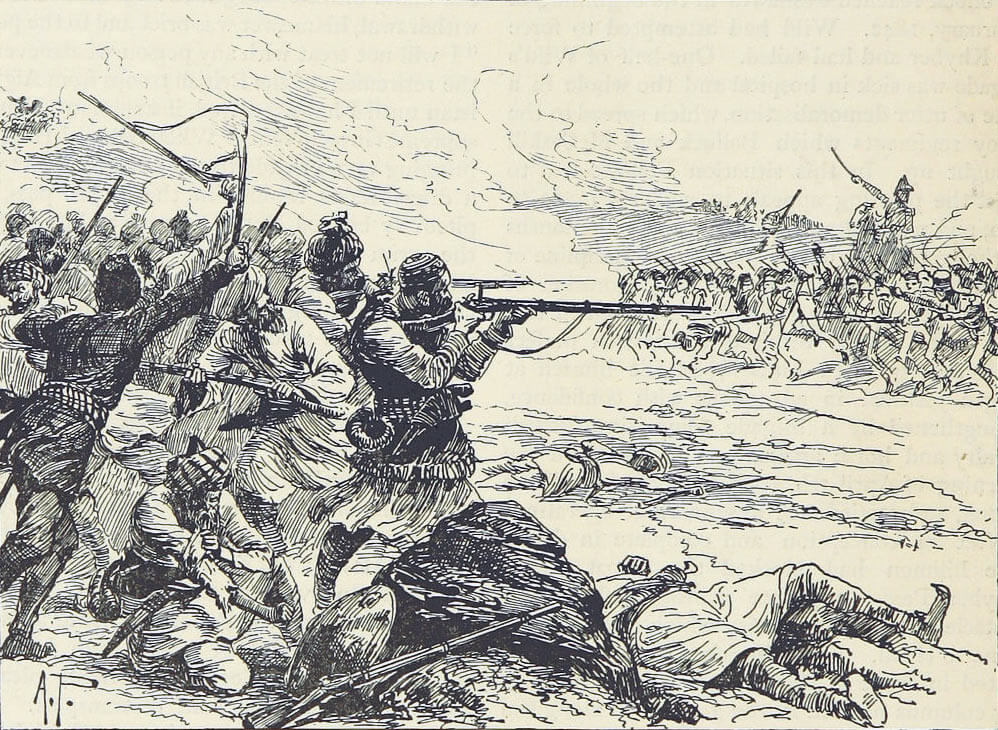
Sortie from Jellalabad: Siege of Jellalabad from 12th November 1841 to 13th April 1842 during the First Afghan War
Dennie’s troops finally conformed to the other two columns, commanded by Havelock and Monteath of the 13th, and the advance continued. The artillery came up in support and a heavy fire was opened on the Afghans, as the three columns advanced into Akbar’s camp capturing his artillery and driving his soldiers away in rout.
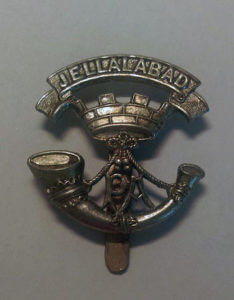
Jellalabad Badge of the 13th Prince Albert’s Own Light Infantry: Siege of Jellalabad from 12th November 1841 to 13th April 1842 during the First Afghan War
By 7am on 8th April 1842 the Afghan besieging force had fled and the 35th BNI, 13th Foot and the artillery were enabled to march back into Jellalabad in triumph. The garrison had raised the siege without assistance.
On 13th April 1842 Pollock’s Army of Retribution arrived, to be played into Jellalabad by the band of the 13th with the Scottish song “Oh but you’ve been a lang time acoming.”
Casualties at the Siege of Jellalabad:
The British and Indian garrison suffered casualties of 20 men killed and wounded during the siege, and 42 men killed and wounded during the final sortie, including Colonel Dennie. Afghan casualties are unknown.
Follow-up to the Siege of Jellalabad:
The holding of Jellalabad was an enormous boost to the British in India, and to Britain, after the disasters of Kabul and Gandamak. Pollock left Jellalabad for Kabul, to punish the Afghans for having the temerity to defend their country.
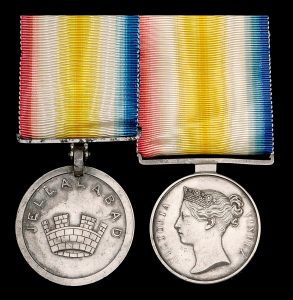
Jellalbad medal issued by the East India Company for the Siege of Jellalabad from 12th November 1841 to 13th April 1842 during the First Afghan War
Anecdotes and traditions from the Siege of Jellalabad:
Afghanistan From Darius to Amanullah by Lieutenant General Sir George McMunn.
The Afghan Wars by Archibald Forbes.
History of the British Army by Fortescue.
 www.britishbattles.com
During the period of correspondence with Shah Shujah, Broadfoot and his sappers worked untiringly to strengthen the fortifications.
Jellalabad gate and defences after the earthquake: Siege of Jellalabad from 12th November 1841 to 13th April 1842 during the First Afghan War
On 19th February 1842, an earthquake destroyed much of their efforts, but Broadfoot’s leadership was inspirational, and the garrison quickly restored the broken works.
The Afghans, now commanded by Akbar Khan, invested the town closely.
On 11th March 1842, Colonel Dennie led out a further sortie and captured some 500 Afghan sheep left to graze under the town walls, a welcome addition to the commissariat stores.
HM 13th Regiment and Skinner’s Horse capturing the flock of sheep: Siege of Jellalabad from 12th November 1841 to 13th April 1842 during the First Afghan War: picture by Daniel Cunliffe
On 9th April 1842, the Afghans fired a series of salutes. Coupled with disturbing messages from the east, the salutes led the commanders of the garrison to believe that General Pollock had been driven back.
Brigadier Sale resolved on a major sortie by the entire garrison, in an attempt to drive the Afghan besiegers away. The odds were not in the garrison’s favour. Akbar had some 5,000 to 6,000 men. The garrison numbered around 1,500 men.
At dawn on 7th April 1842 three columns issued from the Kabul Gate into the open country outside Jellalabad. The columns advanced in line towards Akbar’s camp, some 3 miles away, its right flank resting on the river.
Half way to the camp lay a ruined fort, held by Afghans. Colonel Dennie allowed his column to be diverted into the fort, where a vicious hand to hand fight accounted for several British and Indian casualties including Dennie himself.
Sortie from Jellalabad: Siege of Jellalabad from 12th November 1841 to 13th April 1842 during the First Afghan War
Dennie’s troops finally conformed to the other two columns, commanded by Havelock and Monteath of the 13th, and the advance continued. The artillery came up in support and a heavy fire was opened on the Afghans, as the three columns advanced into Akbar’s camp capturing his artillery and driving his soldiers away in rout.
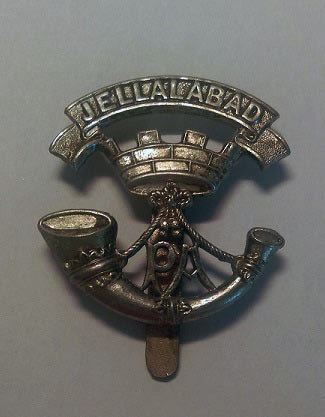
Jellalabad Badge of the 13th Prince Albert’s Own Light Infantry: Siege of Jellalabad from 12th November 1841 to 13th April 1842 during the First Afghan War
By 7am on 8th April 1842 the Afghan besieging force had fled and the 35th BNI, 13th Foot and the artillery were enabled to march back into Jellalabad in triumph. The garrison had raised the siege without assistance.
On 13th April 1842 Pollock’s Army of Retribution arrived, to be played into Jellalabad by the band of the 13th with the Scottish song “Oh but you’ve been a lang time acoming.”
Casualties at the Siege of Jellalabad:
The British and Indian garrison suffered casualties of 20 men killed and wounded during the siege, and 42 men killed and wounded during the final sortie, including Colonel Dennie. Afghan casualties are unknown.
Follow-up to the Siege of Jellalabad:
The holding of Jellalabad was an enormous boost to the British in India, and to Britain, after the disasters of Kabul and Gandamak. Pollock left Jellalabad for Kabul, to punish the Afghans for having the temerity to defend their country.
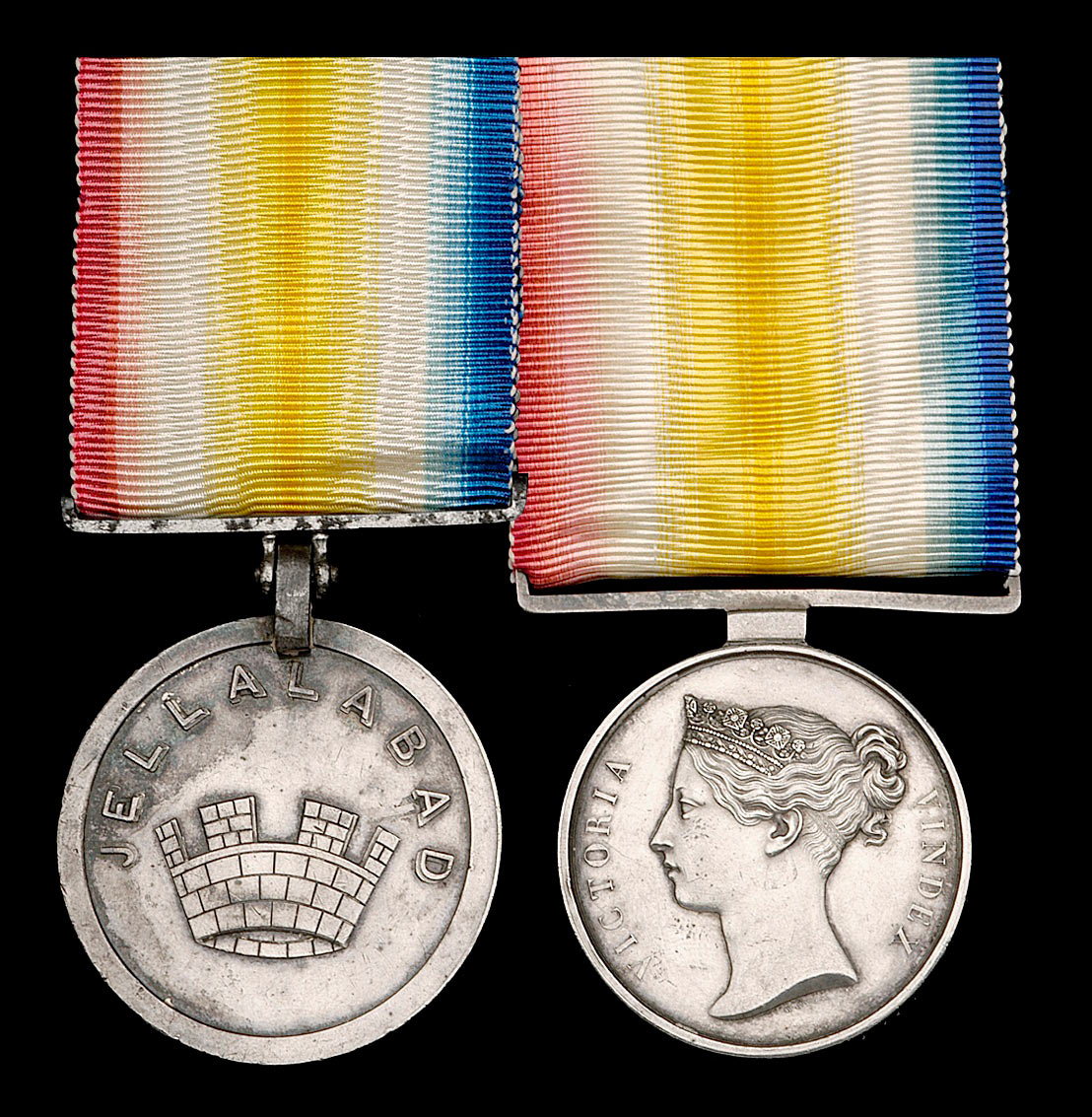
Jellalbad medal issued by the East India Company for the Siege of Jellalabad from 12th November 1841 to 13th April 1842 during the First Afghan War
Anecdotes and traditions from the Siege of Jellalabad:
- The defence of Jellalabad made heroes of the 13th It is reported that as the regiment marched back through India, to return to Britain, every garrison fired a ten-gun salute in its honour. Queen Victoria directed that the regiment be made Light Infantry, carry the additional title of ‘Prince Albert’s Own’ and wear a badge depicting the walls of the town with the word ‘Jellalabad’ inscribed.
- The East Indian Company issued a medal to commemorate the siege and issued it to every member of the Jellalabad garrison present in Jellalabad during the period 12 November 1841 to 16 April 1842.
- Captain Henry Havelock of the 13th Regiment greatly distinguished himself in the Indian Mutiny, relieving the British Residency in Lucknow and dying there of dysentery in 1857. Havelock studied military history and theory in great depth. He was a driven Christian and established Bible reading classes for all ranks in his regiment. The crisis generated by the inadequate elderly British generals needed officers of the ability and driven determination of Havelock and Broadfoot to ensure the survival of the Anglo-Indian garrison in Jellalabad.
Afghanistan From Darius to Amanullah by Lieutenant General Sir George McMunn.
The Afghan Wars by Archibald Forbes.
History of the British Army by Fortescue.
Siege of Jellalabad
The successful defence of Jellalabad in 1841 to 1842 that went a little way to restore the British reputation devastated by the Battles of Kabul and Gandamak
www.britishbattles.com